Most Famous Satraps of the Achaemenid Empire
The satraps of the Achaemenid Empire were regional governors appointed to oversee vast territories within the Persian Empire, which at its height spanned from the Mediterranean to the Indus Valley. Appointed by the central Persian government, satraps were responsible for collecting taxes, maintaining law and order, overseeing defense, and ensuring loyalty to the Great King.
While the role of satrap evolved, several satraps became notable figures in history due to their military, political, or administrative accomplishments, as well as their unique relationships with the central power in Persia.
In the article below, World History Edu provides an exploration of some of the most famous satraps of the Achaemenid Empire.

Cyrus the Younger (Satrap of Lydia, Phrygia, and Cappadocia)
Cyrus the Younger, a prominent member of the Achaemenid royal family, was the younger son of Darius II and the brother of Artaxerxes II. He was appointed satrap of Lydia, Phrygia, and Cappadocia, as well as commander of all forces in Asia Minor. Cyrus became known for his ambitions to seize the Persian throne from his brother Artaxerxes II, leading to one of the most famous events in Persian history: the Battle of Cunaxa in 401 BCE. In this battle, Cyrus marshaled a formidable army, including the infamous Ten Thousand Greek mercenaries, to challenge Artaxerxes. Although Cyrus was killed in the battle, his expedition left a legacy, particularly through Xenophon’s Anabasis, a firsthand account of the Greek mercenaries’ retreat. Cyrus’s ambition and charisma made him one of the most famous satraps, even though he ultimately failed in his attempt to become king.

Image: Cyrus the Younger meets with Spartan general Lysander in Sardis. Artwork by Francesco Antonio Grue.
Mazares (Satrap of Lydia)
Mazares served as one of the earliest satraps of Lydia under Cyrus the Great. He was appointed after Cyrus conquered Lydia and overthrew its king, Croesus. Mazares played a crucial role in pacifying the region by subduing the rebellious Lydian cities that had resisted Persian control. Known for his military expertise, he efficiently quelled revolts by capturing cities like Priene and Magnesia and punishing rebellious leaders. Mazares’ tenure as satrap was brief, as he reportedly died of an illness during his campaign. Despite his short service, Mazares is remembered for his successful suppression of rebellion and his role in establishing Persian authority in the region.
Oroetes (Satrap of Lydia)
Following Mazares, Oroetes was appointed satrap of Lydia and went on to become a well-known, if somewhat controversial, figure. Oroetes was notorious for his ruthless behavior, which included the murder of Polycrates, the ruler of Samos, under suspicious circumstances. Additionally, he amassed considerable power, wealth, and an independent army, essentially ruling as a semi-autonomous figure in Lydia. Oroetes’ ambition eventually led to his downfall, as he was executed by order of Darius I. His independent spirit and defiance of the central Persian authority made him a legendary, albeit infamous, figure in the history of Persian satraps.

Image: Oroetus witnessing the crucifixion of Polycrates.
Artaphernes (Satrap of Lydia)
Artaphernes, brother of Darius I, served as satrap of Lydia during the Ionian Revolt (499–493 BCE). His tenure was marked by efforts to suppress the Greek city-states of Ionia, which had rebelled against Persian rule. Artaphernes is credited with attempting to stabilize the region by reorganizing the tributes paid by the Ionian cities to make them more fair and consistent. Although the revolt was ultimately quashed, it set the stage for the Greco-Persian Wars. Artaphernes’ attempts to create stability in Ionia and his central role in suppressing the revolt solidify his reputation as one of Persia’s most strategic satraps.
Arshama (Satrap of Egypt)
Arshama was an influential satrap of Egypt, a region with a unique cultural identity and history of resistance against foreign rule. Serving under Darius II and Artaxerxes II, Arshama was responsible for maintaining Persian control over a challenging province. He is known for his administrative acumen, particularly his extensive correspondence, which provides valuable insights into the governance of the empire. These letters reveal his attention to detail and efforts to manage the various social, economic, and military issues in Egypt. Arshama’s legacy endures through these letters, which provide a rare glimpse into the daily functions of a satrap and the challenges of managing Egypt under Persian rule.
Phrasaortes (Satrap of Persis)
Phrasaortes was appointed as the satrap of Persis, the central region of the Persian Empire, by Alexander the Great after his conquest of Persia. Although not an Achaemenid himself, Phrasaortes’s appointment represents Alexander’s strategy of retaining the satrapal system to govern the vast territories he had conquered. Phrasaortes is noteworthy as an example of continuity in governance; despite the fall of the Achaemenid Empire, the satrapal structure persisted under Alexander. His role illustrates how deeply the satrapal system had become entrenched in the administration of the Persian territories.
Satibarzanes (Satrap of Areia)
Satibarzanes was the satrap of Areia, a region in northeastern Persia, under Darius III. He initially supported Darius but later attempted to switch allegiances when Alexander the Great invaded Persia. After being defeated by Alexander’s forces, Satibarzanes initially submitted but later rebelled, demonstrating the complexities and divided loyalties of satraps during the fall of the Achaemenid Empire. His defiance and subsequent defeat reflect the challenges Alexander faced in maintaining control over the former Achaemenid territories and the wavering loyalties of Persian satraps.

Abulites (Satrap of Susiana)
Abulites served as satrap of Susiana, a wealthy province in southwestern Persia. When Alexander the Great conquered the Achaemenid Empire, Abulites initially surrendered to him but later proved to be unreliable. Alexander ultimately executed Abulites for his incompetence and failure to provide adequate support. Abulites’ fate underscores the difficulties satraps faced in adapting to new rulers and the consequences of failing to align with the shifting power dynamics after Alexander’s conquest.
Pharnabazus (Satrap of Phrygia)
Pharnabazus was the satrap of Hellespontine Phrygia under Darius II and Artaxerxes II. He became known for his significant role in Persian interventions in Greek affairs, including support for Sparta during the Peloponnesian War. Pharnabazus’ collaboration with Sparta was part of Persia’s strategy to destabilize Athens, which threatened Persian interests in Asia Minor. Known for his military skill and diplomacy, Pharnabazus maintained Persian influence in the region and was instrumental in forging alliances. His leadership during a turbulent period in Greek-Persian relations highlights his diplomatic and strategic capabilities.
Tissaphernes (Satrap of Lydia and Caria)
Tissaphernes, one of the most famous satraps of the Achaemenid Empire, served as satrap of Lydia and Caria and was a key figure in Persian relations with Greece. He was known for his alliance with Sparta during the Peloponnesian War, using Persian resources to weaken Athens. However, his policies often vacillated between supporting Sparta and Athens, reflecting Persian efforts to maintain a balance of power in Greece. Tissaphernes was eventually executed by Artaxerxes II after a failed military campaign and political infighting. His complex relationships with Greek city-states and Persian rulers made him a central figure in the later years of the Achaemenid Empire.
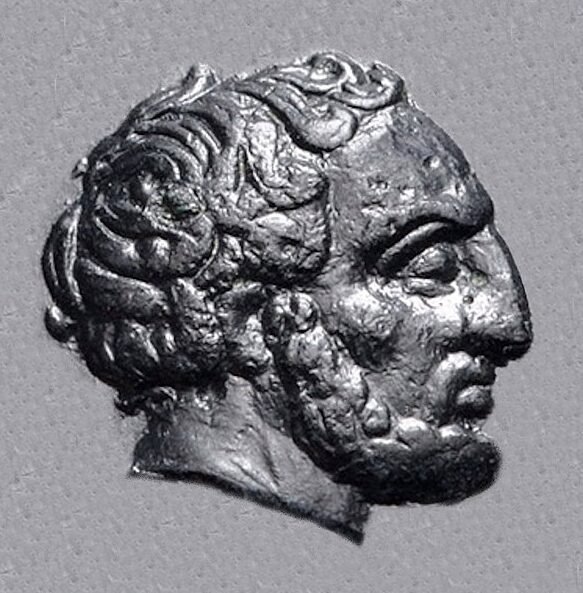
Image: Portrait of Tissaphernes.
Megabazus (Satrap of Phrygia)
Megabazus was an early satrap and a trusted general of Darius I, initially appointed as satrap of Hellespontine Phrygia. Known for his loyalty and military expertise, Megabazus played a crucial role in consolidating Persian control over Thrace, thus extending the empire’s reach into Europe. He was instrumental in implementing Darius I’s policies and established a Persian presence in Thrace, securing important trade and military routes. His loyalty to Darius and effective administration of Phrygia made him a respected satrap in the Persian Empire.
Bessus (Satrap of Bactria and Sogdiana)
Bessus, satrap of Bactria and Sogdiana, is infamous for his role in the capture and assassination of Darius III, the last Achaemenid king. After Darius’s defeat by Alexander the Great, Bessus betrayed him and declared himself king, taking the throne name Artaxerxes IV. However, he was soon captured by Alexander’s forces and executed for treason. Bessus’s actions represent one of the most significant betrayals in Persian history and highlight the desperation and divided loyalties that emerged as Alexander dismantled the Achaemenid Empire.
Hydarnes (Satrap of Media)
Hydarnes, a loyal satrap of Media under Xerxes I, was known for his dedication to the central Achaemenid authority and his role in maintaining the empire’s stability. As a member of one of Persia’s most influential families, Hydarnes held substantial influence and commanded considerable military power. His service exemplified the loyalty and administrative skill required of a satrap in managing one of Persia’s largest and most important provinces.
Gobryas (Satrap of Babylonia)
Gobryas served as the satrap of Babylonia under Cyrus the Great. As one of Cyrus’s closest allies, he played an instrumental role in the Persian conquest of Babylon, bringing the ancient and wealthy city under Persian control. Gobryas was rewarded for his loyalty by being appointed as the satrap of Babylonia, where he implemented Persian policies and helped establish the empire’s authority in Mesopotamia. His loyalty and close association with Cyrus made him one of the most significant satraps in the early Achaemenid Empire.
Mithridates (Satrap of Armenia)
Mithridates, satrap of Armenia under Artaxerxes II, was known for his administrative skills and ability to maintain control over a strategically important province. Armenia often served as a buffer region between the Persian Empire and external threats from the north, making Mithridates’ role essential for the empire’s security. His service in Armenia highlights the importance of satraps in maintaining the empire’s borders and protecting its interests against external threats.
Conclusion
The satraps of the Achaemenid Empire held vast power and responsibility, serving as the king’s representatives in distant provinces. While they were subject to checks from the central Persian government, the satrapal system allowed for considerable autonomy, which some satraps exploited to carve out independent power bases. Many of these governors, such as Cyrus the Younger, Tissaphernes, and Pharnabazus, played significant roles in both Persian internal politics and foreign relations, especially with the Greek city-states. Others, like Bessus and Oroetes, became infamous for their betrayals or ruthless actions.
The Achaemenid satrapal system left a lasting legacy, as it influenced subsequent empires, including the Hellenistic realms that emerged after Alexander the Great’s conquests. The satraps’ blend of administrative, military, and judicial powers made them central figures in the empire’s structure and contributed to the longevity of Persian control over a vast and diverse territory.
Frequently Asked Questions

Image: Herakleia head, a sculpture work depicting the head of a Satrap of Asia Minor.
What is the origin of the term “satrap”?
The term satrap originates from the Old Iranian khshathra-pa, meaning “protector of the province.” It later evolved through Greek and Latin into the Persian shahrbān, meaning “town keeper.”
When and by whom was the role of satrap first established?
The role of satrap was first established by Cyrus the Great around 530 BCE.
What were the main duties of a satrap?
Satraps were powerful regional governors responsible for collecting tribute, overseeing defense, and maintaining law and order within their territories.
How did Darius I formalize the satrapic system?
Darius I formalized the satrapic system by expanding the number of satrapies to thirty-six and implementing regular checks on their authority through royal emissaries and financial officers.
What limitations were placed on satraps’ power?
Satraps were monitored by councils and royal emissaries who reported directly to the king, and their financial officers operated independently to limit any misuse of authority.
How did satraps gain more autonomy over time?
As central control in the Achaemenid Empire weakened, satraps often gained practical autonomy, especially when military authority was combined with their governing role, leading some to act independently.
What was the Revolt of the Satraps?
The Revolt of the Satraps was a significant uprising in the mid-5th century BCE, where satraps rebelled against central authority under the rule of Artaxerxes II.
Did the satrapic system continue after the fall of the Achaemenid Empire?
The satrapic system persisted after the Achaemenid Empire fell, as Alexander the Great and the Seleucid Empire retained similar roles for local governors, adapting them for smaller regions.
How did the satrap system evolve under the Parthians and Sassanians?
Under the Parthians and Sassanians, governors akin to satraps were used, but the Sassanians added “royal cities” to centralize administration more effectively.
Did the Byzantine Empire adopt aspects of the satrapic system?
The Byzantine Empire adopted the title “satrap” for semi-autonomous Armenian leaders, demonstrating the system’s lasting influence.
Who were the Western Satraps, and how long did they rule?
The Western Satraps were Saka rulers in western and central India who ruled contemporaneously with the Kushan and Satavahana dynasties, maintaining their system of governance until the 5th century CE.





