Saint Peter: Who was he, and what role did he play in early Christianity?
Saint Peter, also known as Simon Peter, Simon, Simeon, or Cephas, was one of the Twelve Apostles of Jesus Christ and among the first leaders of the early Christian Church. Born as Shimon Bar Yonah, he lived during the 1st century and played a critical role in the foundation of Christianity. He is venerated as a major saint across various Christian denominations, with Catholic tradition identifying him as the first Pope and the inaugural bishop of Rome and Antioch.
Names and Their Meanings
Saint Peter’s original name was Simon, derived from the Greek Σίμων (Simōn) and Aramaic שִׁמְעוֹן (Shimon). He was later renamed Cephas (Aramaic for “rock” or “stone”) by Jesus, symbolizing the foundational role he would play in establishing the Church. The Greek equivalent, Petros (Πέτρος), also means “rock.” The name reflects Peter’s steadfast and pivotal position within the early Christian community.
Early Life and Calling
Peter was born in Bethsaida, a fishing village on the Sea of Galilee, and worked as a fisherman alongside his brother Andrew. Both brothers became disciples of Jesus after Andrew introduced Peter to Him. According to the Gospel of John, Jesus immediately recognized Peter’s potential and gave him the name Cephas. This marked the beginning of Peter’s transformation into a central figure in the Apostolic ministry.
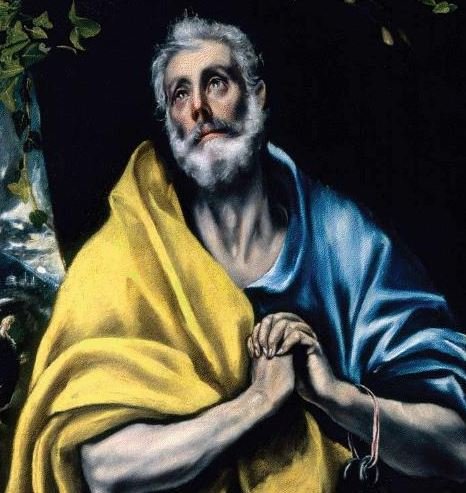
Greek painter El Greco’s depiction of Peter, titled “The tears of Saint Peter”
Peter in the Ministry of Jesus
Throughout Jesus’ ministry, Peter emerged as a leader among the disciples. He was often the first to speak and take action, exemplified by his confession of Jesus as the Messiah in Caesarea Philippi (Matthew 16:16). Peter witnessed key events, such as the Transfiguration and Jesus walking on water. Although his faith faltered momentarily during the latter event, his role as a devoted follower remained unquestioned.
Denial and Redemption
Despite his prominence, Peter displayed human frailty during Jesus’ arrest. As foretold by Jesus, Peter denied knowing Him three times before the rooster crowed. This act of denial was followed by deep remorse, as depicted in the Gospels. After Jesus’ resurrection, Peter was forgiven and reinstated through the famous “Feed my sheep” dialogue, symbolizing his restored role as a shepherd of the Church.
Leadership in the Early Church
Peter became the foremost leader of the early Christian community after Jesus’ ascension. In Jerusalem, he delivered the first public sermon at Pentecost, converting thousands to Christianity. His leadership extended to resolving disputes, such as the acceptance of Gentile converts without requiring adherence to Jewish customs. This decision marked a turning point in the expansion of Christianity beyond Jewish communities.
Connection to Rome
Christian tradition holds that Peter traveled to Rome, where he played a foundational role in organizing the Church. His presence in Rome is supported by writings from early Church Fathers, such as Irenaeus and Clement of Alexandria. Peter’s eventual martyrdom in Rome under Emperor Nero further solidified his association with the city, making it a central hub of early Christianity.
Martyrdom and Legacy
Peter was crucified in Rome around AD 64–68 during Nero’s persecution of Christians. According to tradition, he requested to be crucified upside down, considering himself unworthy to die in the same manner as Jesus. His burial site became the foundation for St. Peter’s Basilica, a major pilgrimage destination. The site reflects his enduring legacy as a cornerstone of the Church.

A depiction of Saint Peter by Flemish artist Peter Paul Rubens.
Writings and Attributions
Two epistles in the New Testament, 1 Peter and 2 Peter, are traditionally attributed to him. These texts offer guidance on faith, perseverance, and leadership. However, modern scholarship debates their authorship, suggesting they may have been written by followers or later Christians inspired by Peter’s teachings.
Depictions and Iconography
Peter is often depicted holding keys, symbolizing the “keys of the kingdom of heaven” given to him by Jesus (Matthew 16:19). He is also represented with a rooster, referencing his denial, or a fishing net, highlighting his former occupation and spiritual mission as a “fisher of men.”
Peter in Different Christian Traditions
- Catholicism: Recognizes Peter as the first Pope and the leader of the Apostolic succession.
- Eastern Orthodoxy: Honors him as a “preeminent apostle” while emphasizing his role as one among equals.
- Protestantism: Views Peter as a key figure but disputes the notion of papal supremacy.
- Oriental Orthodoxy and Other Traditions: Revere Peter’s contributions while interpreting his role within their theological frameworks.
Peter’s Role in Christian Theology
Peter is regarded as a symbol of faith and forgiveness. His journey from denial to redemption reflects the transformative power of Christ’s grace. His leadership exemplifies humility, dedication, and the universality of the Christian message.
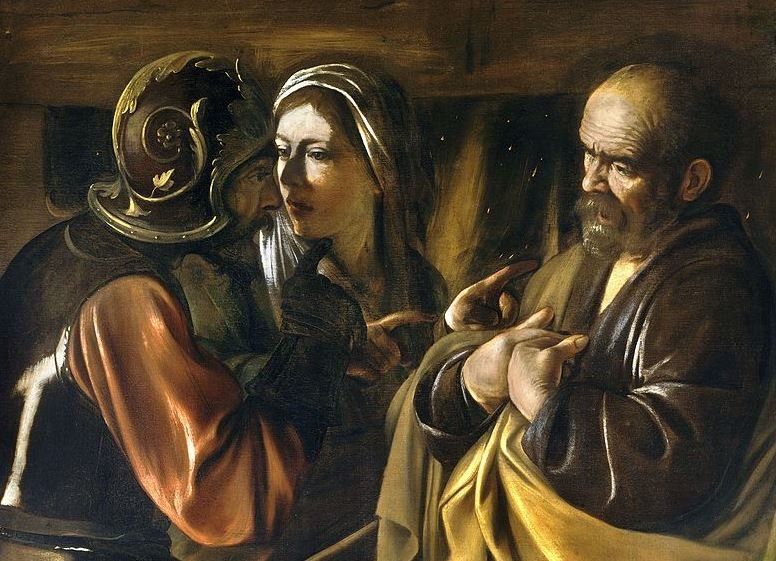
“The Denial of Saint Peter” by Italian painter Caravaggio.
Legacy in Literature and Apocrypha
Beyond canonical texts, Peter is associated with several apocryphal works, including the Gospel of Peter and the Acts of Peter. These writings, while not considered authoritative, offer insights into early Christian traditions and beliefs about Peter’s role.
History of the Catholic Church: How and When Did Catholicism Begin?
Questions and Answers
What role did Peter play in early Christianity?
Peter was a fisherman called by Jesus to be an apostle. He became a central figure, recognized for his leadership and missionary efforts, including founding the Church of Antioch and playing a key role in the Church of Rome.
What is Peter’s significance in Catholicism?
Catholics view Peter as the first bishop of Rome (the first pope), holding the “keys of the kingdom” as bestowed by Jesus in Matthew 16:18–19, which underscores his foundational role in the Church.
How did Saint Peter die?
According to Christian tradition, Peter was martyred by crucifixion in Rome under Emperor Nero around 64–68 AD. He is said to have been crucified upside down, feeling unworthy to die in the same manner as Jesus.
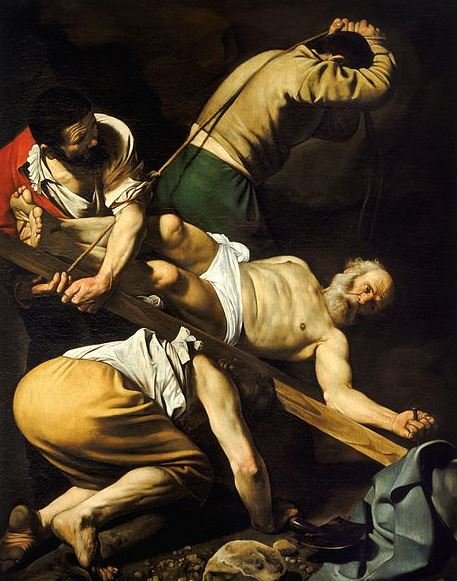
Caravaggio’s artwork titled “The Crucifixion of Saint Peter”
What are the Petrine epistles?
Two New Testament letters, First and Second Peter, are traditionally attributed to Peter, though modern scholars often debate their authorship due to linguistic and theological differences.
What apocryphal writings are linked to Peter?
Several non-canonical texts, such as the Gospel of Peter and Acts of Peter, are associated with his name, though they are considered pseudepigraphal and not historically reliable.
What titles or symbols are associated with Peter?
Peter is often depicted holding keys, symbolizing his role in the “binding and loosing” authority granted by Jesus. He is also referred to as “the Rock” upon which the Church was built.
What is the significance of Peter’s confession of Jesus as the Messiah?
In Matthew 16:16, Peter declares Jesus as “the Messiah, the Son of the living God,” leading to Jesus’ proclamation of Peter as the foundation of the Church. This event is pivotal in Christian theology.





