Sekhemkhet: Pharaoh of the Third Dynasty of Egypt
Sekhemkhet, also known as Sechemchet, was a pharaoh of the 3rd Dynasty during Egypt’s Old Kingdom, reigning from approximately 2648 BC to 2640 BC. His rule, while brief, left an indelible mark on ancient Egyptian history. Often associated with his predecessor, King Djoser, Sekhemkhet is thought to have been either his brother or eldest son. Known under the Hellenized name Tyreis in later records, Sekhemkhet’s reign is a fascinating, albeit enigmatic chapter of Egypt’s past.
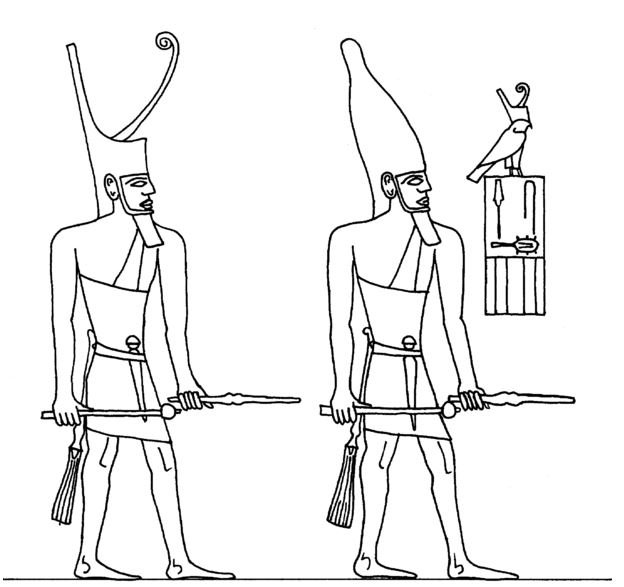
A relief of Sekhemkhet.
Reign of Sekhemkhet
The duration of Sekhemkhet’s reign is estimated at six to seven years. The Turin Canon credits him with a six-year rule, a figure supported by the incomplete construction of his pyramid at Saqqara. Egyptologist Toby Wilkinson, using the Palermo Stone, suggested a slightly longer seven-year reign based on year registers in the Cairo Fragment. Manetho, the ancient historian, corroborates this duration under the name Tyreis. However, some, like Nabil Swelim, speculated on a much longer reign of nineteen years, a hypothesis largely dismissed due to the unfinished state of his pyramid.
Two significant inscriptions at Wadi Maghareh in the Sinai Peninsula offer insights into Sekhemkhet’s reign. These reliefs depict him wearing the Hedjet (white crown) and the Deshret (red crown) of Egypt, symbolizing his rule over Upper and Lower Egypt. One scene shows him in a classic “smiting the enemy” pose, emphasizing his role as a warrior-king. The inscriptions suggest the exploitation of copper and turquoise mines in the region, activities that were vital to Egypt’s economy.
Clay seals found on the island of Elephantine bear Sekhemkhet’s Horus name and an unusual Nebty name, interpreted by some as “The two ladies are pleased with his name.” However, scholars debate whether this refers to Sekhemkhet himself or an unknown queen, as the precise reading of the Nebty name remains uncertain.
Family and Lineage
Sekhemkhet’s familial connections remain speculative. He may have been the son of Khasekhemwy, the last king of the 2nd Dynasty, and Nimaathap, making him the brother of Djoser. His wife may have been Djeseretnebti, though her name lacks the title of “queen,” leading to disagreements about its interpretation. Despite his brief reign, Sekhemkhet likely had children, though no names or definitive evidence of his offspring have been discovered.
The Buried Pyramid
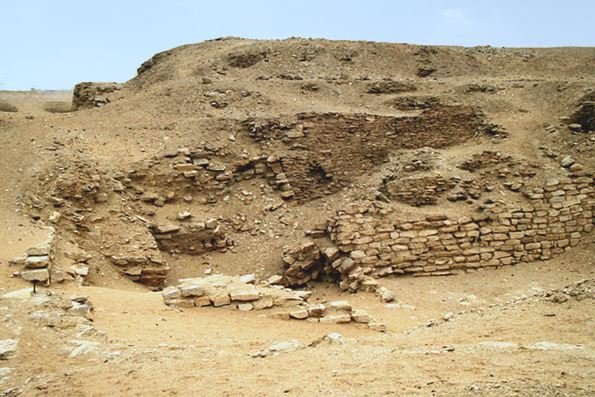
Ruins of the Buried Pyramid.
Sekhemkhet’s most significant architectural legacy is his pyramid, known as the “Buried Pyramid,” located at Saqqara. Intended as a step pyramid, its base measured 378 feet by 378 feet (220 by 220 cubits), and it was planned to rise to a height of 240.5 feet (140 cubits). If completed, it would have rivaled Djoser’s Step Pyramid in grandeur. Like its predecessor, the Buried Pyramid was constructed using limestone blocks. However, only the first step of the pyramid was finished, leaving it as a large square mastaba.
Sekhemkhet’s unfinished pyramid and scant archaeological record may indicate an untimely death, which cut short his ambitions and left many of his projects incomplete.
The pyramid’s burial complex reveals remarkable engineering. The entrance, located on the northern side, features a descending passage 200 feet long. This passage connects to a vertical shaft, which would have been accessible from the second step had the pyramid been completed. The subterranean structure includes a U-shaped gallery with 120 magazines, resembling a comb-like layout. These galleries, however, were left unfinished.
The burial chamber, measuring 29 by 17 feet with a height of 15 feet, housed an alabaster sarcophagus with an unusual sliding door mechanism. Despite its sealed state, the sarcophagus was found empty, sparking debates about whether the king was ever buried there or if the tomb was looted in antiquity.
Treasures of the Tomb
During the excavation of the Buried Pyramid in 1952, Egyptian archaeologist Zakaria Goneim unearthed a small trove of treasures. Among the most notable finds were:
- Gold Bracelets: A set of 21 intricately crafted gold bracelets that had likely escaped detection by ancient tomb robbers.
- Shell-shaped Gold Container: This delicate artifact, measuring 1.4 inches in length, is currently displayed in the Egyptian Museum in Cairo. Its exquisite craftsmanship reflects the skill of Old Kingdom artisans.
These items highlight the wealth and sophistication of Sekhemkhet’s time, even as the king’s burial site remained incomplete.
The Southern Tomb and Necropolis Complex
The necropolis of Sekhemkhet includes the enigmatic Southern Tomb, a structure with a base measuring approximately 105 by 52 feet. Its subterranean section features a narrow corridor leading to a double chamber. In 1963, archaeologist Jean-Philippe Lauer discovered the burial of a two-year-old child in this tomb. The identity of the child remains unknown, but it is certain that the burial was not Sekhemkhet himself, as he was always depicted as an adult.
Sekhemkhet’s brief reign, though overshadowed by the achievements of Djoser, offers valuable insights into the early development of pyramid construction and the political dynamics of the 3rd Dynasty.
Sekhemkhet’s pyramid complex was enclosed by a niched wall, 1,850 feet long, 607 feet wide, and 33 feet high. The exact layout of the necropolis remains uncertain due to its incomplete state. Egyptologists speculate that it would have included a mortuary temple and a serdab (a chamber for the king’s ka statue). However, these structures have not been preserved, likely due to stone looting in antiquity.
Frequently Asked Questions
What is known about Sekhemkhet’s reign duration?
Most Egyptologists agree his reign lasted six to seven years, based on evidence from the Turin Canon and the Palermo Stone. Nabil Swelim’s proposed 19-year reign is generally rejected due to the unfinished state of his pyramid.
What artifacts and inscriptions are linked to Sekhemkhet?
Two inscriptions at Wadi Maghareh depict Sekhemkhet wearing crowns and smiting an enemy, indicating his involvement in mining copper and turquoise in Sinai. Clay seals bearing his Horus and Nebty names were also found at Elephantine.

Who was Sekhemkhet’s family?
Sekhemkhet’s wife might have been Djeseretnebti, though her name appears without queenly titles. He may have been a son of Khasekhemwy and Nimaathap, making him Djoser’s brother. No names of his children have been found.
What is Sekhemkhet’s pyramid?
Known as the “Buried Pyramid,” it was an unfinished step pyramid at Saqqara. Planned with six or seven steps, only the first step was completed. Its base measures 378 feet per side, and it was intended to reach a height of 240.5 feet.
What was found in Sekhemkhet’s burial chamber?
An alabaster sarcophagus, sealed but empty, was discovered. Debate remains whether his body was removed or buried elsewhere. Gold artifacts, including bracelets and a shell-shaped container, were also found, likely missed by ancient tomb robbers.
What other structures existed in his necropolis?
The pyramid complex included a niched enclosure wall and a Southern Tomb. In the latter, a toddler’s burial was found, though it could not have been Sekhemkhet. Other cultic buildings likely existed but were destroyed over time.