Shinar in Ancient Mesopotamia
Shinar, known in Hebrew as Šinʿār (שִׁנְעָר), is a term found in the Hebrew Bible that refers to the southern region of Mesopotamia, encompassing areas central to early civilizations. This region, often equated with Babylonia, holds significant historical and theological importance, bridging biblical narratives and ancient Mesopotamian history.
Over time, Shinar has become synonymous with the cradle of civilization, linking it to prominent cities like Babylon, Erech (Uruk), and Akkad.

Shin’ar, mentioned in the Hebrew Bible, refers to the southern region of Mesopotamia. Image: Cities of Mesopotamia in the 2nd millennium BCE
The Biblical Context of Shinar
Shinar appears multiple times in the Hebrew Bible, establishing its identity as a region of cultural, political, and religious importance. It is mentioned as the location of Nimrod’s kingdom, the site of the Tower of Babel, and a place associated with significant biblical events.
- Genesis 10:10: Shinar is identified as part of Nimrod’s kingdom, which includes cities like Babel (Babylon), Erech (Uruk), Akkad, and Calneh. This verse situates Shinar at the heart of Mesopotamian civilization.
- Genesis 11:2: The narrative of the Tower of Babel places the plain of Shinar as the site where humanity, unified by a single language, attempted to construct a tower reaching the heavens.
- Genesis 14:1, 9: Shinar is ruled by King Amraphel, who participates in the conflict between regional kings described in the account of Abraham rescuing Lot.
Other biblical references in Joshua 7:21, Isaiah 11:11, Daniel 1:2, and Zechariah 5:11 reinforce Shinar’s identification with Babylonia, using it as a general term for the region.
READ MORE: 9 Greatest Ancient Mesopotamian Cities
Linguistic and Historical Connections
The term Šinʿār has linguistic parallels in Egyptian, Hittite, and other ancient languages, all pointing to southern Mesopotamia. Scholars have debated the origin and etymology of the name, proposing several theories:
Egyptian and Hittite Correlations
The Hebrew Šinʿār is related to the Egyptian Sngr and the Hittite Šanḫar(a), both referring to the southern Mesopotamian region. These linguistic connections suggest that Shinar was recognized as a distinct region by neighboring cultures.
Connection to Sumer
Some scholars have proposed that Šinʿār is a western variant of Šumer, the Akkadian name for Sumer. However, this theory faces philological difficulties, as the original Sumerian name for their land, ki-en-gi(-r), does not align easily with Šinʿār.
Association with the Kassite Tribe Šamharu
Another hypothesis links Shinar to the Kassite tribe known as the Šamharu. This tribe’s name may have been generalized to refer to Babylonia during Kassite rule.
Sayce’s Comparison to Other Names
In the 19th century, Assyriologist A.H. Sayce compared Shinar to various ancient names, such as Sangara and Sanhar, found in Egyptian and Amarna records. He also connected it to the Greek Singara and the modern Sinjar region in Upper Mesopotamia. Although Sayce initially placed Shinar in Upper Mesopotamia, he acknowledged that biblical evidence pointed to its location in the south.
Albright’s Identification with Khana
W.F. Albright suggested that Shinar might correspond to the Kingdom of Khana, a region in Mesopotamia during the early second millennium BCE. This theory further situates Shinar within the historical framework of Mesopotamian civilization.
Shinar in the Context of Mesopotamian Civilization
Shinar, as described in the Bible, encompasses key cities and regions that were central to Mesopotamian culture, politics, and religion. The following cities are explicitly linked to Shinar:
Babel (Babylon)
As the capital of the Neo-Babylonian Empire, Babylon was a major center of power, culture, and religion. The city’s association with Shinar underscores its importance in both biblical and historical contexts.
Erech (Uruk)
One of the oldest cities in the world, Uruk played a critical role in the development of urban civilization. Its inclusion in the biblical description of Shinar highlights the region’s ancient significance.
Akkad
Akkad was the capital of the Akkadian Empire, one of the earliest empires in history. Its connection to Shinar links the biblical narrative to Mesopotamia’s imperial heritage.
Calneh
Although less certain in its historical identification, Calneh is mentioned alongside these prominent cities, reinforcing Shinar’s status as a hub of ancient civilization.
Shinar and the Tower of Babel
The Tower of Babel, one of the most iconic stories in Genesis, is set on the plain of Shinar. The narrative describes humanity’s attempt to build a tower reaching the heavens, symbolizing human ambition and unity. God’s intervention to confuse their language and scatter them across the earth emphasizes the theological themes of divine sovereignty and the limitations of human ambition.
Shinaris a biblical term referencing southern Mesopotamia, an area central to early civilizations, including Babylonia.
The story of Babel is often linked to Mesopotamian ziggurats, particularly Etemenanki, the great ziggurat of Babylon dedicated to the god Marduk. These towering structures, designed to connect heaven and earth, were central to Mesopotamian religious practices and likely inspired the biblical account.
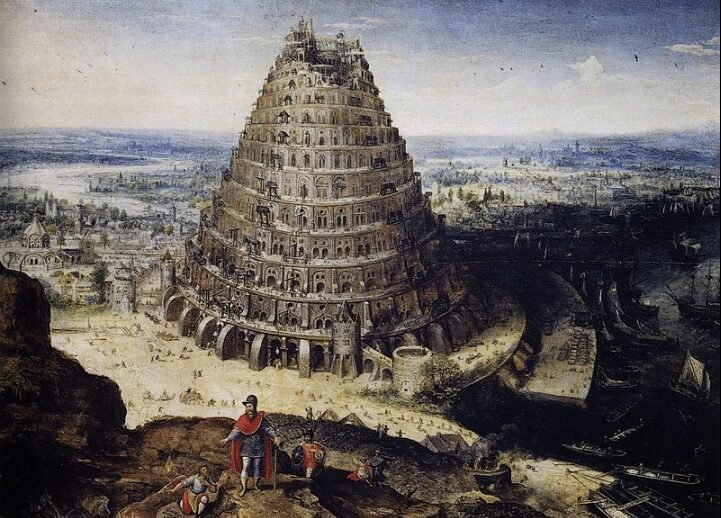
Tower of Babel, by Flemish painter Lucas van Valckenborch, 1594, Louvre Museum
Shinar in the Book of Jubilees
The Book of Jubilees, a Jewish text, provides additional context for Shinar:
- Jubilees 9:3: Assigns Shinar to Ashur, the son of Shem, in its division of territories among Noah’s descendants.
- Jubilees 10:20: Describes the Tower of Babel’s construction using bitumen sourced from Shinar, highlighting the region’s natural resources and engineering capabilities.
Shinar in Popular Culture
The name Shinar, or its Greek form Sennaar, continues to inspire modern media. For example, the video game Chants of Sennaar draws on the Tower of Babel narrative, reflecting Shinar’s enduring symbolic power in exploring themes of communication and unity.
Theological and Cultural Significance
Shinar holds theological significance as a setting for key biblical events and as a symbol of human ambition and divine intervention. Its association with the Tower of Babel underscores themes of unity, pride, and the fragmentation of humanity. Additionally, its identification with Mesopotamia ties the biblical narrative to historical civilizations, bridging faith and history.
The name, rendered as Šīnʿār in Hebrew and Sennaár in the Septuagint, is associated with the biblical location of early civilizations like Babel and significant ancient Mesopotamian cities.
In cultural terms, Shinar represents a nexus of ancient innovation and influence. Its cities were among the first to develop writing, monumental architecture, and centralized governance, shaping the course of human history.
Conclusion
Shinar, as a biblical term for southern Mesopotamia, serves as a vital link between the biblical world and the historical civilizations of the ancient Near East. Its linguistic connections, role in biblical narratives, and association with Mesopotamian cities like Babylon and Uruk underscore its importance.
Frequently Asked Questions
What linguistic connections does Shinar have with other cultures?
The Hebrew Šinʿār is linked to the Egyptian Sngr and Hittite Šanḫar(a), all referring to southern Mesopotamia. Some scholars associate it with Sumer (ki-en-gi-r) or the Kassite tribe Šamharu.
What alternative hypothesis exists about Shinar’s etymology?
One hypothesis connects Shinar to the Kassite tribe Šamharu, whose name may have become a general term for Babylonia over time.
How is Shinar portrayed in the Hebrew Bible?
Shinar is mentioned eight times in the Hebrew Bible, consistently referring to Babylonia. It is associated with cities like Babylon, Erech (Uruk), and Akkad, highlighting its Mesopotamian location.
Which biblical passages reference Shinar?
Notable references include:
Genesis 10:10: Describes Nimrod’s kingdom, encompassing cities in Shinar.
Genesis 11:2: Identifies Shinar as the site of the Tower of Babel.
Genesis 14:1, 9: Names Amraphel as king of Shinar.
What does the Book of Jubilees say about Shinar?
Jubilees 9:3: Assigns Shinar to Ashur, son of Shem.
Jubilees 10:20: Mentions bitumen from Shinar used in the construction of the Tower of Babel.
How does Shinar relate to the Tower of Babel?
Genesis 11:2 identifies Shinar as the location of the plain where the Tower of Babel was built, emphasizing its role in biblical narratives.
What significance does Shinar hold in popular culture?
Shinar’s Greek name, Sennaar, appears in the video game Chants of Sennaar, which draws inspiration from the Tower of Babel story.
Why is Shinar historically significant?
Shinar represents southern Mesopotamia, a cradle of early civilization. Its association with major cities like Babylon and Erech underscores its importance in ancient history and biblical tradition.
Reasons why Mesopotamia is often called the “Cradle of Civilization”





