Slavery in America: Timeline
Slavery in America is a dark and complex chapter of history that began with the arrival of African slaves in the early 17th century and continued until the Emancipation Proclamation in 1863 and the end of the Civil War in 1865. This timeline provides an overview of key events and milestones that shaped the institution of slavery in America.
Early Beginnings: 1619-1700
1619: The beginning of slavery in America is often marked by the arrival of 20 enslaved Africans in Jamestown, Virginia, brought by English privateers who had seized them from a Portuguese slave ship. This marked the start of what would become a massive and brutal system of forced labor.
1641: Massachusetts becomes the first colony to legalize slavery through legislation. Other colonies soon follow suit, institutionalizing slavery as part of their economic and social systems.
1662: Virginia enacts a law stating that children born to enslaved mothers inherit their mother’s status, ensuring the perpetuation of slavery through generations.
What were the early European settlements that failed in North America?
Growth of Slavery: 1700-1776
1705: The Virginia Slave Codes are established, consolidating and codifying existing laws regarding slavery. These codes severely restrict the rights of enslaved people and free Blacks, entrenching the racial hierarchy.
1739: The Stono Rebellion, one of the earliest and largest slave uprisings in the colonies, occurs in South Carolina. The rebellion is brutally suppressed, leading to harsher laws and greater restrictions on enslaved people.
1775: As the American Revolution begins, both the British and American sides offer freedom to enslaved people who join their forces. Thousands of enslaved individuals seek freedom by fighting for either side.

Revolutionary War and the Early Republic: 1776-1800
1776: The Declaration of Independence, with its assertion that “all men are created equal,” sparks debates about slavery’s place in the new nation. Despite these ideals, slavery remains entrenched, particularly in the southern states.
1787: The Northwest Ordinance prohibits slavery in the Northwest Territory, setting a precedent for the limitation of slavery’s expansion. The same year, the U.S. Constitution is drafted, with compromises that protect slavery, such as the Three-Fifths Compromise and the Fugitive Slave Clause.
1793: Eli Whitney’s invention of the cotton gin revolutionizes cotton production, making slavery more profitable and leading to a dramatic increase in the demand for enslaved labor.
Expansion and Entrenchment: 1800-1830
1808: The United States bans the importation of slaves from Africa, although the domestic slave trade continues to flourish, and illegal smuggling of enslaved Africans persists.
1820: The Missouri Compromise attempts to maintain a balance between slave and free states, admitting Missouri as a slave state and Maine as a free state while banning slavery in the remaining Louisiana Purchase territory north of the 36°30′ parallel.
1822: Denmark Vesey, a free Black man, plans a large-scale slave rebellion in Charleston, South Carolina. The plot is discovered, and Vesey and many of his co-conspirators are executed, leading to stricter laws and increased paranoia among slaveholders.
Abolitionist Movement and Growing Tensions: 1830-1850
1831: Nat Turner’s Rebellion in Virginia results in the deaths of about 60 white people and leads to a brutal crackdown. Hundreds of enslaved and free Blacks are killed in the aftermath, and Southern states pass even harsher laws to prevent future revolts.
1833: The American Anti-Slavery Society is founded by William Lloyd Garrison and other abolitionists, advocating for the immediate emancipation of all enslaved people. The movement gains momentum, especially in the northern states.
1845: Frederick Douglass, an escaped slave, publishes his autobiography, “Narrative of the Life of Frederick Douglass, an American Slave,” bringing firsthand accounts of slavery’s horrors to a wide audience and becoming a leading voice in the abolitionist movement.
1850: The Compromise of 1850 includes the Fugitive Slave Act, which mandates that escaped slaves found in free states must be returned to their enslavers. This law incites outrage in the North and fuels the abolitionist movement.
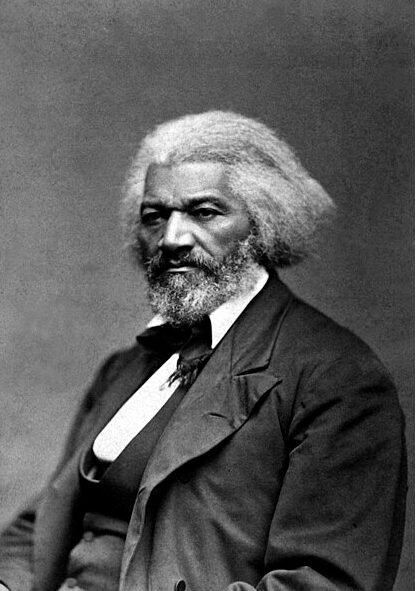
Image: An 1879 portrait of Frederick Douglass.
The Road to Civil War: 1850-1861
1852: Harriet Beecher Stowe‘s novel “Uncle Tom’s Cabin” is published, vividly depicting the brutality of slavery and galvanizing anti-slavery sentiment across the North.
1854: The Kansas-Nebraska Act allows new territories to decide for themselves whether to allow slavery, leading to violent conflict known as “Bleeding Kansas” as pro-slavery and anti-slavery settlers clash.
1857: The Dred Scott decision by the U.S. Supreme Court declares that African Americans are not citizens and have no rights, and that Congress has no authority to ban slavery in the territories. This decision further polarizes the nation.
1859: Abolitionist John Brown leads a raid on the federal armory at Harpers Ferry, intending to incite a slave rebellion. The raid fails, and Brown is captured and executed, but he becomes a martyr for the abolitionist cause.
American Civil War and Emancipation: 1861-1865
1860: Abraham Lincoln is elected president on a platform opposing the expansion of slavery, prompting several southern states to secede from the Union and form the Confederate States of America.
1861: The Civil War begins as Confederate forces attack Fort Sumter in South Carolina. The conflict is fundamentally rooted in the issue of slavery and the southern states’ desire to maintain it.
1862: Lincoln issues the preliminary Emancipation Proclamation, declaring that enslaved people in the Confederate states will be free as of January 1, 1863.
1863: The Emancipation Proclamation takes effect, formally freeing enslaved people in the Confederate states. Although it does not end slavery nationwide, it transforms the war into a fight for freedom and allows Black men to enlist in the Union Army.
1865: The Civil War ends with the defeat of the Confederacy. The Thirteenth Amendment to the Constitution is ratified, abolishing slavery throughout the United States.
Reconstruction and Beyond: 1865-1900
1865: The Freedmen’s Bureau is established to assist formerly enslaved people in the transition to freedom, providing food, housing, education, and legal assistance. However, the Bureau faces significant resistance and limited resources.
1866: The Civil Rights Act of 1866 grants citizenship and equal rights to all persons born in the United States, regardless of race. This is the first federal law to affirm civil rights and is a precursor to the Fourteenth Amendment.
1867: Reconstruction Acts are passed, dividing the South into military districts and requiring states to draft new constitutions guaranteeing Black men the right to vote before being readmitted to the Union.
1868: The Fourteenth Amendment is ratified, providing equal protection under the law and extending citizenship to all persons born or naturalized in the United States, including formerly enslaved people.
1870: The Fifteenth Amendment is ratified, prohibiting the denial of the right to vote based on race, color, or previous condition of servitude. However, various tactics, such as literacy tests and poll taxes, are later used to disenfranchise Black voters.
1877: Reconstruction ends with the Compromise of 1877, in which federal troops are withdrawn from the South. This marks the beginning of the Jim Crow era, characterized by the legal and social segregation of African Americans and widespread disenfranchisement.
Legacy and Continued Struggle for Civil Rights: 1900-Present
1896: The Supreme Court’s decision in Plessy v. Ferguson upholds the constitutionality of racial segregation under the “separate but equal” doctrine, legitimizing decades of discriminatory practices and laws.
1915: The film “The Birth of a Nation” is released, glorifying the Ku Klux Klan and perpetuating racist stereotypes. It highlights the ongoing struggle for African Americans to combat racial prejudice and violence.
1954: The Supreme Court’s decision in Brown v. Board of Education overturns Plessy v. Ferguson, declaring that racial segregation in public schools is unconstitutional. This decision marks a significant victory in the Civil Rights Movement.
1964: The Civil Rights Act of 1964 is signed into law, prohibiting discrimination based on race, color, religion, sex, or national origin and ending segregation in public places. This landmark legislation represents a major step towards equality.
1965: The Voting Rights Act of 1965 is enacted, eliminating barriers to voting for African Americans, such as literacy tests and poll taxes. This act significantly increases voter registration and participation among Black citizens.
2008: Barack Obama is elected as the first African American president of the United States, symbolizing a significant milestone in the nation’s history and progress towards racial equality.
2020: The murder of George Floyd by a police officer in Minneapolis sparks worldwide protests against racial injustice and police brutality, highlighting the ongoing struggle for civil rights and equality.
2021: Kamala Harris is the 49th Vice President of the United States, having been sworn in on January 20, 2021. She made history as the first female Vice President, the highest-ranking female official in U.S. history, and the first African American and first Asian American Vice President.
Thurgood Marshall: Fast Facts, Supreme Court Cases, and Accomplishments





