Slavery in India: History & Major Facts
Slavery in India has a complex and extensive history, evolving from the ancient period to modern times. It has existed in various forms, including bonded labor, human trafficking, and indentured servitude. Despite formal abolition during the colonial period, many forms of exploitation resembling slavery persist in contemporary India.
Below, World History Edu explores the history of slavery in India, focusing on the major periods, facts, and socio-political dynamics that shaped its evolution.
Ancient India and Early Forms of Slavery
The origins of slavery in India are deeply rooted in ancient practices of social hierarchy and servitude. The concept of slavery in ancient India, as documented in early texts, is a subject of scholarly debate. Terms like dāsa and dāsyu have been interpreted in various ways across different periods, often meaning “servant,” “slave,” or even “enemy,” but the precise nature of these terms has been contested.
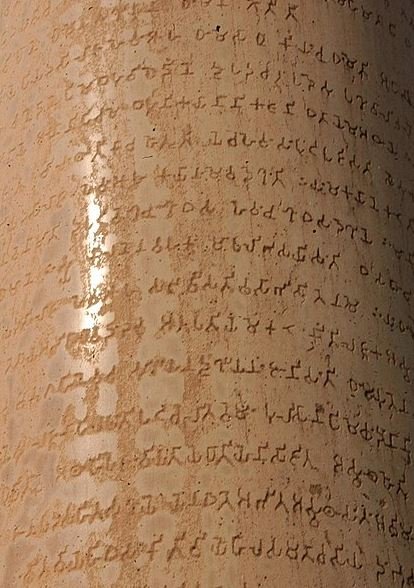
The early history of slavery in India is debated, focusing on terms like dasa and dasyu. Megasthenes claimed slavery was banned in the Maurya Empire, while Ashoka’s edicts mention obligations to slaves. Image: The Delhi-Topra pillar in Delhi, India, showing the edicts of Ashoka.
Early Epigraphy and the Ashokan Edicts
The earliest references to slavery in South Asia come from the 3rd century BCE in the form of the Edicts of Ashoka. These inscriptions, written in multiple languages including Greek and Aramaic, refer to obligations toward slaves (doulous in Greek, avad in Aramaic) and hired workers. Ashoka’s edicts also later banned the trading of slaves within the Maurya Empire, signifying an early attempt to regulate or limit slavery within a large and powerful kingdom.
The Vedic Period and the Rigveda
In the Vedic period (around 1500–500 BCE), the terms dāsa and dāsyu appear frequently in ancient texts such as the Rigveda. These terms have been subject to varying interpretations. Some scholars, like Jamison and Brereton, argue that dāsa and dāsyu in these texts referred to enemies or hostile tribes rather than slaves in the strict sense. Other scholars believe that these terms could indicate a servile status, albeit not in the racialized or chattel slavery sense found in other ancient cultures, such as Greece or Rome.
The ambiguity surrounding the term dāsa extends into later periods. In Pāṇini’s Aṣṭādhyāyī (4th century BCE), dāsa is used in various contexts, sometimes implying a servant or bonded person. However, the specific legal or social status of these individuals remains a matter of debate, as ancient Indian society often blurred the lines between servitude, bondage, and other forms of social subjugation.
Slavery in the Arthashastra and the Manusmriti
By the Common Era, slavery in India was likely well-established. This is supported by the presence of slavery-related regulations in key legal texts such as Kautilya’s Arthashastra (4th century BCE) and the Manusmriti (circa 200 BCE–200 CE). These texts reflect a nuanced understanding of slavery and servitude, regulating the treatment of slaves and laying out conditions for their acquisition and management.
Kautilya’s Arthashastra dedicates significant sections to the institution of slavery. It forbids the enslavement of Aryas (noble classes) but allows the enslavement of non-Aryas, including foreigners, those captured in war, and those sold into slavery due to debt. The text also makes distinctions between different types of servitude, such as bonded labor (where individuals pledged themselves or their families into service to repay debts) and slaves captured through warfare.
The Manusmriti offers similar insights into ancient Indian slavery. While it recognizes the existence of slaves, it also provides a legal framework for their rights and responsibilities, including provisions for the manumission (release) of slaves under specific circumstances. However, it also reinforces a hierarchical social structure in which lower-caste individuals, particularly Shudras, could be subject to servitude or slavery.
Ashoka – Life and Major Accomplishments of the 3rd Mauryan Emperor
Slavery in Medieval India
The arrival of Islamic rulers in India during the medieval period significantly influenced the institution of slavery. Beginning in the 8th century and continuing through the Delhi Sultanate (1206–1526) and Mughal Empire (1526–1857), slavery became an integral part of state-building efforts, particularly as a result of military conquests and the expansion of Islamic rule.
Islamic Invasions and the Delhi Sultanate
During the Islamic invasions of India, large numbers of non-Muslims, particularly Hindus, were captured and enslaved. These slaves were often sold in markets across Central Asia, where they were either absorbed into Islamic societies or used as laborers, soldiers, or concubines. The practice of slavery during this period was part of the broader Islamic world’s use of enslaved labor, with Muslim rulers incorporating the institution into their state apparatus.
The Delhi Sultanate, which ruled over large parts of northern India from the 13th to the 16th centuries, is often cited as a major period in the history of Indian slavery. Sultan Alauddin Khalji, who ruled from 1296 to 1316, is said to have owned tens of thousands of slaves, many of whom were employed in building projects or used in his military campaigns. Ziauddin Barani, a historian of the period, noted that Alauddin’s slave holdings included 50,000 “slave-boys” as well as 70,000 construction slaves.
The enslavement of non-Muslims during the Delhi Sultanate was often justified on the grounds of religious and military conquest. Those who resisted Islamic rule or failed to pay taxes were often captured and enslaved, either being sold into slavery or retained by the sultan’s court. Many of these slaves were forcibly converted to Islam, particularly women and children, who were often raised as Muslims.
The Mughal Empire and Slavery
Under the Mughal Empire, slavery remained a significant institution, though it became more integrated into the social and economic fabric of Indian society. Like their predecessors, the Mughals relied on enslaved labor for a variety of purposes, including agricultural work, military service, and domestic labor. Many of the slaves employed by the Mughals were captured in military campaigns or brought from regions like Central Asia, the Deccan, and Africa.
The Mughal ruler Akbar, known for his relatively progressive policies, attempted to regulate the treatment of slaves. Akbar is said to have freed many slaves and implemented policies aimed at improving their living conditions. However, slavery persisted under subsequent Mughal rulers, with many slaves continuing to serve in elite households, royal courts, and the military.
The Mughal period also saw the importation of African slaves into India, particularly in the Deccan Sultanates. These African slaves, known as Habshis or Sidis, often rose to prominent positions within the military and administrative structures of the Mughal state. The use of African slaves in India reflects the global nature of the Indian Ocean slave trade, which connected India to Africa, the Middle East, and Southeast Asia.
European Colonialism and the Expansion of Slavery
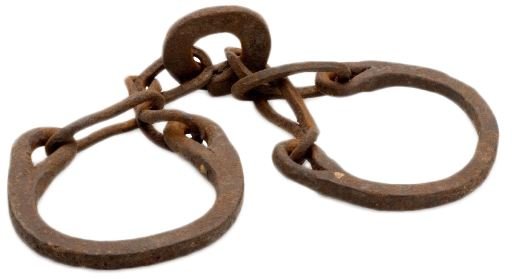
The Portuguese imported African slaves to India between 1530 and 1740. Under European colonialism, slavery continued in India into the 18th and 19th centuries, with Indians trafficked globally.
The arrival of European colonial powers in India—beginning with the Portuguese in the 16th century, followed by the Dutch, French, and British—marked a new phase in the history of slavery. The European colonial powers not only continued the practice of slavery in India but also expanded it, linking Indian labor to global markets through the Indian Ocean slave trade.
Portuguese Slavery in India
The Portuguese were the first European power to establish a significant presence in India, particularly along the Konkan coast and in Goa. From the early 16th century until the 18th century, the Portuguese actively participated in the slave trade, importing African slaves into their Indian colonies and exporting Indian slaves to other parts of their empire.
The Portuguese relied heavily on enslaved labor in their colonies, using slaves in agricultural estates, domestic households, and military service. African slaves, particularly from the Horn of Africa and Mozambique, were imported into Portuguese India to serve as laborers and servants in Portuguese households. Additionally, Indian slaves were trafficked to other parts of the Portuguese empire, including Brazil and Southeast Asia.
The Portuguese also played a significant role in the Indian Ocean slave trade, which linked Indian labor markets to Africa, the Middle East, and Southeast Asia. This trade in enslaved people became an important source of labor for Portuguese plantations and colonies in other parts of the world.
Dutch, French, and British Colonialism
The Dutch East India Company, like the Portuguese, was heavily involved in the Indian Ocean slave trade. The Dutch imported slaves from Southeast Asia, Africa, and India to work in their colonies, particularly in Indonesia and South Africa. Slaves were also trafficked from India to other parts of the Dutch empire, where they were employed as laborers in plantations, factories, and households.
The French and British also engaged in the slave trade in India, particularly during the 18th and 19th centuries. The French imported slaves from Africa to work in their colonies in French India, such as Pondicherry, and exported Indian slaves to their Caribbean colonies.
The British, who became the dominant colonial power in India by the 19th century, also participated in the Indian Ocean slave trade. However, with the rise of the abolitionist movement in the 19th century, British policy toward slavery began to change. In 1833, Britain passed the Slavery Abolition Act, which officially abolished slavery in British colonies. However, India, being under the administration of the East India Company rather than the Crown, was initially excluded from this act.
Abolition of Slavery in Colonial India
The formal abolition of slavery in India occurred in stages during the colonial period. The Indian Slavery Act of 1843, passed by the East India Company, was one of the first laws to officially prohibit slavery in India. This act outlawed the buying, selling, and ownership of slaves, though it did not completely eradicate the practice of bonded labor, which continued in many parts of the country.
In 1848, slavery was abolished in French India, followed by the formal abolition of slavery in British India in 1861. However, despite these legal prohibitions, various forms of servitude and bonded labor persisted, particularly in rural areas, where landlords and elites continued to exploit lower-caste and impoverished individuals.
The Indentured Labor System
One of the major legacies of slavery in colonial India was the rise of the indentured labor system. Following the abolition of slavery, European colonial powers sought alternative sources of labor for their plantations, particularly in the Caribbean, Africa, and Southeast Asia. This led to the development of the indentured labor system, in which Indian workers, known as girmitiyas, were recruited to work under fixed-term contracts (usually five years) in foreign colonies.
Between the mid-19th century and the early 20th century, more than a million Indians were sent abroad as indentured laborers. These workers were primarily recruited from impoverished regions of India and were often promised better wages and conditions in the colonies. However, the reality of indentured labor was harsh, with many workers facing grueling conditions, long hours, and limited freedoms.
Indentured labor was particularly prevalent in British colonies such as Mauritius, Fiji, Trinidad, and Guyana, where Indian workers replaced the formerly enslaved populations on sugar plantations. While the indentured labor system was technically distinct from slavery, the conditions faced by many indentured laborers were so exploitative that historians often describe the system as “slavery by another name.”
Modern Slavery in India
Although slavery was formally abolished in India during the 19th century, many forms of exploitation resembling slavery persist in the country today. Modern slavery in India takes various forms, including bonded labor, human trafficking, child labor, and forced marriage. According to the 2018 Global Slavery Index, India accounts for approximately 8 million of the world’s 40 million modern slaves, making it one of the countries with the highest numbers of enslaved people.
Bonded Labor
Bonded labor, in which individuals are forced to work to repay debts, remains one of the most prevalent forms of modern slavery in India. Despite being outlawed by the Bonded Labour System (Abolition) Act of 1976, bonded labor continues to affect millions of people, particularly in rural areas where poverty and illiteracy are widespread. Bonded laborers are often trapped in a cycle of debt, unable to repay what they owe and forced to work in exploitative conditions for little or no pay.
Bonded labor is especially common in sectors such as agriculture, brick kilns, construction, and textiles, where large numbers of laborers work under harsh conditions with minimal oversight. Dalits and members of other marginalized communities are particularly vulnerable to bonded labor, as they often lack the social and economic resources to escape these exploitative systems.
Human Trafficking and Forced Labor
Human trafficking is another significant issue in India, with thousands of men, women, and children trafficked both within the country and across international borders each year. Trafficked individuals are often forced into various forms of exploitation, including forced labor, domestic servitude, and sex trafficking. Women and children are particularly vulnerable to trafficking, with many trafficked for sexual exploitation or forced into domestic labor.
The rise of human trafficking in India has been driven by factors such as poverty, lack of education, and gender inequality. Traffickers often prey on vulnerable individuals, promising them jobs or opportunities abroad, only to force them into exploitative situations. Trafficking rings operate both within India and internationally, with victims transported to countries in the Middle East, Southeast Asia, and beyond.
Child Labor
Child labor is another form of modern slavery that persists in India, despite laws prohibiting the employment of children in hazardous industries. According to the International Labour Organization (ILO), millions of children in India work in industries such as agriculture, mining, textiles, and domestic work. Many of these children are forced to work in dangerous and exploitative conditions, often for little or no pay.
Child labor is closely linked to poverty and lack of access to education, with many children forced to work to support their families. In some cases, children are trafficked or sold into bonded labor by their parents, who are desperate for money. While the Indian government has made efforts to combat child labor, enforcement of existing laws remains weak, and many children continue to work in exploitative conditions.
Forced Marriage
Forced marriage is another form of modern slavery affecting women and girls in India. In many cases, young girls are forced into marriages by their families, often as a means of settling debts or resolving disputes. Once married, these girls are often subjected to domestic servitude, forced labor, and sexual exploitation by their husbands and in-laws.
Forced marriage is particularly prevalent in rural areas, where traditional customs and gender inequality remain deeply entrenched. While forced marriage is illegal in India, the practice persists in many communities, and enforcement of the law is often weak.
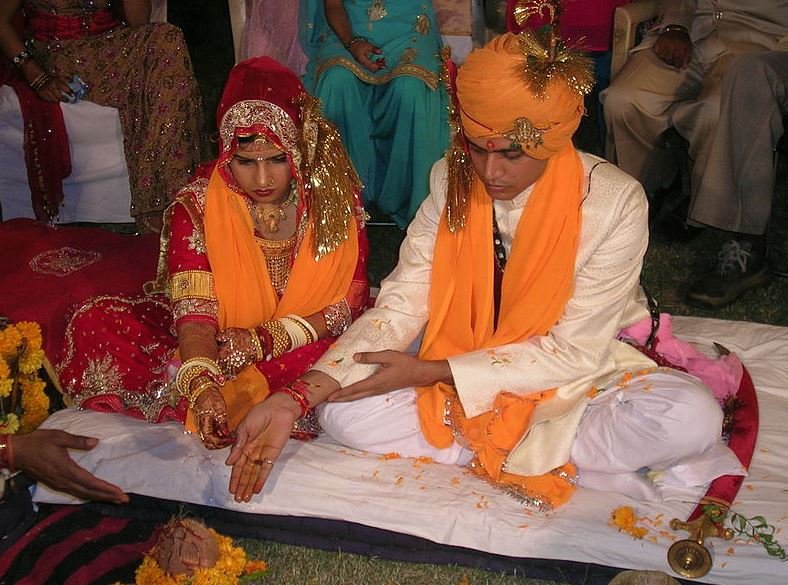
Image: A Hindu marriage ceremony
Questions and Answers
What is the earliest surviving South Asian epigraphy that mentions obligations to slaves and workers?
The earliest surviving South Asian epigraphy is the Edicts of Ashoka from the mid-3rd century BCE, written in Greek and Aramaic, which mention obligations to slaves (doulous in Greek, avad in Aramaic) and hired workers. The edicts later prohibited the trading of slaves within the Maurya Empire.
What is the significance of the term dāsa in ancient Indian texts?
The term dāsa appears in Pāṇini’s Aṣṭādhyāyī (4th century BCE) and has been interpreted variably as “slave” or “servant,” though scholars debate its precise meaning. In the Rigveda, dāsa and dāsyu are often associated with enemies rather than slaves.
Some scholars argue that dāsa and dāsyu in the Rigveda are more associated with enemies than slaves, and they reject interpretations that suggest racial distinctions or slavery in early Vedic society.
Why didn’t the Great Mongol Emperor Genghis Khan invade India?
How was slavery likely established in India by the Common Era?
Slavery was likely established in India by the Common Era, as supported by texts like the Arthashastra and the Manusmriti. These texts suggest that slavery was common, though scholars debate the extent and nature of servitude.
Indian historian Upinder Singh believes that slavery, especially as a result of war or debt, was familiar in ancient India. She notes that terms like dāsa and dāsi later came to denote male and female slaves.
Other scholars argue that the dāsa tribes were integrated into Vedic social systems, and some members of these tribes could rise to prestigious roles, such as priests, warriors, or chiefs.
How does Kautilya’s Arthashastra approach slavery?
Kautilya’s Arthashastra discusses slavery, prohibiting the enslavement of Aryas but allowing it for non-Aryas. Scholars debate the extent of servitude and the rights granted to slaves in this text.
How did Islamic invasions influence slavery in India?
Islamic invasions from the 8th to 12th centuries led to large-scale enslavement of non-Muslims, particularly Hindus. These slaves were sold across Central Asia, and under the Delhi Sultanate and Mughal rule, many were used for labor and forcibly converted to Islam.
What role did European colonial powers play in the continuation of slavery in India?
European colonial powers, including the Portuguese, Dutch, and British, continued the practice of slavery in India. They imported African slaves and exported Indian slaves to international markets. Slavery was eventually outlawed, starting with the Indian Slavery Act of 1843 and later in French and British India.
What system replaced slavery after its formal abolition in India?
After the formal abolition of slavery, indentured labor systems replaced outright slavery. Millions of Indians, known as girmitiyas, were sent to European colonies under exploitative labor contracts, often facing harsh conditions resembling slavery.
How has slavery evolved in modern India?
In modern India, slavery has evolved into forms of exploitation such as bonded labor, human trafficking, and forced marriage. India remains one of the countries with the highest numbers of people affected by modern slavery, with millions still in bonded labor or other forms of forced servitude.
Today, modern slavery in India includes bonded labor, child labor, human trafficking, forced marriage, and sexual slavery. These practices continue to affect millions across the country.