Summary of the Haitian Revolution (1791-1804)
The Haitian Revolution is an underrated epic ignited by the French Revolution. Abolitionist slaves successfully overcame all odds to secure the freedom and independence of their country, paving the way for countless other people to attain their own liberation. The excesses of the despicable treatment were the main driving force behind the success of the Haitian Revolution, sparking the bloodiest and most successful slave uprising in history.
Saint Dominigue: France’s wealthiest overseas possession in the Atlantic

Saint Dominigue, as Haiti was then known, rose to prominence as France’s richest overseas colony in the 18th century. This was thanks to the island’s production of coffee, cotton, indigo, and sugar, using slave labor, who were treated in some cases worse than animals.
St. Domingue was the sugar capital of the world and because of the grueling and savage intentions of slavery, it was easy for slave masters to ignore the pain and agony slaves endured to ensure this industry was consistently thriving.
One of the most grueling experiences for the slaves, was when the tiny saw-like features on the leaves of the sugar cane would make bitter bruises and even deep cuts into their skin. The sweat would burn profusely and become very unbearable for working.
The brutal laws governing the system of slavery allowed the slow violent responses of lashes and whipping, having limbs cut off or the rubbing of pepper in wounds, or quick aggressive punishment such as being shot.
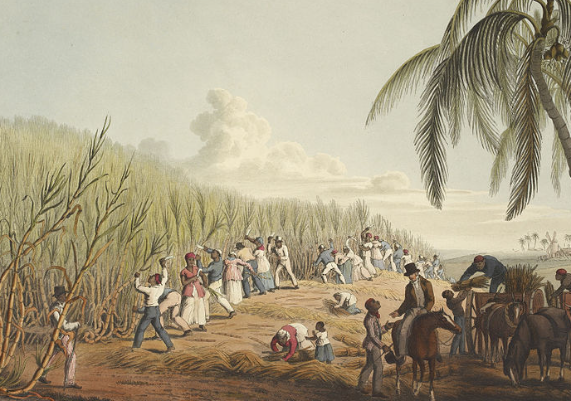
Saint Dominigue was the most prosperous colony in the Atlantic continent. Its wealth was found in human capital by way of slaves.
Toussaint L’Ouverture
One prominent free slave was the son of an educated slave, Toussaint L’Ouverture. He was born and raised on a plantation, but had the privileged role of learning to read and write. Through his Jesuit connections, he was able to learn some French, but wrote and spoke it poorly and frequently used Haitian Creole and African tribal languages. He rose through the plantation manager’s good graces to become a coachman, healer, and eventually a steward. He attracted admiration and awe as a leader.

A very determined and ambitious man, Toussaint Louverture, although born a slave, had some sort of privileges that his fellow slaves did not have. For starters, he was allowed to read and write, things that permanently changed how he viewed the world. It’s said that he had a very endearing personality, making him a likable figure by the plantation administrators and managers.
Effects of the French Revolution
There were five different sets of interest groups in the colony at the time of the French Revolution, which began in 1789. White plantation owners who controlled the slaves, and small-town whites who worked as teachers, artisans, and shopkeepers. The free people, the slaves, and the fugitives, were all of African heritage. In 1789, there were roughly 30,000 free Black people. They were usually wealthier than the petit blancs because half of them were mulatto. The number of slaves was very nearly 500,000. The slaves who had escaped were known as maroons, they had hidden themselves away in Haiti’s highlands and survived by farming.
A number of revolutionary movements with Haitian roots simultaneously developed as a result of French events of 1789. Because they were prohibited from trading with any other country, the planters were quite disillusioned with France.
Additionally, Saint Dominigue’s white population lacked representation in France. The planters and petit blancs both remained dedicated to the institution of slavery despite their calls for independence. The wealthy affranchis were given citizenship by the French revolutionary government in May 1791, but Haiti’s European population rejected the legislation.
Onset of the slave revolt
Toussaint recognized very little value was given to the lives of the slaves. In 1791, he led an army which fought the French, British and Spanish armies for a period of 12 years. It was major payback time for slave masters who lost the mechanisms of their production, had their houses burnt and experienced a massacre on a huge scale.
Toussaint hesitated for a few weeks before assisting his old master to flee and joining the black forces that were destroying plantations and murdering several white people and mulattoes. He quickly recognized the rebel commanders’ incompetence and mocked their eagerness to reach a settlement with extremist Europeans. A black owner employed Jean Jacques Dessalines as a field hand in 1791. He joined the slave uprising that erupted in the colony during the upheaval. He made a name for himself as a lieutenant of the black activist Toussaint Louverture in the ensuing years.
In April 1792, the French assembly conferred citizenship to all affranchis. By then, L’Overture and his troops were in charge of one-third of the island. While pursuing his own political and military goals, which included negotiating with the British, L’Overture maintained a nominal allegiance to France. Despite French reinforcements, the rebels’ control over a larger portion of the province and the level of hostility on both sides increased.
A new nation
Toussaint Louverture and his troops eventually successfully created a nation by driving the invaders out, ending not only the colony’s enslavement but also French rule. The rebels destroyed 184 sugar estates in the north in less than 8 days, costing the proprietors millions of French livres. The French colony’s officials were forced to emancipate the slaves by the insurgents within a few years, and revolutionary Paris validated this decision in 1794.
Before the battle stopped, about 24,000 of the 40,000 white people and about 100,000 of the 500,000 black people were dead. Even yet, the ex-slaves were able to repel both the French and British armies that arrived in 1793 to occupy the province and left in 1798 following a string of losses to L’Overture’s soldiers.
Post-Independence
Rival factions tore the nation apart, some of which were supported by British forces from Jamaica or Spanish colonists in Santo Domingo. L’Ouverture took control of the adjacent Spanish colony of Santo Domingo-Dominican Republic, extending the revolution beyond Haiti.
A commissioner from France named Léger-Félicité Sonthonax was dispatched to keep order in 1793 and offered freedom to slaves who joined his army. He soon abolished slavery completely, and the French government ratified his decision the following year.
This was the first and only successful slave revolution in the Americas, but the prospects of a black republic greatly disturbed the French, Spanish and English. The order of master/slave relationships throughout the Americas, including the southern United States, was shockingly challenged by this victory, confirming the greatest fears of masters and the most ardent hopes of slaves. The “Declaration of the Rights of Man” from the French Revolution served as their model.
Dessalines initially complied with the new government when Toussaint was overthrown in 1802 by a French invasion dispatched by Napoleon Bonaparte to retake the colony. Dessalines and other black and mulatto leaders, however, rose out in rebellion in 1803, in response to Napoleon’s announcement that he intended to reinstate slavery which had been outlawed by the French National Convention in 1794.
Dutty Boukman, a Muslim preacher who was from the region of Senegambia – Senegal and Gambia, was taken prisoner and brought to the Caribbean as a slave, first to the island of Jamaica, then to Saint-Domingue, and last to Haiti. He was enslaved to a French plantation owner and worked as a commandeur, and then as a coach driver after attempting to teach other slaves how to read. His English moniker “Book Man” served as the basis for his French name. At this point, the French Revolution had lost ground to the Haitian Revolution.
General Charles Leclerc, his brother-in-law, and 43,000 French soldiers were sent by Napoleon Bonaparte, who was now in charge of France, to seize L’Overture and bring back slavery and French sovereignty. Before consenting to an armistice in May 1802, Toussaint fought Leclerc’s army for several months.
However, the French violated the agreement. L’Ouverture was captured and transported to France, where he died in custody on April 7, in 1803. At the Battle of Vertieres on November 18, 1803, where the French forces were routed, revolutionaries were headed by Jean-Jacques Dessalines, one of L’Overture’s generals and a former slave.
Dessalines proclaimed the country independent and gave it the new name of Haiti on January 1, 1804. The first country to acknowledge its independence was France. Thus, Haiti became the second country in the western hemisphere after the United States to gain independence from a European power and the first black republic in history.

Toussaint Louverture supported the anti-colonial revolution and anti-slavery revolution right to the bitter end.
Effects of the Revolution
The Haitian Revolution had a wide range of repercussions. One of the significant factors was that the majority of Haiti’s population was made up of African slaves. The National Assembly granted rights to a small group of free persons of color in response to the brutal murder of a free man of color named Vincent Oge in 1791, which was opposed by whites.
Following the Haitian Revolution, many countries abolished slavery and investors turned to imperialism rather than slavery in an effort to gain control over markets and labor abroad. Slave-owners in the United States were concerned about losing control of their slaves as a result of Haitians’ victory for freedom. In 1791, the National Convention freed the slaves of the French colonies and made men legally equal. Slave owners sought payment from the new Republic to make up for the financial burden of losing their slaves. The plantation complex as it existed in the early modern era was abolished by this Revolution. The Haitians established the Black Republic and escaped France’s rule.
Frequently asked questions about the Haitian Revolution

Haitian Revolution – origin story, causes and outcome
The Haitian Revolution was a complex struggle involving various factions, including enslaved Africans, free people of color, French colonial forces, and foreign powers.
Here are some frequently asked questions to help understand this important historical event:
What Was the Haitian Revolution?
The Haitian Revolution was a series of conflicts that took place in the French colony of Saint-Domingue (now Haiti) from 1791 to 1804. It was led by enslaved Africans and free people of color against French colonial rule, aiming to abolish slavery and achieve independence from France. The revolution resulted in the establishment of Haiti as the first independent nation founded by formerly enslaved people.
What Were the Main Causes of the Haitian Revolution?
The Haitian Revolution was driven by several interconnected factors:
- Slavery and Oppression: Saint-Domingue was one of the wealthiest colonies in the world due to its sugar and coffee plantations, which relied on the brutal exploitation of enslaved Africans. The inhumane conditions, severe punishment, and lack of rights for the enslaved people created a strong desire for freedom and rebellion.
- Social Inequality: A complex social hierarchy existed in Saint-Domingue, with white plantation owners at the top, free people of color in the middle, and enslaved Africans at the bottom. The free people of color, although free, faced discrimination and were denied equal rights, which fueled resentment and calls for change.
- The French Revolution: The French Revolution (1789) and its ideals of “Liberty, Equality, and Fraternity” inspired the enslaved and free people of color in Saint-Domingue to demand rights and freedom. The revolution also created political instability in France, weakening its control over the colony.
- Racial Tensions: Racial discrimination and tensions between the different groups in Saint-Domingue—enslaved Africans, free people of color, and white colonists—exacerbated the conflict.
Who Were the Key Leaders of the Haitian Revolution?
Several key leaders played crucial roles in the Haitian Revolution:
- Toussaint Louverture: A formerly enslaved man who emerged as a military and political leader of the revolution. Toussaint was instrumental in organizing the enslaved people, negotiating with foreign powers, and drafting the 1801 Constitution that abolished slavery in Saint-Domingue.
- Jean-Jacques Dessalines: One of Toussaint’s principal lieutenants, Dessalines became the leader of the revolution after Toussaint’s capture and deportation to France. He led the final phase of the revolution and declared Haiti’s independence in 1804, becoming its first ruler.
- Henri Christophe: A key military leader under Toussaint Louverture and later Dessalines, Christophe played a vital role in the fight against both French and British forces.
- Dutty Boukman: An early revolutionary leader, Boukman was a Vodou priest who is believed to have led the initial slave uprising in August 1791, marking the beginning of the revolution.

Jean-Jacques Dessalines (1758-1806)
What Was the Role of Vodou in the Haitian Revolution?
Vodou, a syncretic religion practiced by many enslaved Africans in Saint-Domingue, played a significant role in the Haitian Revolution. It served as a unifying force, fostering solidarity and resistance among the enslaved population. The revolution began with a Vodou ceremony, the Bois Caïman ceremony, led by Dutty Boukman and Cécile Fatiman, where enslaved people pledged to fight for their freedom. Vodou rituals and symbols were used to inspire and rally the enslaved population, providing spiritual strength and a sense of shared identity.
How Did the French Revolution Influence the Haitian Revolution?
The French Revolution of 1789 had a profound influence on the Haitian Revolution:
- Ideological Inspiration: The principles of liberty, equality, and fraternity promoted by the French Revolution resonated with the enslaved and free people of color in Saint-Domingue. They saw an opportunity to demand their rights and freedom.
- Political Instability: The political upheaval in France weakened its control over its colonies, creating a power vacuum in Saint-Domingue. Competing factions in France debated the rights of colonial subjects, and the French government’s inconsistent policies toward slavery and the status of free people of color added to the chaos.
- Abolition of Slavery in 1794: The French Revolutionary government abolished slavery in all its colonies in 1794 in a bid to gain support from the enslaved people of Saint-Domingue against foreign invasions. However, when Napoleon Bonaparte rose to power, he attempted to reinstate slavery, prompting renewed resistance in Saint-Domingue.
What Were the Major Phases of the Haitian Revolution?
The Haitian Revolution can be divided into several key phases:
- The Initial Uprising (1791-1793): The revolution began with a slave revolt in August 1791, led by Dutty Boukman and other leaders. The enslaved population took control of large portions of the colony, burning plantations and killing slave owners.
- War of Independence (1794-1802): After the French Revolutionary government abolished slavery in 1794, Toussaint Louverture consolidated power in Saint-Domingue. He led military campaigns to drive out foreign forces, including the British and Spanish, and establish control over the entire colony.
- Renewed Conflict (1802-1804): Napoleon Bonaparte sent an expedition led by his brother-in-law, Charles Leclerc, to restore French control and reimpose slavery. The French forces initially made gains, but the death of Toussaint Louverture in 1803 and continued resistance by leaders like Dessalines led to the eventual defeat of the French.
- Declaration of Independence (1804): On January 1, 1804, Jean-Jacques Dessalines declared Haiti’s independence, making it the first independent black republic and the second independent nation in the Western Hemisphere.

Image: The 1804 Haiti massacre of whites
What Was the Impact of the Haitian Revolution on Slavery?
The Haitian Revolution was a landmark event in the global fight against slavery. It resulted in the abolition of slavery in Saint-Domingue and established Haiti as the first free black republic. The revolution inspired enslaved people and abolitionists worldwide, demonstrating that a slave-led rebellion could successfully challenge a colonial power. It also accelerated the abolitionist movement in other parts of the world, including the British and French empires.
How Did the International Community React to the Haitian Revolution?
The international community’s reaction to the Haitian Revolution was mixed:
- France: Initially, France tried to suppress the revolution and later attempted to reassert control over Saint-Domingue. However, after the defeat of the French forces in 1803, France was forced to recognize Haiti’s independence, although it imposed a heavy indemnity on the new nation in 1825 as compensation for lost property, including enslaved people.
- United States: The United States, a slave-owning nation, was initially wary of the revolution, fearing its influence on enslaved people in the American South. The U.S. imposed a trade embargo on Haiti and did not officially recognize its independence until 1862.
- Britain and Spain: Both countries intervened in Saint-Domingue during the revolution, hoping to gain territory or weaken France. However, after their respective defeats, they ultimately withdrew from the conflict.
What Were the Major Outcomes of the Haitian Revolution?
The Haitian Revolution had several significant outcomes:
- Independence and Abolition of Slavery: Haiti became the first independent black republic in 1804, abolishing slavery and colonial rule. It became a symbol of freedom and resistance against oppression.
- Economic Consequences: The revolution had severe economic consequences for Haiti. The war devastated its infrastructure and economy, and subsequent international isolation, including a trade embargo from the United States and indemnity payments to France, hindered economic development.
- Impact on the Atlantic World: The Haitian Revolution inspired enslaved people, abolitionists, and anti-colonial movements worldwide. It had a profound impact on the history of the Americas, challenging the institution of slavery and colonialism.
What Was the Significance of the Haitian Revolution?
The Haitian Revolution was significant for several reasons:
- A Triumph of Human Rights: It was the first and only successful slave revolt in history, establishing a free republic governed by formerly enslaved people.
- A Catalyst for Change: The revolution accelerated the abolitionist movement, undermined colonialism, and challenged the racial hierarchies of the Atlantic world.
- A Legacy of Resistance: Haiti’s independence set a precedent for future struggles against slavery and oppression, serving as a powerful example for other colonies and nations.
Why Did Napoleon Bonaparte Attempt to Retake Saint-Domingue?
Napoleon Bonaparte attempted to retake Saint-Domingue in 1802 for several reasons:
- Economic Interests: Saint-Domingue was the wealthiest colony in the French empire, and Napoleon wanted to restore it to its former status as a profitable sugar-producing colony.
- Strategic Importance: Control of Saint-Domingue would have allowed France to strengthen its presence in the Caribbean and North America, where Napoleon had imperial ambitions.
- Restoration of Slavery: Napoleon sought to re-establish slavery in the French colonies, which had been abolished by the revolutionary government in 1794. He saw retaking Saint-Domingue as a step toward achieving this goal.
How Did Haiti Maintain Its Independence After the Revolution?
Haiti maintained its independence through several means:
- Military Strength: Despite being a small and economically challenged nation, Haiti maintained a strong military to defend against potential invasions, especially from France and other European powers.
- Diplomacy: Haiti pursued diplomatic efforts to gain recognition from other nations, though it faced significant challenges due to its status as a nation of formerly enslaved people.
- National Unity: Haitian leaders promoted national unity and a sense of identity centered on freedom and independence, which helped maintain internal stability.
What Challenges Did Haiti Face After Independence?
After gaining independence, Haiti faced numerous challenges:
- Economic Isolation: Many nations, including the United States and European powers, imposed trade embargoes on Haiti, severely limiting its economic prospects.
- Debt to France: In 1825, Haiti agreed to pay a massive indemnity to France in exchange for official recognition of its independence. This debt placed a heavy burden on Haiti’s economy for decades.
- Internal Conflicts: Haiti faced internal divisions and conflicts among its leaders, leading to periods of instability and civil war.
How Did the Haitian Revolution Affect Other Colonies and Slave Societies?
The Haitian Revolution had a profound impact on other colonies and slave societies:
- Inspiration for Rebellion: The success of the Haitian Revolution inspired enslaved people and free people of color throughout the Caribbean and the Americas to seek freedom and equality.
- Fear Among Slaveholders: In contrast, the revolution sparked fear among slaveholding societies, particularly in the United States and the Caribbean, leading to harsher slave laws and increased repression to prevent similar uprisings.
- Impact on Colonial Policies: European colonial powers reassessed their policies regarding slavery and governance in their colonies, recognizing the potential for revolt and resistance.
How Is the Haitian Revolution Remembered Today?
Today, the Haitian Revolution is remembered as a landmark event in the history of human rights and freedom. It is celebrated in Haiti as a symbol of national pride, resistance, and the fight for equality. Globally, it is acknowledged as a transformative moment that challenged the institution of slavery and colonial rule, inspiring other movements for freedom and justice. The revolution continues to be studied and commemorated for its enduring impact on the course of history