Tagged: Ancient Near East
The Hurrians were an influential Bronze Age people whose cultural, political, and religious dimensions once resonated across a wide geographical landscape. Though never as universally recognized in popular imagination as...
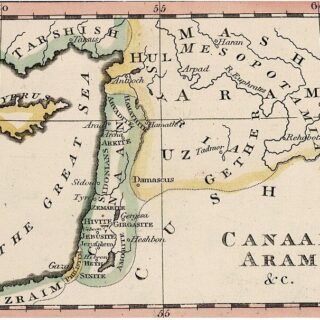
Canaan was a region of profound cultural, linguistic, and political importance in the ancient Near East. Occupying a strategic area within the Southern Levant, it played a critical role as...
The Sumerian King List (SKL), also known as the Chronicle of the One Monarchy, is a pivotal ancient literary document written in the Sumerian language. Originating from southern Mesopotamia, the...
Shalmaneser I (1273–1244 BC or 1265–1235 BC) was a key figure in the Middle Assyrian Empire, a period of significant expansion and consolidation in Assyria’s history. The Middle Assyrian period,...
The Ancient Near East is a region that encompasses a vast geographical area, including parts of present-day Middle East. This region witnessed the rise and fall of several influential civilizations...
The system of mathematics developed by the Sumerians was highly significant and laid the foundation for many mathematical concepts and systems that are still in use today. The Sumerians, who...
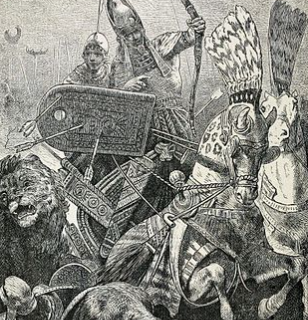
The Battle of Kadesh took place in the 13th century BC and is one of the most well-known military encounters of the ancient world. It occurred around 1274 BC and...
Upon the death of his older brother King Muwattalli II, the famed king who went toe-to-toe with the Great Ramesses II of Egypt (Ramses II), Hattusili III supported the reign...
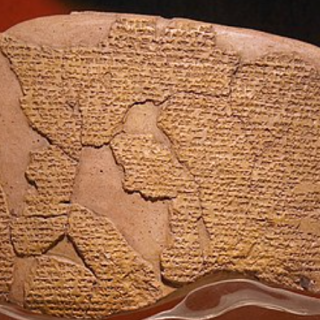
The Treaty of Kadesh, also known as the Peace Treaty of Ramses II and Hattusili III, was a significant treaty signed in the 13th century BC between the Egyptian pharaoh...