Teres I: The First King of the Odrysian kingdom of Thrace
Teres I, who ruled from approximately 460 to 445 BC, was the first king of the Odrysian Kingdom, the earliest centralized state in Thrace.
His reign marked a transformative period in Thracian history, as he united numerous fragmented tribes into a powerful and cohesive kingdom.
This achievement not only elevated the Odrysian Kingdom’s status in the southeastern Balkans but also established a legacy of political and military influence in the region for generations.
The Historical Context of Thrace
Before the rise of Teres I, Thrace was a region inhabited by numerous tribes, each functioning as independent entities with their own leaders. Thrace had come under Persian control during the reign of Darius I around 516 BC, becoming a nominal part of the Persian Empire. Persian dominance in the region was further solidified by Mardonius in 492 BC, as part of the empire’s expansionist campaigns in Europe.
However, the Persian defeat in the Greco-Persian Wars, particularly after the battles of Salamis and Plataea, weakened Persian influence over the Balkans. This decline created a power vacuum in the region, allowing local leaders to assert their independence and reorganize politically. It was during this period of political instability that Teres I emerged as a unifying figure.
The Formation of the Odrysian Kingdom
Teres I is credited with uniting over 40 Thracian tribes, a feat that required not only military strength but also diplomatic acumen. By forming alliances and exerting military dominance, he brought these tribes under a centralized rule, creating the Odrysian Kingdom, the first state of its kind in Thrace. This unification likely occurred in the 460s BC, coinciding with the retreat of Persian influence from the region.
The Odrysian Kingdom became a significant power in the southeastern Balkans, encompassing vast territories that included the plains, river valleys, and mountain regions of Thrace. This unification allowed the kingdom to project its power beyond its borders, engaging in regional diplomacy and military campaigns that solidified its influence.
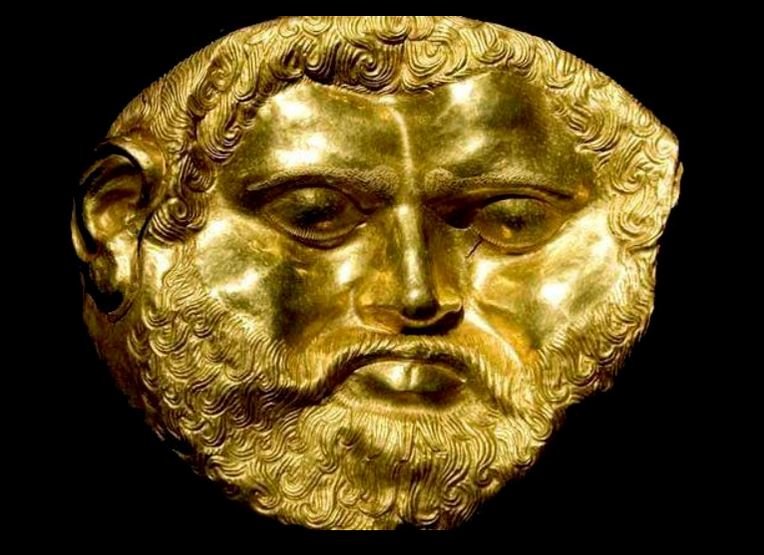
Image: A golden mask likely belonging to King Teres I, discovered in a mound within the Valley of the Thracian Kings, Kazanlak region, Central Bulgaria.
Military Leadership and Campaigns
Teres I was renowned for his military prowess, spending much of his life on the battlefield. His campaigns not only expanded the kingdom’s territory but also protected it from external threats. Thrace was surrounded by rival tribes and powerful neighbors, including the Macedonians and the Triballi, a Thracian tribe to the north.
While specific details of Teres I’s campaigns are scarce, historians believe his military efforts focused on consolidating power within Thrace and defending against incursions by rival tribes. His ability to maintain unity among the diverse Thracian tribes speaks to his effectiveness as both a warrior and a leader.
Teres I’s Death and Succession
Teres I’s reign ended in 445 BC when he died during a military campaign. While the exact circumstances of his death remain uncertain, some historians speculate that he may have been fighting the Triballi, a formidable Thracian tribe occupying northern territories. His death marked the conclusion of his foundational rule but did not weaken the kingdom he established.
Teres was succeeded by his second son, Sitalces, who inherited his father’s military skills and leadership qualities. Under Sitalces, the Odrysian Kingdom continued to grow in power, waging wars with neighboring states like Macedon and further consolidating Thracian tribes under centralized rule.
Family and Dynasty
Teres I established a dynasty that played a crucial role in maintaining and expanding the Odrysian Kingdom. His family members held key positions of power and continued his legacy of military and political leadership:
- Sitalces: His second son, who became king after Teres I’s death. Sitalces is remembered for his aggressive military campaigns and efforts to extend the kingdom’s influence.
- Maisades: Another son of Teres, who was the father of Seuthes II, a prominent figure in Thracian history.
- Sparatocos: Another of Teres’ sons, who was the father of Seuthes I, continuing the line of influential Odrysian rulers.
The dynasty founded by Teres I ensured the stability and prominence of the Odrysian Kingdom, which remained a major power in the Balkans for decades.
The Legacy of Teres I
Teres I’s achievements had a profound impact on the history and identity of Thrace. His unification of the Thracian tribes created a state that could rival its neighbors in power and influence. The Odrysian Kingdom became a significant player in the geopolitical dynamics of the Balkans, interacting with major powers like Athens, Sparta, and Macedon.
Cultural and Political Impact
Teres I’s efforts to unify Thrace laid the foundation for a cohesive Thracian identity, despite the cultural and linguistic diversity of the tribes. The centralized rule of the Odrysian Kingdom provided stability and a framework for economic and cultural development.
Commemoration
Teres I’s legacy extends beyond ancient Thrace. Teres Ridge, located on Livingston Island in the South Shetland Islands, Antarctica, is named in his honor, reflecting his historical significance. This modern recognition highlights his enduring reputation as a unifier and leader.
Significance of the Odrysian Kingdom
The establishment of the Odrysian Kingdom under Teres I marked a turning point in the history of Thrace. It transformed the region from a collection of fragmented tribes into a cohesive political entity. This unification allowed Thrace to assert its independence and influence in a period dominated by larger empires and states.
Relations with Other States
The Odrysian Kingdom’s strategic location made it a key player in regional politics. It controlled important trade routes and resources, which allowed it to negotiate and interact with powerful neighbors, including the Persian Empire, Athens, and Macedon. The kingdom’s military strength, combined with its political unity, ensured its significance in the geopolitical landscape of the ancient Balkans.
Military Legacy
The military tradition established by Teres I continued under his successors, particularly Sitalces, who expanded the kingdom’s influence through warfare. The Odrysian Kingdom’s military capabilities made it a formidable force, capable of defending its interests and asserting dominance over rival tribes.
Frequently Asked Questions

What was the significance of the Odrysian Kingdom?
The Odrysian Kingdom, founded by Teres I, became a dominant power in the southeastern Balkans. It unified Thracian tribes and secured their position as a significant political and military force in the region.
How did Teres I achieve the unification of Thracian tribes?
Teres I used his exceptional military leadership to unite more than 40 Thracian tribes under a single rule, creating the first centralized Thracian state.
When and how did Teres I die?
Teres I died in 445 BC during a military campaign, possibly against the Triballi, a powerful Thracian tribe to the north of his kingdom.
Who succeeded Teres I?
Teres I was succeeded by his second son, Sitalces, who continued his father’s military tradition and used the united Thracian tribes to wage war with Macedon.
What was the legacy of Teres I?
Teres I’s legacy lies in uniting Thracian tribes into a powerful state, establishing a dynasty that maintained the kingdom’s strength for generations. His historical significance is commemorated by Teres Ridge on Livingston Island in Antarctica.
What were the key characteristics of Teres I’s leadership?
Teres I’s leadership was marked by military prowess, strategic unification of tribes, and successful campaigns that secured and protected the Odrysian Kingdom.
Why is Teres I considered a foundational figure in Thracian history?
Teres I is considered foundational because he created the first centralized Thracian state, laying the groundwork for a strong and unified Odrysian Kingdom that influenced the region’s history for decades.
What does the naming of Teres Ridge signify?
The naming of Teres Ridge on Livingston Island, Antarctica, honors Teres I’s historical importance as a unifier and leader of the Thracian Odrysian Kingdom.





