The East–West Schism, also known as the Great Schism or the Schism of 1054, represents the break in communion between the Catholic Church and the Eastern Orthodox Church. The formal schism was the result of ecclesiastical differences and theological disputes between the Greek East and Latin West. While the Schism is conventionally dated to 1054, its origins are much older, and subsequent events exacerbated the divide.
What were the main causes of the East–West Schism?
Ecclesiastical and Theological Disputes
The Schism was the culmination of centuries of disputes over doctrine, church authority, and liturgical practices. Major points of contention included:
- The Filioque Controversy: The Latin Church inserted the phrase “Filioque” (“and the Son”) into the Nicene Creed to express that the Holy Spirit proceeds from both the Father and the Son. The Eastern Orthodox Church rejected this addition, maintaining that the Holy Spirit proceeds only from the Father.
- Use of Leavened vs. Unleavened Bread in the Eucharist: The Western Church used unleavened bread, while the Eastern Church insisted on leavened bread, each arguing that their tradition was theologically superior.
- Iconoclasm: The Byzantine Emperor Leo III and his successors banned the veneration of icons, which the Western Church opposed. This issue was resolved at the Second Council of Nicaea (787), but it left lasting tensions.
- Papal Supremacy: The Catholic Church asserted that the Pope had universal jurisdiction over all Christians, while the Eastern Orthodox Church maintained a model of conciliarity, emphasizing the equal status of all patriarchs.
Political and Cultural Factors
- The Coronation of Charlemagne (800): Pope Leo III crowned Charlemagne as “Emperor of the Romans,” which the Byzantine Empire saw as an affront to its authority, as it still considered itself the legitimate continuation of the Roman Empire.
- The Rise of Constantinople: The Byzantine capital, Constantinople, grew in political and ecclesiastical prominence, challenging Rome’s supremacy. The Council of Chalcedon (451) elevated Constantinople to a status “second only to Rome,” a decision that Rome never fully accepted.
- Linguistic and Cultural Differences: The Western Church used Latin as its liturgical language, while the Eastern Church used Greek. Over time, the lack of common language and cultural differences further deepened misunderstandings.
The Schism of 1054
The final break occurred in 1054 when Pope Leo IX sent a delegation led by Cardinal Humbert to Constantinople to negotiate with Patriarch Michael I Cerularius. The discussions failed, and Humbert excommunicated Cerularius. In response, Cerularius excommunicated Humbert and his delegation. Although both excommunications were of individuals rather than entire churches, the event marked the beginning of an official and enduring division.
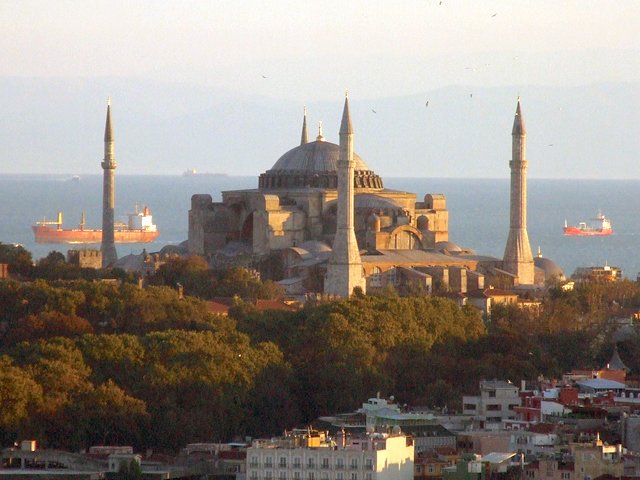
Hagia Sophia, the main cathedral of Constantinople during the period of the Schism.

Consequences of the Schism
The Schism deepened during the Crusades, particularly with the Fourth Crusade (1204), when Western Crusaders sacked Constantinople. The imposition of a Latin patriarch on the Byzantine capital further alienated the Eastern Orthodox Church.
The Western and Eastern Churches continued to develop independently. The Catholic Church formalized doctrines such as Papal Infallibility (1870) and the Immaculate Conception (1854), which the Orthodox Church rejected.
The Catholic Church developed a centralized model with the Pope as the supreme authority, while the Eastern Orthodox Church maintained a synodal structure, where bishops govern collectively.
READ MORE: Timeline of the Crusades
Ecumenical dialogues, shared celebrations of feast days, and meetings between popes and patriarchs continue, but theological and ecclesiastical differences remain obstacles to full unity.
Attempts at Reconciliation
At the Council of Lyon (1274) and Council of Florence (1439), attempts were made to reunite the churches. However, these agreements were largely rejected by the Orthodox faithful and were never fully implemented.
In a historic gesture in 1965, Pope Paul VI and Patriarch Athenagoras I mutually lifted the excommunications of 1054, but this did not result in full reconciliation.
Today, the Catholic and Orthodox Churches engage in ecumenical dialogue, with shared celebrations of feasts and meetings between popes and patriarchs. However, full unity remains elusive.
Frequently Asked Questions about the East–West Schism
Why was the Filioque clause controversial?
The Western Church added “Filioque” (“and the Son”) to the Nicene Creed, claiming the Holy Spirit proceeds from both the Father and the Son. The Eastern Church rejected this, maintaining that the Holy Spirit proceeds only from the Father.
What role did the Pope’s authority play in the schism?
The Catholic Church asserted papal supremacy, claiming the Pope had universal jurisdiction over all Christians, while the Eastern Orthodox Church maintained a model of conciliar governance among patriarchs.
How did the Fourth Crusade impact the schism?
In 1204, Western Crusaders sacked Constantinople and installed a Latin Patriarch, deepening the divide and fostering lasting resentment in the Eastern Church.
What were some early attempts at reunification?
The Second Council of Lyon (1274) and the Council of Florence (1439) aimed at reconciliation, but these agreements were largely rejected by the Orthodox clergy and laity.
What was the significance of the 1965 mutual lifting of excommunications?
Pope Paul VI and Patriarch Athenagoras I symbolically lifted the excommunications of 1054, improving relations but not restoring full communion between the churches.
How do the Catholic and Orthodox Churches differ in governance today?
The Catholic Church is centralized under papal authority, while the Orthodox Church follows a synodal model where bishops collectively govern without a supreme leader.





