The Fourth Crusade
The Fourth Crusade (1202–1204) was an ambitious Latin Christian expedition launched by Pope Innocent III with the official goal of recapturing Jerusalem from Muslim control. However, a series of economic and political maneuvers redirected the Crusaders toward attacking Christian cities, culminating in the 1204 sack of Constantinople. This campaign led to the fragmentation of the Byzantine Empire and initiated the period known as Frankokratia, during which Latin Crusader states ruled over former Byzantine territories. In the article below, WHE explores the origins, course, and consequences of the Fourth Crusade in detail.

A 15th-century miniature depicting the conquest of Constantinople by the Crusaders in 1204.
Background
The Loss of Jerusalem and the Third Crusade
In 1187, Saladin‘s forces captured Jerusalem, sparking the Third Crusade (1189–1192), led by Richard the Lionheart, Philip II of France, and Emperor Frederick I Barbarossa. While Richard successfully reclaimed coastal territories, he failed to retake Jerusalem. A truce with Saladin permitted Christian pilgrimages to the city but left the Crusader states vulnerable. The expiration of this truce in 1198, coupled with political instability in the Muslim world, spurred Pope Innocent III to call for a new Crusade in 1198.
Byzantine Tensions and European Rivalries
The Byzantine Empire was experiencing internal strife, particularly after Emperor Isaac II Angelos was deposed and blinded by his brother, Alexios III, in 1195. European Crusaders harbored longstanding suspicions against the Byzantines due to their perceived reluctance to support earlier Crusades. The Republic of Venice, an economic powerhouse, had its own commercial interests in the Eastern Mediterranean, exacerbating tensions between Latins and Greeks.
The Crusaders’ Agreement with Venice
The Crusaders initially planned to attack Egypt, the center of Ayyubid power. In 1201, they negotiated with Venice for naval transport, agreeing to pay 85,000 silver marks for a fleet to carry 33,500 men. However, fewer Crusaders than expected arrived in Venice, leaving them unable to pay the full sum.
Doge Enrico Dandolo, the ruler of Venice, proposed a compromise: the Crusaders would attack the rebellious Christian city of Zara (modern-day Zadar, Croatia) in exchange for Venetian assistance. Pope Innocent III explicitly forbade this, but the attack proceeded in November 1202. Zara fell to the Crusaders, leading to the Pope’s temporary excommunication of the Crusading army.
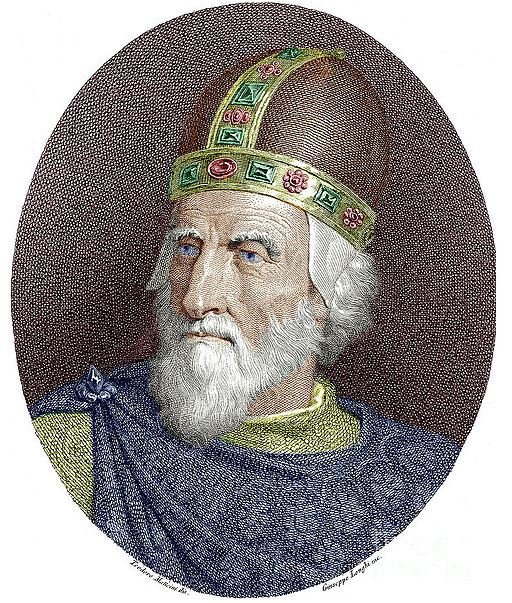
Portrait of Enrico Dandolo.
The Byzantine Involvement
During the winter at Zara, the Crusaders received an offer from Prince Alexios Angelos, son of the deposed Byzantine emperor Isaac II. He promised to fund the Crusade, provide military assistance, and place the Byzantine Church under Papal authority if they restored his father to the throne. Despite internal disagreements, most Crusader leaders accepted the proposal.
In June 1203, the Crusader fleet reached Constantinople. A siege commenced, and Alexios III, unable to muster an effective defense, fled. Isaac II was restored as co-emperor alongside his son, now crowned Alexios IV. However, Alexios IV struggled to fulfill his financial promises to the Crusaders, leading to resentment among both Crusaders and Byzantines.
Pope Innocent III condemned the attack on Constantinople but ultimately accepted the new Latin Empire.
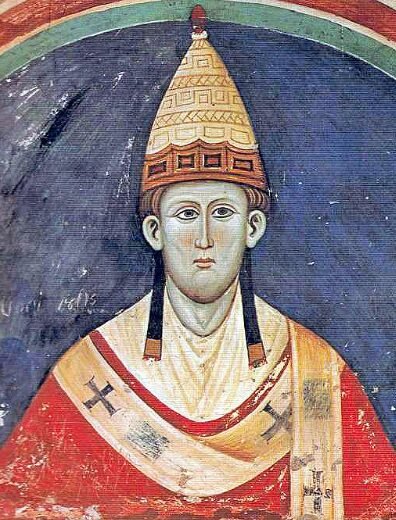
A portrait of Pope Innocent III.
The Sack of Constantinople (1204)
Dissatisfaction with Alexios IV’s rule led to a coup in January 1204. He was deposed and later murdered, while Alexios V Doukas Mourtzouphlos seized the throne. Refusing to honor Alexios IV’s agreements, Alexios V prepared to resist the Crusaders.
On April 12, 1204, the Crusaders launched a full-scale assault. Overwhelmed, Alexios V fled, and the city fell. The Crusaders looted Constantinople for three days, desecrating churches, stealing relics, and committing atrocities against the city’s population. The Latin Empire of Constantinople was then established under Baldwin of Flanders, with Venice receiving significant territorial concessions.
The Fourth Crusade, intended to reclaim Jerusalem, instead resulted in the devastating sack of Constantinople and the division of the Byzantine Empire.
Aftermath and Legacy
The Byzantine Empire was carved into Latin and Venetian-controlled territories. Key Crusader states included:
- The Latin Empire of Constantinople under Baldwin I.
- The Kingdom of Thessalonica under Boniface of Montferrat.
- The Principality of Achaea and the Duchy of Athens, among others.
Byzantine resistance continued through successor states such as the Empire of Nicaea, the Despotate of Epirus, and the Empire of Trebizond. The Empire of Nicaea eventually recaptured Constantinople in 1261, restoring Byzantine rule but leaving the empire weakened.
Ultimately, the Fourth Crusade’s detour altered the course of medieval history, accelerating Byzantine decline and altering the balance of power in the Mediterranean world.
The Fourth Crusade deepened the schism between the Roman Catholic and Eastern Orthodox Churches. The violence against fellow Christians discredited the Crusading movement. Additionally, the Crusade’s failure to reach the Holy Land left the Crusader states in the Levant increasingly vulnerable.
The weakening of Byzantium facilitated the rise of the Ottoman Empire, which ultimately conquered Constantinople in 1453. The looting of Byzantine treasures enriched Western Europe, and Venice emerged as a dominant maritime power.
Timeline of the Fourth Crusade (1202-1204)
- 1198 – Pope Innocent III calls for a crusade to reclaim Jerusalem.
- 1201 – Crusaders contract Venice for transport but fail to raise the agreed payment.
- 1202 (November) – To settle debts, the Crusaders, led by Doge Enrico Dandolo, besiege and sack Zara, a Catholic city.
- 1203 (January) – Byzantine prince Alexios Angelos promises wealth in exchange for restoring his father, Isaac II Angelos, as emperor.
- 1203 (June–July) – Crusaders reach Constantinople, force Alexios III to flee, and install Alexios IV as co-emperor.
- 1204 (January) – Alexios IV is overthrown and killed by Alexios V, who refuses Crusader demands.
- 1204 (April 12–13) – Crusaders storm Constantinople, looting and dividing the empire, establishing the Latin Empire.
- 1261 – The Byzantines, under the Empire of Nicaea, reclaim Constantinople.
- 1453 – The Byzantine Empire falls to the Ottomans, partly due to the Crusade’s lasting damage.

History of the Catholic Church: How and When Did Catholicism Begin?
Frequently Asked Questions
What was the initial goal of the Fourth Crusade?
The goal was to recapture Jerusalem by first defeating the powerful Egyptian Ayyubid Sultanate.
Why did the Crusaders attack Zara in 1202?
They were unable to pay the Venetians for transport, so Doge Enrico Dandolo proposed attacking Zara, a Catholic city, as compensation.
How did Pope Innocent III respond to the attack on Zara?
He excommunicated the Crusader army, though later lifted the ban for non-Venetians.
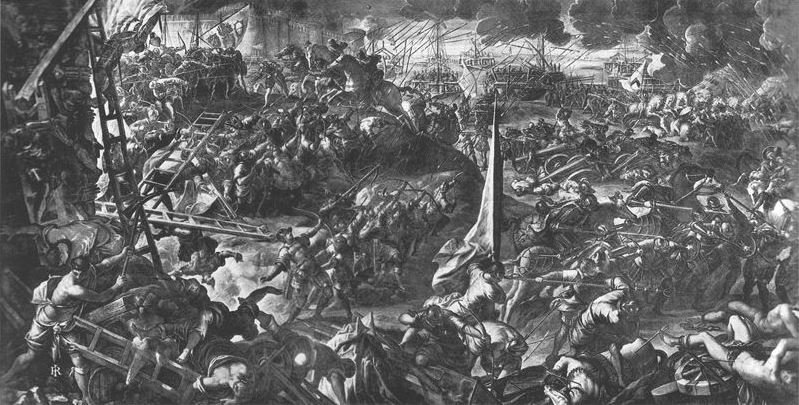
An illustration showing the attack on Zara by the crusaders.
Why did the Crusaders divert to Constantinople?
Byzantine prince Alexios Angelos promised to finance the Crusade and provide military aid if they helped restore his deposed father, Isaac II Angelos, to the throne.
What happened when the Crusaders reached Constantinople in 1203?
They besieged the city, restored Isaac II and Alexios IV to power, but Alexios IV could not meet their financial demands, leading to tensions.
What led to the sack of Constantinople in 1204?
Alexios IV was overthrown and killed by Alexios V, who refused to honor his agreements with the Crusaders. In response, the Crusaders stormed and looted the city.
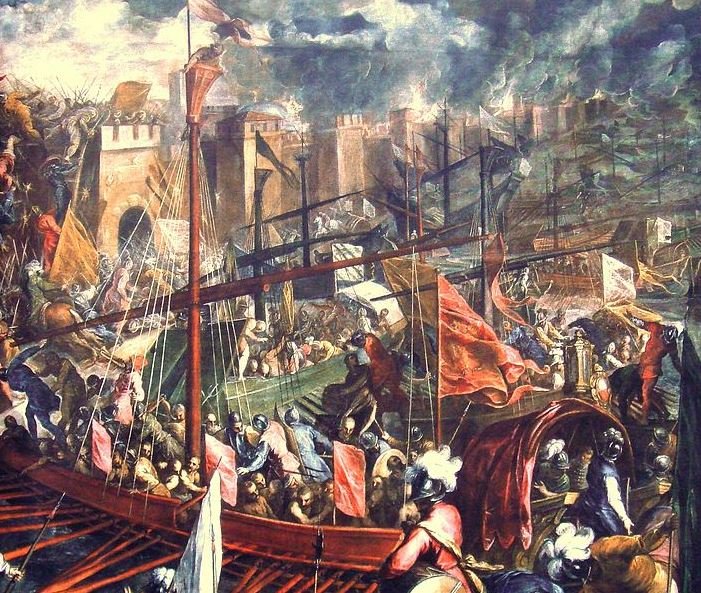
An illustration depicting the siege of Constantinople in 1204. Artwork by Italian painter Palma il Giovane.
What was the significance of the Sack of Constantinople?
It marked a major turning point in Christian history, deepened the East-West Schism, and weakened the Byzantine Empire.
What was the Partitio terrarum imperii Romaniae?
It was the division of the Byzantine Empire among the Crusaders and their Venetian allies, leading to the creation of the Latin Empire and other Crusader states.
What happened to the Byzantine Empire after 1204?
It fragmented into successor states, including the Empire of Nicaea, Empire of Trebizond, and Despotate of Epirus. The Nicaean Empire eventually recaptured Constantinople in 1261.
How did the Fourth Crusade impact the Byzantine Empire long-term?
It severely weakened the empire, making it vulnerable to later attacks, including the Ottoman conquest in 1453.
How did the Fourth Crusade affect relations between the Catholic and Orthodox Churches?
It deepened mistrust and solidified the schism between the two branches of Christianity.
How is the Fourth Crusade viewed today?
It is widely regarded as one of the most disastrous and misguided crusades, prioritizing political and economic interests over religious objectives.
FACT CHECK: At World History Edu, we strive for utmost accuracy and objectivity. But if you come across something that doesn’t look right, don’t hesitate to leave a comment below.





