The Fifth Crusade
The Fifth Crusade, fought from September 1217 to August 1221, marked another determined, if ultimately ill-fated, attempt by Western Christendom to recover Jerusalem and the Holy Land from Muslim control. This time, the strategy was different: rather than attacking the Levant directly, Crusader leaders targeted Egypt, seen as the logistical and military heart of the Muslim world. Their plan hinged on conquering the Egyptian port of Damietta and pushing south to Cairo, forcing the ruling Ayyubid Sultanate to trade control of Jerusalem in exchange for peace. Yet despite early victories, internal divisions, stubborn leadership, and environmental challenges led to a disastrous outcome.
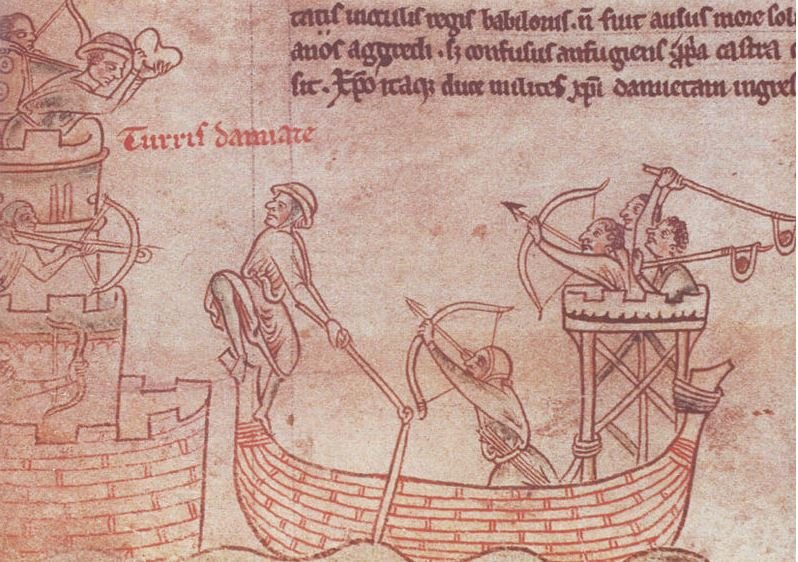
During the Fifth Crusade, warriors from Frisia laid siege to a fortified structure close to Damietta.
A Tumultuous Era in Europe and the East
Pope Innocent III, undeterred by the humiliating diversion of the Fourth Crusade to Constantinople, envisioned a more disciplined, spiritually directed campaign. He issued a clarion call for a new Crusade in 1213 with the papal bull Quia maior. Unlike previous campaigns, this one aimed to correct the missteps of the past: no entanglement with Venetian merchants, no opportunistic sacking of Christian cities. Instead, it was to be a true effort for the Holy Land, orchestrated under papal guidance.
However, Europe at the time was fragmented and distracted. France was embroiled in the Albigensian Crusade against heretics in Languedoc, Germany was wracked by political instability, and England was recovering from civil conflict. Nevertheless, nobles from various corners of Christendom took the cross, including King Andrew II of Hungary and Leopold VI of Austria. John of Brienne, the titular King of Jerusalem, played a central role, rallying support from the Latin East.
How and why did the Roman Catholics sack Constantinople in 1204?
Initial Campaigns in the Levant
The Crusaders began their campaign not in Egypt, but in the Levant. In 1217, Andrew II led a large army that landed in Acre, joining forces with John of Brienne and the leaders of the military orders. Despite their numerical strength, the Crusaders achieved little. They conducted small raids and a failed assault on the fortress of Mount Tabor. Andrew soon returned to Hungary, his objectives unclear and his enthusiasm apparently spent.
This initial phase revealed a lack of unified strategy and poor coordination. The decision was soon made to shift the focus to Egypt, based on the belief that its conquest would cripple Muslim power and force the return of Jerusalem.
The Strategic Pivot: Targeting Egypt
The idea of attacking Egypt was not new. Saladin himself had risen to power from Cairo, and previous Crusaders had identified it as a key Muslim stronghold. By 1218, a multinational army assembled at the port of Acre, including Germans under Oliver of Paderborn and Dutch, Flemish, and Frisian troops under William I of Holland. They were joined by Templars, Hospitallers, Teutonic Knights, and a growing number of Italian seafarers.
The papal legate Pelagius Galvani arrived to take command on behalf of the pope, supported by a vision of papal authority over secular leaders. Unfortunately, Pelagius’ uncompromising stance and spiritual absolutism would later clash with military pragmatism, sowing discord among Crusader ranks.
READ ALSO: 10 Most Influential Catholic Popes from the Middle Ages
The Siege of Damietta (1218–1219): A Painful Victory
In May 1218, the Crusaders landed at Damietta, a strategic city on the Nile Delta protected by formidable fortifications and the infamous Chain Tower—a fortified structure that controlled access to the Nile. A long and grueling siege began. Initially, the Crusaders made little headway, suffering setbacks and losses.
But innovation and persistence paid off. Oliver of Paderborn engineered a new kind of siege engine, protected by hides and equipped with a revolving ladder, allowing Crusaders to breach the Chain Tower by August 1218. Soon after, Sultan al-Adil, Saladin’s brother, died, and his son al-Kamil took command.
Despite his defensive mindset, al-Kamil offered generous peace terms: the return of Jerusalem and key Christian sites in exchange for the Crusaders’ withdrawal from Egypt. John of Brienne and others were inclined to accept, but Pelagius rejected the offer, convinced that total victory was near.
After over a year of siege, Damietta finally fell in November 1219. The Crusaders entered a ghost town: most defenders were dead, and the remaining population was ill or starving. It was a hard-won prize—but their problems were far from over.
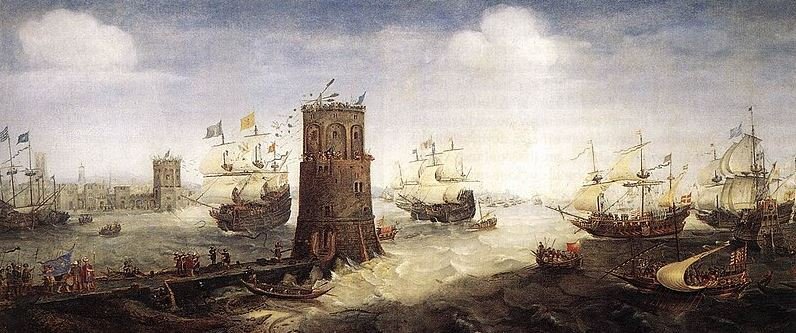
Dutch artist Cornelis Claesz van Wieringen captured the moment when crusaders stormed the tower of Damietta in one of his paintings.
Internal Struggles and Missed Opportunities
Following the victory at Damietta, disagreements erupted over who would govern the city and what to do next. The Templars, Hospitallers, and Italian factions clashed with French and German Crusaders. Pelagius, asserting his papal authority, placed the city under ecclesiastical control, alienating secular leaders like John of Brienne.
Al-Kamil again proposed peace, this time offering even more generous terms, including the return of the True Cross lost at the Battle of Hattin. Once again, Pelagius refused, believing divine victory was certain. His obstinance—driven more by religious zeal than military logic—would soon have disastrous consequences.
Saint Francis of Assisi’s Mission of Peace
One of the most memorable episodes of the Fifth Crusade came not from the battlefield but from a barefoot friar. Francis of Assisi, driven by a radical message of peace, crossed enemy lines in 1219 to meet with Sultan al-Kamil. The sultan, perhaps intrigued or moved by Francis’s humility, received him graciously.
Though Francis did not convert al-Kamil, nor halt the Crusade, his mission represented a profound moment of interfaith dialogue. It later became a defining story in Christian-Muslim relations and a symbol of peaceful evangelism.
9 Greatest Catholic Saints of All Time and Their Accomplishments
The March to Cairo and the Catastrophe at Mansurah (1221)
By mid-1221, Pelagius grew impatient and ordered the Crusader army to march on Cairo, ignoring warnings about the rising Nile. John of Brienne opposed the move, pointing out logistical challenges, but Pelagius, believing reinforcements from Emperor Frederick II were imminent, insisted.
The Crusader army reached Mansurah in July 1221, unaware that al-Kamil had prepared a trap. Taking advantage of his knowledge of the terrain and the seasonal flooding of the Nile, the sultan ordered sluices opened, flooding the Crusader camp and cutting them off from their supply lines.
Trapped, starving, and disease-ridden, the Crusaders were surrounded and forced to surrender in late August. Pelagius negotiated a truce: in exchange for their lives, the Crusaders agreed to evacuate Damietta and leave Egypt. On September 8, 1221, Damietta was handed back to Muslim control. The Fifth Crusade had ended in failure.
Why the Crusade Failed
The Fifth Crusade’s failure was not due to a lack of manpower, bravery, or initial success. Instead, it collapsed under the weight of poor leadership, internal division, and inflexible ideology. Pelagius’ refusal to accept multiple generous peace offers alienated allies and squandered opportunities. His insistence on spiritual victory over practical strategy proved disastrous.
Frederick II, who had vowed to join the Crusade, never arrived, citing political difficulties in the Holy Roman Empire. His absence eroded morale and left the Crusaders vulnerable. Additionally, many European powers, still embroiled in regional conflicts, offered only limited or delayed support.

Cultural and Literary Legacy
Despite its military failure, the Fifth Crusade left a deep imprint on medieval thought and literature. Songs, sermons, and chronicles reflected both admiration and criticism. The Occitan poet Guilhem Figueira composed bitter verses blaming the papacy for the defeat, while Gormonda de Monpeslier defended the Church, placing the blame on the sinfulness of mankind.
Eyewitness accounts by Oliver of Paderborn, Jacques de Vitry, and Roger of Wendover shaped contemporary and later understandings of the Crusade. These accounts, full of pious imagery, battlefield drama, and moral reflection, remained influential for centuries.
READ MORE: Timeline of the Crusades
Frequently Asked Questions
What was the main goal of the Fifth Crusade?
The main goal was to recapture Jerusalem by first conquering Egypt, which was seen as the strategic and economic center of Muslim power.
Who initiated the Fifth Crusade?
Pope Innocent III initiated it in 1213, aiming to correct the failures of the Fourth Crusade and reassert papal leadership in Crusading efforts.
Why did the Crusaders target Egypt instead of the Levant directly?
They believed that capturing Egypt, especially its vital port of Damietta, would cripple Muslim resistance and force the return of Jerusalem through negotiation or capitulation.
Who were the key leaders of the Crusade?
John of Brienne (titular King of Jerusalem), King Andrew II of Hungary, Leopold VI of Austria, and papal legate Pelagius Galvani were prominent leaders.
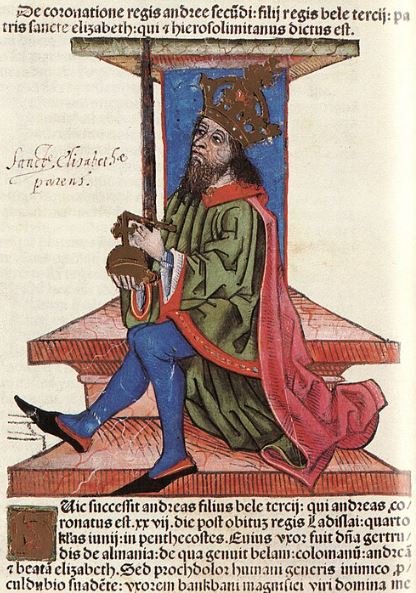
A depiction of Andrew II of Hungary.
What was the outcome of the siege of Damietta (1218–1219)?
The Crusaders successfully captured Damietta after a long siege, but failed to capitalize on the victory due to internal disputes and poor leadership.
Why did Pelagius reject Sultan al-Kamil’s peace offers?
Pelagius believed a complete victory was within reach and refused multiple generous offers, including the return of Jerusalem, prioritizing religious zeal over pragmatic diplomacy.
What role did Saint Francis of Assisi play in the Crusade?
Francis crossed into Muslim territory to preach to Sultan al-Kamil, seeking peaceful dialogue rather than conquest; he was received courteously and returned unharmed.

Portrait of Francis of Assisi by Flemish painter Philip Fruytiers
Why did the Crusaders suffer defeat at Mansurah in 1221?
They advanced toward Cairo during the Nile flood season, were cut off by rising waters and encircled by Egyptian forces, forcing their surrender.
What was the role of Emperor Frederick II in the Crusade?
Though he had taken the cross, Frederick II never joined the Crusade, citing internal political conflicts, which significantly weakened the Crusaders’ chances of success.
What were the consequences of rejecting al-Kamil’s peace proposals?
By refusing peace, the Crusaders lost the opportunity to reclaim Jerusalem and ultimately suffered a humiliating military defeat and retreat from Egypt.
How did the Fifth Crusade end?
The Crusaders surrendered at Mansurah in August 1221 and handed back Damietta in exchange for safe passage out of Egypt and an eight-year truce.
What is the legacy of the Fifth Crusade?
It is remembered as a cautionary tale of how disunity, poor leadership, and inflexible ideology can derail even well-supported military campaigns.





