The Mughrabi Bridge
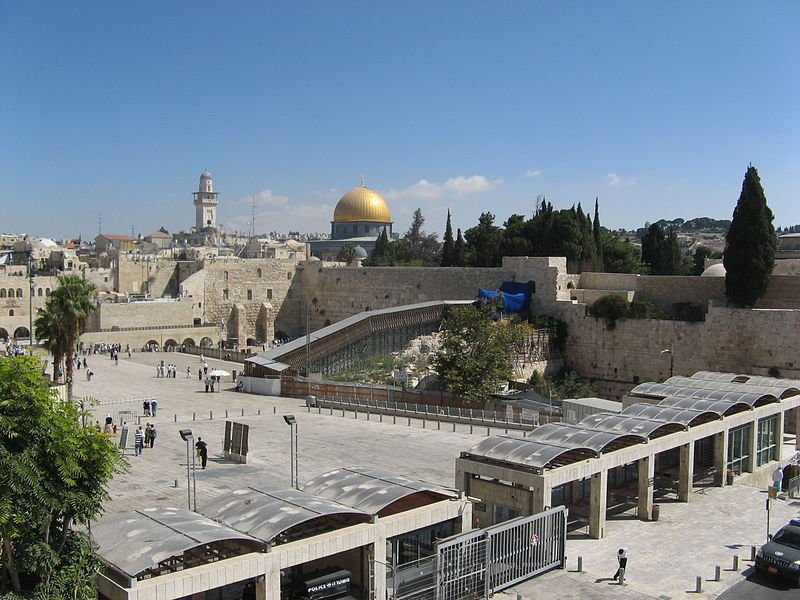
The Mughrabi Bridge is a wooden bridge that serves as the only direct access route for non-Muslim visitors to the Temple Mount in Jerusalem. It connects the Western Wall Plaza to the Mughrabi Gate, one of the eleven gates leading into the revered complex.
Given its location in one of the most politically and religiously sensitive areas in the world, the bridge has been the subject of controversy, geopolitical tension, and historical disputes. Though originally intended as a temporary structure, the bridge has remained in use for over a decade due to disagreements over the construction of a permanent replacement.
In the article below, World History Edu explores the history, significance, and political complexities surrounding the Mughrabi Bridge.
Origins of the Route to the Mughrabi Gate
Before the Mughrabi Bridge was built, non-Muslims accessed the Mughrabi Gate via an earthen ramp. This ramp was part of a structure that had stood for centuries, supported by an 800-year-old wall. It was a vital connection to the Temple Mount, particularly for those who sought to visit the historic and religiously significant site.
Collapse of the Earthen Ramp (2004)
The stability of the earthen ramp was compromised in 2004 when a partial collapse occurred. Several factors contributed to this structural failure:
- An earthquake had recently struck the region, potentially weakening the centuries-old foundations.
- Heavy snowfall, an uncommon occurrence in Jerusalem, further deteriorated the ramp’s integrity, causing sections of it to cave in.
The collapse raised concerns over visitor safety and necessitated an alternative means of access to the Mughrabi Gate.
Construction of the Temporary Wooden Bridge (2007)
In response to the collapse, Israeli authorities constructed a wooden bridge in 2007, initially as a temporary measure. The intent was to create a safe passage while plans for a permanent bridge were developed.
However, the process of excavation and construction required the removal of remaining portions of the earthen ramp, which triggered significant backlash from the Waqf (the Islamic religious trust responsible for overseeing the Temple Mount). The Waqf and several Arab nations accused Israel of attempting to undermine the stability of the Temple Mount and potentially endanger the Dome of the Rock, a revered Islamic shrine. These allegations led to:
- International condemnation
- Violent protests in Jerusalem
- Threats of a third Intifada (uprising)
- Concerns among Arab nations that the situation could destabilize their own governments
As a result of these tensions, the wooden bridge, originally meant to last only a few months, remained in place.
Structural Modifications and Safety Concerns (2011–2013)
By 2011, concerns arose over the safety of the wooden bridge. The Jerusalem city engineer issued an order stating that the structure was no longer safe for continued use.
In 2012 and 2013, support scaffolding was replaced with a metal beam structure, allowing visitors to move freely underneath the bridge. This modification led to an expansion of the women’s prayer section at the Western Wall, although not beyond the space available before the original ramp’s collapse.
Its role as the sole entry point for non-Muslim visitors to the Temple Mount makes Mughrabi Bridge a focal point of the ongoing Arab-Israeli conflict.
Attempt to Build a Second Bridge (2014)
In August 2014, Israel began constructing a secondary bridge to supplement the existing wooden structure. This new bridge was designed to:
- Improve visitor access
- Provide an additional emergency route
However, the Jordanian government, which plays a custodial role over Islamic sites in Jerusalem, strongly objected to this development. Under Jordanian pressure, construction was halted, and the partially built bridge was dismantled.
The Mughrabi Bridge is far more than a simple wooden passageway—it is a symbol of Jerusalem’s complex history and geopolitical struggles.
Significance of the Mughrabi Bridge
The Mughrabi Bridge holds deep religious and historical significance for multiple groups:
- For Jews, it provides access to the Temple Mount, the holiest site in Judaism, where the First and Second Temples once stood.
- For Muslims, the Temple Mount (Haram al-Sharif) is home to the Al-Aqsa Mosque and Dome of the Rock, both of which are among the most sacred sites in Islam.
- For Christians, the area is historically significant due to its connections to Biblical events and its role in Jerusalem’s religious heritage.
Since non-Muslim entry to the Temple Mount is restricted to the Mughrabi Gate, the bridge serves as the only access point for Jewish and Christian visitors.
The bridge is more than just a structure—it is a symbol of the ongoing Arab-Israeli conflict. Its construction and maintenance have repeatedly sparked diplomatic disputes, protests, and security concerns.
Key points of contention include:
- Excavation of the original ramp – Many Muslim leaders feared that Israeli-led excavations would destabilize the Temple Mount, despite archaeological evidence indicating otherwise.
- Access to the Temple Mount – The Waqf limits Jewish prayer on the Temple Mount, while Israeli authorities enforce strict visiting hours for non-Muslims.
- Political Involvement of Jordan – As part of its peace treaty with Israel (1994), Jordan has custodianship over Islamic sites in Jerusalem. Any changes to the Mughrabi Bridge are viewed as a challenge to Jordan’s role.
- Calls for Intifada – Several Palestinian factions have used disputes over the bridge as justification for violent uprisings.
Structural Concerns
The wooden bridge remains an aging temporary solution, raising concerns over:
- Structural integrity – Engineers have repeatedly warned that the bridge needs replacement.
- Fire hazards – The wooden material poses a risk, especially in a volatile area.
- Increased foot traffic – The number of visitors to the Temple Mount continues to rise, adding strain to the bridge.
Political Barriers to Construction
Despite the technical necessity of building a permanent bridge, political realities make it difficult to proceed. Any attempt to alter the bridge’s structure risks inflaming regional tensions and provoking violent protests.
Efforts to find a diplomatic solution have largely stalled, with Israel, Jordan, and the Waqf unable to agree on a mutually acceptable plan.
Frequently asked questions
Why was the bridge built?
It was constructed in 2007 as a temporary replacement for an earthen ramp that partially collapsed in 2004 due to an earthquake and heavy snowfall.
Why is the bridge controversial?
The excavation required to build a permanent structure led to accusations from the Waqf and Arab nations that Israel was attempting to destabilize the Temple Mount, sparking protests and diplomatic tensions.
What role does Jordan play in the bridge’s status?
Jordan, which has custodianship over Islamic sites in Jerusalem, has objected to modifications to the bridge, including halting the construction of a second bridge in 2014.
Why hasn’t a permanent bridge been built?
Political sensitivities and religious concerns have made it difficult to replace the bridge, as any construction could provoke regional unrest and international criticism.
What safety concerns exist regarding the bridge?
Engineers have warned that the wooden bridge is aging, poses fire hazards, and struggles to accommodate increasing foot traffic, yet remains in use due to political obstacles.
How does the bridge impact the Arab-Israeli conflict?
The bridge is a flashpoint in the conflict, with disputes over its construction and use fueling protests, diplomatic disputes, and fears of further unrest.
What is the future of the Mughrabi Bridge?
While a permanent structure is needed for safety and stability, geopolitical tensions make any modification challenging, requiring negotiations between Israel, Jordan, and the Waqf.





