The National September 11 Memorial & Museum
The National September 11 Memorial & Museum, located at the site of the former World Trade Center in Lower Manhattan, stands as a poignant tribute to the nearly 3,000 people who lost their lives during the terrorist attacks of September 11, 2001, and the six victims of the 1993 World Trade Center bombing. The memorial and museum serve as a place of reflection, remembrance, and education, aiming to preserve the history and impact of these tragic events.
The Vision and Planning of the Memorial
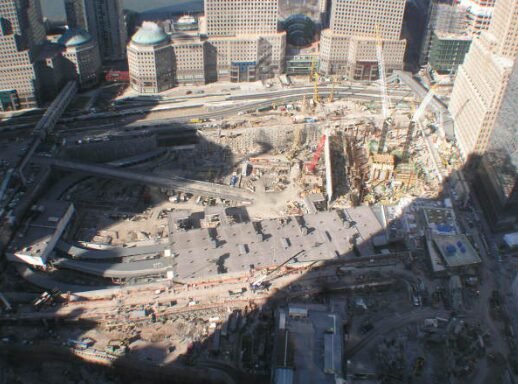
A Site of Tragedy and Resilience
The space where the World Trade Center once stood became hallowed ground following the attacks on September 11, 2001. After the towers collapsed, the site, often referred to as “Ground Zero,” was a chaotic, devastated area filled with debris and human loss. As the city of New York and the country grappled with the shock and grief of the attacks, it became clear that a memorial needed to be created, both to honor the victims and to serve as a testament to the resilience of the American spirit.
In the years following 9/11, discussions about the memorial’s creation began in earnest. The challenge was to transform Ground Zero into a place that could memorialize the loss while symbolizing hope and renewal. The memorial had to accommodate the memory of lives lost, the destruction of the Twin Towers, and the emotional weight carried by survivors, families, and first responders. Additionally, it had to preserve the historical significance of the site.
Governance and Decision-Making
The planning process involved multiple stakeholders, including family members of victims, local leaders, architects, and government officials. The Lower Manhattan Development Corporation (LMDC), a public agency formed in the aftermath of the attacks, was tasked with overseeing the rebuilding and redevelopment of the World Trade Center site. This included the design and construction of the memorial and the accompanying museum.
In 2003, the LMDC launched an international competition to select the design for the memorial. This competition received over 5,000 submissions from around the world. The goal was to find a design that could strike the delicate balance between memorialization and inspiration, acknowledging both the loss and the strength found in the response to the tragedy.
Selecting the Design
After months of deliberation, the winning design, titled “Reflecting Absence,” was selected in 2004. The design was submitted by architect Michael Arad, in collaboration with landscape architect Peter Walker. Their vision for the memorial was striking in its simplicity yet powerful in its symbolism.
The centerpiece of Arad and Walker’s design consists of two large, square reflecting pools set within the footprints of the original Twin Towers. These pools feature waterfalls that cascade down the walls, eventually disappearing into a void at the center of each pool. Surrounding the pools are bronze parapets inscribed with the names of the nearly 3,000 victims of the 2001 and 1993 attacks. The design, with its empty spaces and continuous flow of water, was intended to convey a sense of loss and the passage of time while also serving as a place of quiet reflection.
Construction of the Memorial
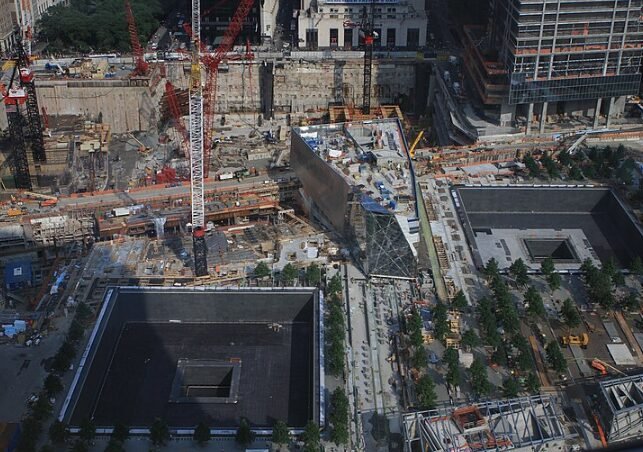
Challenges and Delays
The construction of the memorial was a massive and complex undertaking. Several challenges arose during the project, particularly because the site was not just a memorial space but also part of a larger reconstruction of the World Trade Center complex. The memorial had to be integrated with the surrounding infrastructure, including the new One World Trade Center (Freedom Tower), transportation hubs, and other buildings planned for the area.
One of the most significant challenges was balancing the construction timeline of the memorial with the needs of the families of victims and the broader public’s desire for a timely completion. Many families expressed frustration over delays, feeling that the process was moving too slowly and that the memorial should be prioritized over commercial development at the site.
Additionally, the design itself presented technical challenges. The reflecting pools, with their massive waterfalls, required extensive engineering to ensure their structural integrity and functionality. The site also contained sensitive remnants of the original World Trade Center, such as the slurry wall, which had to be preserved. This retaining wall, built to hold back the Hudson River, became a symbol of resilience after surviving the destruction of the towers.
Slurry Wall and the “Bathtub”
The slurry wall, also known as the “Bathtub,” was a critical aspect of the original World Trade Center foundation. It was designed to keep the waters of the nearby Hudson River from flooding the site, and it remarkably survived the collapse of the towers. In the aftermath of 9/11, the wall took on additional symbolic meaning as a representation of strength and survival amidst destruction.
During the construction of the memorial, the slurry wall had to be carefully preserved. It was incorporated into the design of the museum as an integral element, allowing visitors to see the literal and figurative foundation upon which the new memorial was built.
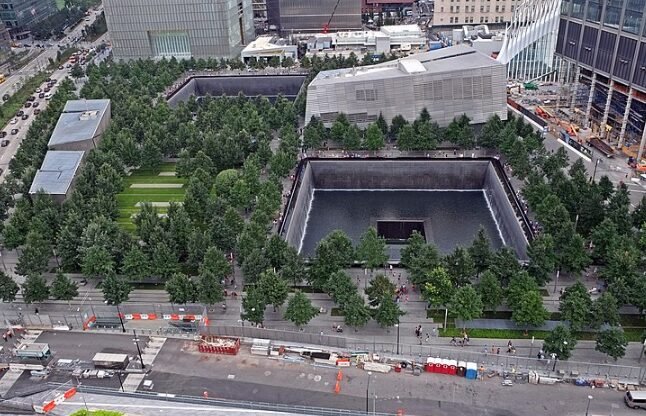
Sustainability and Green Design
Sustainability was a key consideration in the memorial’s design. The architects and planners aimed to create an environmentally friendly space that could endure the test of time. The memorial plaza, which surrounds the reflecting pools, was designed as a green space with over 400 white oak trees. These trees, selected for their longevity and resilience, contribute to the tranquility of the memorial. The plaza’s design also incorporated a sophisticated irrigation system to maintain the trees, making it a sustainable and living tribute to the victims.
The memorial was completed and opened to the public on September 11, 2011, the tenth anniversary of the attacks. The opening marked a significant milestone in the effort to reclaim the World Trade Center site as a place of remembrance and hope.
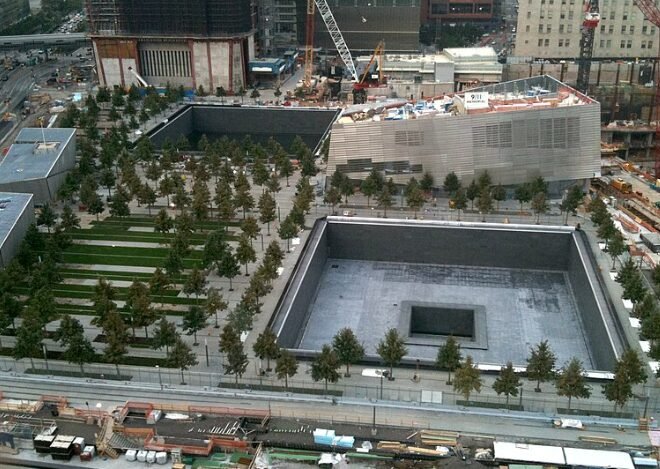
View of September 11 Memorial and Museum
The Museum: Preserving History
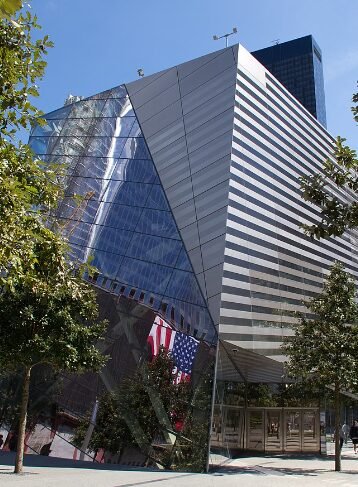
The National September 11 Museum building
Concept and Purpose
While the memorial serves as a place for reflection, the museum was envisioned as an educational space dedicated to preserving the history of 9/11 and the personal stories of those affected by the tragedy. The museum would document not only the events of September 11 but also their aftermath, the global War on Terror, and the ongoing impact on American society and the world.
The museum was designed to be an immersive and deeply personal experience. It is located largely underground, with exhibits placed at bedrock level, directly adjacent to the foundation of the original Twin Towers. This placement adds a tangible sense of connection to the physical space where the events unfolded.
Architectural Design
The museum’s design, by Davis Brody Bond, aims to create a contemplative space that guides visitors through the historical narrative of 9/11 while also honoring the memories of the victims. The entrance to the museum is through a pavilion designed by Norwegian architectural firm Snøhetta, which features a striking glass atrium. Once inside, visitors descend into the museum’s vast underground galleries.
The museum’s main exhibition hall is dominated by two monumental artifacts: the “Last Column” and the Slurry Wall. The Last Column, a 36-foot steel beam, was the final piece of debris removed from Ground Zero during the recovery efforts. It became a powerful symbol for the rescue workers and survivors, and it was signed and adorned with tributes before its removal. Today, it stands in the museum as a tribute to the victims, first responders, and workers who participated in the recovery.
Exhibits and Artifacts

Main hall of the Museum of the September 11 Memorial in New York City
The museum contains over 10,000 artifacts, including pieces of the Twin Towers’ steel, personal belongings of victims and survivors, damaged emergency vehicles, and recordings of 911 calls. The museum’s collection is vast and diverse, covering personal, architectural, and historical aspects of the tragedy.
The main exhibition is divided into three parts:
- The Events of 9/11: This section provides a detailed account of the events leading up to the attacks, including the 1993 World Trade Center bombing, the timeline of the attacks themselves, and their immediate aftermath.
- Memorial Exhibition: This area is dedicated to the victims, featuring photographs of each person who died in the 2001 and 1993 attacks. Personal mementos and biographies bring the human element of the tragedy to the forefront.
- Historical Exhibition: This section provides a broader historical context, exploring the rise of al-Qaeda, the geopolitical consequences of the attacks, and the impact on American society and global politics.
The museum also hosts temporary exhibits, educational programs, and lectures to deepen the public’s understanding of 9/11 and its ongoing significance.

Commemoration and Legacy

A Place for Remembrance
Since its opening, the National September 11 Memorial & Museum has become an essential part of the fabric of New York City and a pilgrimage site for visitors from around the world. Each year, on the anniversary of the attacks, a commemoration ceremony is held at the memorial, during which the names of the victims are read aloud. This annual event serves as a somber reminder of the lives lost and the enduring legacy of 9/11.
The memorial plaza, with its trees and reflective pools, has become a place of solace for survivors, families of the victims, and anyone seeking to remember or understand the events of that day. It is not just a space for mourning but also for contemplation and renewal. The decision to plant white oak trees—chosen for their resilience and longevity—reinforces the theme of regeneration and hope.
A Living Memorial
The National September 11 Memorial & Museum continues to evolve as a living memorial, where new generations can learn about the attacks and their aftermath. The memorial and museum are not static; they are part of an ongoing process of healing and reflection. As more personal stories are shared and as global events continue to unfold, the museum serves as both a repository of history and a place that connects the past with the present.
Controversies and Criticism
Despite its success and significance, the memorial and museum have not been without controversy. Critics have raised concerns over the commercialization of the site, particularly with the presence of a gift shop within the museum. Some family members of victims expressed discomfort with the sale of souvenirs at what they considered sacred ground.
Additionally, the decision to charge an admission fee to the museum sparked debate. While the memorial is free to visit, admission to the museum is $26 for adults. This raised questions about accessibility, as many felt that the history of 9/11 should be available to everyone, regardless of financial means.
There were also debates over how to balance remembrance with education and how to present the more sensitive aspects of the attacks, such as the involvement of radical Islamic extremism, without alienating or offending visitors.
The Ongoing Impact of the National September 11 Memorial & Museum
The National September 11 Memorial & Museum serves as a vital reminder of the tragic events that shaped the 21st century and the ongoing impact they have on the world. The memorial is a powerful symbol of resilience and remembrance, honoring the victims while acknowledging the bravery of first responders and the resolve of survivors.
The museum, meanwhile, plays a crucial role in educating the public about the broader historical, social, and political implications of 9/11. Through its exhibits, it connects the past to present-day issues, such as terrorism, security, civil liberties, and the consequences of war.
As a place of both remembrance and education, the National September 11 Memorial & Museum continues to evolve and adapt, ensuring that the legacy of 9/11 will be remembered for generations to come. It stands not only as a tribute to the victims but also as a reminder of the resilience of the human spirit in the face of tragedy.





