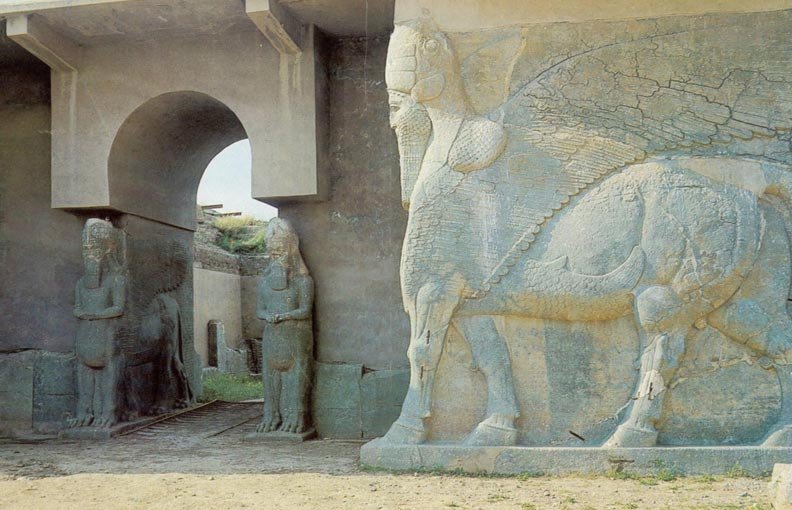
A lamassu stood at the North West Palace of Ashurnasirpal II until its destruction in 2015.
The Nimrud Dogs are an intriguing and somewhat mysterious aspect of ancient Assyrian archaeology, shedding light on the culture, religion, and beliefs of one of the most formidable civilizations of the ancient Near East. These dog figurines, discovered in the ruins of Nimrud (the ancient Assyrian city of Kalhu), serve as both physical artifacts and symbolic representations of the Assyrian worldview, particularly their relationship with supernatural forces, protection, and the role of animals in religious and daily life.
Discovery and Context
Nimrud, located in present-day northern Iraq, was a major capital of the Neo-Assyrian Empire, particularly under the reign of Ashurnasirpal II (reign: c. 883–859 BCE). It remained an important administrative and religious center for successive Assyrian kings, flourishing through the 9th to the 7th centuries BCE.
The site has yielded numerous artistic and architectural marvels, including massive palace complexes, grandiose reliefs, and countless inscriptions. Among these discoveries are the Nimrud Dogs—small terracotta figurines shaped like dogs, often buried under doorways and thresholds of buildings, particularly in palaces and temples.
Nimrud, originally known as Kalhu, was a significant city of the Neo-Assyrian Empire. It served as a major administrative and cultural center, especially during the reigns of powerful Assyrian kings.
The dog figurines were first uncovered in the mid-19th century during excavations led by archaeologists such as Austen Henry Layard, who brought many of Nimrud’s artifacts to European museums.
Further excavations in the 20th century, particularly those led by Max Mallowan and David Oates, provided additional insights into the purpose and placement of these artifacts. The figurines were generally buried with ritual inscriptions, sometimes within clay boxes or wrapped in cloth, and placed in strategic locations within buildings, usually beneath entrances. This positioning suggests a protective function, likely linked to Assyrian beliefs in spiritual guardianship.
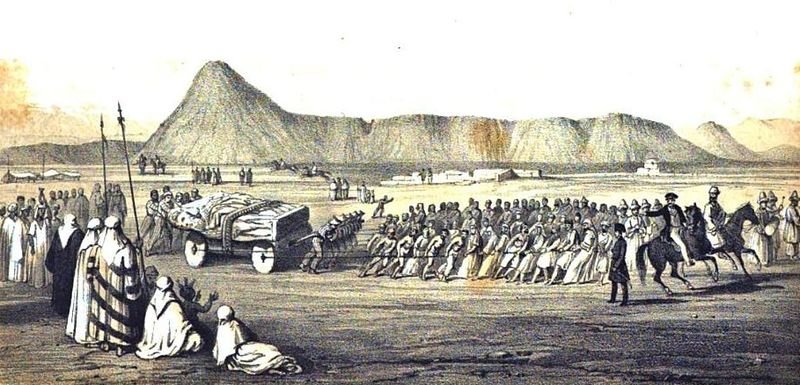
A sketch from 1849 showing Layard’s expedition moving a Lamassu.
Symbolism and Purpose
The Nimrud Dogs were more than just decorative or artistic objects; they had a deep-rooted spiritual significance.
In Mesopotamian culture, dogs were associated with healing, protection, and divine intervention. The goddess Gula (also known as Nintinugga or Bau), a deity of healing and medicine, was often depicted with dogs or accompanied by them. This connection reinforced the idea that dogs possessed supernatural protective abilities, particularly against diseases and malevolent spirits.
Assyrian religion and magic heavily relied on the use of apotropaic (protective) symbols and rituals to ward off evil. The ancient Mesopotamians believed in a vast array of supernatural entities, including malevolent demons and ghosts, which could bring misfortune to individuals, households, and even entire cities. To counteract these threats, Assyrians employed various forms of protection, including ritual figurines like the Nimrud Dogs.
The Nimrud Dogs and figurines provide insight into the spiritual beliefs and daily lives of ancient Assyrians.
These figurines were not merely symbolic but were part of elaborate ritual practices. Inscriptions found on some of them contain prayers or incantations invoking divine protection. Some texts mention specific demons or evils that the dogs were meant to repel, highlighting their role in home defense against unseen forces. The inscriptions sometimes call upon the goddess Gula or other protective deities, reinforcing the association between dogs and divine safeguarding.
The placement of these figurines under doorways and thresholds further emphasizes their function. In many ancient cultures, doorways were considered liminal spaces—boundaries between the safety of the home and the dangers of the outside world. By burying protective objects at these critical junctures, Assyrians sought to create a spiritual barrier against harmful forces.
Craftsmanship and Variability
The Nimrud Dog figurines exhibit a variety of forms, though they generally share common characteristics. Most are made of terracotta, a material frequently used for ritual objects due to its accessibility and ease of shaping. They are typically small, ranging from a few centimeters to around 15 centimeters in length. Some are stylized, with simple, almost abstract features, while others display more detailed anatomical elements, such as pointed ears, snouts, and carefully molded legs.
The Nimrud Dogs were part of a broader tradition of magical protection, where people believed in using amulets and figurines to safeguard against supernatural threats.
The craftsmanship of these figurines varies, indicating that they were not all produced by the same workshop or for a single purpose. Some appear hastily made, suggesting mass production for widespread use, while others display finer detailing, perhaps intended for elite households or royal palaces. The inscriptions, when present, are sometimes etched into the surface or added after the figurine was molded. These inscriptions are written in cuneiform, the dominant script of the Assyrians, and often invoke divine names or magical formulas.
While terracotta was the most common material, some dog figurines have also been found in bronze or other metals, indicating that wealthier individuals might have commissioned more elaborate versions. However, the general function remained the same—providing spiritual protection.
Cultural and Religious Context
The role of dogs in Mesopotamian culture extended beyond the Nimrud figurines. In both Sumerian and Akkadian traditions, dogs were valued not just as protectors but also as companions, hunters, and even religious symbols. They appear frequently in Mesopotamian art, from cylinder seals to temple reliefs. Archaeological evidence suggests that domesticated dogs were present in Mesopotamian households, and their roles varied from practical (guarding property and assisting in hunting) to mystical (serving as agents of divine power).
The association between dogs and healing was particularly strong in the cult of Gula. Temples dedicated to this goddess often featured dog imagery, and real dogs were sometimes kept in her shrines. It is believed that sick individuals sought healing in Gula’s temples, where dogs may have played a role in the rituals. This idea likely influenced the use of dog figurines for protection, as they symbolized not just physical security but also health and well-being.
Beyond healing, dogs were linked to exorcism and purification rites. Some Mesopotamian texts describe rituals in which dogs were used to drive out evil spirits. In this sense, the Nimrud Dogs functioned similarly to other apotropaic creatures, such as the famous Assyrian lamassu (human-headed winged bulls) that guarded palace entrances. Whereas the lamassu were grand and imposing, dog figurines were discreet and hidden, operating in the unseen realm of spiritual defense.
Similar Practices in the Ancient World
The use of protective figurines was not unique to Assyria. Across the ancient Near East and Mediterranean world, many cultures buried ritual objects under buildings to ward off evil. In ancient Egypt, small figurines of gods or sacred animals were sometimes placed in tombs or beneath temple foundations. The Greeks and Romans later continued similar practices, burying amulets or statues beneath homes to ensure divine favor.
In Mesopotamia itself, the tradition of using magical figurines dates back to at least the third millennium BCE. Sumerians, Babylonians, and later Assyrians all practiced forms of ritual magic that involved placing figurines in homes and temples. Other common protective symbols included clay plaques of guardian spirits, demon-trapping bowls, and statuettes of mythical beings such as Pazuzu, a demon often invoked to protect against other, more malevolent entities.
Decline and Legacy
The practice of burying protective dog figurines appears to have declined with the fall of the Neo-Assyrian Empire in the late 7th century BCE. As the Babylonians and later the Persians took control of Mesopotamia, religious practices evolved, and new forms of spiritual protection emerged. However, the concept of dogs as guardians persisted in Mesopotamian and later Persian traditions. Even in later Islamic and Christian folklore, dogs often retained their role as supernatural protectors, appearing in myths and legends as creatures that could sense evil or guard sacred places.
Archaeologically, the Nimrud Dogs remain significant for understanding Assyrian magic and daily life. Their discovery has provided scholars with insights into how ancient people viewed unseen threats and how they sought to mitigate those dangers through ritual objects. Museums worldwide, including the British Museum and the Iraq Museum, house examples of these figurines, allowing modern audiences to appreciate their craftsmanship and cultural significance.
Questions and answers
What are the Nimrud Dogs?
The Nimrud Dogs are five small canine figurines discovered at the ancient Mesopotamian city of Nimrud. They were part of Mesopotamian protective rituals, buried beneath doorways to guard homes and inhabitants from evil spirits.
Where were the Nimrud Dogs found?
The figurines were discovered in a well within the Northwest Palace of Nimrud, an ancient city of the Neo-Assyrian Empire.
What was the purpose of the Nimrud Dogs?
These figurines served as protective symbols, believed to ward off evil spirits and ensure the safety of a household. They were thought to be spiritually awakened through rituals to enhance their protective power.
How did the Neo-Assyrian Empire fall?
By 612 BCE, the empire had become too vast to manage effectively. A coalition of Babylonians, Medes, Persians, and Scythians invaded, sacking major cities like Nineveh, Ashur, and Kalhu, leading to the empire’s collapse.
Who first excavated Nimrud?
British archaeologist Austen Henry Layard led one of the first systematic excavations at Nimrud in the 19th century. Initially, he mistakenly believed he had discovered Nineveh.
What other significant discoveries were made at Nimrud?
Besides the Nimrud Dogs, Layard and later archaeologists uncovered palaces, inscriptions, and the famous Nimrud Ivories, which were exquisitely carved decorative artifacts.
What role did dogs play in Mesopotamian culture?
Dogs were both practical and spiritual figures. They protected homes and livestock and were closely associated with the goddess Gula, who was linked to healing. Dog saliva was believed to have medicinal properties.
Why were dog figurines used for protection?
Dogs were seen as guardians against evil. These figurines were buried under thresholds, inscribed with protective names like “Biter of His Enemy,” and believed to have supernatural abilities to keep homes safe.
What did Max Mallowan discover at Nimrud?
Max Mallowan, an archaeologist and husband of Agatha Christie, unearthed additional ivories and the Nimrud Dogs while excavating layers of mud and debris in the 1950s.
Why was one of the figurines mistaken for a cat?
One of the Nimrud Dogs had feline-like features, leading to initial confusion. However, since cats were not used in Mesopotamian protective magic, it was later confirmed to be another dog figurine.
Where are the Nimrud Dogs now?
The figurines are housed in museums across the world, including in Baghdad, Cambridge, New York, and Melbourne.
Why are the Nimrud Dogs significant today?
They were not merely decorative but reflected a universal human desire for security and protection, much like modern security systems or religious symbols.





