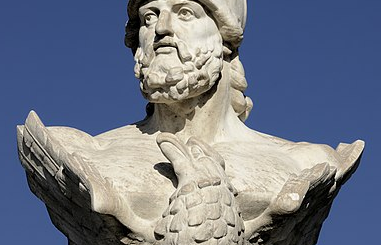
The Pergamon Altar
The Pergamon Altar, a monumental architectural and artistic marvel, stands as a testament to the grandeur and sophistication of Hellenistic culture. Constructed during the reign of King Eumenes II in the first half of the 2nd century BC, this altar was erected on one of the terraces of the acropolis of Pergamon, an ancient Greek city located in what is now modern-day Turkiye. The altar is not only a significant historical and cultural artifact but also a symbol of the artistic and architectural prowess of the ancient Greeks.
Historical Context
The Pergamon Altar was built during the Hellenistic period, a time characterized by the spread of Greek culture across a vast empire established by Alexander the Great. Following Alexander’s death, his empire was divided among his generals, leading to the creation of several Hellenistic kingdoms. Pergamon emerged as a significant cultural and political center during this era, especially under the rule of the Attalid dynasty.
King Eumenes II
King Eumenes II, who reigned from 197 to 159 BC, was a prominent figure in the history of Pergamon. Under his rule, Pergamon experienced considerable expansion and development. Eumenes II was a patron of the arts and learning, significantly contributing to the cultural flourishing of his city. The construction of the Pergamon Altar was one of his major projects, intended to symbolize the power and glory of his reign.
Architectural Design
Dimensions and Structure
The Pergamon Altar is an impressive structure, measuring 35.74 meters (116 feet) in width and 33.4 meters (109 feet) in depth. The front stairway alone spans nearly 20 meters (66 feet) in width, providing a grand entrance to the altar. The altar was built on a raised platform, with a monumental stairway leading up to it. This design was intended to elevate the structure both physically and symbolically, reflecting its importance in religious and civic life.
The Friezes
One of the most striking features of the Pergamon Altar is its intricate frieze, which decorates the base of the structure. This high-relief frieze vividly portrays the mythological battle between the Giants and the Olympian gods, known as the Gigantomachy. The depiction of this battle symbolizes the triumph of order over chaos, a theme that resonated deeply with the Hellenistic worldview.
In addition to the main frieze, there is a second, smaller frieze located on the inner court walls surrounding the fire altar on the upper level of the structure. Though less well-preserved, this frieze offers a sequence of scenes from the life of Telephus, the legendary founder of Pergamon. Telephus is depicted as the son of the hero Heracles and Auge, daughter of Aleus, king of Tegea. These scenes celebrate the heroic origins of the city and its divine connections.
Artistic Significance
The Gigantomachy Frieze
The Gigantomachy frieze is a masterpiece of Hellenistic art. It features dynamic compositions, dramatic expressions, and intricate detailing, showcasing the skill and creativity of the artists. The frieze is notable for its vivid portrayal of movement and emotion, with figures depicted in various poses of struggle and triumph. The gods are shown in powerful, heroic stances, while the giants are depicted in more chaotic, desperate poses, emphasizing the contrast between order and disorder.
The Telephus Frieze
The Telephus frieze, though smaller and less well-preserved, is equally significant. It provides insight into the mythological and cultural heritage of Pergamon. The scenes depict various episodes from the life of Telephus, including his birth, his upbringing by a doe, his adventures, and his eventual founding of Pergamon. This frieze not only highlights the city’s legendary origins but also reinforces the connection between the Attalid dynasty and the heroic past.
Excavation and Relocation
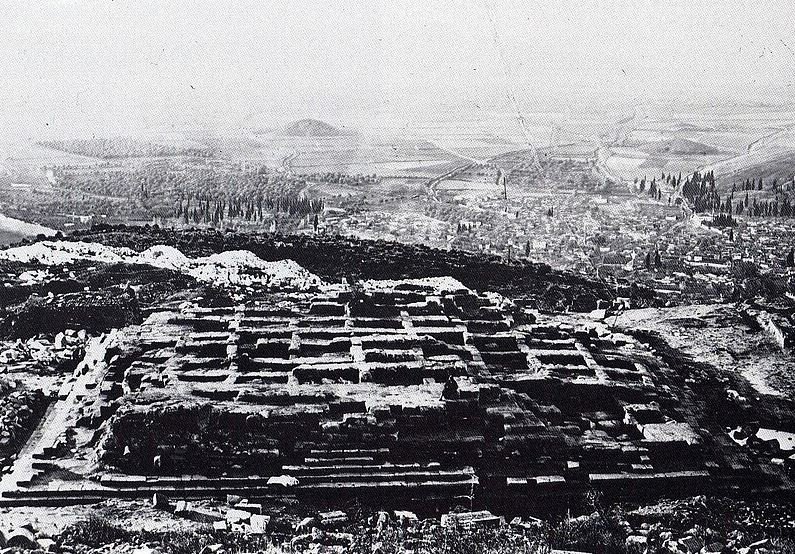
The excavation and relocation of the Pergamon Altar to Berlin have ensured its preservation and facilitated its study, allowing modern audiences to appreciate its historical and artistic significance. Image: The Pergamon Altar during its excavation in 1880. The picture shows its foundation.
Carl Humann’s Excavations
The history of the Pergamon Altar took a significant turn in 1878 when German engineer Carl Humann began official excavations at the site. Humann’s efforts were part of a broader interest in classical archaeology that swept Europe in the 19th century. His excavations continued until 1886, during which time he uncovered numerous relief panels and other artifacts.
Transfer to Berlin
Following their discovery, the relief panels of the Pergamon Altar were carefully removed and transported to Berlin. This transfer was part of an agreement between the Ottoman Empire, which controlled the region at the time, and the German government. The panels were eventually placed on display in the Pergamon Museum, where they remain to this day.
Modern Significance
The Pergamon Museum
The Pergamon Museum, located on Berlin’s Museum Island, is one of the most visited museums in Germany. The museum was designed specifically to house the Pergamon Altar and other significant archaeological finds. The display of the altar and its friezes in the museum allows visitors to appreciate the scale, detail, and artistic mastery of this ancient monument.

Image: Side view of the Pergamon museum.
Cultural and Historical Impact
The relocation of the Pergamon Altar to Berlin has had a profound impact on the study and appreciation of Hellenistic art and architecture. It has allowed scholars to conduct detailed analyses of the friezes and other aspects of the altar, leading to a deeper understanding of Hellenistic culture and mythology. Moreover, the altar has become an iconic representation of ancient Greek art, influencing artistic and architectural practices in subsequent centuries.
Questions and Answers
When was the Pergamon Altar constructed?
The Pergamon Altar was constructed during the reign of King Eumenes II in the first half of the 2nd century BC.
Where was the Pergamon Altar originally located?
The Pergamon Altar was originally located on one of the terraces of the acropolis of Pergamon, in what is now modern-day Turkey.
What are the dimensions of the Pergamon Altar?
The Pergamon Altar measures 35.74 meters (116 feet) in width and 33.4 meters (109 feet) in depth, with the front stairway spanning nearly 20 meters (66 feet) in width.
What is depicted in the high-relief frieze on the base of the Pergamon Altar?
The high-relief frieze on the base of the Pergamon Altar depicts the mythological battle between the Giants and the Olympian gods, known as the Gigantomachy.
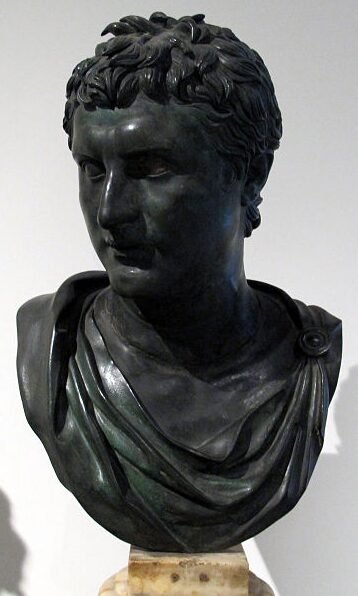
Construction of the Pergamon Altar under King Eumenes II symbolized the power and glory of Pergamon, while its intricate friezes depicted themes of divine triumph and heroic legacy. Image: A statue depicting Eumenes II.
What does the smaller frieze on the inner court walls of the Pergamon Altar depict?
The smaller frieze on the inner court walls depicts scenes from the life of Telephus, the legendary founder of Pergamon and son of the hero Heracles and Auge, daughter of Aleus, king of Tegea.
Who began the official excavations of the Pergamon Altar and when did they start?
German engineer Carl Humann began the official excavations of the Pergamon Altar in 1878.
How long did the excavations of the Pergamon Altar last?
The excavations of the Pergamon Altar lasted until 1886.
Where are the relief panels from the Pergamon Altar currently displayed?
The relief panels from the Pergamon Altar are currently displayed in the Pergamon Museum in Berlin.
What significance do the relief panels of the Pergamon Altar hold today?
The relief panels of the Pergamon Altar are a testament to the artistic and cultural achievements of ancient Pergamon.
Who is Telephus and what is his significance in relation to the Pergamon Altar?
Telephus is the legendary founder of Pergamon, depicted as the son of the hero Heracles and Auge, daughter of Aleus, king of Tegea. His life is depicted in the smaller frieze on the inner court walls of the Pergamon Altar.