The Shield of Heracles: Origin Story and Intepretation of the Poem
The Shield of Heracles (Aspis Herakleous) is a Homeric Hymn-like epic poem attributed to ancient Greek poet Hesiod, though its authorship remains debated. It recounts a single episode in the life of Heracles, the mythical Greek hero and demigod. Central to the poem is the vivid description of Heracles’ shield, which is presented with intricate artistic detail, akin to the famed description of Achilles‘ shield in Homer’s Iliad.
The Poem’s Structure and Content
The Shield of Heracles can be divided into four main sections:
- Introduction and Context
- The Challenge by Cycnus
- The Shield Description
- The Battle and Victory
Introduction and Context
The poem begins with an invocation to the Muses, a traditional opening in epic poetry, situating itself within the oral tradition of Greek literature. The narrative sets the stage for Heracles’ encounter with Cycnus, the son of Ares, who challenges him to battle. Cycnus is portrayed as a bandit who robs pilgrims and desecrates sacred paths. This introduction characterizes Heracles as a defender of divine law and order, juxtaposing him against Cycnus’ impiety.
Heracles is traveling with his loyal nephew, Iolaus, who serves as his charioteer. The relationship between Heracles and Iolaus highlights the importance of kinship and camaraderie in Greek heroic tales.

A depiction from the early 5th century BCE illustrating Heracles (on the left) engaged in a battle with Cycnus.
The Challenge by Cycnus
Cycnus, renowned for his ferocity, is introduced as a rival to Heracles. As the son of Ares, the god of war, he embodies raw violence and aggression. He challenges Heracles near the sanctuary of Apollo at Pagasae. The setting emphasizes the sacrilegious nature of Cycnus’ actions, as he disrupts the sanctity of religious spaces. This encounter underscores the theme of divine justice, with Heracles serving as the enforcer of Zeus‘ will.
The dialogue between the two heroes encapsulates the ethos of Greek martial culture: honor, bravery, and the inevitability of fate. Heracles accepts the challenge, confident in his strength and divine lineage.
READ MORE: Greek God Apollo: Myths, Powers and Depictions
The Shield Description
The centerpiece of the poem is the ornate description of Heracles’ shield. It is depicted as a marvel of craftsmanship, showcasing intricate designs that serve both artistic and symbolic purposes. The description spans several lines and mirrors the Iliad’s depiction of Achilles’ shield. Through this vivid ekphrasis (a literary device for describing art), the poem offers a microcosm of the world, portraying mythological, natural, and societal themes.
Key elements of the shield include:
- Scenes of War and Peace: The shield features contrasting images of conflict and harmony, reflecting the dual nature of existence. War scenes depict battles, sieges, and armed warriors, while peace is represented through depictions of weddings, harvests, and communal celebrations.
- Mythological Figures: The shield is adorned with figures from Greek mythology, including the Gorgons, the Fates (i.e. the Moirai), and various gods and heroes. These images reinforce Heracles’ role as a hero supported by divine forces.
- Cosmic Imagery: Celestial elements, such as the sun, moon, and stars, are also present, emphasizing the shield as a symbol of the universe. This cosmic dimension aligns Heracles with the divine order.
The shield’s description not only highlights the artistic sophistication of the ancient Greeks but also serves as a metaphor for Heracles’ own role as a protector and avenger.
The Battle and Victory
The climactic battle between Heracles and Cycnus showcases the heroic ideals of strength, courage, and skill. Heracles, wielding his formidable shield, engages in a brutal and decisive duel with Cycnus. Despite Cycnus’ divine parentage and martial prowess, Heracles’ superior strength and divine favor ensure his victory.
After slaying Cycnus, Heracles faces Ares, who seeks to avenge his son. However, Ares is thwarted by Athena, the goddess of wisdom and war strategy. Athena’s intervention underscores the theme of divine justice, reinforcing the idea that Heracles’ actions align with the will of the gods.
The Shield of Heracles offers insight into the aesthetics, culture, and martial ethos of ancient Greece.
Heracles’ victory serves as a reaffirmation of his heroic status and his role as an agent of Zeus’ justice. The narrative concludes with Heracles’ return to Iolaus, emphasizing the bonds of loyalty and shared triumph.
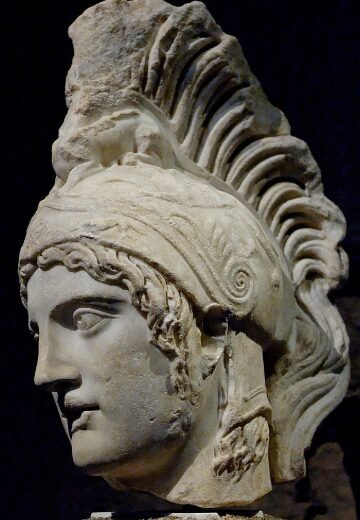
A statue of Ares, dated to the 2nd–3rd century AD, modeled after a Greek bronze original by Alkamenes from circa 420 BCE. The piece was excavated in 1925 at Rome’s Largo di Torre Argentina.
READ MORE: 9 Most Famous Sons of Zeus: From Ares to Perseus
Themes and Symbolism of the Shield of Heracles
The Shield of Heracles explores several key themes central to Greek literature and culture.
Firstly, Heracles embodies the ideal Greek hero, combining physical strength with moral righteousness. His victories are portrayed as divinely sanctioned, highlighting the interplay between mortal effort and divine intervention.
Secondly, the conflict between Heracles and Cycnus symbolizes the struggle between order (represented by Heracles) and chaos (embodied by Cycnus). The shield’s imagery further reinforces this dichotomy, juxtaposing scenes of harmony with depictions of violence.
The detailed description of the shield reflects the ancient Greek appreciation for art and its capacity to convey complex narratives. The shield serves as a microcosm of the world, blending mythological, natural, and societal elements.
Lastyly, Heracles’ confrontation with Cycnus underscores the importance of justice in Greek mythology. By defeating Cycnus, Heracles restores the sanctity of religious spaces and upholds the divine order.
Literary and Historical Significance
The Shield of Heracles occupies a unique position in Greek literature. While it draws heavily on the style and themes of Homeric epics, it also reflects Hesiod’s characteristic interest in moral and cosmic order. The poem’s ekphrastic description of the shield demonstrates the fusion of oral and visual traditions in ancient Greek culture.
From a historical perspective, the poem offers valuable insights into the martial values, religious beliefs, and artistic sensibilities of the archaic Greek world. The shield’s imagery provides a glimpse into how the Greeks perceived their cosmos, blending mythological and natural elements in a unified vision.

Frequently Asked Auestions

Statue of Heracles at the National Archaeological Museum, Naples, Italy
Who is the author of The Shield of Heracles, and how is it stylistically categorized?
The poem is attributed to an unknown poet emulating Hesiod’s style. Though initially believed to be Hesiod’s work, its authorship has been questioned since the 3rd century BCE. Modern scholarship accepts it as a later composition influenced by Hesiod and Homer.
What is the central episode narrated in The Shield of Heracles?
The poem narrates an episode where Heracles and his nephew Iolaus confront Cycnus, son of Ares, known for murdering pilgrims traveling to Apollo’s sanctuary. Heracles kills Cycnus and later battles Ares, emerging victorious with Athena’s aid.
How does the poem establish Heracles’ divine lineage?
The poem begins by recounting how Alcmene, Heracles’ mother, bore twins after being impregnated by Zeus and her husband Amphitryon on the same night. This lineage emphasizes Heracles’ status as a demi-god favored by Zeus.
What prompts the confrontation between Heracles and Cycnus?
Cycnus, notorious for robbing and killing pilgrims near Apollo’s sanctuary, challenges Heracles to single combat. Heracles accepts the challenge, spurred by Apollo’s influence and his own sense of justice.

A relief work portraying the battle between Heracles and Cycnus.
How does Heracles defeat Cycnus, and what is the significance of this victory?
Heracles kills Cycnus with a spear thrust to the throat. This act not only eliminates a violent oppressor but also reaffirms Heracles’ role as an agent of divine justice, defending sacred spaces and order.
What role does Ares play in the poem, and how does his confrontation with Heracles end?
Ares, enraged by his son Cycnus’ death, attacks Heracles. The battle ends with Heracles wounding Ares in the thigh, forcing him to retreat. Athena’s intervention ensures Heracles’ survival and highlights divine favor.
What happens to Cycnus after his death?
Cycnus is buried by King Ceyx of Thessaly, but Apollo causes the river Anaurus to flood and erase his grave, symbolically obliterating his memory due to his evil deeds.
What is the significance of the shield described in the poem?
The shield is a microcosm of the world, blending scenes of war, peace, and mythological imagery. It symbolizes Heracles’ heroic role, the balance of chaos and order, and the interconnectedness of mortal and divine realms.
What imagery is depicted on the shield?
The shield includes scenes of battles, sieges, weddings, harvests, celestial elements, and mythological figures like Perseus and the Gorgons. These images reflect themes of conflict, harmony, and cosmic order.
What themes are central to The Shield of Heracles?
Key themes include heroism and divine justice, the conflict between order and chaos, the role of art as symbolism, and the tension between mortality and immortality.
How does the poem juxtapose mortality and immortality?
The poem contrasts Heracles’ mortal struggles with the eternal presence of gods like Athena and Ares, emphasizing the interplay between human effort and divine intervention.
What is the literary significance of the poem?
The poem bridges Hesiodic and Homeric traditions, showcasing themes of moral and cosmic order while reflecting the artistry of ekphrasis, a vivid description of art that merges oral and visual culture.
Why is The Shield of Heracles considered unique in Greek literature?
Though it borrows from Hesiod and Homer, the poem stands out for its rich ekphrasis and narrative focus on a single heroic episode. It skillfully blends action, artistry, and mythology.





