Timeline of Ancient Sumer
by World History Edu · April 7, 2025
Long before ancient Egypt built its pyramids or the Roman Empire rose to power, a civilization emerged in southern Mesopotamia that would lay the foundation for much of human progress. This was Ancient Sumer one of the world’s earliest urban societies. Located in what is now southern Iraq, Sumerians developed writing, built some of the first cities, and created systems of government, law, and religion that still influence us today.
Let’s explore the major events and periods in the timeline of Ancient Sumer.

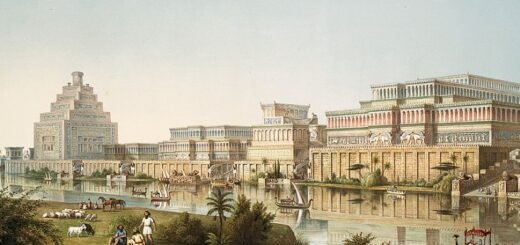
The great ziggurats of Sumer stood as stairways between earth and sky—symbols of early civilization.
c. 5000 BCE – Early Settlements in Southern Mesopotamia
Before Sumerian civilization took shape, the land along the Tigris and Euphrates rivers was home to early farming communities. These people grew crops, raised animals, and built small villages. They also developed irrigation systems to manage the flow of river water, making the land more productive.
This laid the groundwork for the complex society that would follow.
c. 4000 BCE – The Ubaid Period
The Ubaid culture marks the beginning of large-scale settlement in southern Mesopotamia. During this time, villages grew into larger towns with temples, public buildings, and centralized leadership. People began to specialize in different types of work, including pottery, weaving, and trading.
Although not yet fully Sumerian, the Ubaid people created the cultural and technological foundation upon which the Sumerians would build.
c. 3500–3100 BCE – The Uruk Period
Named after the city of Uruk, this period saw the birth of urban civilization. Uruk became the first true city in the world, with a population that may have reached 40,000 people. The city featured monumental temples known as ziggurats, public buildings, and complex streets.
One of the most important inventions of this time was cuneiform writing. Originally used for keeping records of trade and taxes, this early writing system was made by pressing wedge-shaped symbols into clay tablets. Cuneiform was the first known form of written communication.
The Uruk Period also saw the rise of a central government, with kings and priests sharing power. Religion was deeply connected to leadership, and rulers claimed to govern with the support of the gods.
c. 2900–2334 BCE – The Early Dynastic Period
During this time, the region of Sumer was made up of city-states, each with its own king, army, and patron god or goddess. Important city-states included Uruk, Ur, Lagash, Eridu, Nippur, and Kish.
The city-states often fought each other for control of land and water. Despite the conflicts, this was a time of great cultural and technological achievement. Sumerians created legal codes, expanded their writing system, and made advances in math, astronomy, and medicine.
The Epic of Gilgamesh, one of the oldest known stories in the world, comes from this period. It tells the tale of a powerful king who searches for the meaning of life and immortality.
Religion was central to daily life. Each city had a temple complex dedicated to its patron deity, and ziggurats were built to honor the gods and connect heaven and earth.
c. 2600 BCE – The Royal Tombs of Ur
One of the most remarkable discoveries from this period is the Royal Cemetery of Ur, where archaeologists found richly decorated tombs containing gold, jewelry, musical instruments, and even human sacrifices. These tombs showed the wealth and complexity of Sumerian society.
The famous Queen Puabi was buried with a golden headdress and ornaments, providing insight into the status of elite women in Sumerian culture.
c. 2500 BCE – The Kings of Lagash and Umma
Two city-states, Lagash and Umma, fought a long conflict over farmland. The ruler of Lagash, Eannatum, claimed victory and recorded it on the Stele of the Vultures, one of the earliest examples of historical writing and war propaganda.
This event highlighted how Sumerian kings used military power and divine authority to maintain control.
c. 2334–2279 BCE – The Rise of Sargon of Akkad
The Sumerian city-states were eventually conquered by Sargon of Akkad, a powerful ruler from the north. Sargon defeated the Sumerian king of Kish and created the Akkadian Empire, the first empire in world history.

Artifacts like this golden helmet tell the story of kings, gods, and the birth of organized society in Sumer.
Although Sargon was not Sumerian by origin, he adopted many Sumerian traditions and kept their language and religious practices alive. The Akkadian language became dominant in government and daily use, though Sumerian continued in religious and scholarly settings.
Sargon’s conquest marked the end of the independent Sumerian city-states, but not the end of Sumerian culture.
c. 2150–2000 BCE – The Neo-Sumerian Revival (Third Dynasty of Ur)
After the fall of the Akkadian Empire due to internal struggles and external invasions, Sumerian culture experienced a revival under the Third Dynasty of Ur. This period is often called the Neo-Sumerian Empire.
One of the most important rulers was Ur-Nammu, who created the Code of Ur-Nammu, one of the earliest known legal codes. He also built grand ziggurats and revived Sumerian religion and literature.
The city of Ur became the political and cultural center once again. Government officials kept detailed records using cuneiform, and scribes were highly respected members of society.
This period restored much of Sumer’s glory and influence across Mesopotamia.
c. 2000–1900 BCE – The Decline of Sumer
Despite the cultural revival, the Neo-Sumerian Empire eventually weakened due to invasions from nomadic groups like the Elamites and the Amorites. These groups took over many Sumerian cities, including Ur, and replaced local rulers with their own.
The city of Babylon began to rise under the Amorites, leading to the Old Babylonian Period. While Sumerian culture influenced the new rulers, the Sumerian language gradually disappeared from everyday use, surviving only in religious and literary texts.
By around 1900 BCE, Sumerian civilization had officially ended as a political force. However, its legacy lived on through the cultures that followed.
Why Is Ancient Sumer Important Today?
Ancient Sumer made lasting contributions that continue to shape the world. These include:
The invention of writing (cuneiform), which allowed for the recording of history, law, and literature
The development of cities with organized governments, trade, and religious institutions
Advances in math, including the concept of dividing time into 60-second minutes and 60-minute hours
The creation of law codes that influenced later civilizations
The building of temples and ziggurats, showing early human attempts to connect architecture with spirituality
Their contributions to literature, especially the Epic of Gilgamesh, have influenced storytelling across cultures and centuries
Fun Fact
The Sumerians believed that writing was a gift from the gods. Their god of writing, Nisaba, was often depicted holding a stylus and a tablet. Scribes were so important in society that they were often buried with their writing tools.

“In Sumer, cities rose from mud and dreams, and with a wedge on clay, humanity found its voice.”
Frequently Asked Questions (FAQ)
1. Where was Ancient Sumer located?
Ancient Sumer was located in the southern part of Mesopotamia, in what is now southern Iraq. It was situated between the Tigris and Euphrates Rivers, an area known for its fertile soil and ideal farming conditions.
2. Who were the Sumerians?
The Sumerians were one of the earliest known civilizations in human history. They built some of the first cities, invented writing, and developed advanced systems of government, religion, and law.
3. What were the major cities of Ancient Sumer?
Some of the most important city-states of Ancient Sumer included Ur, Uruk, Lagash, Eridu, Nippur, and Kish. Each city was politically independent and had its own ruler and patron deity.
4. What is cuneiform, and why is it important?
Cuneiform is the world’s first known system of writing, invented by the Sumerians around 3200 BCE. It was written by pressing wedge-shaped symbols into clay tablets and used for recording laws, trade, stories, and daily events.
5. What is a ziggurat?
A ziggurat is a large, stepped temple tower built in Sumerian cities. It served as the religious center of the city and was believed to connect the heavens with the earth. Ziggurats were dedicated to the city’s patron god or goddess.
6. Who was Sargon of Akkad and how did he affect Sumer?
Sargon of Akkad was a powerful ruler from northern Mesopotamia who conquered the Sumerian city-states around 2334 BCE. He established the Akkadian Empire, the world’s first known empire. Although he wasn’t Sumerian, he kept many Sumerian traditions alive.
7. What is the Epic of Gilgamesh?
The Epic of Gilgamesh is one of the oldest surviving works of literature in the world. It tells the story of Gilgamesh, a Sumerian king who seeks immortality. The epic explores themes like friendship, mortality, and the meaning of life.
8. What was the Code of Ur-Nammu?
The Code of Ur-Nammu is one of the oldest known legal codes, written by King Ur-Nammu of Ur around 2100 BCE. It included laws and punishments and helped maintain justice and order in Sumerian society.
9. Why did Sumer decline?
Sumer declined due to a combination of invasions, internal conflict, and environmental issues like soil exhaustion and water mismanagement. By around 1900 BCE, Sumerian city-states were absorbed by other cultures, including the Babylonians.
10. What is the legacy of Ancient Sumer?
Ancient Sumer’s legacy includes:
-
The invention of writing
-
The first legal systems
-
Early urban planning
-
Contributions to math, science, and literature
Their influence can be seen in the civilizations that followed, including the Akkadians, Babylonians, and Assyrians—and even in modern society.