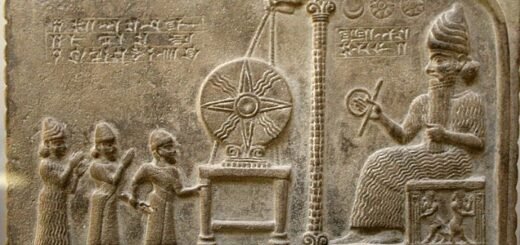
Timeline of the Hittite Empire
When we think about ancient empires, names like Egypt, Babylon, and Rome often come to mind. But there’s one powerful and influential civilization that deserves just as much attention—the Hittite Empire. Based in Anatolia, or modern-day Turkey, the Hittites created a vast empire that rivaled Egypt and Babylon. They were builders, warriors, lawmakers, and diplomats. They used advanced chariots in warfare, signed one of the world’s first peace treaties, and developed a unique writing system.
The story of the Hittites is both mysterious and exciting. For centuries, no one even knew they existed until archaeologists uncovered their lost cities and tablets in the 19th century. Let’s explore the timeline of the Hittite Empire and discover how these forgotten people helped shape ancient history.
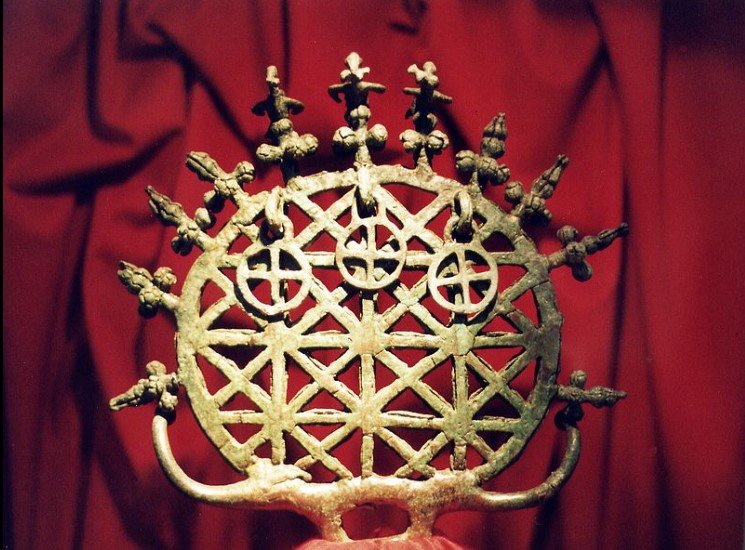
The Hittites ruled from the Anatolian highlands, blending power, diplomacy, and sacred tradition.
c. 2500–2000 BCE – Pre-Hittite Civilizations in Anatolia
Long before the Hittites appeared, Anatolia was already home to many cultures. One of the most important early civilizations in this region was the Hattians, who lived in central Anatolia. They built towns and temples, worshipped a variety of nature gods, and traded with Mesopotamia.
During this time, groups of Indo-European-speaking tribes began moving into the region. These migrations would lay the foundation for the Hittite people and their language, which shares roots with Latin, Greek, and English.
c. 2000–1700 BCE – Arrival of the Hittites and the Old Kingdom
By around 2000 BCE, the Hittites had settled in central Anatolia. They eventually established their capital at Hattusa, a city surrounded by walls and located in a mountainous region. From here, the Hittites began building their kingdom.
One of the earliest known Hittite kings was Anitta, who conquered the city of Hattusa and cursed it, only for it to later become the Hittite capital. Anitta was followed by other rulers who expanded Hittite control over neighboring regions.
This period is known as the Old Hittite Kingdom, and although records are limited, it’s clear the Hittites were starting to become a major force in the region. They used a form of cuneiform writing adapted from Mesopotamia and spoke their own Indo-European language, which is the oldest known written Indo-European language in history.
c. 1650–1500 BCE – Expansion and Consolidation
The Hittites grew stronger under kings such as Hattusili I, who re-established Hattusa as the capital. He led campaigns across Anatolia and into Syria, capturing cities and spreading Hittite influence. He was succeeded by Mursili I, who achieved one of the most remarkable military victories of the ancient world—marching all the way to Babylon and capturing the city in 1595 BCE.
This victory shocked the Mesopotamian world. However, the Hittites did not stay in Babylon and soon returned to their homeland. After Mursili’s assassination, the empire entered a period of internal struggle and instability. The power of the Hittite kings weakened, and local rulers began acting independently.
Despite these challenges, the Hittite state survived and began to rebuild.
c. 1500–1400 BCE – The Middle Kingdom and Struggles
During this time, the Hittite Kingdom was not as powerful as it had once been. It faced threats from neighboring tribes, including the Kaska people from the north, who often raided Hittite territory. Political power was unstable, and rulers changed frequently.
However, the Hittite bureaucracy and royal traditions remained intact. Kings continued to write laws, negotiate with neighbors, and worship a complex set of gods. The Hittite religion was a blend of native Anatolian beliefs and influences from the Hurrians, another powerful group in the region.
This period is often called the Middle Kingdom, and though it was a time of difficulty, it paved the way for a remarkable comeback.
c. 1400–1200 BCE – The New Kingdom (Empire Period)
The New Kingdom, also known as the Hittite Empire, marks the height of Hittite power. Under strong and ambitious kings, the Hittites expanded their territory across Anatolia and deep into Syria, clashing with powerful rivals like Egypt and Mitanni.
One of the greatest Hittite kings was Suppiluliuma I, who reorganized the government, strengthened the army, and led successful campaigns against the Mitanni kingdom and other rivals. He also took control of northern Syria, bringing important cities like Aleppo under Hittite rule.
Suppiluliuma I became famous for his diplomatic skills as well. After his death, the Hittites entered into a series of wars with Egypt for control of Syria.
c. 1274 BCE – The Battle of Kadesh
The most famous event in Hittite history is the Battle of Kadesh, fought between the Hittite king Muwatalli II and the Egyptian pharaoh Ramesses II. The battle was one of the largest chariot battles in ancient history and took place near the city of Kadesh in modern-day Syria.
Both sides claimed victory, but neither was able to fully defeat the other. The outcome led to the first known peace treaty in world history, signed between the Hittites and the Egyptians around 1259 BCE. Copies of the treaty have been found in both Hattusa and Egypt.
This treaty shows the Hittites were not just warriors but skilled diplomats as well.
c. 1200 BCE – The Fall of the Hittite Empire
Despite their success, the Hittite Empire began to decline in the late 13th century BCE. Several factors contributed to its fall. The Sea Peoples, mysterious invaders from the west, attacked coastal cities and disrupted trade. The Kaska continued raiding from the north, and climate changes likely caused drought and food shortages.
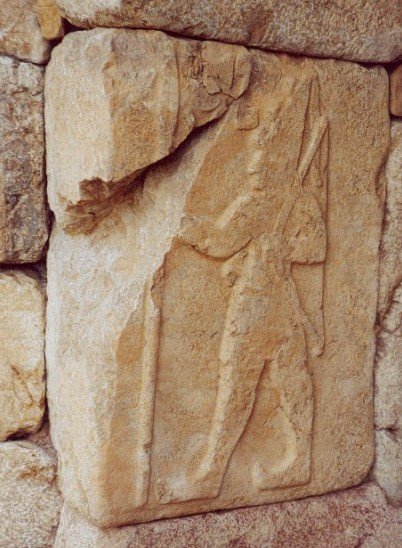
Reliefs like this offer a glimpse into a warrior civilization that once stood toe-to-toe with mighty Egypt.
Internal conflicts and power struggles also weakened the central government. The last known king of Hattusa was Suppiluliuma II, who tried to defend the empire but ultimately failed.
By around 1180 BCE, the capital city of Hattusa was destroyed and abandoned. The great Hittite Empire had come to an end, but its culture and people did not vanish completely.
Aftermath: Neo-Hittite States and Cultural Legacy
After the fall of the main empire, several small Neo-Hittite states survived in northern Syria and southeastern Anatolia. These states continued Hittite traditions, including the use of hieroglyphic writing, for several more centuries. However, they eventually fell under the control of the Assyrians, Arameans, and later the Persians.
The Hittites were forgotten for thousands of years. It wasn’t until the 19th and 20th centuries that archaeologists uncovered their cities, tablets, and artifacts. Today, sites like Hattusa and tablets written in Hittite have taught us about this remarkable civilization.
Hittite Contributions to Civilization
The Hittites made lasting contributions to ancient culture and human development:
They signed the world’s first peace treaty, showing the importance of diplomacy
They developed a legal system based on fairness and included protections for the poor and enslaved
They mastered ironworking, giving them advanced tools and weapons before many of their rivals
Their chariot tactics revolutionized ancient warfare
They adapted and spread writing systems, especially cuneiform
They created beautiful architecture and art, including lion gates, temple complexes, and stone reliefs
Their religion included hundreds of gods and influenced other cultures in the region
Fun Fact
One of the most amazing discoveries in Hattusa was a massive stone gate called the Lion Gate, featuring two large carved stone lions. These statues were meant to protect the city and scare off evil spirits—and possibly enemy armies too!
Conclusion
The Hittite Empire was one of the great powers of the ancient Near East. Though it was forgotten for centuries, modern discoveries have shown that the Hittites were brilliant warriors, clever diplomats, and master builders. Their ability to adapt ideas from other cultures while creating a unique society of their own made them true pioneers of ancient civilization.
By understanding the timeline of the Hittite Empire, we see how early humans built powerful states, managed complex societies, and left behind legacies that shaped the world. From their rise in the hills of Anatolia to their battles with Egypt and their eventual fall, the Hittites offer us a fascinating look into the ancient world.
Frequently Asked Questions (FAQ)
Who were the Hittites?
The Hittites were an ancient Indo-European people who built a powerful empire in Anatolia (modern-day Turkey) and Syria from around 1650 to 1200 BCE. They were known for their military skill, use of chariots, and diplomacy.

The Hittites forged iron and destiny, standing at the crossroads of gods and empires.
Where was the capital of the Hittite Empire?
The capital of the Hittite Empire was Hattusa, located in central Anatolia. It was surrounded by strong walls and had impressive gates, temples, and royal buildings.
What language did the Hittites speak?
The Hittites spoke an Indo-European language known as Hittite, the oldest written Indo-European language we know. It was written using a modified form of cuneiform script borrowed from Mesopotamia.
What was the Battle of Kadesh?
The Battle of Kadesh was a massive battle between the Hittites and Egyptians around 1274 BCE. It ended in a draw and led to the world’s first known peace treaty.
What caused the fall of the Hittite Empire?
The empire fell due to a combination of foreign invasions, internal conflict, food shortages, and the mysterious movements of the Sea Peoples. The capital Hattusa was destroyed around 1180 BCE.
Did the Hittites disappear completely?
No. After the fall of the main empire, smaller Neo-Hittite states survived for several centuries. Eventually, these were absorbed by larger empires like the Assyrians.
What is a Neo-Hittite state?
A Neo-Hittite state was a smaller kingdom that continued Hittite traditions and culture after the collapse of the main empire. These existed mostly in northern Syria and southeastern Turkey.
How did we learn about the Hittites?
For centuries, the Hittites were unknown until archaeologists in the 1800s and 1900s uncovered their ruins, inscriptions, and clay tablets, especially at Hattusa. These discoveries revealed their language, history, and culture.
What made the Hittite legal system unique?
The Hittite laws were known for being relatively fair and practical. They included protections for slaves and women and used fines instead of harsh punishments in many cases.
Why is the Hittite Empire important?
The Hittites played a major role in ancient history. They influenced the balance of power in the ancient Near East, developed key ideas in law and diplomacy, and helped spread iron technology and writing systems across the region.