Timeline of the Babylonian Empire
The Babylonian Empire is one of the most fascinating civilizations in ancient history. Known for its contributions to law, science, literature, and architecture, Babylon left a legacy that still influences us today. Located in Mesopotamia, the land between the Tigris and Euphrates Rivers, Babylon rose to power not once but twice—first under the Old Babylonian Empire and later during the Neo-Babylonian Empire.
This timeline takes you through the key moments in Babylon’s history, from its early beginnings to its rise and fall, helping you understand how this ancient empire helped shape the world.

The Ishtar Gate stood as a majestic entry into Babylon—an empire of culture, science, and law.
c. 1894 BCE – Babylon is Founded
The city of Babylon began as a small town during the rule of the Akkadian Empire and later the Sumerians. Around 1894 BCE, a group of Amorites, a nomadic tribe, took control of the city. Under their rule, Babylon started to grow in power and importance in southern Mesopotamia.
This period marks the beginning of what is known as the Old Babylonian Period.
c. 1792 BCE – Hammurabi Becomes King
One of the most famous names in Babylonian history, Hammurabi, became king around 1792 BCE. He transformed Babylon from a city-state into an empire by conquering neighboring regions, including Sumer and Akkad.
Hammurabi was not just a warrior; he was also a lawgiver. He created the Code of Hammurabi, one of the earliest and most complete written legal codes in history. The laws covered everything from trade to family life and used the principle of “an eye for an eye.”
This legal system helped unify the diverse people of the empire under a shared set of rules.
c. 1750 BCE – Death of Hammurabi
After Hammurabi’s death, his successors were not as strong. The empire began to weaken, and parts of it broke away. Babylon remained a cultural and religious center, but its political power declined.
Despite this, Hammurabi’s influence continued. His law code was copied and studied for centuries and even influenced legal thinking in other parts of the ancient world.
c. 1595 BCE – Hittites Sack Babylon
The Old Babylonian Empire came to a sudden end when the Hittites, a powerful group from Anatolia (modern-day Turkey), invaded and sacked the city of Babylon. They looted the city and removed the statue of Marduk, the main god of Babylon.
After the invasion, the city was taken over by another group called the Kassites, who ruled Babylon for several centuries. Although the Kassites didn’t expand the empire, they kept Babylon stable and maintained its culture and traditions.
c. 1000–700 BCE – Babylon Under Assyrian Control
For several centuries, Babylon was a part of larger empires, especially the Assyrian Empire. While the city kept its cultural and religious importance, it was not politically independent. Assyrian kings often placed their own governors in Babylon, and rebellions were frequent.

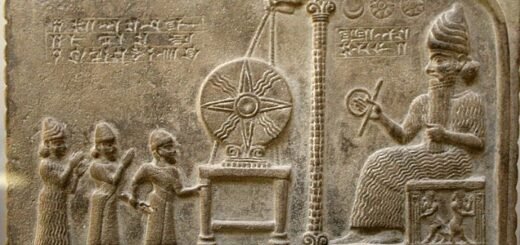
This stone stele bears Hammurabi’s Code—one of the oldest recorded systems of law in human history.
Despite the political troubles, Babylon continued to be a center of learning, astronomy, and literature.
626 BCE – Rise of the Neo-Babylonian Empire
A Babylonian general named Nabopolassar led a successful revolt against the Assyrians and established the Neo-Babylonian Empire. He formed an alliance with the Medes, another powerful group from Iran, and together they destroyed the Assyrian capital Nineveh in 612 BCE.
This marked the beginning of a second golden age for Babylon, one that would reach its peak under Nabopolassar’s son.
605–562 BCE – Reign of Nebuchadnezzar II
Nebuchadnezzar II is the most famous ruler of the Neo-Babylonian Empire. He expanded the empire, fought wars in the Levant (modern-day Syria, Lebanon, and Israel), and captured Jerusalem in 586 BCE. During this time, many people from the Kingdom of Judah were exiled to Babylon—a period known as the Babylonian Captivity.
Nebuchadnezzar also made Babylon one of the most magnificent cities in the ancient world. He built huge walls, temples, palaces, and the legendary Hanging Gardens of Babylon, one of the Seven Wonders of the Ancient World (though its actual existence is still debated by historians).
He also restored the massive ziggurat of Etemenanki, which some believe inspired the story of the Tower of Babel in the Bible.
c. 562–539 BCE – Decline of the Neo-Babylonian Empire
After Nebuchadnezzar’s death, a series of weaker kings came to power. The empire struggled with internal problems and was no longer expanding. Religious tensions also grew, especially when King Nabonidus tried to promote a different god over Marduk, the city’s patron deity.
This created unrest among the priesthood and citizens, weakening the unity of the empire.
539 BCE – Babylon is Conquered by the Persian Empire
In 539 BCE, Cyrus the Great, the ruler of the Persian Empire, conquered Babylon without a major battle. According to historical accounts, the Babylonians welcomed him as a liberator.
Cyrus respected Babylonian customs and allowed many exiled peoples, including the Jews, to return to their homelands. Although Babylon became part of the Persian Empire, it remained an important city for many years.
This event marked the end of the Babylonian Empire, but not the end of Babylon’s importance in history.
Legacy of the Babylonian Empire
The Babylonian Empire left behind a rich cultural and intellectual legacy:
It gave the world one of the earliest legal systems through the Code of Hammurabi
Babylonian scholars made important contributions to math, astronomy, and writing
The city of Babylon became a symbol of power, wisdom, and mystery in later cultures
Many Biblical stories and ancient myths were set in or inspired by Babylon
The achievements of Babylon influenced later civilizations, including the Persians, Greeks, and Romans
Even today, we use a base-60 number system for time (60 seconds in a minute, 60 minutes in an hour) thanks to the Babylonians
Fun Fact
The famous Ishtar Gate, built by Nebuchadnezzar II, was one of the main entrances to the city of Babylon. It was decorated with blue tiles and images of dragons and bulls. Today, you can see parts of it reconstructed in the Pergamon Museum in Berlin, Germany.

In Babylon, law was carved in stone, and justice stood not above kings, but beside them.
Frequently Asked Questions (FAQ)
1. What was the Babylonian Empire?
The Babylonian Empire was an ancient Mesopotamian civilization centered around the city of Babylon. It had two major periods of power: the Old Babylonian Empire under Hammurabi and the Neo-Babylonian Empire under Nebuchadnezzar II.
2. Who was Hammurabi?
Hammurabi was a Babylonian king best known for creating the Code of Hammurabi, one of the earliest and most detailed legal codes in human history.
3. What was the Code of Hammurabi?
The Code of Hammurabi was a set of 282 laws carved into a stone pillar. It included rules about trade, family, crime, and punishment, and it followed the principle of “an eye for an eye.”
4. Who was Nebuchadnezzar II?
Nebuchadnezzar II was the greatest king of the Neo-Babylonian Empire. He expanded the empire, built grand structures in Babylon, and was involved in the conquest of Jerusalem.
5. What were the Hanging Gardens of Babylon?
The Hanging Gardens are said to have been a magnificent terraced garden built by Nebuchadnezzar II. They are considered one of the Seven Wonders of the Ancient World, although some historians debate whether they really existed.
6. What happened to the Babylonian Empire?
The Babylonian Empire ended in 539 BCE when it was conquered by Cyrus the Great of Persia. Babylon became part of the Persian Empire, though the city remained culturally important.
7. What was Babylon’s contribution to science and math?
Babylonian scholars made key advances in astronomy, algebra, and timekeeping. They developed a base-60 number system, which is why we have 60 seconds in a minute and 60 minutes in an hour.
8. Why is Babylon important today?
Babylon influenced later civilizations and religions. Its laws, stories, and scientific achievements continue to be studied and admired. It also appears in many religious texts and legends.





Who are the kings who ruled Babylon from the beginning to the second end with Cyrus the Great?