What were the Townshend Acts?
The Townshend Acts, passed by the British Parliament between 1767 and 1768, were a series of legislative measures designed to assert control over the American colonies and raise revenue for the British government. Named after Charles Townshend, the Chancellor of the Exchequer who introduced them, these acts became a flashpoint in the escalating conflict between Britain and its American colonies. The measures not only heightened colonial grievances but also laid the groundwork for the American Revolution.
Historical Context
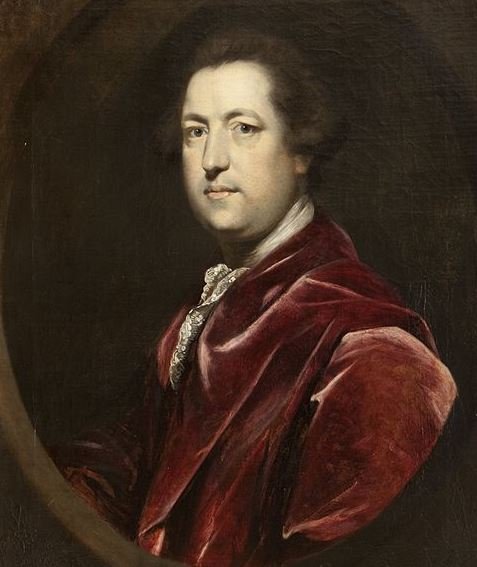
The Townshend Acts were a turning point in the relationship between Britain and its American colonies. Image: Portrait of Charles Townshend by English artist Joshua Reynolds.
Aftermath of the French and Indian War
The French and Indian War (1754–1763), a North American theater of the global Seven Years’ War, left Britain with a massive national debt. To recoup these expenses, the British government sought to levy taxes on its American colonies, which were seen as beneficiaries of British military protection during the war. Parliament believed these measures were fair and necessary for maintaining colonial administration and defense.
However, the colonies viewed these taxation policies through a different lens. American colonists had long operated with a degree of autonomy and resisted Parliamentary interference. The Stamp Act of 1765, which imposed a direct tax on legal documents, newspapers, and other paper goods, provoked widespread outrage and was repealed in 1766 due to strong colonial resistance. Seeking an alternative means to generate revenue and assert authority, Charles Townshend proposed a series of indirect taxes, known as the Townshend Acts.
Provisions of the Townshend Acts
The Townshend Acts encompassed five main legislative measures, each with specific goals:
- The Revenue Act of 1767: This act imposed duties on imported goods such as glass, lead, paints, paper, and tea. Unlike the Stamp Act, these taxes were indirect, levied on goods at the point of importation, rather than directly on colonial consumers.
- The Commissioners of Customs Act of 1767: This act created a Board of Customs Commissioners based in the colonies to enforce trade regulations and curb smuggling, which had been a persistent issue in the American colonies.
- The Indemnity Act of 1767: By reducing taxes on tea imported to Britain by the British East India Company, this act allowed the company to undercut colonial merchants and maintain its profitability.
- The New York Restraining Act of 1767: This punitive measure suspended the legislative powers of New York’s Assembly as punishment for its refusal to comply with the Quartering Act of 1765, which required colonies to house and supply British troops.
- The Vice Admiralty Court Act of 1768: This act expanded the jurisdiction of vice-admiralty courts, allowing them to handle trade-related offenses without juries. This bypassed the colonial judicial system, which often sympathized with smugglers.
Objectives of the Townshend Acts
The Townshend Acts served several purposes for the British government:
- Raise Revenue: Generate funds to pay the salaries of colonial governors and judges, ensuring their loyalty to Britain rather than to colonial legislatures.
- Enforce Trade Compliance: Strengthen mechanisms to curb smuggling and enforce customs duties.
- Punitive Action: Discipline colonies, such as New York, that resisted British policies like the Quartering Act.
- Assert Parliamentary Authority: Reinforce the principle that Parliament had the right to tax and legislate for the colonies, as affirmed by the Declaratory Act of 1766.
Colonial Reaction and Resistance
The Townshend Acts ignited fierce opposition in the American colonies, with resistance manifesting through economic, political, and social channels.
Economic Boycotts
Colonists organized non-importation agreements, refusing to purchase British goods subject to the new taxes. These boycotts significantly reduced British exports, putting economic pressure on British merchants and manufacturers, who lobbied for repeal.
Political and Intellectual Opposition
Colonial leaders criticized the acts as a violation of their rights. John Dickinson’s Letters from a Farmer in Pennsylvania articulated a compelling argument against taxation without representation, resonating widely across the colonies. Similarly, the Massachusetts Circular Letter, authored by Samuel Adams and James Otis, called for unified colonial resistance, challenging Parliament’s authority.

Image: Letters from a Farmer in Pennsylvania by John Dickinson
Escalation of Tensions
The presence of customs officials and the enforcement of trade laws led to violent confrontations, such as the seizure of John Hancock’s ship Liberty in 1768. Tensions culminated in the Boston Massacre of 1770, where British soldiers killed five colonists during a confrontation in Boston. This event galvanized colonial unity and deepened anti-British sentiment.
Partial Repeal and Retention of the Tea Tax
In 1770, under the leadership of Frederick, Lord North, Parliament repealed most of the Townshend duties due to the economic impact of colonial boycotts and unrest. However, the tax on tea was retained as a symbolic assertion of Parliament’s authority over the colonies. This decision proved consequential, as it kept the issue of taxation alive and set the stage for further conflict.
Long-Term Consequences

The Tea Act and Boston Tea Party
The retention of the tea tax led to the passage of the Tea Act of 1773, which allowed the British East India Company to sell tea directly to the colonies at reduced prices. Although the act lowered tea prices, many colonists saw it as a ploy to enforce Parliament’s right to tax. Resistance culminated in the Boston Tea Party, during which colonists destroyed a shipment of taxed tea in protest.
The Intolerable Acts
In response to the Boston Tea Party, Parliament enacted the Intolerable Acts (also known as the Coercive Acts) in 1774. These punitive measures further alienated the colonies, leading to the formation of the First Continental Congress, which coordinated colonial resistance.
Path to Revolution
The Townshend Acts contributed to the militarization of colonial resistance. Incidents such as the burning of the British ship Gaspee in 1772 and the drilling of colonial militias foreshadowed the outbreak of armed conflict. The Battles of Lexington and Concord in April 1775 marked the beginning of the American Revolution.
Significance of the Townshend Acts
The Townshend Acts were pivotal in the deterioration of relations between Britain and its American colonies. Their significance lies in several key areas:
Colonial Unity and Resistance
The acts united the colonies in opposition to British policies. Coordinated boycotts, protests, and legislative actions fostered a sense of shared purpose and laid the groundwork for the Continental Congress and the push for independence.
Economic Impact
The boycotts significantly disrupted British trade, demonstrating the colonies’ economic leverage. This impact pressured Parliament to partially repeal the Townshend duties, revealing the power of collective colonial action.
Assertion of Parliamentary Authority
The Townshend Acts exemplified Parliament’s determination to assert its authority over the colonies, even at the cost of escalating tensions. The retention of the tea tax became a lasting symbol of British intransigence.
Precursor to Revolution
The acts and their enforcement directly contributed to key events such as the Boston Tea Party and the Intolerable Acts. They revealed the deep divisions between British and colonial conceptions of governance and rights, pushing the colonies closer to declaring independence.
Legacy of Resistance
The ideological and practical resistance to the Townshend Acts became a template for future revolutionary actions. They exemplified the colonies’ willingness to challenge British authority and defend their liberties, inspiring the development of a new, independent nation.
Conclusion
The Townshend Acts were a turning point in the relationship between Britain and its American colonies. By imposing taxes and asserting authority, these measures deepened colonial grievances and fostered a spirit of resistance that ultimately culminated in the American Revolution. While Parliament sought to address administrative and fiscal challenges, the acts exposed the irreconcilable differences between British and colonial visions of governance, paving the way for the birth of the United States.
Frequently Asked Questions

What were the five key legislative measures under the Townshend Acts?
- The Revenue Act of 1767: Imposed duties on imported goods like glass, lead, paints, paper, and tea.
- The Commissioners of Customs Act of 1767: Established a Board of Customs Commissioners to enforce trade regulations.
- The Indemnity Act of 1767: Reduced taxes on tea imported to Britain by the British East India Company.
- The New York Restraining Act of 1767: Suspended New York’s legislative powers for defying the Quartering Act.
- The Vice Admiralty Court Act of 1768: Expanded the jurisdiction of courts handling trade offenses without juries.
What were the main goals of the Townshend Acts?
- Raise revenue to pay governors and judges, ensuring loyalty to Britain.
- Enforce compliance with trade regulations.
- Punish New York for resisting the Quartering Act.
- Establish the precedent that Parliament had the authority to tax and legislate for the colonies.
Why did the Townshend Acts face resistance in the colonies?
Colonists opposed the Acts because they lacked representation in Parliament and viewed the taxes as a violation of their rights. The principle of “No taxation without representation” became a rallying cry.
What forms of resistance did the colonists employ against the Townshend Acts?
- Public Debate: Pamphlets like John Dickinson’s Letters from a Farmer in Pennsylvania and the Massachusetts Circular Letter by Samuel Adams and James Otis argued against the Acts.
- Economic Boycotts: Non-importation agreements among merchants significantly reduced British exports.
- Protests and Violence: Escalated tensions, such as the Boston Massacre in 1770.
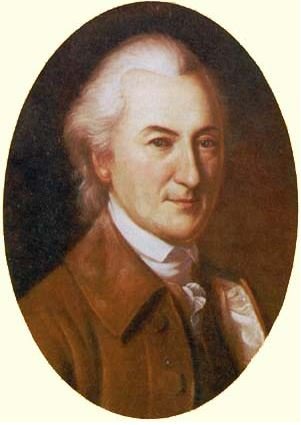
Image: A portrait of John Dickinson.
How did Parliament respond to colonial resistance?
In March 1770, under Frederick, Lord North, Parliament repealed most of the Townshend duties except for the tea tax. The tea tax was retained as a symbolic assertion of Parliamentary authority.
What were the long-term consequences of the Townshend Acts?
- The Tea Act of 1773: Led to the Boston Tea Party, where colonists destroyed a shipment of taxed tea.
- The Intolerable Acts of 1774: Punitive measures in response to the Tea Party that unified colonial opposition.
- The Path to Revolution: Incidents like the Gaspee burning and the Battles of Lexington and Concord marked the transition to open conflict.
What role did the Boston Tea Party play in the aftermath of the Townshend Acts?
The Boston Tea Party, a direct response to the retention of the tea tax, exemplified colonial defiance. It escalated tensions and prompted the Intolerable Acts, leading to the formation of the First Continental Congress.
What impact did the Townshend Acts have on colonial unity?
The acts fostered unity among the colonies through shared grievances and coordinated resistance, such as non-importation agreements and collective action through the Continental Congress.
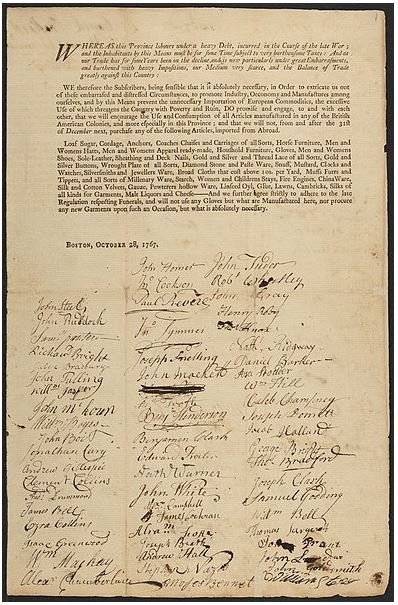
Image: Boston’s October 1767 Non-Importation Agreement.
How did the Townshend Acts influence the outbreak of the American Revolution?
By asserting Parliamentary authority and imposing taxes, the acts deepened colonial resentment and mistrust. Their enforcement, combined with British resistance to compromise, contributed to revolutionary sentiments and ultimately war.
Why was the tea tax retained even after most of the Townshend Acts were repealed?
The tea tax was retained to demonstrate Parliament’s authority to tax the colonies, a point of principle following the repeal of other duties.
What is the legacy of the Townshend Acts?
The Townshend Acts exemplify the colonies’ willingness to resist British control and defend their liberties. They played a pivotal role in the ideological and practical groundwork for the American Revolution, marking a key stage in the struggle for independence.





