Treaty of Paris in 1783
The Treaty of Paris, signed on September 3, 1783, stands as one of the most significant diplomatic achievements in world history, particularly for the United States.
It formally ended the American Revolutionary War (1775-1783), a conflict that had lasted for nearly eight years and saw the transformation of British colonial subjects into citizens of a new and independent nation.
The treaty not only confirmed the United States’ independence but also laid out specific terms that would define its future borders, its relations with Britain, and its role in the global community.
This treaty was signed by representatives of the United States and Great Britain, the two principal parties in the conflict. However, it was part of a larger series of treaties between Britain and the other European powers that had become involved in the conflict, such as France, Spain, and the Dutch Republic. Collectively, these agreements were known as the Peace of Paris.

Despite some unresolved issues, the treaty was a significant step in securing the United States’ place in the world and reshaping the global balance of power. Image: The front page of the Treaty of Paris.
READ MORE: Major Events that Led to the American Revolutionary War
Background of the Treaty
The origins of the Treaty of Paris lie in the American Revolutionary War, which began in 1775 as a rebellion by thirteen British colonies on the eastern coast of North America. These colonies had grown increasingly dissatisfied with British rule, particularly over issues such as taxation without representation, trade restrictions, and the lack of local governance. In 1776, the colonies declared their independence from Britain, setting off a conflict that would last until the Treaty of Paris was signed.
By 1781, the war had turned decisively in favor of the American forces, particularly after the British defeat at the Battle of Yorktown. However, while military victories helped pave the way for independence, diplomacy was just as crucial. The American cause had been bolstered by the support of European powers, most notably France, which had provided both military aid and financial backing. The Netherlands and Spain also played roles in weakening Britain’s ability to maintain the war effort, either by entering the war directly or by providing resources to the American side.
By 1782, both Britain and the United States were ready to discuss peace. The British government, facing mounting debts and a loss of political support for continuing the war, was inclined to negotiate. At the same time, the Americans were eager to secure formal recognition of their independence and end the fighting. As negotiations began, representatives from both sides, as well as other interested nations like France and Spain, gathered in Paris to begin drafting a peace agreement.
Key Representatives
The American side was represented by John Adams, Benjamin Franklin, and John Jay, three prominent figures who played key roles in the revolution and subsequent peace negotiations.
Adams was a strong advocate for American independence and had previously served as a diplomat in Europe.
Franklin, one of the most famous Americans of his time, had helped secure the critical French alliance during the war.
Jay, a skilled diplomat and future Chief Justice of the United States, had been involved in numerous negotiations before the peace talks in Paris.
On the British side, David Hartley and Richard Oswald were the main representatives. They worked on behalf of King George III and the British government, with instructions to secure peace while maintaining British interests in the region. Although Britain had been defeated militarily, it still sought to retain influence in North America and protect its remaining colonial holdings.

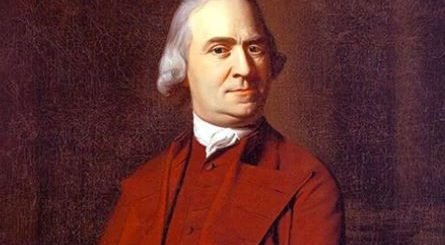
Image: Benjamin Franklin
READ MORE: Greatest Challenges Faced by the Founding Fathers
Terms of the Treaty
The Treaty of Paris consisted of several key provisions that laid the foundation for peaceful relations between the United States and Great Britain, as well as other future considerations. These provisions touched upon a variety of topics, ranging from territorial issues to trade agreements, and laid the groundwork for post-war relations between the two nations.
Recognition of U.S. Independence
The most important clause of the treaty was the formal recognition of the United States as a free and independent nation. Britain had long resisted this, hoping to retain the colonies within its empire.
However, the military defeats and political realities of the time forced Britain to concede, and this recognition was enshrined in the treaty. Article 1 specifically acknowledged the sovereignty of the United States, marking the end of colonial rule in America.
Boundaries
The treaty outlined new boundaries for the United States, which significantly expanded its territory. The borders were set from the Atlantic coast to the Mississippi River, and from the Great Lakes in the north to the northern boundary of Spanish Florida. The precise boundaries were as follows:
- To the north, the border with British Canada was set along the Great Lakes, though disputes over the exact boundary would persist for some time.
- To the west, the boundary was established at the Mississippi River, opening up vast new lands for potential American expansion.
- To the south, the border was drawn at the northern boundary of Florida, which was under Spanish control at the time.
These new boundaries effectively doubled the size of the United States and opened the door for westward expansion, a process that would shape much of the country’s future history.
Fishing Rights
The treaty granted Americans fishing rights off the coast of Newfoundland and in the waters around the Gulf of Saint Lawrence. Fishing had been a significant industry for the American colonies, and access to these waters was crucial for their economic future. The British conceded these rights to ensure a lasting peace, even though it allowed American fishermen access to areas traditionally dominated by the British.
Restoration of Property and Prisoners of War
The treaty also addressed the issue of property confiscated during the war. Many Loyalists—colonists who had remained loyal to the British crown—had their property seized by the American revolutionary governments. The treaty stipulated that Congress would recommend the return of this property, though in practice, many Loyalists were never compensated. In addition, the treaty called for the release of prisoners of war on both sides, facilitating the post-war recovery process.
Debt
Another important provision was the recognition of pre-war debts owed by American citizens to British creditors. The treaty confirmed that these debts would remain valid, and American courts were instructed to honor them. This provision was intended to normalize economic relations between the two nations and allow trade to resume.
Evacuation of British Troops
The treaty required the withdrawal of all British troops from American soil, particularly from frontier forts in the west. This would ensure the United States had full control over its newly recognized territory. However, this clause was not fully implemented until years later, as British forces remained in some areas for longer than expected.
Navigation of the Mississippi River
The treaty established that the Mississippi River would be open to both American and British navigation. This was a significant provision, as the river was a key artery for trade and communication in the western territories. The joint access to the river was intended to promote peaceful cooperation between the two nations in the years to come.

Challenges and Controversies
While the Treaty of Paris was a monumental achievement, it did not solve all the issues between the United States and Great Britain. Several challenges and controversies arose in the years following the treaty’s signing.
Boundary Disputes
Despite the detailed descriptions in the treaty, disputes over the exact location of the borders persisted. In the northwest, for example, the lack of precise geographic knowledge led to disagreements about where the boundary between Canada and the United States should be drawn. These disputes would not be fully resolved until the Jay Treaty of 1794 and other agreements in the 19th century.
British Troop Withdrawal
Although the treaty called for the evacuation of British forces from American territory, the British delayed their departure from several frontier forts in the Great Lakes region. They cited concerns over the treatment of Loyalists and other unresolved issues. The continued British presence in these areas caused tension between the two nations and contributed to the deteriorating relationship that eventually led to the War of 1812.
Loyalist Compensation
The treaty’s provision for the restitution of property to Loyalists was largely ignored by the American states. Many Loyalists had fled to Canada or Britain during the war, and their property had been confiscated. While the treaty recommended that these individuals be compensated, there was no enforcement mechanism, and many Loyalists received little or nothing in return. This failure contributed to lingering resentment between the United States and Britain.
Debts to British Creditors
The requirement that American courts honor debts owed to British creditors also proved controversial. Many American citizens, particularly those in the southern states, were reluctant to repay debts to British merchants. The issue of unpaid debts continued to strain relations between the two countries for several years.
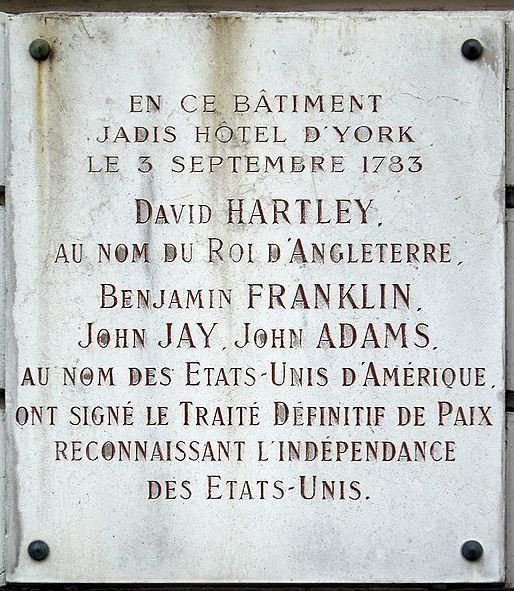
Image: A memorial plaque of the Treaty of Paris.
Native American Relations
One significant group left out of the negotiations entirely were the Native American tribes. The treaty made no provisions for the indigenous peoples who had lived in the western territories for centuries. Many Native American tribes had allied with the British during the war, hoping to prevent American expansion into their lands. With the signing of the treaty, these tribes were left to face American settlers pushing westward, leading to decades of conflict and displacement.
Long-term Impact
The Treaty of Paris was a turning point in world history, with profound implications for the United States, Great Britain, and the broader international community. For the United States, the treaty was the formal recognition of its independence and sovereignty. It set the stage for the nation’s westward expansion and growth into a continental power.
For Great Britain, the treaty marked the end of its first empire. The loss of the American colonies was a significant blow, both economically and politically. However, Britain would go on to focus its energies on building a new empire, particularly in Asia and Africa, leading to the expansion of British influence in the 19th century.
The treaty also had broader international consequences. It reshaped the geopolitical landscape of North America, with Spain regaining control of Florida and France having played a key role in the American victory. The success of the American Revolution and the Treaty of Paris also inspired other independence movements around the world, as oppressed peoples looked to the United States as a model for their own struggles for freedom.
Frequently Asked Questions
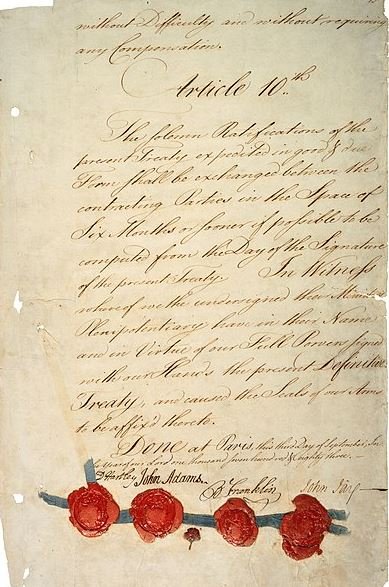
The Treaty of Paris, signed in 1783, was a monumental achievement that marked the end of the American Revolutionary War and recognized the independence of the United States. Image: The last page of the treaty.
What was the main outcome of the Treaty of Paris for the United States?
The main outcome of the Treaty of Paris was that it recognized the Thirteen Colonies as free, sovereign, and independent states, ending British control over them.
What did the treaty establish between British North America and the United States?
The treaty established the boundaries between British North America, which later became Canada, and the United States, though some disputes over boundaries in the northwest and southern regions persisted.
What other issues were addressed by the Treaty of Paris besides boundaries?
The treaty addressed issues such as fishing rights, the return of property, and the release of prisoners of war.
What was the broader group of agreements called that included the Treaty of Paris?
The broader group of agreements, including the Treaty of Paris, was collectively known as the Peace of Paris.
Which countries were involved in the separate peace treaties under the Peace of Paris?
The separate peace treaties involved countries like France, Spain, and the Dutch Republic, which had supported the American cause.

Image: A map highlighting the US and its territories after the peace treaty.
What part of the treaty remains in effect today?
Today, only Article 1, which formally recognizes the United States as an independent nation, remains in effect.
Why was the Treaty of Paris significant for the United States?
The Treaty of Paris was significant because it established the United States as a sovereign nation and paved the way for its future growth and development.