Who was Quintus Aurelius Symmachus?
Quintus Aurelius Symmachus (c. 345 – 402) was a prominent Roman statesman, orator, and man of letters who lived during a period of transition in the Roman Empire as Christianity became the dominant religion. Symmachus is best known for his advocacy of traditional Roman religion and culture at a time when the old pagan practices were being increasingly marginalized. His life and works represent a critical moment in the history of late antiquity, as the old aristocratic class struggled to maintain its cultural identity in the face of growing Christian influence.
Early Life and Education
Quintus Aurelius Symmachus was born into an aristocratic family in Rome, the son of Lucius Aurelius Avianius Symmachus, who served as urban prefect of the city twice. His mother, whose name is not preserved, was the daughter of Fabius Tatianus, a consul in 337, and also an urban prefect. Symmachus was thus born into a lineage of high-ranking officials deeply embedded in the Roman political system. He had two brothers, both of whom served as provincial governors, and a sister who may have connected the Symmachus family to the influential Christian Anicii family through marriage, signifying the family’s deep political connections.
Symmachus was educated in Gaul, likely at Bordeaux or Toulouse, regions known for their intellectual and cultural vibrancy during the late Roman Empire. His time in Gaul had a significant impact on him, especially in developing his lifelong passion for literature and rhetoric. During his early years, Symmachus cultivated relationships with notable intellectual figures, including the poet and statesman Ausonius, with whom he developed a close friendship. This friendship would influence both men, as they exchanged ideas about literature and politics.
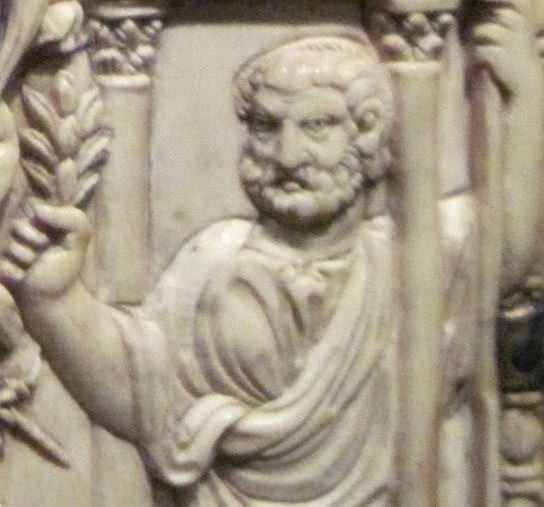
Image: An artwork depicting Symmachus
Political Career
Symmachus’ political career began in the traditional cursus honorum (the sequence of public offices held by aspiring politicians in Rome). He held the offices of quaestor, praetor, and eventually served as Corrector of Lucania and Bruttii in 365. This early administrative experience allowed him to build a reputation as a capable and responsible public servant. In 373, Symmachus was appointed proconsul of Africa, a prestigious position that signified his growing prominence in Roman political life. Around this time, he also became a member of the College of Pontiffs, a key position in the traditional Roman religious establishment.
Symmachus was deeply committed to preserving the ancient religion of Rome, which placed him at odds with the rising tide of Christianity, particularly within the Roman Senate. His religious and political conservatism became a defining feature of his career. He viewed the mos maiorum (the customs of the ancestors) as the foundation of Roman identity and stability, and he believed that the preservation of these customs was essential to the continued success of the Roman state.

The Altar of Victory Controversy
One of the most famous episodes in Symmachus’ life was his involvement in the Altar of Victory controversy. In 382, Emperor Gratian, a Christian, ordered the removal of the Altar of Victory from the Roman Senate house. The altar had been a symbol of Roman religious practices for centuries, and its removal represented a significant shift in the religious landscape of the Empire. Gratian also curtailed state funding for the Vestal Virgins and other traditional religious rites, which further alienated the pagan aristocracy.
Symmachus, known for his eloquence and rhetorical skill, was chosen by the Senate to lead a delegation to protest Gratian’s actions. His eloquent defense of traditional Roman religion emphasized the importance of preserving the customs that had made Rome great. Symmachus argued that removing the altar had angered the gods, leading to a famine, and he urged the emperor to restore it to ensure the prosperity of the Empire. His plea for religious tolerance and the restoration of the altar was delivered in the form of an elaborate epistle to Emperor Valentinian II, Gratian’s successor, in 384.
However, Symmachus’ efforts were ultimately unsuccessful. His argument was famously rebutted by Ambrose, the bishop of Milan, who articulated the Christian position that the old pagan practices had no place in the new religious order of the Empire. Ambrose’s influence over Valentinian II ensured that the Altar of Victory was not restored, and Symmachus’ appeal for religious tolerance was dismissed. This episode marked a turning point in the decline of traditional Roman religion and the consolidation of Christianity as the dominant faith in the Empire.
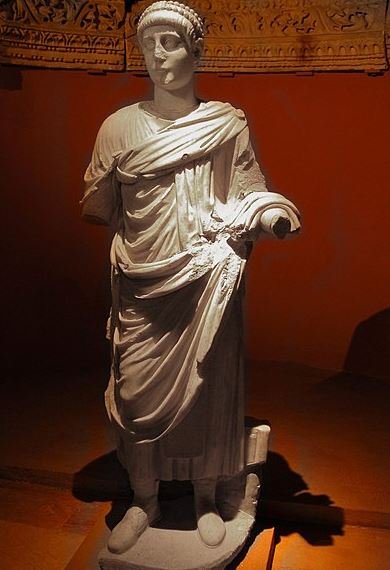
Image: Valentinian II
Relationship with Magnus Maximus and Political Downfall
In 387, Symmachus found himself involved in a more dangerous political situation. After the death of Gratian, the usurper Magnus Maximus had seized power in Gaul and posed a serious threat to the ruling emperor Theodosius I. Symmachus, perhaps due to his alignment with traditional Roman values and his dislike of Gratian’s policies, sympathized with Maximus and openly supported him when he threatened to invade Italy.
However, when Theodosius arrived in Italy to confront Maximus, Symmachus’ support for the usurper led to his impeachment for treason. Forced to seek refuge in a sanctuary, Symmachus managed to avoid severe punishment due to the intervention of powerful friends. He expressed his contrition in an apologetic address to Theodosius, who not only pardoned him but also restored him to favor by appointing him consul in 391.
Symmachus’ consulship marked a brief return to political prominence, but his power and influence would never again reach the heights they had before his involvement with Maximus. Nevertheless, he continued to participate in public affairs, advocating for the preservation of traditional Roman values and religion.

Image: Solidus of Magnus Maximus.
Literary Contributions and Legacy
Though Symmachus is best known for his political and religious activities, his literary contributions were also significant. He left behind a body of work that includes nine or ten books of letters, a collection of official dispatches (Relationes), panegyrics, and fragments of various orations. These writings provide valuable insight into the intellectual and political culture of late antiquity, though modern scholars often criticize them for lacking in-depth historical analysis.
Symmachus’ letters, many of which were brief notes to friends, family, and acquaintances, provide a window into the social and intellectual networks of the Roman elite. His most famous letter, addressed to the emperors Valentinian II, Theodosius I, and Arcadius, is the epistle in which he petitioned for the restoration of the Altar of Victory. This letter is often considered one of the most polished and important pieces in the collection.
In addition to his letters, Symmachus compiled official dispatches, or Relationes, which were written during his time as urban prefect of Rome. These dispatches offer valuable insights into the day-to-day administration of the city and Symmachus’ role in maintaining public order during his tenure. He also wrote panegyrics, or public speeches, in praise of emperors, including Valentinian I and the youthful Gratian, though only fragments of these works survive.
Symmachus was also involved in the preservation of Roman history. In a letter dated 401, he mentioned his work on an edition of Livy’s Ab Urbe Condita (From the Founding of the City), an extensive history of Rome. Seven manuscripts of Livy’s first decade (books 1-10) bear Symmachus’ name, indicating his role in transmitting and preserving this important historical work.
Personal Life and Wealth
Symmachus’ personal wealth was immense, enabling him to live a life of luxury and leisure. He owned multiple properties, including a mansion on the Caelian Hill in Rome, numerous villas across Italy, and estates in Sicily and Mauretania. His wealth allowed him to sponsor elaborate public games, for which he procured exotic animals such as lions, leopards, and even crocodiles. These games were a reflection of his status and his commitment to maintaining the grandeur of Roman public life.
One infamous episode from his involvement in the games occurred when twenty-nine Saxon slaves, whom Symmachus had purchased to fight in the arena, strangled each other in their cells the night before their scheduled appearance. Symmachus expressed frustration at the loss of his investment, but the incident also highlights the brutality of the entertainment culture of the late Roman Empire.
Symmachus was married to Rusticiana, the daughter of Memmius Vitrasius Orfitus, a former urban prefect of Rome. Together, they had several children, including a daughter named Galla, who married Nicomachus Flavianus, a friend and ally of Symmachus, and a son, Quintus Fabius Memmius Symmachus, who continued the family’s aristocratic tradition.
Intellectual Circle and Later Years
In addition to his political and literary activities, Symmachus was part of a vibrant intellectual circle that included both pagans and Christians. He is a central figure in Saturnalia, a dialogue written by Macrobius Ambrosius Theodosius in the early 5th century but set in 384. In this work, Symmachus and his associates engage in philosophical discussions on a wide range of topics, including literature, religion, and Roman history. The Saturnalia offers a glimpse into the intellectual world of the late Roman aristocracy and the ways in which they sought to preserve their cultural heritage amidst the rise of Christianity.
Symmachus continued to write and correspond with friends until the early 5th century. Though the exact date of his death is not known, one of his letters was written as late as 402, suggesting that he remained active in public and intellectual life until his final years.
Frequently Asked Questions

What was Symmachus’ family background?
Symmachus was the son of Lucius Aurelius Avianius Symmachus, who served as urban prefect of Rome twice. His mother was the daughter of Fabius Tatianus, a former consul and urban prefect. Symmachus also had two brothers who served as provincial governors and a sister, possibly connected to the influential Christian Anicii family through marriage.
Where did Symmachus receive his education, and what impact did it have on him?
Symmachus was educated in Gaul, likely at Bordeaux or Toulouse, where he developed a lifelong passion for literature. His friendship with the poet and politician Ausonius, whom he met in 369, was mutually beneficial and contributed to Symmachus’ literary and intellectual pursuits.
What political offices did Symmachus hold during his career?
Symmachus held several important offices, including quaestor, praetor, Corrector of Lucania and the Bruttii, and proconsul of Africa. He also became a member of the College of Pontiffs and was later appointed urban prefect of Rome in 384 and consul in 391.
What was the significance of the Altar of Victory incident in Symmachus’ career?
In 382, Emperor Gratian ordered the removal of the Altar of Victory from the Roman Senate house and cut funds for traditional religious rites. Symmachus, known for his eloquence, led a Senate delegation to protest these actions. Although unsuccessful, this incident became a defining moment in his efforts to preserve ancient Roman religious practices.
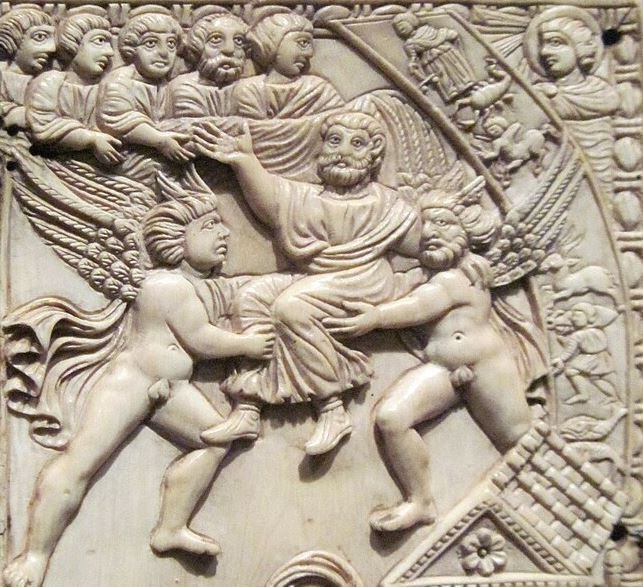
Image: An artwork depicting Symmachus’ arrival in Heaven.
How did Symmachus respond to the rise of Magnus Maximus and his defeat of Gratian?
Symmachus sympathized with Magnus Maximus and openly supported him when Maximus threatened to invade Italy in 387. This led to Symmachus being impeached for treason. However, he was later pardoned by Emperor Theodosius I and subsequently elevated to the position of consul in 391.
What were some of the notable aspects of Symmachus’ personal wealth and lifestyle?
Symmachus was immensely wealthy, owning several villas, farms, estates in Sicily and Mauretania, and a mansion on the Caelian Hill in Rome. He also organized elaborate gladiatorial games, procuring exotic animals such as leopards, lions, and crocodiles for entertainment. One notable incident involved the suicide of 29 Saxon slaves before a scheduled arena event, which frustrated him greatly.
What are some of Symmachus’ most important literary works?
Symmachus’ literary output includes nine or ten books of letters, a collection of official dispatches (Relationes), panegyrics, and fragments of orations. His most famous letter was addressed to the emperors Valentinian, Theodosius, and Arcadius, in which he petitioned for the restoration of the Altar of Victory.
What role did Symmachus play in preserving Livy’s Ab Urbe Condita?
Symmachus was involved in the preparation of an edition of Livy’s Ab Urbe Condita. Seven manuscripts of Livy’s first decade (books 1-10) bear his name and reflect his efforts to preserve Roman history.
How did Symmachus navigate the intellectual and political environment of his time?
Although Symmachus was a defender of traditional Roman paganism, he interacted with both pagan and Christian intellectuals. His participation in Macrobius Ambrosius Theodosius’ Saturnalia, set in 384, reflects this engagement with diverse philosophical discussions.
Who was Symmachus married to, and what connections did his family have?
Symmachus married Rusticiana, daughter of Memmius Vitrasius Orfitus and possibly Constantia, the daughter of Constantina and Hannibalianus. His children included Galla, who married Nicomachus Flavianus, and Quintus Fabius Memmius Symmachus, an aristocrat.
How is Symmachus’ literary style viewed by modern scholars?
Symmachus’ literary style was highly admired in his time, but modern scholars find his writings lacking in detailed historical insights. Nonetheless, his works remain valuable for understanding the intellectual and political climate of late Roman paganism during the Christianization of the Empire.