Turkish War of Independence
The Turkish War of Independence (1919–1923) was a landmark conflict that reshaped the remnants of the Ottoman Empire into the modern Republic of Turkey. Sparked by foreign occupations and the harsh terms of the Treaty of Sèvres after World War I, the war was led by the Turkish National Movement under Mustafa Kemal Pasha (later Atatürk). It combined military campaigns and political revolution to assert Turkish sovereignty.

Image: Allied occupation forces parading down the Grande Rue de Péra, now known as İstiklal Avenue.
Background: The Collapse of the Ottoman Empire
The Ottoman Empire faced defeat in World War I, culminating in the Armistice of Mudros (1918), which permitted Allied occupation of key territories. The Treaty of Sèvres (1920) proposed the dismemberment of the empire, allocating large portions of Anatolia to Greece, Armenia, and Allied control. The weakened Ottoman government under Sultan Mehmed VI struggled to resist these pressures, prompting the emergence of the Turkish National Movement to defend national interests.
Emergence of the Turkish National Movement
Mustafa Kemal Pasha, a respected Ottoman general, was initially dispatched to restore order in Anatolia but quickly became the leader of nationalist resistance. Establishing a counter-government in Ankara, he rejected the authority of the Istanbul-based Ottoman government and mobilized Turkish forces to resist foreign occupation.

Mustafa Kemal Pasha
Key Fronts and Campaigns
Western Front: The Greco-Turkish War
The Greek occupation of Smyrna (Izmir) in 1919 was a catalyst for resistance. Greek forces aimed to annex Western Anatolia under the Megali Idea. Turkish irregular militias, later organized into a regular army, countered these advances. Major battles included the First and Second Battles of İnönü, the pivotal Battle of Sakarya, and the Great Offensive of 1922, which resulted in the recapture of Smyrna and the expulsion of Greek forces.
Eastern Front: Conflict with Armenia
In the east, Turkish forces under Kazım Karabekir clashed with Armenia over territorial claims. The Treaty of Alexandropol (1920) and the subsequent Treaty of Kars (1921) secured Turkey’s eastern borders. These treaties formalized agreements with the Soviet Union, ensuring stability in the region.
Southern Front: The Franco-Turkish Conflict
In southern Anatolia, Turkish irregulars fought against French forces and their Armenian allies. The Cilicia Campaign ended with the Treaty of Ankara (1921), which led to the French withdrawal and the establishment of favorable borders for Turkey.
Political Developments
In 1920, Mustafa Kemal established the Grand National Assembly (GNA) in Ankara, declaring it the legitimate representative of the Turkish people. The GNA assumed control over nationalist forces, marking a break from the Istanbul-based Ottoman government.
In 1922, the GNA abolished the Ottoman sultanate, ending over six centuries of monarchy. Sultan Mehmed VI fled into exile, and the GNA consolidated its authority as the governing body of Turkey.
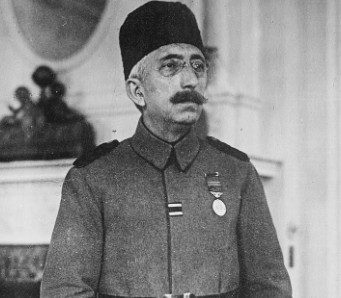
Sultan Mehmed VI
Treaty of Lausanne and International Recognition
The Treaty of Lausanne (1923) replaced the Treaty of Sèvres, recognizing the sovereignty of the Republic of Turkey. It secured favorable borders, abolished capitulations, and ended foreign occupations. The treaty marked international acknowledgment of the Turkish National Movement’s success.
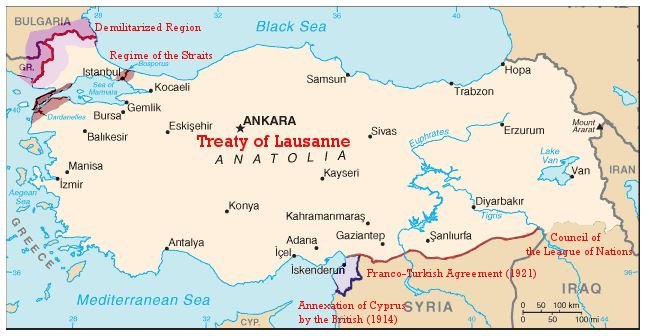
The 1923 Treaty of Lausanne secured Turkey’s independence, replacing the earlier Treaty of Sèvres.
Social and Demographic Impact
The war formalized a population exchange between Greece and Turkey in 1923. Greek Christians were expelled from Anatolia, and Muslims from Greece were relocated to Turkey. This exchange significantly homogenized Turkey’s demographics.
The war saw continued deportations and massacres of Christian populations, including Armenians and Greeks. These actions mirrored earlier Ottoman policies and left lasting scars on the region’s social fabric.
The Establishment of the Republic
On October 29, 1923, the Republic of Turkey was officially proclaimed, with Mustafa Kemal Atatürk elected as its first president. This marked the end of the Ottoman era and the beginning of a new, secular, and modern Turkish state.
Atatürk’s Reforms

Secularization and Modernization
Atatürk implemented sweeping reforms to modernize Turkey. He abolished the caliphate in 1924, established secular laws, and promoted education and women’s rights. These reforms aimed to align Turkey with Western models of governance and society.
Cultural and Economic Changes
Efforts were made to create a national identity, including language reforms and the adoption of the Latin alphabet. Economic modernization focused on reducing foreign dependency and building a self-sufficient industrial base.
Legacy and Impact
The Turkish War of Independence established a sovereign, unified state, laying the groundwork for modern Turkey. It demonstrated the power of a nationalist movement to challenge foreign domination and internal decay.
Turkey’s success inspired anti-colonial and nationalist movements worldwide. Atatürk’s leadership became a model for transformative nation-building in post-colonial states.
Frequently Asked Questions





