Upper Canada Rebellion: History & Major Facts
The Upper Canada Rebellion, which occurred in 1837, was a significant historical event that helped shape the political landscape of what is now Canada. Although the rebellion was short-lived and ultimately unsuccessful in terms of its immediate objectives, it played a key role in the larger narrative of colonial discontent and reform.
This rebellion was part of a broader movement across both Upper and Lower Canada that demanded political change and sought to address grievances related to governance, land ownership, and economic inequality.
Understanding the history and the major facts surrounding the Upper Canada Rebellion requires a look into its causes, the key events that transpired, and its long-term impacts on the formation of Canada.
Background of Upper Canada
Upper Canada, today known as Ontario, was established in 1791 following the division of the Province of Quebec into Upper and Lower Canada. Upper Canada was predominantly English-speaking, while Lower Canada, which is now Quebec, was largely French-speaking. The colony’s political system was a representative government, but real power was held by an elite group of wealthy and influential individuals known as the Family Compact. This oligarchy controlled both the executive and legislative branches, ensuring that political and economic power remained concentrated in their hands.
This concentration of power led to widespread frustration among settlers, particularly those of middle-class backgrounds, who felt that their interests were not represented in government decisions. The colonial government, heavily influenced by British rule, was slow to address these growing concerns, contributing to a tense political climate.
Causes of the Rebellion
The Upper Canada Rebellion was fueled by a variety of social, economic, and political grievances that had been simmering for years. Among the primary causes were:
Political Discontent
At the heart of the rebellion was dissatisfaction with the lack of democratic representation in Upper Canada’s government. While the colony had an elected assembly, real power was held by the appointed Legislative and Executive Councils, dominated by the Family Compact. This elite group made key decisions about land distribution, economic development, and taxation, often serving their own interests over those of the wider population.
Land Ownership and Economic Inequality
Many settlers were frustrated with the system of land ownership, particularly the allocation of land to absentee landlords, wealthy individuals, and the Anglican Church. The system favored large landowners, often leaving smaller farmers and new settlers with little land or poor-quality plots. The colonial government was also slow to develop infrastructure and support agriculture, further aggravating economic disparities.
Influence of Reform Movements
Reform movements were gaining traction across the British colonies in North America. Influenced by the ideals of the American Revolution, many reformers in Upper Canada advocated for greater political representation and the establishment of a more democratic system of government. These reformers, led by figures such as William Lyon Mackenzie, sought to challenge the power of the Family Compact and push for reforms that would benefit the broader population.
Inspiration from Lower Canada
The rebellion in Lower Canada, which broke out a month earlier in November 1837, served as an inspiration for reformers in Upper Canada. In Lower Canada, the French-speaking population was similarly frustrated with an oligarchic system of governance, and their fight for political reform emboldened their counterparts in Upper Canada to take action.
Key Figures in the Upper Canada Rebellion
Several prominent individuals played pivotal roles in the Upper Canada Rebellion:
William Lyon Mackenzie
Mackenzie was one of the leading figures of the rebellion and a staunch critic of the Family Compact. He was a newspaper publisher and politician who advocated for democratic reforms and the establishment of a republic in Upper Canada. Mackenzie became a leader of the reform movement and was instrumental in organizing the rebellion.
Sir Francis Bond Head
Bond Head was the Lieutenant Governor of Upper Canada at the time of the rebellion. His policies and refusal to address the grievances of reformers contributed to the growing discontent in the colony. Bond Head took a hardline approach against the rebels, mobilizing loyalist forces to suppress the uprising.
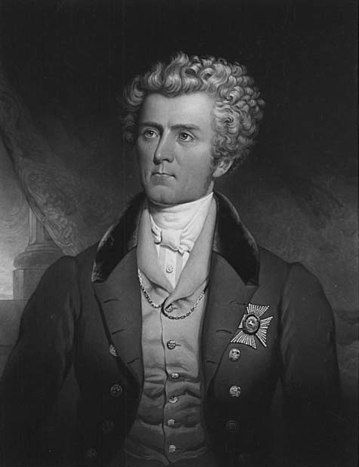
Image: Francis Bond Head
The Family Compact
Although not a single individual, the Family Compact was a powerful oligarchic group that controlled much of the political and economic power in Upper Canada. The rebellion was largely aimed at dismantling their influence and establishing a more equitable political system.
The Rebellion Itself
The Upper Canada Rebellion unfolded in December 1837, with a series of events leading up to a poorly organized and largely unsuccessful armed uprising:
Initial Attempts at Reform
Before the rebellion broke out, Mackenzie and other reformers tried to push for political change through peaceful means. They petitioned the government for reforms and sought to use the existing political system to address their grievances. However, these efforts were met with resistance from the Family Compact and the colonial government, leading some reformers to believe that armed rebellion was the only remaining option.
The Battle of Montgomery’s Tavern
On December 5, 1837, Mackenzie and his followers gathered at Montgomery’s Tavern, located just outside of Toronto, to launch an armed uprising against the government. The plan was to march on Toronto, seize the city, and establish a provisional government. However, the rebels were poorly organized, and their forces were quickly overwhelmed by government troops. The rebellion was effectively crushed within days, with most of the rebel leaders, including Mackenzie, fleeing to the United States.
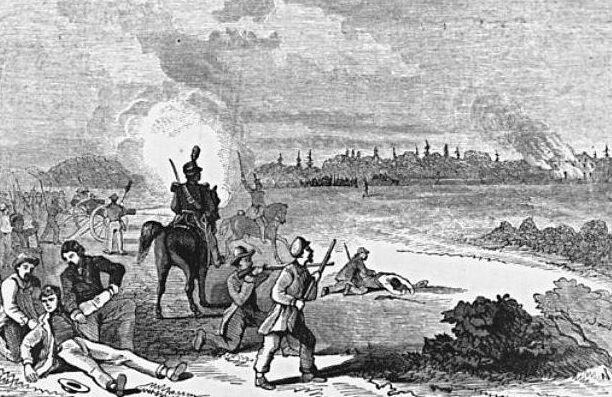
Image: A depiction of the Battle of Montgomery’s Tavern.
Continued Resistance
Although the main rebellion was quickly suppressed, pockets of resistance continued into 1838, largely through the efforts of the Hunters’ Lodges, a secret militia based in the United States. This group, composed of American and Canadian sympathizers, launched the Patriot War, a series of raids and skirmishes along the Canada-U.S. border. However, these efforts were also unsuccessful, and the rebellion ultimately failed to achieve its immediate objectives.
The Aftermath
Despite its failure, the Upper Canada Rebellion had significant long-term consequences for the political future of Canada:
Repression and Punishment
In the immediate aftermath of the rebellion, the colonial government cracked down on the rebels and their supporters. Many were arrested, and several leaders were executed or exiled to remote British colonies. Mackenzie himself fled to the United States, where he continued to advocate for political reform in Canada.
Lord Durham’s Report
One of the most important outcomes of the rebellion was the response from the British government. In 1838, Lord Durham, the Governor General of British North America, was sent to investigate the causes of the rebellions in both Upper and Lower Canada. His report, known as the Durham Report, recommended significant political reforms, including the establishment of responsible government. He argued that the lack of democratic representation and the concentration of power in the hands of a few elites were the primary causes of the unrest.
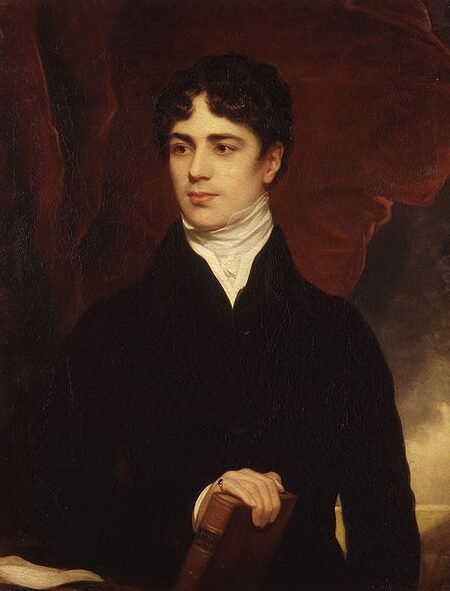
Image: Lord Durham
The British North America Act of 1840
In response to the Durham Report, the British government passed the British North America Act in 1840, which united Upper and Lower Canada into a single province known as the Province of Canada. This was a major step toward the eventual confederation of Canada in 1867. The Act also introduced a more representative form of government, though full responsible government would not be achieved until later.
Long-Term Impact and Legacy
The Upper Canada Rebellion, though a failure in the short term, had a profound impact on the development of Canadian political institutions. Some of the major long-term effects include:
Responsible Government
The rebellions in both Upper and Lower Canada contributed to the eventual establishment of responsible government in Canada. This meant that the colonial government would be accountable to an elected legislature rather than to appointed officials or the British Crown. This shift toward democracy laid the groundwork for modern parliamentary systems in Canada.
Canadian Confederation
The British North America Act of 1840 was a precursor to the larger movement toward Canadian confederation in 1867. By uniting Upper and Lower Canada into a single province, the British government set the stage for the eventual union of all British North American colonies into the Dominion of Canada.
Political Reform Movements
The ideas of political reform championed by Mackenzie and other rebels continued to influence Canadian politics in the decades following the rebellion. Reformers advocated for greater democratic representation, the protection of individual rights, and the reduction of oligarchic control over political and economic life. These ideas would shape the political culture of Canada as it developed into a modern democracy.
National Identity
The rebellions in Upper and Lower Canada also played a role in shaping Canadian national identity. The struggle for political reform and the desire for greater self-governance were key themes in the development of Canadian political thought. The rebellions helped foster a sense of Canadian identity distinct from that of Britain and the United States, as Canadians sought to balance their colonial heritage with their aspirations for independence and democracy.
Questions and Answers
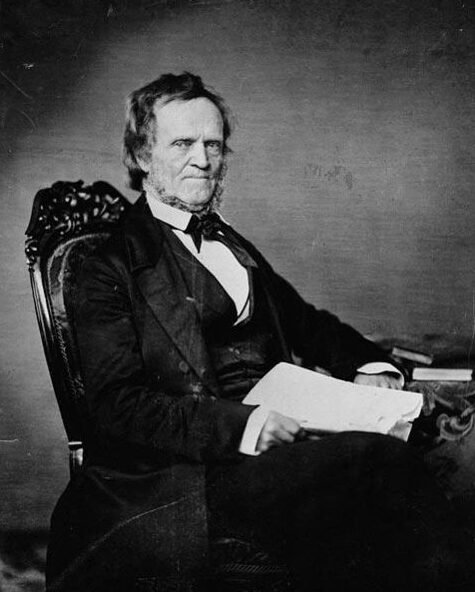
The Upper Canada Rebellion was an uprising against the oligarchic government of Upper Canada (now Ontario) that occurred in December 1837. Image: William Lyon Mackenzie, one of the major figures during the rebellion.
What inspired the Upper Canada Rebellion?
The rebellion in Lower Canada (now Quebec), which started a month earlier in November 1837, inspired the Upper Canadian rebels to act.
Was the Upper Canada Rebellion successful?
The Upper Canada Rebellion was swiftly suppressed, but resistance continued into 1838 with support from the Hunters’ Lodges, a secret U.S.-based militia.
Who were the Hunters’ Lodges?
The Hunters’ Lodges were a secret militia based in the United States around the Great Lakes that supported the Upper Canada rebels and helped launch the Patriot War in 1838.
How do historians view the 1837 rebellions in Upper and Lower Canada?
Historians view the 1837 rebellions as part of the broader context of the Atlantic Revolutions of the late 18th and early 19th centuries, including revolutions in the United States, France, Haiti, Ireland, and Spanish America. These uprisings were driven by social problems caused by oligarchic governments and inspired by democratic ideals.
What was the outcome of the rebellions in Upper and Lower Canada?
The rebellions influenced Lord Durham’s Report on the Affairs of British North America, which led to the British North America Act of 1840. This act reformed the provinces into a unitary system and eventually contributed to the formation of Canada as a unified nation in 1867.
How did the 1837 rebellions relate to other global revolutions?
While the 1837 rebellions were smaller and less focused on republicanism, they shared similar motivations—challenging poorly regulated oligarchies and seeking democratic reforms—aligning them with the broader ideals of the Atlantic Revolutions





