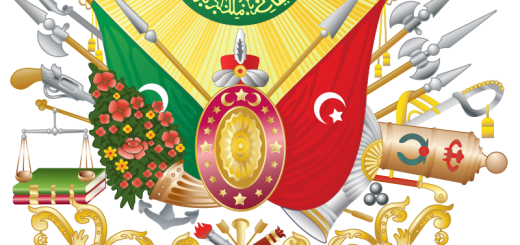
The 1876 coup d’état that removed Ottoman Sultan Abdulaziz
The 1876 coup d’état that led to the removal of Sultan Abdulaziz marked a significant turning point in Ottoman history. It reflected the deep political, economic, and social challenges facing the empire in the late 19th century.
The coup was precipitated by a combination of internal unrest, economic instability, dissatisfaction with Abdulaziz’s rule, and the ambitions of reformist factions within the Ottoman elite. This event not only led to Abdulaziz’s removal but also set in motion a series of events that eventually culminated in the establishment of a constitutional monarchy.
To understand the coup in its entirety, World History Edu examines the context of Abdulaziz’s reign, the events leading up to the coup, and the consequences that followed.
Background: Abdulaziz’s Reign
Sultan Abdulaziz ascended the throne in 1861, following the death of his brother, Sultan Abdulmejid I. His reign initially carried the momentum of the Tanzimat reforms, a series of modernization efforts aimed at revitalizing the Ottoman Empire’s institutions. These reforms, which had begun under his predecessors, sought to centralize authority, modernize the military, and restructure the empire’s administrative and legal systems along Western lines.
Abdulaziz, however, emphasized military modernization, particularly in expanding the Ottoman navy, which by the 1870s had become one of the largest in the world. He invested heavily in ships and armaments, as well as in the construction of new palaces and other large-scale public works.
While these efforts aimed to strengthen the empire’s military capabilities, they came at a high financial cost, plunging the Ottoman Empire deeper into debt. European loans, which initially supported these projects, became increasingly burdensome as the empire struggled to repay its creditors. The government’s reliance on foreign loans created a sense of financial vulnerability, which became more pronounced as economic conditions worsened.

Image: A picture of Abdulaziz during the 1870s.
Economic Decline and Rising Discontent
By the mid-1870s, the Ottoman Empire was facing severe economic challenges. In 1873, a famine struck Anatolia, one of the empire’s most important agricultural regions. This famine led to widespread crop failures, reducing tax revenues and exacerbating the already precarious financial situation.
To make matters worse, the empire was still reeling from the costs of the Crimean War (1853-1856), and Abdulaziz’s lavish spending on the military and personal projects only deepened the financial crisis.
In October 1875, the Ottoman government declared bankruptcy, suspending payments on its foreign debt. This economic collapse, known as the “Ramazan Kanunnamesi” (Ramadan Proclamation), sent shockwaves through the empire. The government’s decision to default on its debts angered European creditors and damaged the empire’s international reputation. Domestically, the economic hardships led to widespread discontent among the Ottoman population, particularly in the Balkan provinces, where nationalist movements were gaining momentum.
The Balkan Uprisings and European Intervention
While the economic crisis worsened, nationalist revolts erupted across the empire’s Balkan territories. In 1875, revolts broke out in Bosnia-Herzegovina, Serbia, Montenegro, and Romania, as Christian populations in these regions sought independence or greater autonomy from Ottoman rule. The uprisings were fueled by a combination of nationalist fervor and dissatisfaction with the central government’s inability to address economic grievances.
The situation escalated in April 1876, when the Bulgarian Revolts began in the Panagurishte region. The revolt quickly spread across the Sredna Gora region, leading to violent clashes between Bulgarians and Ottoman forces.
An estimated 1,000 Muslims were killed by Bulgarian rebels, prompting retaliatory massacres by Ottoman forces and Caucasian Muslim refugees, such as Circassians and Abazas, who had been displaced by the Russian Empire. The violence in Bulgaria, however, was widely reported in Europe as a unilateral massacre against Bulgarian Christians, further damaging the Ottoman Empire’s reputation abroad.
European powers, particularly Russia, began to express concern over the treatment of Christians within the Ottoman Empire, and there were growing calls for intervention. This external pressure compounded the internal unrest, creating an atmosphere of crisis in the Ottoman capital, Istanbul. Abdulaziz, already seen as ineffective in handling the empire’s economic and political problems, became the target of increasing criticism from reformist factions within the Ottoman elite.
The Role of the Young Ottomans and Reformists
By 1876, a faction of reformist intellectuals, known as the Young Ottomans, had gained significant influence within Ottoman political circles. The Young Ottomans advocated for constitutional reform, arguing that the empire needed a representative government to address its internal problems and improve its international standing. They believed that Abdulaziz’s autocratic rule was preventing the necessary reforms and that a constitutional monarchy was the only way to restore the empire’s stability.
Among the leaders of the reformist movement was Midhat Pasha, a prominent Ottoman statesman and reformer. Midhat Pasha had served in various high-ranking positions within the empire and was known for his efforts to modernize provincial administration and education. He became the driving force behind the movement to depose Abdulaziz, believing that the sultan’s removal was essential for the implementation of a constitution.
Midhat Pasha found allies in the military, particularly in Hüseyin Avni Pasha, the serasker (minister of war), and Süleyman Pasha, the War School Minister. Together, these reformist leaders sought to remove Abdulaziz from power and replace him with a more compliant figure who would agree to constitutional reforms. Their choice was Murad V, Abdulaziz’s nephew, who had been influenced by European political ideas and was seen as sympathetic to the constitutional cause.
The May 1876 Coup
The plot to overthrow Abdulaziz was carefully planned and executed by the reformist faction. On 29 May 1876, Midhat Pasha, Hüseyin Avni Pasha, Süleyman Pasha, and Ahmed Pasha, the chief of the Military Council, secured a fatwa (religious decree) from the newly appointed sheikh al-Islam, Hasan Hayrullah Efendi, which authorized the removal of Sultan Abdulaziz. This fatwa provided the religious legitimacy needed to justify the coup, as it declared that Abdulaziz was unfit to rule due to his mismanagement of the empire’s affairs.
On 30 May 1876, the coup was launched. Students from the Military Academy, led by Süleyman Pasha, were mobilized to take control of key points in the capital. Soldiers from the Taşkışla and Gümüşsuyu barracks, under the command of Istanbul Army Commander Refik Pasha, also joined the coup. Even students from religious institutions, known as madrasa students, joined the soldiers in their march toward Dolmabahçe Palace, where Abdulaziz resided.
Dolmabahçe Palace was surrounded by the coup forces, and Abdulaziz was informed of his deposition. Faced with overwhelming military force and having lost the support of key officials, Abdulaziz was removed from the palace and taken by boat to Feriye Palace, where he would be held under house arrest. Murad V, Abdulaziz’s nephew, was declared the new sultan on the same day.

Image: Hüseyin Avni Pasha.
Aftermath: The Death of Abdulaziz
The deposition of Abdulaziz marked a dramatic shift in Ottoman politics, but the aftermath of the coup was equally tumultuous. Abdulaziz was kept in confinement at Feriye Palace, but his mental state deteriorated in the days following his removal.
On 4 June 1876, less than a week after his deposition, Abdulaziz was found dead in his room with his wrists slit. Official reports declared his death a suicide, but rumors of foul play quickly spread, and the circumstances surrounding his death remain a subject of debate among historians.
Abdulaziz’s death was followed by a series of violent incidents that further destabilized the Ottoman government.
On 11 June, just days after Abdulaziz’s death, his wife Neşerek Kadın Efendi also passed away. Her brother, Hasan the Circassian, blamed the state officials involved in the coup for the deaths of Abdulaziz and his sister.
On 15 June 1876, Hasan the Circassian stormed Midhat Pasha’s mansion, where a government meeting was taking place, and killed War Minister Hüseyin Avni Pasha and Foreign Minister Mehmed Raşid Pasha. He attempted to kill Midhat Pasha and Ahmed Pasha as well, but they managed to escape. Five people were killed in the raid before Hasan was apprehended.
The Short Reign of Murad V and the Rise of Abdul Hamid II
Murad V, who had been installed as the new sultan after Abdulaziz’s deposition, faced immediate challenges. Although he had initially supported constitutional reforms, Murad V struggled with mental health issues, and the traumatic events surrounding his accession further exacerbated his condition. His inability to govern effectively soon became apparent, and by August 1876, it was clear that he could not continue as sultan.
On 31 August 1876, after just three months on the throne, Murad V was deposed by another fatwa from the sheikh al-Islam, and Abdul Hamid II, another nephew of Abdulaziz, ascended to the throne. Abdul Hamid II would go on to rule the empire for over three decades, overseeing a period of both reform and repression, including the eventual implementation of a constitution, though his reign would later become more autocratic.

Legacy of the 1876 Coup
The 1876 coup d’état that removed Abdulaziz was a pivotal moment in Ottoman history. It not only brought an end to Abdulaziz’s reign but also highlighted the deep divisions within the Ottoman elite and the growing demand for constitutional reforms. The coup was a manifestation of the tensions between the old autocratic system of governance and the emerging calls for modern, representative institutions.
In the short term, the coup did not achieve its goal of establishing a lasting constitutional government. Murad V’s reign was cut short by his health issues, and his successor, Abdul Hamid II, initially agreed to constitutional reforms but soon suspended the constitution and ruled as an autocrat for much of his reign. However, the ideas promoted by the Young Ottomans and other reformists continued to influence Ottoman politics, eventually leading to the re-establishment of a constitutional monarchy in 1908 during the Young Turk Revolution.
The coup also exposed the fragility of the Ottoman state, which was struggling to manage its diverse populations, economic challenges, and external pressures from European powers. The uprisings in the Balkans, the empire’s growing debt, and the increasing influence of foreign powers all contributed to the empire’s decline in the late 19th and early 20th centuries.
Finally, the death of Abdulaziz, whether by suicide or assassination, became a symbol of the instability that plagued the Ottoman Empire in its final centuries. His reign, marked by both modernization and financial mismanagement, reflected the broader contradictions of the Ottoman state as it grappled with the challenges of modernity while trying to preserve its traditional power structures.
Questions and Answers

What major challenges did the Ottoman Empire face in the final years of Abdulaziz’s reign?
The Ottoman Empire faced worsening economic conditions and widespread uprisings in 1875, including revolts in Serbia, Egypt, Montenegro, Romania, and Bosnia-Herzegovina.
When and where did the Bulgarian Revolts begin, and how did they escalate?
The Bulgarian Revolts began in April 1876 in the Panagurishte region and spread across Sredna Gora, leading to massacres between Bulgarians and Caucasian Muslim refugees like Circassians and Abazas.
How were the massacres during the Bulgarian Revolts portrayed in Europe?
European reports portrayed the massacres as one-sided, committed against Bulgarians, which tarnished the Ottoman Empire’s reputation.
What event took place in Istanbul on 9 May 1876, and how did the government respond?
Protests erupted in Istanbul’s Fatih district on 9 May 1876, gathering over 4, 500 demonstrators. In response, Grand Vizier Mahmut Nedim Pasha was dismissed and replaced by Mehmed Rüşdi Pasha, along with other key changes in government.
What significant action took place on 29 May 1876 involving Midhat Pasha and other officials?
On 29 May 1876, Midhat Pasha and other officials secured a fatwa from the new sheikh al-Islam, Hayrullah Efendi, authorizing the removal of Sultan Abdulaziz.
How was Sultan Abdulaziz removed from power?
On 30 May 1876, students from the Military Academy, led by Süleyman Pasha, and soldiers under Refik Pasha surrounded Dolmabahçe Palace, deposing Sultan Abdulaziz, who was replaced by Murad V.

Following the 1876 coup, the Ottoman Empire was then governed by a constitutional committee led by Midhat Pasha, marking the beginning of the First Constitutional Era. Image: Midhat Pasha.
What happened to Sultan Abdulaziz after he was deposed?
After his deposition, Abdulaziz was taken to Feriye Palace, where he was found dead on 4 June with his wrists slit.
Neşerek Kadın Efendi’s brother, Hasan the Circassian, sought revenge. On 15 June 1876, he raided a government meeting and killed War Minister Avni Pasha and Foreign Minister Mehmed Raşid Pasha, attempting to kill Midhat Pasha and Ahmed Pasha as well.
What effect did these events have on Sultan Murad V?
Sultan Murad V, already struggling with mental health issues, deteriorated further after these events and was deposed on 31 August 1876 by a fatwa.
Who succeeded Murad V as the new Ottoman Sultan?
Abdul Hamid II ascended the throne following the deposition of Murad V on 31 August 1876.