Canadian Pacific Railway: History & Major Facts
One of the most significant milestones in Canadian history occurred on November 7, 1885, when the last spike of the Canadian Pacific Railway (CPR) was driven at Craigellachie, British Columbia. This marked the completion of the transcontinental railway, which was a key factor in the unification of the country, particularly for linking British Columbia with the rest of Canada. The CPR played a crucial role in Canada’s economic development and westward expansion.
The Canadian Pacific Railway (CPR) is one of Canada’s most iconic and historically significant infrastructure projects. Established in the late 19th century, it played a critical role in the unification of Canada and the development of its western regions.
More than just a railway, the CPR became a symbol of national unity, economic development, and engineering achievement. Its construction was an essential component of Canada’s “National Dream,” and it has continued to be a key player in the North American transportation industry to this day.
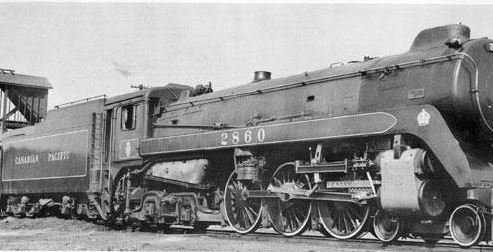
The Canadian Pacific Railway is more than just a transportation company; it is an integral part of Canada’s history and identity. Image: C.P.R. railroad locomotive 2860
Origins and the National Dream
The vision for a transcontinental railway in Canada originated with Prime Minister Sir John A. Macdonald and his Conservative government. When British Columbia joined the Canadian Confederation in 1871, one of the conditions of its entry was the promise of a rail link connecting the province to the eastern part of Canada.
This transportation link was seen as vital for the economic integration of the country and for national unity, especially with the ongoing expansion of the United States to the south.
Macdonald’s grand vision, often referred to as the “National Dream,” was that the railway would serve as a physical manifestation of a united Canada, binding together its vast territories and diverse populations.
The Pacific Scandal and Early Challenges
The early stages of the Canadian Pacific Railway were mired in political controversy. In 1873, the Pacific Scandal erupted, in which Macdonald and other key figures were accused of accepting bribes in exchange for awarding government contracts to the Canada Pacific Railway Company. This company, unrelated to the modern CPR, had been given contracts over a rival bidder, the Inter-Ocean Railway Company, which was suspected of having ties to the Northern Pacific Railway in the United States.
As a result of the scandal, Macdonald’s Conservative government was forced out of power, and the Liberals, led by Alexander Mackenzie, took over. Mackenzie’s government, however, was less enthusiastic about the railway project. They handed the responsibility for construction over to the Department of Public Works, but progress slowed considerably during Mackenzie’s tenure due to financial constraints and a lack of urgency.
Macdonald’s Return and a New Strategy
John A. Macdonald returned to power in 1878 and revitalized the railway project. Recognizing the need for aggressive action, he floated bonds in London to raise funds for the construction of the railway and issued tenders for its completion. The construction of the CPR was one of the most ambitious infrastructure projects of its time, requiring significant capital, labor, and logistical coordination.
In 1880, Macdonald’s government signed a contract with a new consortium, agreeing to construct the railway in exchange for $25 million in credit and 25 million acres of land. The government also took on surveying costs and provided a 20-year exemption from property taxes for the railway. This contract set the groundwork for what would become one of the largest transportation projects in Canadian history.
Construction of the CPR
Construction of the Canadian Pacific Railway began in earnest in 1880. American contractor Andrew Onderdonk was hired to begin work in British Columbia, tackling some of the most challenging terrain of the entire project. The railway had to traverse the Rocky Mountains, vast plains, rivers, and forests, making it a monumental engineering challenge.
The CPR’s logo, featuring a beaver, was chosen to honor Donald Smith, 1st Baron Strathcona and Mount Royal, who had risen to prominence through his long career with the Hudson’s Bay Company. Smith was also a key investor in the railway.
The CPR began its eastward expansion from Bonfield, Ontario, where the first spike was driven into a sunken railway tie. Initially, the plan was for the railway to follow a route through the North Saskatchewan River Valley and cross the Rocky Mountains via the Yellowhead Pass. However, due to cost considerations and logistical concerns, a more southern route was chosen, passing through Palliser’s Triangle in Saskatchewan and crossing the Rocky Mountains at Kicking Horse Pass.
Challenges and Setbacks
Despite the initial progress, the CPR faced a number of challenges during its construction. The project was moving too slowly for officials, and by 1882, renowned railway executive William Cornelius Van Horne was hired to oversee the construction. Van Horne promised rapid progress, and although the project was delayed by floods and other natural obstacles, he managed to push forward aggressively. By the end of 1882, 672 kilometers (418 miles) of track were completed, including branch lines and sidings.
Labor shortages were a constant issue, and the CPR relied heavily on immigrant labor, particularly from Europe and China. Many of the workers lived in harsh conditions, often in remote areas far from towns. The Chinese laborers, in particular, were given some of the most dangerous jobs, such as blasting tunnels through the mountains with explosives. Their work was vital to the railway’s completion, but it came at a great cost, with an estimated 600 to 800 Chinese workers losing their lives during the project.
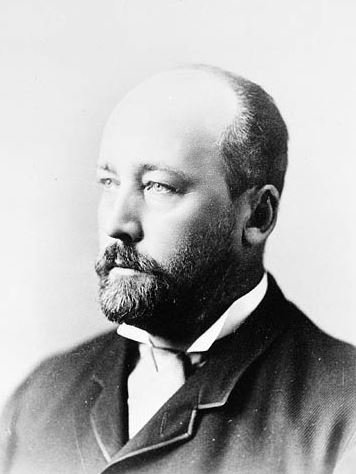
William Cornelius Van Horne, hired in 1882, expedited CPR construction, reaching the Rockies by 1883. Image: William Cornelius Van Horne.
Financial Difficulties and Government Support
By 1883, the CPR was facing serious financial difficulties. Construction was proceeding, but the company was running out of funds. In response, the Canadian government passed the Railway Relief Bill in 1884, providing an additional $22.5 million in loans. This financial assistance was crucial for the railway’s completion, allowing construction to continue at a steady pace.
During the North-West Rebellion of 1885, the CPR demonstrated its strategic military value by transporting troops to suppress the rebellion in Saskatchewan. Despite incomplete sections of the track, Van Horne managed to move troops from Ottawa to Qu’Appelle in just 10 days. This military success further cemented the railway’s importance to the Canadian government.
The Last Spike and Completion of the CPR
The Canadian Pacific Railway was completed on November 7, 1885, when Donald Smith drove the last spike at Craigellachie, British Columbia. This moment marked the completion of Canada’s first transcontinental railway, a project that had taken over a decade to plan and build. Although the railway was finished four years after the original deadline, it was completed five years ahead of the revised schedule set by Macdonald in 1881.
With the completion of the CPR, Canada had a continuous rail link from the Atlantic to the Pacific. This achievement was more than just an engineering marvel; it was a symbol of national unity and economic progress.
Expanding the CPR Network
The CPR quickly expanded its operations beyond the original transcontinental line. In Eastern Canada, the CPR had created a network of lines reaching from Quebec City to St. Thomas, Ontario, by 1885, mainly through the acquisition of smaller railways such as the Quebec, Montreal, Ottawa & Occidental Railway. The CPR also launched a fleet of ships on the Great Lakes to link its rail terminals.
The CPR’s first transcontinental passenger train departed from Montreal on June 28, 1886, and arrived in Port Moody, British Columbia, on July 4. However, the CPR soon decided to move its western terminus from Port Moody to Granville, which was later renamed Vancouver. This decision was driven by the city’s growing importance as a port and economic hub. The first official train to Vancouver arrived on May 23, 1887.
By the 1890s, the CPR had expanded further, leasing the New Brunswick Railway in 1891 and building the International Railway of Maine to connect Montreal with Saint John, New Brunswick. These connections made the CPR the first truly transcontinental railway in Canada, allowing for year-round shipping between the Atlantic and Pacific coasts.
The Crowsnest Pass Agreement and Western Expansion
In 1896, the CPR sought government aid to build a second line across British Columbia, south of the original transcontinental line. This led to the Crowsnest Pass Agreement, in which the CPR agreed to reduce freight rates on key commodities in exchange for financial assistance from the government. The agreement allowed the CPR to expand its network into southern British Columbia, further increasing its influence in the province’s growing economy.
The CPR also played a critical role in promoting immigration to Canada. The company offered land for sale to settlers, and its agents operated in many overseas locations. Immigrants often purchased travel packages that included passage on CPR ships, train travel, and land. To accommodate these settlers, the CPR developed a fleet of Colonist cars, low-budget sleeper cars designed for families traveling to the West.
20th Century Expansion and Major Projects
During the early 20th century, the CPR continued to build new lines and improve its infrastructure. One of the most significant projects was the construction of the Lethbridge Viaduct in Alberta, which opened in 1909. At over 1,600 meters long and 96 meters high, it was one of the largest railway bridges in the world at the time.
Another major project was the Connaught Tunnel, completed in 1916, which provided a safer and more efficient route through the Selkirk Mountains. The 8-kilometer (5-mile) tunnel was, at the time, the longest railway tunnel in the Western Hemisphere and allowed trains to bypass the avalanche-prone Rogers Pass.
The CPR’s success in the early 20th century was not without challenges. It faced stiff competition from the government-owned Canadian National Railways (CNR), which was formed after WorldWar I. Despite this competition, the CPR remained a dominant force in the Canadian transportation industry.
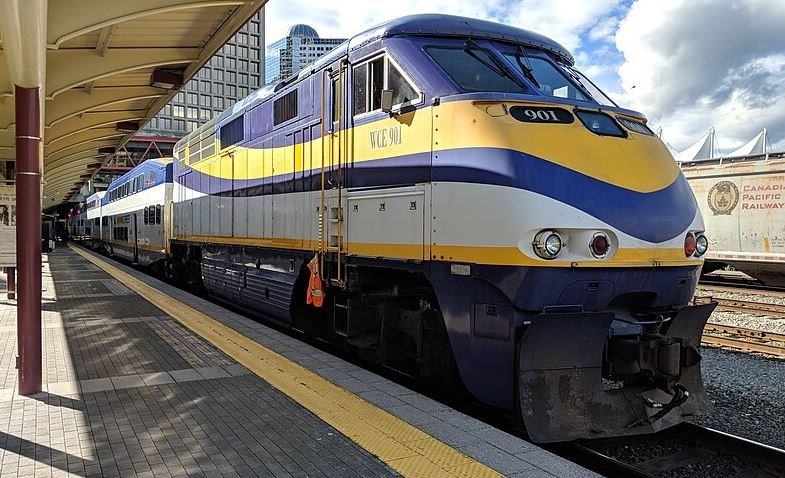
Image: Commuter train, West Coast Express at Waterfront station in Downtown Vancouver.
The CPR’s Role in the World Wars
During both World War I and World War II, the CPR played a crucial role in supporting the Canadian war effort. In addition to transporting troops and supplies, the CPR converted its facilities to produce military equipment, including tanks and other armored vehicles. The railway also deployed its ships for wartime service, with many of them used to transport troops across the Atlantic.
The CPR’s contribution to the war effort was significant, and its role during the wars cemented its reputation as a vital component of Canada’s national infrastructure.
Post-War Decline and Diversification
After World War II, the transportation industry in Canada began to change. The rise of automobiles, trucks, and airplanes started to erode the dominance of railways, especially in passenger services. The CPR responded by diversifying its operations, expanding into air and trucking services while maintaining its freight business.
However, the railway’s passenger services became increasingly unprofitable, and by the 1970s, the CPR had transferred most of its passenger operations to Via Rail, a government-owned corporation created to handle intercity passenger rail services.
Did you know…?
- As of 2023, the CPR is headquartered in Calgary, Alberta, Canada.
- As of 2023, the CPR owns approximately 20,100 kilometers (12,500 miles) of track, spanning seven Canadian provinces and extending into several major U.S. cities, including Montreal, Vancouver, Minneapolis–St. Paul, Milwaukee, Detroit, Chicago, and Albany, New York.
- In December 2021, CPR purchased the Kansas City Southern Railway for $31 billion. By April 2023, Kansas City Southern became a wholly owned subsidiary, and the combined company began operating under the name Canadian Pacific Kansas City (CPKC).
- In 2009, CPR expanded its U.S. operations by acquiring two American rail lines: the Dakota, Minnesota and Eastern Railroad (DM&E) and the Iowa, Chicago, and Eastern Railroad (IC&E).
- CPR is publicly traded on both the Toronto Stock Exchange and the New York Stock Exchange under the ticker symbol “CP.”
Late 20th Century Acquisitions and Expansion
In the 1980s and 1990s, the CPR continued to evolve, acquiring several American railroads to expand its presence in the U.S. market. Notable acquisitions included the Dakota, Minnesota and Eastern Railroad and the Milwaukee Road. These moves allowed the CPR to extend its network into the American Midwest and strengthen its position as a North American transportation giant.
By the early 2000s, the CPR had restructured its operations, spinning off some of its subsidiaries and refocusing on its core freight business. The company continued to grow, and in 2023, it merged with the Kansas City Southern Railway to form Canadian Pacific Kansas City (CPKC), further expanding its North American network.
Questions and Answers
The Canadian Pacific Railway (CPR), also known as Canadian Pacific, is a Class I railway in Canada that was incorporated in 1881. It is one of the largest rail networks in North America, with operations in Canada and the United States.
Below are some frequently asked questions about CPR:
What was the significance of the original construction of the CPR?
The CPR was constructed between 1881 and 1885 to connect eastern Canada with British Columbia. This project fulfilled a key promise made to British Columbia when it joined the Canadian Confederation in 1871, and it played a major role in the settlement and development of Western Canada.
What was CPR’s primary function, and how did its role evolve?
Initially, the CPR primarily served as a freight railway. For many years, it was also the primary means of long-distance passenger transport in Canada. Over time, its focus has shifted more towards freight operations.
Why was the creation of the Canadian Pacific Railway (CPR) important for Canadian Confederation?
The CPR was crucial in fulfilling a promise made to British Columbia when it joined the Canadian Confederation in 1871. A transportation link to the eastern provinces was essential for uniting the country and ensuring British Columbia’s place within Canada.
What was the Pacific Scandal, and how did it affect the CPR’s early development?
The Pacific Scandal occurred in 1873 when Prime Minister John A. Macdonald and other high-ranking Conservatives were implicated in bribery, awarding contracts to the Canada Pacific Railway Company instead of the Inter-Ocean Railway Company. As a result, the Conservatives lost power, and Alexander Mackenzie’s Liberal government slowed railway construction by transferring responsibility to the Department of Public Works.
How did John A. Macdonald push forward the construction of the CPR upon his return to power?
After returning to power in 1878, Macdonald adopted a more aggressive construction strategy by floating bonds in London and issuing tenders to complete sections of the railway, especially in British Columbia. In 1880, a new consortium signed a contract to construct the railway for $25 million in credit and 25 million acres of land, with exemptions from property taxes for 20 years.
Who was William Cornelius Van Horne, and what role did he play in the CPR’s construction?
William Cornelius Van Horne was a renowned railway executive hired in 1882 to oversee the construction of the CPR. His leadership helped accelerate construction, and by the end of 1882, 672 kilometers (418 miles) of track were completed. Under his guidance, the railway reached the Rocky Mountains by 1883.
What were some challenges faced during the construction of the CPR, particularly regarding labor?
Thousands of laborers, including European immigrants and Chinese workers, worked on the railway. Chinese laborers performed the most dangerous tasks, such as blasting through rock with explosives. Poor working conditions resulted in the deaths of an estimated 600 to 800 Chinese workers during construction.

Image: CPR Crew laying tracks in 1883 at lower Fraser Valley.
How did the Canadian government help the CPR financially during its construction?
In 1884, the Canadian government passed the Railway Relief Bill, providing the CPR with an additional $22.5 million in loans, which were crucial for the railway’s completion. The government also offered financial assistance during the North-West Rebellion of 1885 when the CPR transported troops to Qu’Appelle in just 10 days.
When and where was the last spike of the CPR driven, marking its completion?
The last spike of the CPR was driven by Donald Smith on November 7, 1885, at Craigellachie, British Columbia. This marked the official completion of the railway, which was finished four years after the original deadline but five years ahead of the revised schedule.
How did the CPR expand its network after the railway’s completion?
After completing the main railway line, the CPR expanded its network through acquisitions and long-term leases, including purchasing the Quebec, Montreal, Ottawa & Occidental Railway and creating the Ontario and Quebec Railway. The CPR extended its reach to cities such as Sault Ste. Marie, Windsor, and Montreal by 1888.
What was the Crowsnest Pass Agreement, and why was it important for the CPR?
The Crowsnest Pass Agreement was established in 1896, requiring the CPR to reduce freight rates on key commodities in exchange for government aid. This agreement was important for the construction of a second line across British Columbia, further expanding the railway’s influence in the province.
How did the CPR promote immigration to Canada, and what role did it play in settling the West?
The CPR played a crucial role in promoting immigration to Canada by offering land for sale to settlers, often in packages that included travel on CPR ships and trains. To accommodate immigrant families, the CPR developed Colonist cars, which were low-budget sleeper cars for long journeys to the West.
What major infrastructure projects did the CPR undertake in the early 20th century?
The CPR built significant infrastructure, including the Lethbridge Viaduct in Alberta in 1909 and the Connaught Tunnel, which was completed in 1916 to bypass avalanche-prone areas in Rogers Pass. These projects were vital for improving safety and expanding the railway’s capacity.
How did the CPR contribute to the Canadian war effort during both World Wars?
During both World Wars, the CPR provided critical support by transporting troops and supplies. It also converted its facilities to produce military equipment and deployed its ships for wartime service. The CPR played an essential role in logistics and transportation during these conflicts.
How did the rise of automobiles, trucks, and airplanes after World War II impact the CPR?
After World War II, the growing popularity of automobiles, trucks, and airplanes reduced the demand for railway services. In response, the CPR diversified into air and trucking operations while maintaining its freight business. However, its passenger services became increasingly unprofitable, leading to the transfer of these operations to Via Rail in the 1970s.





