War Goddesses in World History
War goddesses have played significant roles in world mythology, embodying the intersection of divine power, warfare, and the roles of women in both myth and society. These powerful deities, often depicted as fierce warriors or cunning strategists, were venerated, feared, and called upon by ancient cultures to bless armies, ensure victory, or guide the dead to the afterlife.
While they are often seen as symbols of destruction, many war goddesses also embody protection, justice, and even fertility, underscoring the complex nature of war itself. Across different cultures and time periods, these goddesses have had a profound impact on religious beliefs, warfare, and cultural ideals of strength and leadership.
The 10 war goddesses that we are about to explore are generally considered the fiercest in world history.
Athena

Athena, one of the most revered goddesses in Greek mythology, is the embodiment of wisdom, warfare, and strategic battle. Unlike other war deities who relish the chaos of combat, Athena represents the intellectual side of warfare—the careful planning, strategy, and discipline that lead to victory. She is also associated with defensive warfare, protecting cities and civilizations from invasion.
Born from the head of Zeus, fully armored, Athena is often depicted with a shield, spear, and her sacred animal, the owl, symbolizing wisdom. In Homer’s Iliad, she is portrayed as a skilled warrior who aids the Greeks in their battles against the Trojans. Her strategic mind and tactical prowess make her a vital ally for heroes like Odysseus and Achilles. However, Athena is also known for her role as a goddess of peace and justice, embodying the ideal of war fought for noble causes rather than for sheer destruction.
Athena’s most famous temple, the Parthenon, is located in Athens, the city named after her. As a war goddess, she was called upon to protect the city during times of war, but her wisdom and just nature were also invoked in matters of governance and civic duty.

Pallas Athena by Dutch master Rembrandt
READ MORE: What triggered the dispute between Athena and Poseidon?
Sekhmet

Sekhmet
Sekhmet, one of the most powerful and fearsome goddesses in Egyptian mythology, is a lion-headed deity associated with war, destruction, and healing. As the daughter of Ra, the sun god, Sekhmet was unleashed by her father to punish humanity when they disrespected him. Her ferocity in battle was so great that she nearly wiped out the human race, but Ra intervened to calm her fury.
Sekhmet represents the duality of war and healing. While she is a goddess of destruction, bringing plague and devastation to those who offend the gods, she is also a powerful healer. Egyptians believed that after battle, Sekhmet could cure warriors and ensure their safe return. Her role as a healer extended to her being a deity invoked during times of plague and illness.
Sekhmet’s role in Egyptian society reflected the need for balance between chaos and order. In war, she was a terrifying force, capable of unleashing death and destruction, but she was also a protector of pharaohs and soldiers, ensuring their success in battle and their health afterward.
READ MORE: Differences between Sekhmet and Hathor
Morrigan
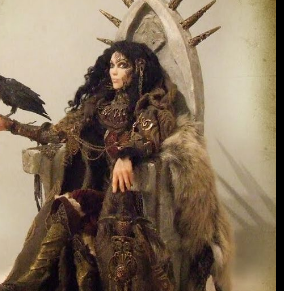
Celtic goddess Morrigan was popular among Celtic people due the support she offered to Dagda in securing victory during the great war against the Fomorians.
The Morrigan is a prominent figure in Irish mythology and one of the most complex war goddesses. She is often portrayed as a triple goddess, encompassing the aspects of sovereignty, war, and death. The three forms of the Morrigan are Badb, Macha, and Nemain, each representing different facets of war, chaos, and fate.
The Morrigan is closely associated with prophecy and the foretelling of death in battle. She appears on battlefields as a harbinger of doom, often in the form of a crow or raven, circling above the fighting. Her presence is a sign that death is near, and her cawing is believed to foreshadow the outcome of the battle.
While she is often feared for her association with death and destruction, the Morrigan also has a protective aspect. She is said to favor certain warriors and protect them in battle, ensuring their survival or leading them to victory. Her connection to death also ties her to the land and fertility, making her a goddess of cycles—of life, death, and rebirth.
In Celtic society, the Morrigan’s fierce, unpredictable nature embodied the chaotic elements of war, but she was also revered as a guardian of the land and its people.
Durga

Durga slays the Buffalo demon, Mahishasura
Durga is one of the most revered goddesses in Hinduism, particularly in her role as a warrior goddess. She is often depicted riding a lion or tiger, with multiple arms holding weapons. Durga was created by the gods to defeat the demon Mahishasura, who had terrorized the heavens and the earth. None of the gods could defeat him, so they combined their powers to create Durga, the ultimate warrior goddess.
Durga’s name means “invincible,” and she is a symbol of divine strength, protection, and righteousness. Her battles against demons are metaphors for the struggle between good and evil, and she is invoked for protection, both in times of physical war and in the internal battles one faces in life.
Durga’s festival, Durga Puja, is one of the most important celebrations in India, where she is worshiped for her victory over Mahishasura and her embodiment of strength and maternal protection. She represents the ideal of shakti, or feminine power, and her image as a warrior goddess resonates with the idea that women, too, embody strength and resilience in the face of adversity.
Freyja

Freyja in the Dwarf’s Cave (1891) by Louis Huard
Freyja is a prominent goddess in Norse mythology, associated with love, fertility, beauty, and war. As a war goddess, she is often linked to the Valkyries, the female figures who choose which warriors die in battle and which are taken to Valhalla, the hall of the slain. Half of the warriors who die in battle are said to go to Freyja’s realm, Folkvangr, while the other half go to Odin’s hall, Valhalla.
Freyja’s connection to war and death is balanced by her associations with fertility and love. She is a complex deity who embodies both life and death, pleasure and violence. This duality makes her one of the most intriguing goddesses in Norse mythology, representing the inevitable connection between creation and destruction.
Freyja’s role as a war goddess reflects the Norse culture’s belief in the nobility of battle and the importance of warriors’ honor in both life and death. She is a protector of warriors, ensuring their place in the afterlife, while also symbolizing the natural cycles of life and death.
How Loki became the blood brother of Odin in Norse mythology
Bellona
Bellona was a Roman goddess of war, closely associated with Mars, the Roman god of war. While Mars represented the general idea of war and conquest, Bellona was specifically invoked for the violence and destruction that war brought. She was depicted as a fierce warrior, often seen with a sword or spear, and her temples were places where Roman leaders would declare war.
Bellona’s role in Roman society was both symbolic and practical. She was the embodiment of military prowess and aggression, and her cult played a key role in the Roman practice of declaring war. Roman priests would hurl a spear into a space symbolizing enemy territory as a ritual act of declaring hostilities, often in Bellona’s name.
In Roman military campaigns, Bellona’s favor was sought to ensure victory and to protect soldiers. Her presence in Roman religion reflected the empire’s militaristic nature and the importance placed on conquest and expansion.
Anat
Anat was a goddess of war and fertility in Canaanite and ancient Near Eastern mythology. She was often depicted as a fierce warrior, wielding weapons and engaged in battle. In texts such as the Baal Cycle, Anat is portrayed as a powerful and bloodthirsty figure who aids her brother Baal in his battles.
Despite her ferocity, Anat was also associated with love and fertility, underscoring the dual nature of many war goddesses who straddled the line between creation and destruction. Her role in Canaanite mythology was complex, and she was worshipped for her strength in war and her ability to protect and nurture life.
Anat’s worship extended beyond the Canaanite world, influencing neighboring cultures such as the Egyptians, who incorporated her into their pantheon as a goddess of war.
Inanna/Ishtar

The Adda Seal, an ancient Akkadian cylinder seal showing (from left to right) Inanna, Utu, Enki, and Isimud (circa 2300 BC)
Inanna, known as Ishtar in Akkadian mythology, is one of the oldest and most powerful goddesses in the ancient world. She was a goddess of love, fertility, and war, embodying the complexity and duality of life. As a war goddess, Inanna/Ishtar was fierce and relentless, leading armies into battle and fighting alongside warriors.
In Mesopotamian mythology, Inanna/Ishtar was a key figure in several myths, including her famous descent into the underworld, where she faced death and returned, symbolizing rebirth. As a goddess of war, she was also linked to the planet Venus, which represented both the morning and evening star, symbolizing both love and war.
Her temples, such as the one in Uruk, were centers of worship where she was honored for her ability to bring both prosperity and destruction. Inanna/Ishtar’s role as a war goddess made her a symbol of power and authority, and she was invoked by kings and warriors for her blessings in battle.
Reasons why Mesopotamia is often called the “Cradle of Civilization”
Oya
Oya is a powerful goddess in the Yoruba religion of West Africa, associated with winds, storms, and war. She is the goddess of change, transformation, and destruction, representing the natural forces of chaos and upheaval. As a war goddess, Oya is a protector of her people, but she also embodies the unpredictability and violence of battle.
Oya is often depicted wielding a sword or spear, leading warriors into battle. Her association with storms and lightning reflects the sudden and destructive nature of conflict, but she is also seen as a bringer of justice. In Yoruba cosmology, Oya is a warrior who fights to protect the oppressed and bring balance to the world.
Her role as a war goddess highlights the importance of balance and justice in times of conflict, and she is revered for her strength, both as a protector and a destroyer.
Kali

Kali is one of the most fearsome and misunderstood goddesses in Hindu mythology. Often depicted with a necklace of skulls and a fierce expression, Kali is the goddess of time, destruction, and death. As a war goddess, she is invincible, destroying demons and evil forces with unparalleled ferocity.
Kali’s destructive power is not without purpose; she destroys to protect and to bring about renewal. Her battles are symbolic of the struggle between good and evil, and she is invoked by warriors seeking victory. Despite her terrifying appearance, Kali is also seen as a mother figure, nurturing her devotees and protecting them from harm.
Her worship, especially during the festival of Kali Puja, reflects her dual nature as both a destroyer and a protector. In battle, Kali is unstoppable, but her destruction ultimately leads to rebirth and transformation.
Conclusion: The Complex Roles of War Goddesses
War goddesses across different cultures share common themes of destruction, protection, and justice. They embody the dual nature of war—its capacity for both chaos and order, life and death. These goddesses were not only revered for their ability to bring victory in battle, but also for their roles as protectors of the people and upholders of cosmic balance.
In many cultures, war goddesses were also connected to fertility and creation, highlighting the interconnectedness of life and death. Their roles in myth and religion reflected the realities of ancient societies, where warfare was a constant threat, but also a means of defending communities and ensuring survival.





