What was the Angevin Empire? – History & Major Facts
The Angevin Empire refers to the collection of lands and territories ruled by the Plantagenet kings of England, primarily from the mid-12th century to the early 13th century.
At its height, it encompassed England, parts of modern-day France (including Normandy, Anjou, Aquitaine, and Brittany), as well as parts of Ireland and Wales. The term “Angevin” comes from the region of Anjou, the ancestral homeland of the Plantagenet family.
The empire’s history is marked by the efforts of Henry II, its founder, to consolidate these lands, and by the conflicts and challenges faced by his successors, particularly Richard I and John, in maintaining control over such a vast and diverse territory.
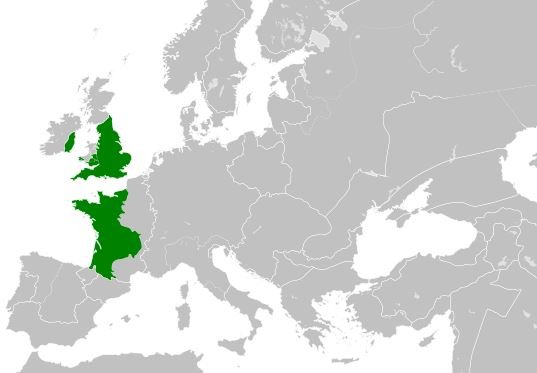
The Angevin Empire was a vast collection of territories ruled by the Plantagenet dynasty during the 12th and 13th centuries. It spanned England, half of France, parts of Ireland, and Wales, with significant influence across the British Isles. Image: A 1190 map of the Angevin Empire.
Origins and Expansion of the Empire
The Angevin Empire began with Henry II, who became the ruler of England in 1154. Henry was a skilled leader and a descendant of both Norman and Anglo-Saxon royalty. He inherited the counties of Anjou, Maine, and Touraine from his father, Geoffrey of Anjou. His marriage to Eleanor of Aquitaine in 1152 greatly expanded his territory by adding the wealthy Duchy of Aquitaine to his holdings. This marriage brought him into direct rivalry with the kings of France, who sought to weaken Henry’s control over these lands.
Henry II’s claim to the English throne came through his mother, Empress Matilda, the daughter of King Henry I of England. After a long civil war known as “The Anarchy,” in which Matilda had fought Stephen of Blois for the crown, Henry II finally succeeded Stephen as king in 1154, bringing a level of stability to England. His rule marked the consolidation of his extensive lands, which stretched from Scotland to the Pyrenees in southwestern France.
Despite being the King of England, Henry II spent much of his reign ruling from his continental territories, and his administration reflected the fact that the Angevin Empire was more than just an English kingdom; it was a vast and loosely connected network of fiefs that owed fealty to various overlords, including the King of France. This complex system of feudal loyalty would be both a strength and a source of tension throughout the history of the empire.
Female Rulers of England and Great Britain & Their Years on the Throne
Conflicts and Rivalries with France
A central feature of the Angevin Empire was its ongoing conflict with the Capetian dynasty of France. Although Henry II ruled extensive lands in France, he technically owed feudal homage to the French king for his continental possessions. This created a delicate and often volatile relationship between the Plantagenet and Capetian kings. Henry II’s vast empire was a direct challenge to the French monarchy’s authority, particularly since his lands covered more territory in France than those controlled by the French king himself.
The rivalry between the Plantagenets and the Capetians would intensify under Henry II’s sons, Richard I and John. Richard, known as Richard the Lionheart, inherited the Angevin Empire in 1189. He is best known for his participation in the Third Crusade, which occupied much of his reign. Although a successful military leader, Richard’s absence from his territories and his focus on crusading left the empire vulnerable.
King John, who succeeded Richard in 1199, is often considered the key figure in the decline of the Angevin Empire. Unlike his father and brother, John lacked military prowess and the political acumen necessary to maintain control over his continental holdings. His defeat in the Anglo-French War (1213–1214), culminating in the Battle of Bouvines in 1214, resulted in the loss of Normandy and most of his other French lands. This loss weakened England’s power on the continent and contributed to internal strife, as many of his barons became disillusioned with his leadership.
Decline and Loss of French Territories
The turning point in the decline of the Angevin Empire came during the reign of King John. In 1204, John lost Normandy to the French king Philip II, a catastrophic blow that marked the beginning of the end for the empire. By 1214, John had lost most of his continental territories, with the exception of Gascony and a small portion of Aquitaine in southern France. These losses drastically reduced the scope and power of the Angevin Empire, shifting the balance of power between England and France.

Philip II (1165- 1223)
John’s military defeats also weakened his authority at home. His efforts to reclaim his lost territories required raising large sums of money, which led to heavy taxation and unpopular fiscal policies. These measures, combined with his treatment of the English barons and his conflict with the Church, created widespread discontent that culminated in the rebellion of the barons and the signing of the Magna Carta in 1215. This document sought to limit the powers of the king and establish certain legal rights for his subjects.
Legacy and Impact on English and French History
Although the Angevin Empire did not survive in its original form beyond the early 13th century, its legacy had a lasting impact on both English and French history. The empire’s rise and fall were pivotal in shaping the political landscape of medieval Europe, particularly in the development of centralized royal authority.
In France, the collapse of the Angevin Empire allowed the Capetian kings to consolidate their power and expand their territories, laying the groundwork for the emergence of France as a dominant European power in the later Middle Ages. The loss of the Angevin lands also shifted the focus of English kings away from their continental ambitions and towards consolidating their control over England, Scotland, and Wales.
The Angevin Empire also left a profound impact on the legal and administrative systems of both England and France. Henry II’s legal reforms, particularly his establishment of common law and the use of royal courts, were crucial in shaping the English legal system. His innovations in governance and justice helped lay the foundations for the development of the English state, and many of his reforms continued to influence English law for centuries.
Furthermore, the conflict between the Plantagenets and the Capetians set the stage for future Anglo-French hostilities, most notably the Hundred Years’ War (1337–1453). This long-running conflict, which stemmed in part from the territorial disputes between the two dynasties, would define relations between England and France for generations and have a lasting impact on the development of both nations.
READ MORE: Greatest Medieval Kings and their Accomplishments
Major Facts about the Angevin Empire
- Founder: The Angevin Empire was founded by Henry II, who became King of England in 1154 and ruled over a vast collection of territories in France and the British Isles.
- Marriage to Eleanor of Aquitaine: Henry II’s marriage to Eleanor of Aquitaine in 1152 brought the wealthy and strategically important Duchy of Aquitaine into the empire, greatly expanding its territorial reach.
- Rivalry with France: The Plantagenet rulers of the Angevin Empire were in constant conflict with the Capetian kings of France, who sought to limit the influence of the empire on French soil.
- Loss of Normandy: King John, Henry II’s youngest son, lost Normandy and most of the empire’s French territories to Philip II of France in 1204, marking the beginning of the empire’s decline.
- Magna Carta: King John’s attempts to reclaim his lost territories led to heavy taxation and discontent among his barons, resulting in the rebellion that forced him to sign the Magna Carta in 1215, a foundational document in the development of constitutional law.
- End of the Empire: The Angevin Empire effectively came to an end with the loss of most of its French territories during the reign of King John, although England retained control over Gascony and Aquitaine in southern France for a time.
- Hundred Years’ War: The collapse of the Angevin Empire and the ongoing rivalry between the Plantagenets and the Capetians laid the groundwork for the Hundred Years’ War, a series of conflicts between England and France that lasted from 1337 to 1453.
- Legal Reforms: Henry II’s legal reforms, including the establishment of common law and the use of royal courts, had a lasting impact on the development of the English legal system.
- Cultural and Political Influence: The Angevin Empire, though short-lived, played a significant role in shaping the political and cultural landscape of medieval Europe, influencing both the development of centralized monarchies and the relationship between England and France.

Image: Henry II of England
Conclusion
The Angevin Empire was one of the most remarkable political entities of the Middle Ages, stretching from England to the southern parts of France. Its creation under Henry II and its expansion through marriage, inheritance, and conquest represented the height of Plantagenet power. However, the vastness of the empire also made it difficult to control, especially in the face of rising tensions with the French Capetian monarchy.
While the empire disintegrated during the reign of King John, its legacy endures. The Angevin Empire played a key role in shaping medieval European history, particularly in terms of Anglo-French relations, the development of centralized royal power, and the legal reforms that helped to shape English governance.
Frequently Asked Questions

Who established the Angevin Empire?
The empire was established by Henry II, who inherited Anjou and Normandy and expanded his territories by marrying Eleanor of Aquitaine in 1152. He also claimed the English throne through his mother, Empress Matilda, in 1154.
What territories did the Angevin Empire include?
The Angevin Empire included England, half of France (Normandy, Anjou, Aquitaine), parts of Ireland, and Wales.
Why did the Angevin Empire face conflict with the Capetians?
The Angevin Empire’s vast size and control of French lands brought it into conflict with the Capetian kings of France, to whom the Plantagenet rulers owed feudal homage. This rivalry created tension between the two dynasties.
What led to the decline of the Angevin Empire?
The Angevin Empire began to decline during the reign of John, Henry II’s son, who lost most of the French territories to Philip II of France after his defeat in the Anglo-French War (1213–1214) and the Battle of Bouvines.

Image: A depiction of the Battle of Bouvines.
Which French territories did England retain after John’s defeat?
After John’s defeat, England retained control over the regions of Guyenne and Gascony in southern Aquitaine.
How did the loss of French territories influence future conflicts?
The loss of French lands during John’s reign laid the groundwork for prolonged hostilities between England and France, leading to the Hundred Years’ War (1337–1453).
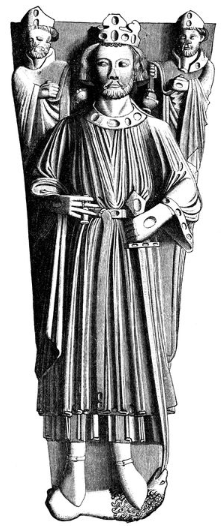
King John of England
What was the outcome of the Hundred Years’ War for the Angevin Empire?
The Hundred Years’ War temporarily allowed England to regain control over parts of France, but by the end of the war, England had permanently lost its French territories, marking the final collapse of the Angevin Empire.
What is the historical legacy of the Angevin Empire?
The Angevin Empire’s legacy includes its role in shaping medieval European politics, especially through the rivalry between the Plantagenet and Capetian dynasties, as well as its influence on English legal and cultural developments.
How did the Angevin Empire contribute to the history of feudal relationships?
The empire’s vast territories, governed under different legal systems, illustrated the challenges of managing a composite monarchy and played a key role in the development of complex feudal relationships in medieval Europe.
Why is the Angevin Empire significant in medieval European history?
The Angevin Empire is significant for its size, its role in Anglo-French relations, and the lasting cultural, political, and legal impacts it had, particularly in England, through the Plantagenet dynasty’s rule.
What was the relationship between Henry II and Eleanor of Aquitaine in building the Angevin Empire?
Henry II’s marriage to Eleanor of Aquitaine in 1152 brought the vast and wealthy Duchy of Aquitaine under his control, significantly expanding the Angevin Empire’s territory and influence across Europe.
What led to future conflicts between England and France after the Angevin Empire’s decline?
The loss of French lands under John’s reign set the stage for ongoing Anglo-French conflicts, culminating in the Hundred Years’ War, as English kings sought to reclaim lost territories.
How did the Angevin Empire affect English governance?
The Angevin Empire contributed to the development of centralized governance in England, as well as legal reforms that shaped English common law.
What was the role of the Battle of Bouvines in the Angevin Empire’s downfall?
The Battle of Bouvines in 1214 was a decisive defeat for King John against Philip II of France, which led to the loss of most of John’s French territories and the effective collapse of the Angevin Empire.





