What was the Chouannerie?
The Chouannerie was a significant royalist uprising in western France during the French Revolution, driven by resistance to Republican policies. This counter-revolutionary movement, lasting from 1794 to 1800, mirrored the Vendée uprising in its objectives and methods.
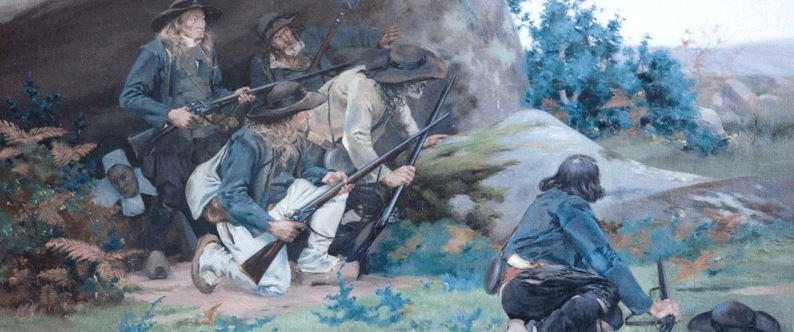
A painting portraying the Chouans seeking refuge behind the imposing stones of an ancient dolmen, utilizing its natural shelter as they readied themselves for their next action.
Origins of the Chouannerie
The Chouannerie emerged in response to two revolutionary policies: the Civil Constitution of the Clergy (1790) and the levée en masse (1793). The Civil Constitution sought to nationalize the Catholic Church, requiring clergy to swear allegiance to the state. This affront to Catholic tradition alienated devout rural populations, particularly in Brittany and Maine. Additionally, the levée en masse, which imposed mass conscription, fueled widespread anger among peasants unaccustomed to mandatory military service.
The first signs of unrest appeared in 1791 when peasants near Vannes rose to defend their bishop, Sébastien-Michel Amelot, against demands to swear the loyalty oath. By 1792, localized uprisings spread across western France, including Finistère, Mayenne, and Ille-et-Vilaine. Jean Cottereau, known as “Jean Chouan,” became a prominent figure, rallying resistance with guerrilla tactics. His nickname derived from the call of the tawny owl (“chouette hulotte”), used as a recognition signal among rebels.
The Association Bretonne, formed by royalists in Brittany, aimed to restore the monarchy and regional autonomy lost after 1789. This group organized the earliest coordinated efforts to challenge Republican authority, laying the groundwork for larger uprisings.

The First Phase (1794–1795)
The Chouannerie gained momentum in 1794 after the Vendéans’ defeat at the Virée de Galerne. Survivors regrouped with local insurgents, using guerrilla tactics to ambush Republican forces and disrupt government operations. Leaders like Jean Chouan, Aimé du Boisguy, and Jean-Louis Treton (Jambe d’Argent) commanded small, mobile units that relied on local knowledge to outmaneuver larger Republican armies.
To counter the Chouans, Republican forces fortified towns and deployed mobile columns to suppress resistance. General Jean Antoine Rossignol led efforts to undermine the rebellion, including the use of fake Chouan bands to sow confusion. Harsh measures, such as summary executions, further inflamed local animosity toward the government.
While Brittany became the epicenter of the uprising, the Chouannerie spread to neighboring départements. In Morbihan, leaders like Pierre Guillemot and Georges Cadoudal orchestrated peasant revolts, while Joseph de Puisaye attempted to unify the fragmented movement. However, divisions among commanders and regional loyalties hindered coordination.
The Second Phase (1795–1796)
In 1795, the British government supported the Chouans by organizing a royalist expedition to Quiberon. Led by Joseph de Puisaye, 3,500 émigré soldiers landed in Brittany to join 15,000 Chouans. However, internal conflicts and strategic missteps undermined the operation. Republican General Lazare Hoche launched a decisive counterattack, culminating in the Battle of Quiberon (July 1795). The royalists suffered a devastating defeat, with over 6,000 prisoners taken and hundreds executed.
The failure at Quiberon exposed deep rifts within the Chouan leadership. Puisaye faced accusations of incompetence and betrayal, particularly from Georges Cadoudal, who emerged as a rival figure. Despite these challenges, Puisaye retained the nominal support of royalist factions, including the exiled Count of Artois (the future Charles X).
Following the Quiberon debacle, the Chouans resumed their guerrilla campaign, targeting Republican forces and collaborators. In Normandy, Louis de Frotté led a parallel uprising, while in Ille-et-Vilaine, Aimé Picquet du Boisguy became a key commander. Despite their resilience, the Chouans struggled to maintain cohesion in the face of relentless Republican pressure.
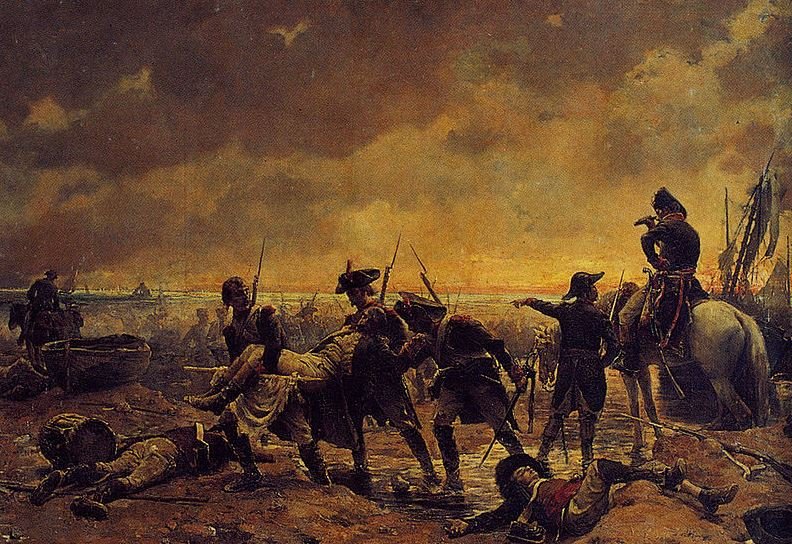
A painting by Paul-Émile Boutigny depicting the battle of battle of Quiberon.
The Third Phase (1796–1800)
By 1796, General Hoche implemented a comprehensive strategy to pacify western France. Recognizing the futility of brute force, he offered amnesty to insurgents, guaranteed religious freedom, and improved discipline among Republican troops. These measures weakened the Chouannerie, as many rebels laid down their arms in exchange for clemency.
The deaths of key leaders further demoralized the movement. Jean-Nicolas Stofflet and François de Charette, prominent Vendéan commanders, were captured and executed in early 1796. Without their Vendéan allies, the Chouans faced overwhelming odds. Gradually, regional leaders like Scépeaux, Cadoudal, and Boisguy surrendered or sought exile.
Despite its decline, the Chouannerie experienced brief resurgences during the Hundred Days (1815) and the Legitimist uprisings of 1832. These later movements, while inspired by the original rebellion, lacked the same intensity and widespread support.
Key Figures of the Chouannerie
The Chouannerie’s leadership reflected a diverse coalition of nobles, clergy, and commoners united by their loyalty to the monarchy. Prominent figures included:
- Jean Chouan: The movement’s namesake and an early leader in Mayenne.
- Georges Cadoudal: A charismatic commander in Morbihan who became a symbol of Chouan resistance.
- Joseph de Puisaye: A controversial leader who sought British support for the royalist cause.
- Aimé du Boisguy: A skilled guerrilla leader in Ille-et-Vilaine.
- Louis de Frotté: The chief organizer of the Norman uprising.
These leaders operated with relative autonomy, reflecting the decentralized nature of the rebellion.
Comparison to the Vendée War
While the Chouannerie shared similarities with the Vendée uprising, key differences set them apart. The Vendée was characterized by large-scale battles and territorial control, while the Chouannerie relied on hit-and-run tactics. Additionally, the Vendée’s leadership was dominated by the nobility, whereas the Chouans included significant peasant participation.
Legacy and Cultural Impact
The Chouannerie demonstrated the depth of rural resistance to revolutionary reforms, highlighting the enduring influence of religion and monarchy in French society. It also exposed the challenges of uniting disparate factions under a common cause.
The Chouannerie inspired numerous works of literature, including Les Chouans by Honoré de Balzac and Ninety-Three by Victor Hugo. These novels captured the drama and tragedy of the uprising, cementing its place in French cultural memory.
Questions and Answers
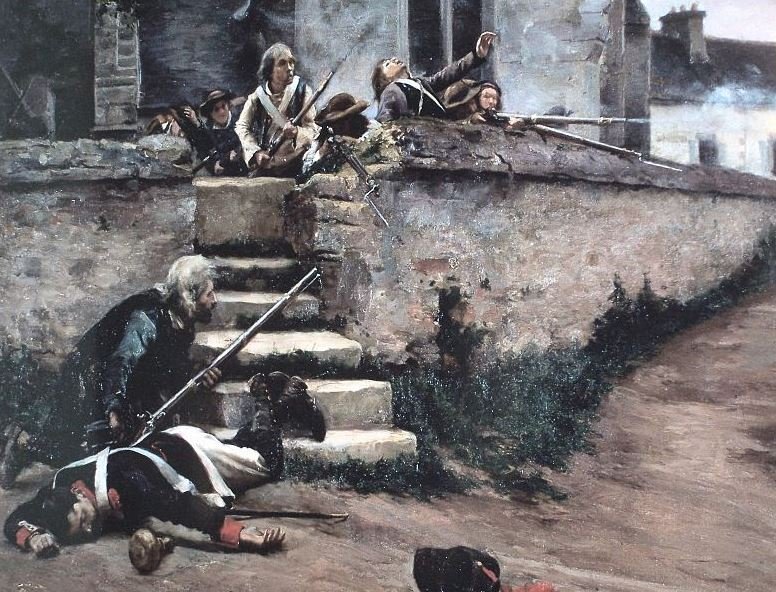
A painting by French artist, Jules Girardet, depicting an event during the Chouannerie.
What triggered the Chouannerie?
The Civil Constitution of the Clergy (1790), which imposed state control over the Catholic Church, and mass conscription (levée en masse) in 1793 provoked widespread discontent among the rural population.
Who were the Chouans?
Predominantly rural peasants led by nobles and charismatic leaders like Jean Cottereau (Jean Chouan), Georges Cadoudal, and Joseph de Puisaye. They opposed Republican forces using guerrilla tactics.
What distinguished the Chouannerie from the War in the Vendée?
The Chouannerie lacked a unified territory and organized army, relying instead on dispersed guerrilla units, unlike the Vendée, which had defined territories under insurgent control.
How did the Chouannerie evolve?
It occurred in three phases: initial guerrilla uprisings (1794–1795), intensified conflict with British support (1795–1796), and a gradual Republican victory by 1800.
What role did religion play in the uprising?
Catholic loyalty was central; many Chouans viewed Republican laws as an attack on their faith, particularly the Civil Constitution of the Clergy.
What was the outcome of the Chouannerie?
The rebellion was ultimately suppressed by Republican forces by 1800 through military campaigns, amnesty offers, and guarantees of religious freedom.