Who was Caracalla, and when did he rule the Roman Empire?
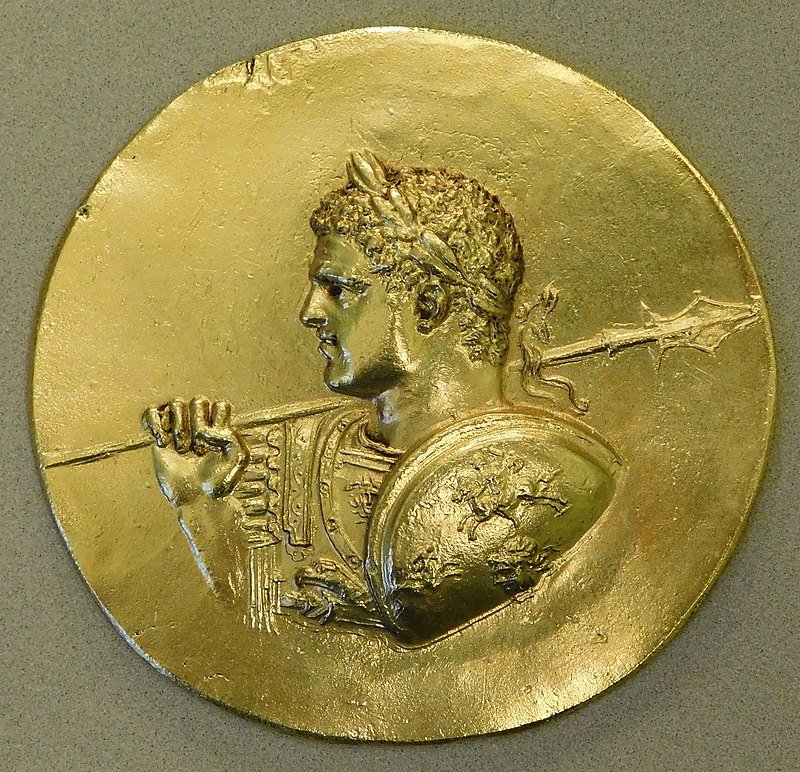
Gold medallion of Roman Emperor Caracalla
Caracalla, born Lucius Septimius Bassianus (April 4, 188 – April 8, 217 AD), was a Roman emperor who ruled from 198 to 217 AD. He is best known for his militaristic reign, violent temper, and the infamous edict that granted Roman citizenship to all free men within the Roman Empire.
Though his rule was marked by some significant achievements, Caracalla’s legacy is also one of cruelty and instability, reflected in his rise to power, governance, and eventual assassination.
Early Life and Rise to Power
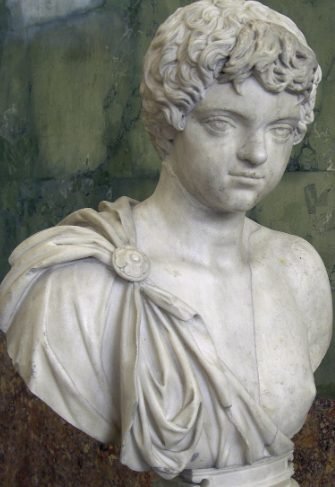
Young Caracalla; Hermitage Museum, Saint Petersburg, Russia
Caracalla was born to Septimius Severus, a Roman emperor, and Julia Domna, a powerful and influential woman of Syrian origin. His original name, Lucius Septimius Bassianus, was later changed to Marcus Aurelius Antoninus to strengthen the association with the highly respected Emperor Marcus Aurelius. His nickname, “Caracalla,” comes from a type of Gallic hooded cloak that he popularized during his reign.

Bust of Julia Domna, mother of Caracalla and Geta
From an early age, Caracalla was groomed for leadership. In 198 AD, at the age of 10, his father made him co-emperor, sharing the title of Augustus. His younger brother, Geta, was also appointed co-emperor in 209 AD, creating a tense and competitive dynamic between the two. Despite this shared rule, Caracalla had no intention of governing in harmony with his brother.

The Severan Tondo, a famous piece of Roman artwork created during the reign of the Severan dynasty, portrays Roman emperor Septimius Severus, his wife Julia Domna, and their children Caracalla and Geta, whose face is removed.
Major Accomplishments of Septimius Severus, the first African to become emperor of Rome
The Severan Dynasty
Caracalla was part of the Severan Dynasty, which ruled Rome from 193 AD to 235 AD. His father, Septimius Severus, established this dynasty after a period of civil war known as the Year of the Five Emperors (193 AD). Severus was a successful general who brought stability to the empire through military strength and political reform. He secured his sons’ succession by making them co-emperors, hoping they would rule jointly after his death. However, this plan would not unfold as he had intended.
Severus died in 211 AD while on a military campaign in Britain. Before his death, he supposedly advised his sons to “be harmonious, enrich the soldiers, and scorn all others.” This advice, particularly the focus on military loyalty, would heavily influence Caracalla’s reign.

Severan Emperors Septimius Severus, Caracalla, and Geta
Caracalla and Geta: A Deadly Rivalry
After their father’s death, Caracalla and Geta became co-rulers, but their relationship was fraught with hostility. They divided the imperial palace and even avoided appearing in public together. The Roman historian Cassius Dio described the situation as unbearable, with the brothers constantly at odds over how to govern.
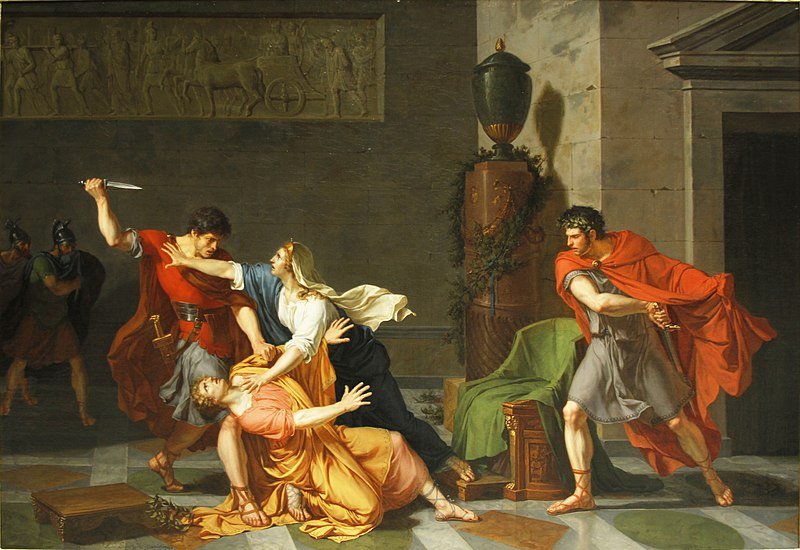
Emperor Geta Dying in his Mother’s Arms, by French artist Jacques-Augustin-Catherine Pajou, 1766–1828 (Staatsgalerie Stuttgart)
This tension culminated in a violent episode in December 211 AD. Caracalla, unwilling to share power any longer, had his brother Geta murdered. According to contemporary accounts, Geta was killed in his mother’s arms during a meeting meant to resolve their differences.
Following the assassination, Caracalla ordered a brutal purge of Geta’s supporters and anyone perceived as a threat, killing thousands in what became known as the “damnatio memoriae” of Geta. He sought to erase his brother’s memory by destroying images, coins, and inscriptions that bore his name.
Reign as Sole Emperor
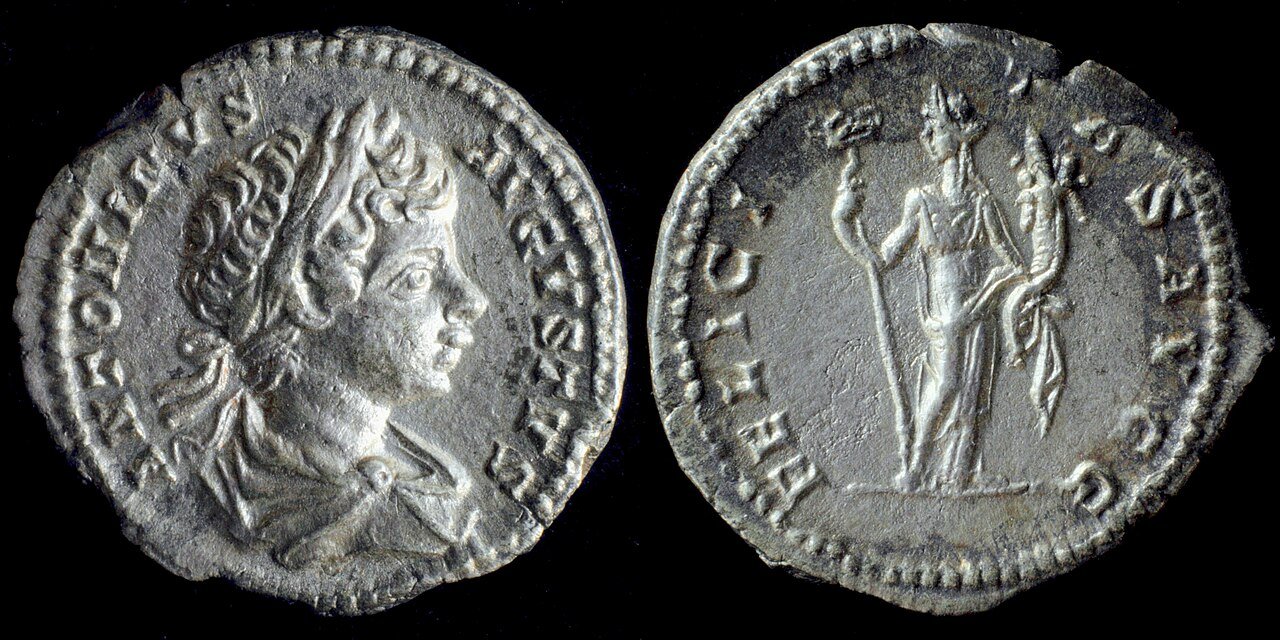
AR Denarius of Caracalla, reverse side with ‘FELICITAS AVGG’ – Felicitas Augusti means: “To the good fortune (or happiness) of emperors”
After eliminating Geta, Caracalla became the sole ruler of the Roman Empire. His reign is often characterized by its militaristic focus, autocratic style, and ruthless suppression of dissent.
The Edict of Caracalla (Constitutio Antoniniana)
One of Caracalla’s most notable actions was the issuance of the Constitutio Antoniniana in 212 AD. This edict granted Roman citizenship to all free men within the empire. Previously, Roman citizenship had been a privilege granted to select individuals and communities, offering legal protections and other advantages. By extending citizenship to everyone, Caracalla aimed to increase tax revenues and secure greater loyalty to the empire.
While the edict had significant social and political implications, its primary motivation was likely financial. The Roman Empire was facing increasing fiscal pressures, and by making more people citizens, Caracalla could collect more taxes, particularly the inheritance and manumission taxes that only citizens paid.
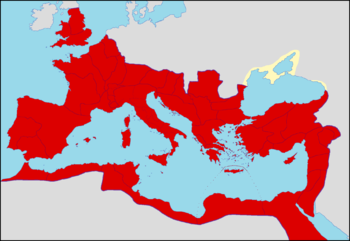
Raised in the shadow of a powerful father, Emperor Caracalla inherited both the empire and the expectations of continuing its prosperity. However, his violent nature, obsession with military affairs, and inability to work with his brother led to a reign marked by bloodshed and instability. Image: The Roman Empire during the reign of Caracalla
Military Campaigns
Caracalla had a deep affinity for the military, and his reign was defined by a focus on military expansion and the well-being of the army. He increased soldiers’ pay, lavished them with gifts, and personally participated in military campaigns. This won him the loyalty of the legions, but it also drained the empire’s finances.
In 213 AD, Caracalla led a campaign against the Alamanni, a Germanic tribe that had been threatening the northern frontiers of the empire. He claimed victory, though it’s unclear how significant this triumph was. His military ambitions extended beyond Europe; in 216 AD, he launched an invasion of Parthia, seeking to emulate the conquests of Alexander the Great. This campaign, however, was largely unsuccessful.
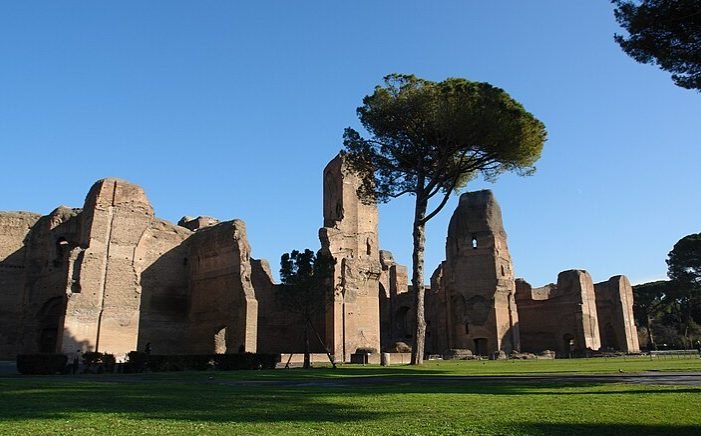
The Baths of Caracalla
Caracalla’s Personality and Governance
Caracalla’s reign was marked by cruelty and paranoia. Ancient sources, such as Cassius Dio and Herodian, describe him as a violent and erratic ruler who was quick to anger and ruthless in eliminating perceived enemies. His erratic behavior and heavy reliance on the military for control made him deeply unpopular among the Roman elites and the Senate, though he remained popular with the army due to his generosity toward them.
Caracalla also indulged in grandiose building projects, the most famous of which were the Baths of Caracalla in Rome. These massive public baths, completed during his reign, were a symbol of the emperor’s desire to leave a lasting legacy. The baths were not only a feat of engineering but also served as a social hub for Roman citizens, featuring libraries, gyms, and gardens.
Despite these projects, Caracalla’s governance was largely characterized by neglect for civilian administration and the welfare of the general population. His focus on the military, coupled with his brutal suppression of dissent, created an atmosphere of fear and instability.
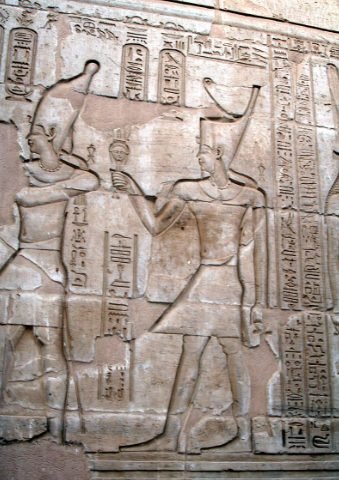
Despite his many flaws, Emperor Caracalla’s decision to extend Roman citizenship to all free men within the empire had a lasting impact, shaping the social and political landscape of the Roman world. Image: Caracalla as Egyptian Pharaoh at the Temple of Kom Ombo
Assassination and Legacy
Caracalla’s reign came to an abrupt end in 217 AD. While on campaign in the East, he was assassinated by a soldier named Julius Martialis, who had been offended by the emperor. The assassination was likely orchestrated by Caracalla’s praetorian prefect, Macrinus, who then declared himself emperor.
Caracalla’s death marked the end of his turbulent reign, but his legacy endured in various ways. His granting of Roman citizenship had lasting effects on the structure of the empire, helping to create a more uniform legal and social identity across its vast territories. However, his militaristic focus and ruthless methods also contributed to the eventual decline of the Severan Dynasty.
The Baths of Caracalla remain one of the most visible and enduring legacies of his rule. These grand public baths stood as a testament to Roman engineering and the emperor’s desire to be remembered.
However, the overall assessment of Caracalla’s reign is overwhelmingly negative. His cruelty, fratricide, and reckless economic policies overshadowed any positive contributions he made, and ancient historians like Cassius Dio depict him as a tyrant whose reign did more harm than good to the Roman Empire.
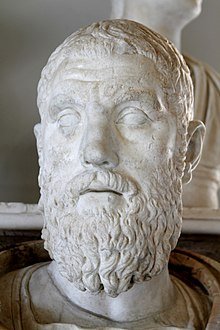
Bust of Emperor Macrinus Capitoline Museums
Frequently Asked Questions

Caracalla, born Lucius Septimius Bassianus, ruled the Roman Empire from 211 to 217 CE. He became co-emperor with his father Septimius Severus in 198 CE and later consolidated sole power in 211 CE by murdering his younger brother Geta. Image: Aureus of Roman Emperor Caracalla
What was Caracalla’s full name after his name change, and why was it changed?
Caracalla’s name was changed to Marcus Aurelius Antoninus to link the new Severan dynasty with the respected Antonine dynasty. This change was part of an effort to create symbolic continuity between the two dynasties.
Why was Caracalla nicknamed “Caracalla”?
Caracalla was a nickname derived from a type of Gallic cloak that he popularized. It was never an official name but became widely used to refer to him.
How did Caracalla come to power, and what role did his family play in his rise?
Caracalla was named co-emperor with his father, Septimius Severus, in 198 CE at the age of 10. His father’s influence and eventual death in 211 CE set the stage for him to share power with his brother Geta. However, Caracalla soon had Geta murdered to secure sole control of the empire.
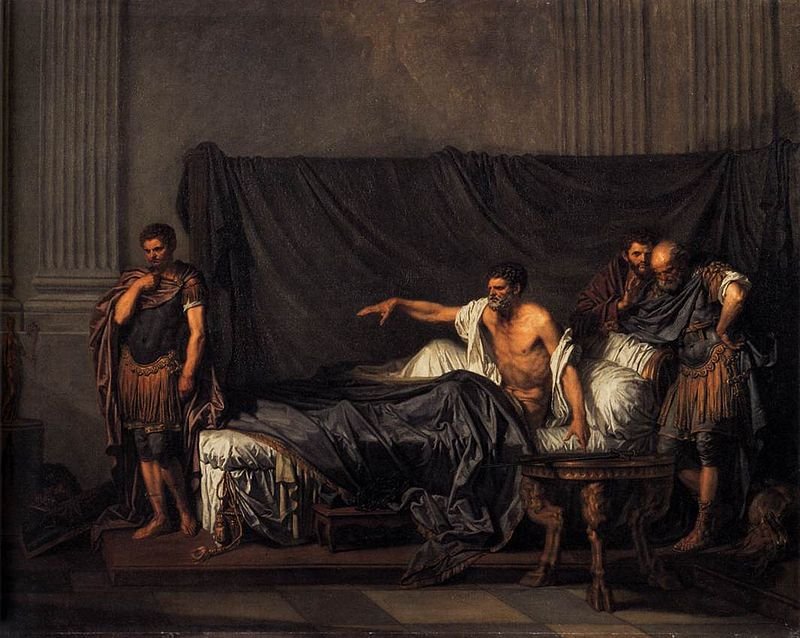
Septimius Severus and Caracalla, by French artist Jean-Baptiste Greuze, 1769
What led to the conflict between Caracalla and his brother Geta, and how did Caracalla resolve this?
Caracalla and Geta had a contentious relationship, disagreeing on governance after their father’s death. Their conflict grew so severe that they considered dividing the empire. Ultimately, Caracalla arranged for Geta’s murder in December 211 CE, thereby securing sole rule.
What was damnatio memoriae, and how did Caracalla use it against his brother?
Damnatio memoriae was the practice of erasing someone’s name and memory from public records, inscriptions, and monuments. After murdering Geta, Caracalla employed damnatio memoriae to remove all traces of his brother from Roman history.
How did Caracalla ensure the loyalty of the Roman army?
Caracalla gained the army’s loyalty by portraying himself as a fellow soldier and increasing their pay by about 50%. He shared hardships with the soldiers and presented himself as a warrior-emperor, which made him popular with the military.
What was the Constitutio Antoniniana, and why did Caracalla issue it?
The Constitutio Antoniniana was an edict issued in 212 CE that granted Roman citizenship to all free men in the empire. Although it was presented as an egalitarian measure, its primary purpose was to increase tax revenues by broadening the base of taxable citizens.
What were the main achievements and failures of Caracalla’s military campaigns?
Caracalla successfully campaigned against the Alemanni in 213 CE, securing the empire’s northern frontiers and earning the title “Germanicus.” However, his campaign in the east against the Parthians in 216 CE was less successful, as he failed to achieve significant gains and faced strong resistance.
How did Caracalla’s reign come to an end?
Caracalla was assassinated in 217 CE by a soldier under the orders of his praetorian prefect, Macrinus. Fearing that Caracalla planned to remove him, Macrinus acted preemptively, and Caracalla was killed near Carrhae (modern Harran).
What was Caracalla’s lasting legacy in the Roman Empire?
Caracalla’s legacy is mixed. He is remembered for his military strength and his extension of Roman citizenship through the Constitutio Antoniniana, which unified the empire’s diverse population. However, his reign was marked by violence, autocracy, and financial strain, contributing to the eventual decline of the Severan dynasty and the instability of the Roman Empire in the third century.

Caracalla’s reliance on the army for control, violent suppression of rivals, and focus on personal ambition led to bloodshed and instability, which undermined long-term peace and prosperity in the empire.





