Who Was Cesar Chavez? Major Facts About the American Labor Leader and Civil Rights Activist
Cesario Estrada Chavez was a prominent American labor leader and civil rights activist. He is best known for co-founding the National Farm Workers Association (NFWA) alongside Dolores Huerta, which later merged with the Agricultural Workers Organizing Committee (AWOC) to become the United Farm Workers (UFW) labor union.
Chavez’s ideological stance was a unique blend of leftist politics and Catholic social teachings, reflecting his commitment to social justice and his deep religious convictions.

Mexican-American farm worker, labor leader and civil rights activist César Chávez emphasized that social change is irreversible; educated people, those with pride, and the unafraid cannot be oppressed. He believed that once people envision a better future, it becomes theirs to claim.
Early Life and Background
Chavez was born in Yuma, Arizona, to a Mexican-American family. His early life was marked by hardship and labor. Growing up, he worked as a manual laborer, a common occupation for many Mexican-Americans of that era. His experiences as a laborer laid the foundation for his future activism. Chavez’s work ethic and determination were evident from a young age. Despite the challenges, he remained committed to improving his circumstances and those of his community.
After spending two years in the U.S. Navy, Chavez relocated to California, where he married and started a family. His move to California proved pivotal. It was here that he became deeply involved in the Community Service Organization (CSO), a group dedicated to promoting civil rights and labor rights.
Through the CSO, Chavez helped laborers register to vote, empowering them to participate in the democratic process. His leadership skills were quickly recognized, and in 1959, he became the national director of the CSO, based in Los Angeles.
Founding the NFWA and Early Activism

Cesar Chavez was a prominent labor leader and civil rights activist who served as the president of the National Farm Workers Association (NFWA) from 1962 to 1965. Image: Cesar Chavez (center) marching with United Farm Workers members from the Mexican border to Sacramento in Redondo Beach, California.
In 1962, Chavez made a bold decision to leave the CSO and co-found the National Farm Workers Association (NFWA) in Delano, California. The NFWA aimed to improve the conditions of farmworkers, who often faced exploitation and poor working conditions. Under Chavez’s leadership, the NFWA launched several initiatives, including an insurance scheme, a credit union, and the publication of El Malcriado, a newspaper dedicated to farmworkers’ issues.
One of Chavez’s most significant contributions was organizing strikes among farmworkers. The Delano grape strike of 1965-1970 stands out as a landmark event in labor history. The strike began when Filipino grape workers, led by Larry Itliong and the AWOC, walked off the vineyards demanding higher wages and better working conditions. Chavez’s NFWA joined the strike, and together, the two organizations formed the United Farm Workers (UFW) in 1967. This merger brought together Mexican-American and Filipino farmworkers in a united front.
Chavez’s methods were heavily influenced by Mahatma Gandhi‘s principles of nonviolence. He employed direct, nonviolent tactics such as picketing and boycotts to pressure farm owners. Chavez also infused his campaigns with Roman Catholic symbolism, including public processions, Masses, and fasts, which resonated deeply with many farmworkers, who shared his faith.

The National Farm Workers Association merged with the Agricultural Workers Organizing Committee to form the United Farm Workers (UFW) labor union.
Expansion and Challenges
In the early 1970s, Chavez sought to expand the UFW’s influence beyond California. He opened branches in other U.S. states, aiming to unite farmworkers nationwide. However, this expansion brought new challenges. Chavez viewed illegal immigrants as a major source of strike-breakers and launched a campaign against illegal immigration into the U.S. This campaign generated violence along the U.S.-Mexico border and created schisms with many of the UFW’s allies, including civil rights organizations and immigrant advocacy groups.
Chavez’s interest in cooperative living led him to establish a remote commune at Keene, California. However, his increasing isolation and relentless campaigning began to alienate many California farmworkers who had previously supported him. By 1973, the UFW had lost most of the contracts and membership it had gained during the late 1960s.
Despite these setbacks, Chavez’s alliance with California Governor Jerry Brown was instrumental in the passing of the California Agricultural Labor Relations Act of 1975. This legislation was a significant victory for farmworkers, as it aimed to protect their right to organize and bargain collectively. However, the UFW’s campaign to enshrine its measures in California’s constitution ultimately failed, marking a significant blow to Chavez’s efforts.

Chávez dedicated his life to changing this, working to gain recognition for agricultural workers’ rights. He inspired and organized them into the National Farm Workers Association, which later became the United Farm Workers. Through marches, strikes, and boycotts, Chávez pressured employers to pay fair wages and provide benefits, leading to the enactment of the first Bill of Rights for agricultural workers.
Later Years and Decline
In his later years, Chavez’s leadership style became increasingly autocratic. Influenced by the Synanon religious organization, he emphasized communal living and purged those he deemed disloyal from the UFW. This approach led to dwindling membership and support within the union. In the 1980s, Chavez shifted his focus to anti-pesticide campaigns, raising awareness about the health risks farmworkers faced due to pesticide exposure.
Chavez also ventured into real estate development, a move that generated controversy due to his use of non-unionized laborers. This decision was seen as hypocritical by many of his supporters and further eroded his standing within the labor movement.
Did you know…?

- Chavez supported Ferdinand Marcos, the president of the Philippines from 1965 to 1986. This aspect of his political affiliations is less celebrated due to Marcos’s controversial leadership.
- In the early 1990s, the UFW promoted Chavez as a heroic figure, especially on college campuses. In 1990, he appeared at 64 events, earning an average of $3,800 per appearance.
- In 1991, he launched a “Public Action Speaking Tour” across U.S. colleges, discussing farmworker issues, pesticide dangers, agribusiness and Republican Party alliances, and advocating boycotts and marches over electoral politics.
- U.S. President Barack Obama highlighted Cesar Chavez’s lasting impact by adopting Chavez’s slogan, “Si, se puede” (“Yes, we can”), during his historic 2008 campaign to become the first Black U.S. president. This phrase underscored Obama’s message of hope and change.
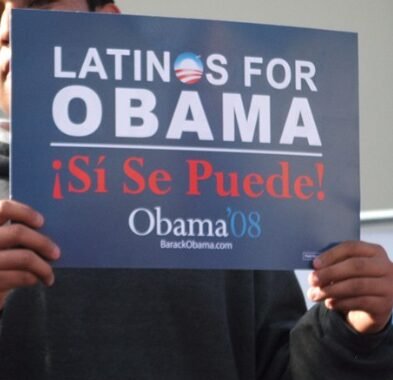
Barack Obama honored Cesar Chavez by using his slogan, “Si, se puede” (“Yes, we can”), in the 2008 Presidential Campaign
Legacy and Controversy
Cesar Chavez remains a controversial figure. Critics of the UFW have raised concerns about his autocratic control of the union, the purges of those he considered disloyal, and the personality cult that developed around him. Farm owners, on the other hand, often viewed him as a communist subversive, threatening the established order.
Despite these criticisms, Chavez became an icon for organized labor and leftist groups in the United States. His impact was evident during his October 1981 visit to dedicate the first Farm Worker Service Center in the Midwest, where he was warmly received by migrant farm worker activists like Maria Elena Lucas. His dedication to improving the lives of farmworkers and his methods of nonviolent protest left a lasting impression.
Chavez’s posthumous legacy is significant. He has been honored as a “folk saint” among Mexican Americans, reflecting the deep cultural and spiritual impact he had on the community. His birthday, March 31, is a federal commemorative holiday in several U.S. states, celebrating his contributions to labor rights and social justice. Numerous places, including schools, streets, and parks, are named after him, ensuring that his legacy endures.
In 1994, a year after his death, Chavez was posthumously awarded the Presidential Medal of Freedom, the highest civilian honor in the United States. This award, presented by President Bill Clinton, recognized Chavez’s tireless work and significant contributions to the nation.

Questions and Answers about Cesar Chavez (March 31, 1927 – April 23, 1993)

Who were Cesar Chavez’s parents, and what influence did his family have on his upbringing?
Cesar Chavez’s parents were Librado and Juana Estrada Chavez. His tight-knit extended family and his upbringing as a Roman Catholic, particularly influenced by his grandmother, fostered a deep religious faith in him.
The Great Depression caused Chavez’s family to lose their property, leading them to move to California in search of better opportunities, along with many other American immigrants.
What educational background did Cesar Chavez have, and why did he leave school?
Chavez attended Laguna Dam School but left after completing primary education to work as a farm laborer to support his family.
Who did Cesar Chavez marry, and how many children did they have?
In 1948, Cesar Chavez married Helen Fabela, and together they had eight children.
What hardships did Chavez face during his early life in California?
Chavez faced significant hardship and discrimination, working alongside his parents as an agricultural laborer and facing racial discrimination in school due to his poverty.
What was Chavez’s role in the United States Navy, and what did he do after leaving the Navy?
Chavez joined the United States Navy in 1944 and earned the rank of seaman first class. After leaving the Navy in 1946, he returned to farm labor.
How did Chavez begin his path to activism, and who influenced him?
Chavez’s path to activism began through his interactions with social activists Father Donald McDonnell and Fred Ross. His first significant activist role was as vice president of the Community Service Organization (CSO) in San Jose.
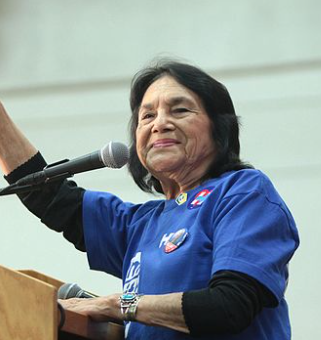
Chavez cofounded the National Farm Workers Association (NFWA) with Dolores Huerta. Image: American labor leader and civil rights activist Dolores Huerta
Most Powerful and Influential Women Leaders of the 20th Century
What role did Chavez play in the Community Service Organization (CSO)?
Chavez expanded the CSO by establishing chapters in various California cities, encouraging voter registration, and securing financial support from organizations like the American Federation of Labor.

Chavez was involved in major labor movements such as the Delano Grape Strike, the Salinas Lettuce Strike, and campaigns focused on immigration and legislative reforms. Image: The Arch of Dignity, Equality, and Justice (by Judy Baca) on the Plaza de César Chávez at San José State University. The monument is dedicated to Chavez
What awards and recognitions did Chavez receive during and after his life?
Chavez received the Jefferson Award for Greatest Public Service Benefiting the Disadvantaged in 1973, the Pacem in Terris Award, and posthumously the Presidential Medal of Freedom awarded by President Bill Clinton. He was also inducted into the California Hall of Fame and had the Cesar E. Chavez National Monument designated in his honor.

For his commitment to social justice and lifelong dedication to improving others’ lives, Chávez was posthumously awarded the Presidential Medal of Freedom.
What were some criticisms faced by Chavez?
Chavez faced criticism for his autocratic control of the UFW, purges of those deemed disloyal, and accusations of trying to disrupt the established American democratic structure.
What kind of threats did Cesar Chavez face during his life, and how did he respond?
Throughout his life, Chavez received numerous death threats due to his activism. Despite these threats, he remained unwavering in his dedication to improving the lives of farm workers and advocating for civil rights.
When did Cesar Chavez die?
The UFW faced a legal battle with Bruce Church Inc., which sued for libel and illegal threats. A $5.4 million verdict against the UFW was overturned on appeal. Chavez testified in Yuma in 1993. During the case, he died on April 23, aged 66, at a supporter’s home in San Luis.
An autopsy was inconclusive, but his family cited natural causes.
His funeral, attended by tens of thousands, took place at Forty Acres, and he was buried in a private ceremony at La Paz.
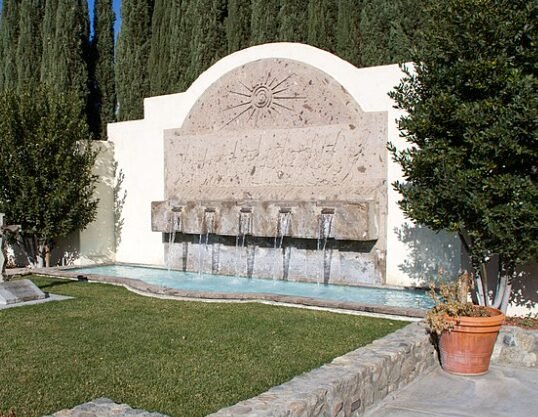
César Chávez is buried in the garden of the Cesar E. Chavez National Monument in Keene, California





