Who was Maximilian I of Mexico?
In the vast and intricate tableau of global history, certain figures emerge as enigmatic. Maximilian of Austria, or Maximilian I of Mexico, is undoubtedly one such individual. A European archduke who became the ill-fated emperor of a nation across the ocean, Maximilian’s life is a blend of ambition, idealism, geopolitical maneuvering, and tragedy.
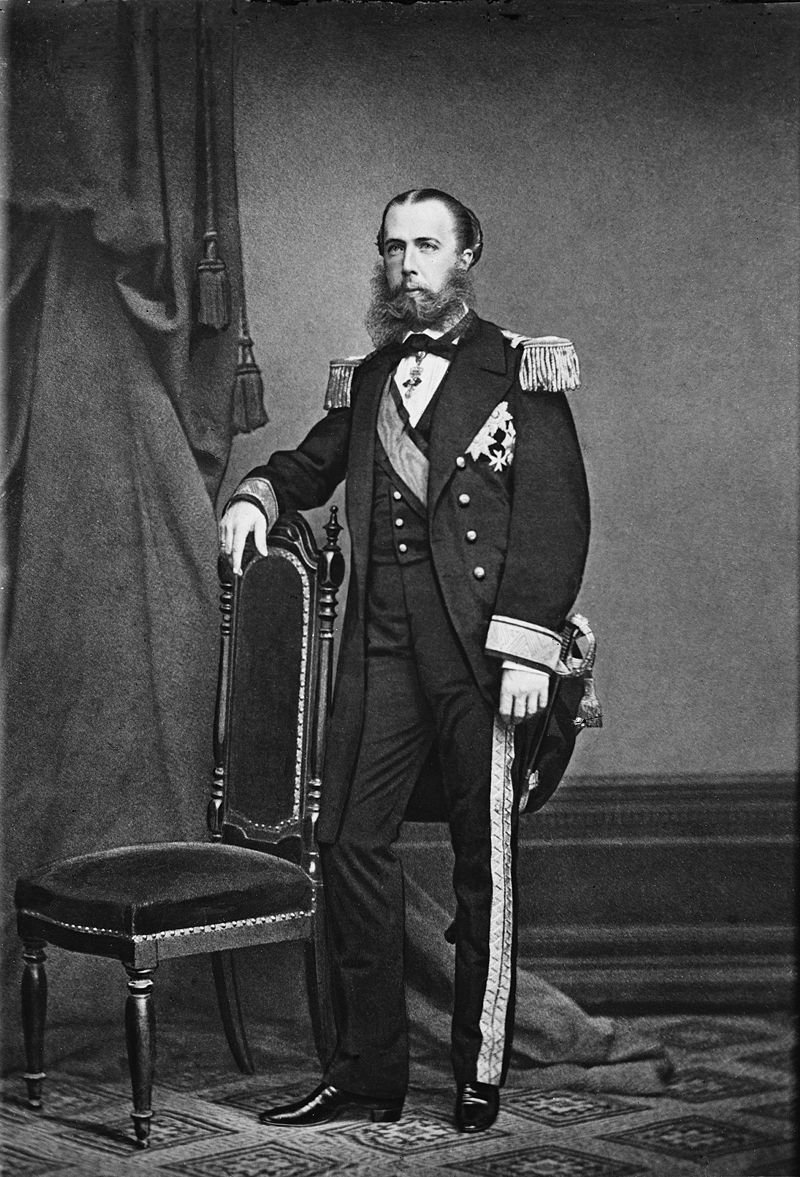
Maximilian of Austria, born on July 6, 1832, at Schönbrunn Palace in Vienna, ascended as the Emperor of the Second Mexican Empire on April 10, 1864.
In the article below, World History Edu delves deep into the life, reign, and eventual demise of this complex figure.
Mexican War of Independence: Causes, Major Battles, & Outcome
Early Life and Habsburg Lineage
Born on July 6, 1832, in Vienna, Maximilian came from the eminent House of Habsburg, one of the most powerful royal houses of Europe. His lineage alone, as the younger brother of Emperor Franz Joseph I of Austria, placed upon him considerable expectations and privileges.
He was groomed with the meticulousness typical of European royalty. His education was comprehensive, reflecting the Habsburgs’ cosmopolitan outlook, encompassing languages, military tactics, and governance.
As a young archduke, Maximilian was known for his liberal views, in stark contrast to his brother Franz Joseph’s conservatism. This difference in political perspective would play a pivotal role in the years to come.

Born on July 6, 1832, at Schönbrunn Palace in Vienna, Maximilian was baptized as Ferdinand Maximilian Josef Maria, names honoring his godfather, Emperor Ferdinand I, and his maternal grandfather, King Maximilian I Joseph of Bavaria. Image: Maximilian as a boy, 1838, by German painter Joseph Karl Stieler
Did you know…?
- Son of Archduke Franz Karl and Princess Sophie of Bavaria, Maximilian was rumored to be the result of his mother’s alleged affair with Napoleon II, although these claims are speculative.
- Maximilian was rigorously educated from a young age, his daily studies expanding from 32 hours a week at age seven to 55 by age 17, covering a broad array of subjects including history, law, and diplomacy.
Naval Career and Governorship of the Lombardo-Venetian Kingdom
Maximilian’s early forays into statecraft and military leadership were through his naval career. He entered the Austrian Navy in 1848 and, displaying both competence and passion, quickly ascended the ranks. By 1854, he was appointed as the commander-in-chief of the navy, embarking on a series of reforms and modernizations.
His governance skills further got a platform when he was appointed the Governor-General of the Lombardo-Venetian Kingdom in 1857. Here, his liberal policies, aimed at conciliation with the local populace, became evident. However, with the pressures of growing Italian nationalism and the broader geopolitical context of the era, his tenure was fraught with challenges.

Despite the strict Austrian court environment, Maximilian’s charismatic nature shone through. Known for his pranks and charm, he often clashed with his more reserved brother, Franz Joseph. During the 1848 revolutions, Maximilian was appalled by the harsh repressions and expressed his disapproval of the brutality he witnessed. Image: Maximilian in uniform, 1853
The Allure of a Mexican Crown
Post his European assignments, a unique opportunity presented itself. Mexico, in the aftermath of the Reform War and grappling with significant debt, suspended repayments to European creditors. This decision, coupled with the geopolitical ambitions of Napoleon III of France, led to the French intervention in Mexico.
Napoleon III’s larger vision was to establish a friendly monarchy in Mexico, providing France a foothold in the Americas. For this, he needed a puppet monarch, and who better than a European archduke? Thus, the allure of a Mexican crown was presented to Maximilian.
Initially hesitant, Maximilian was swayed by a combination of factors. These included manipulated plebiscites showcasing Mexican support for a monarchy, his own idealistic visions of benevolent rule, and perhaps the allure of ruling a vast territory.
In 1864, Maximilian, with the support of conservative Mexican factions and the French military, was crowned Emperor Maximilian I of Mexico.
Reign in Mexico: Idealism meets Reality
Maximilian’s reign in Mexico was marked by a blend of idealism and naivety. He genuinely attempted to understand and integrate with Mexican culture. He even went as far as adopting two Mexican children and tried to tour the country to build rapport with the populace.
In governance, he retained several liberal reforms of his predecessor, Benito Juárez, aiming to create a synthesis of monarchic and republican governance. However, these moves alienated his conservative supporters without winning over the liberals.
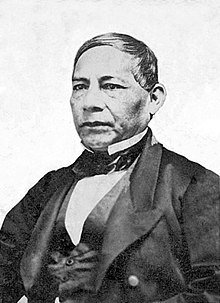
Maximillian reign marked the establishment of a monarchy under European influence in a region previously led by President Benito Juárez as a republic. Image: President Benito Juárez
The broader landscape was even more challenging. President Juárez, though in retreat, led a persistent resistance against the French and Maximilian. As time passed, it became evident that Maximilian’s rule was heavily reliant on French military support.

Maximilian’s genuine attempts at bridging divides, though laudable, were perhaps ill-timed and lacked the local nuance and support base necessary for success. Image: At Miramar castle the Mexican Delegation appoints Ferdinand Maximilian of Habsburg as Emperor of Mexico by Cesare Dell’Acqua (1864)
The Turning Tide: Abandonment and Capture
By 1866, the global and local scenario changed drastically. With the end of the American Civil War, the U.S., adhering to the Monroe Doctrine, began pressuring France to withdraw from the Americas. Concurrently, Napoleon III, facing challenges in Europe, began recalling his troops from Mexico.
Maximilian, now with a dwindling support base, faced a resurgent Juárez and his forces. Advised by many, including his wife Empress Carlota, to abdicate and return to Europe, Maximilian chose to stay, driven by a combination of honor, duty, and perhaps overconfidence.
This decision proved fatal. With the tide turning rapidly, Maximilian was captured by Juárez’s forces in 1867.

Execution and Aftermath
Maximilian’s trial was swift. Despite international pleas for mercy, including from notable figures and governments, Juárez, viewing the need to establish the supremacy of the Mexican state, decided to make an example of the foreign monarch.
On June 19, 1867, Maximilian, alongside two loyal generals, was executed by firing squad on the Hill of Bells in Querétaro. Thus, the ambitious dream of a European monarch in the Americas came to a tragic end.
In death, Maximilian became a symbol, interpreted variously as a martyr, a naïve dreamer, and a victim of larger geopolitical machinations.

Maximilian’s Mexican reign, though short-lived, was emblematic of the era’s tensions: monarchy versus republicanism, European interventionism versus local sovereignty, and conservatism versus liberalism. Image: Last moments of Emperor Maximilian I of México. by French painter Jean-Paul Laurens.
Reasons why the United States didn’t annex Mexico following the Mexican-American War
Questions and Answers
The life of Maximilian of Austria encapsulates the complexities of 19th-century global politics. Here was an archduke, born to privilege and power in Europe, who found himself an emperor in a distant land, only to meet a tragic end.
Below are some frequently asked questions about Maximilian I of Mexico:
What is Maximilian I’s full name and titles?
Maximilian I was born Ferdinand Maximilian Josef Maria von Habsburg-Lothringen and ruled as the Emperor of the Second Mexican Empire.
What familial connections did Maximilian have to European royalty?
Maximilian was a member of the House of Habsburg-Lorraine, the younger brother of Franz Joseph I, the Emperor of Austria. His lineage also traced back to Charles V, Holy Roman Emperor and King of Spain.
What role did Maximilian serve in before becoming Emperor of Mexico?
Before becoming Emperor of Mexico, Maximilian served as the commander-in-chief of the Austrian Navy and briefly as the viceroy of Lombardy-Venetia, although his tenure in these roles was not notably successful.
What led to Maximilian’s decision to accept the Mexican crown in 1864?
Maximilian was persuaded to accept the Mexican crown by a combination of factors including the political and financial backing of Napoleon III, who wanted to extend French influence in the Americas, and a dubious referendum suggesting widespread support for his rule in Mexico.

Contrary to the expectations of his conservative backers, Maximilian implemented liberal reforms such as land reforms and protections for indigenous populations, which alienated many of his initial supporters without gaining significant support from liberals. Image: The arrival of the Emperor and Empress of Mexico at Vera Cruz
What international policy of the U.S. impacted Maximilian’s reign in Mexico?
The Monroe Doctrine, which opposed European colonization and interference in the Americas, impacted Maximilian’s reign. Initially, the U.S. was preoccupied with the Civil War and could not enforce this doctrine, but post-1865, the U.S. supported the republican forces led by Benito Juárez against Maximilian’s regime.
What was the impact of the American Civil War on Maximilian’s rule in Mexico?
The American Civil War initially prevented the U.S. from intervening against the French-supported regime of Maximilian. However, once the Civil War concluded, the U.S. began to support Juárez’s forces, contributing to the destabilization of Maximilian’s rule.
Why did Maximilian’s implementation of liberal policies fail to gain him adequate support in Mexico?
Maximilian’s liberal policies failed to win him substantial support because they alienated his conservative base without sufficiently appealing to the Mexican liberals, who still viewed him as a foreign and illegitimate ruler imposed by European powers.

As history judges figures with the benefit of hindsight, Maximilian emerges as a tragic figure, caught in a whirlwind of ambition, idealism, and the relentless tide of historical forces. Image: Emperor Maximilian and Empress Carlota receiving a Kickapoo delegation at Chapultepec Castle
What were the circumstances of Maximilian’s capture and execution?

As French troops withdrew from Mexico in 1866, Maximilian’s regime began to crumble, leading to his capture and execution by the forces of the restored Republic under Juárez on June 19, 1867, at Cerro de las Campanas in Querétaro. His death marked the end of the monarchy, and Juárez resumed the presidency, reinstating the republic. Image: Print of the execution of Maximilian in Santiago de Querétaro, Mexico
Maximilian was captured in Querétaro in 1867, and after a military trial, he was executed by firing squad alongside his generals, Miguel Miramón and Tomás Mejía. This marked the end of his reign and was a significant moment in Mexican history, symbolizing the rejection of monarchical governance.

Maximilian is seen by many historians as a tragic figure whose ambitious venture into Mexican politics was thwarted by national and international forces beyond his control. He was buried in the Imperial Crypt in Vienna on January 18, 1868, Image: Death mask of Maximilian I of Mexico
Who was Maximilian’s wife?
In May 1856, Franz Joseph summoned Maximilian from Paris to Vienna, with a stop in Brussels to meet King Leopold I of Belgium. During this visit, Maximilian was introduced to and fell in love with Charlotte of Belgium, Leopold’s daughter.
Leopold advised Maximilian to propose, seeing the union as beneficial for Belgium’s stature among European powers. Their engagement was formalized on December 23, 1856, and they married on July 27, 1857, in a ceremony attended by notable European royals, enhancing the Belgian royal family’s prestige.
Despite their political alliance, the marriage remained childless, though they later adopted two grandsons of Agustín de Iturbide, the first emperor of Mexico.

Image: Charlotte and her fiancé Maximilian by Louis-Joseph Ghémar (1857)
How has Maximilian’s legacy been viewed in historical narratives?
Maximilian’s legacy is complex; he is often portrayed not just as a puppet or invader but as a tragic figure whose liberal ideals did not align with the political and social realities of Mexico. His reign is seen as a study in the complexities of leadership and the consequences of foreign intervention.





