Who are the Berbers?
Let’s start with the basics. The Berbers—also known by their indigenous name, Amazigh (plural: Imazighen)—are the original inhabitants of North Africa. Long before the Arab conquests or the rise of Islam, the Berbers were already firmly rooted in the Maghreb, which includes modern-day Morocco, Algeria, Tunisia, Libya, parts of Mali, Niger, and even the Siwa Oasis in Egypt.
The name “Berber” is actually an exonym—it wasn’t what they originally called themselves. It comes from the Greek word “barbaroi,” meaning foreigner or outsider, which eventually got absorbed into Latin and Arabic as “Barbar.” Over time, this evolved into “Berber.” Today, many Imazighen view the term “Berber” as pejorative and prefer “Amazigh,” which is often interpreted as meaning “free people” or “noble men.”

Berber flag
Linguistic Heritage
Berber identity is tied closely to language—actually, a family of languages. These languages belong to the Afroasiatic family, like Arabic and Ancient Egyptian. But here’s the catch: Berber languages are so diverse that speakers from different regions often can’t understand each other. We’re talking about a family of dialects that range from the Riffian dialect of northern Morocco to Tuareg spoken in the vast Sahara.
Despite centuries of Arabization and the dominance of Arabic and French in official settings, Berber languages have held on, especially in rural and mountainous areas. Thanks to the activism of the Berber cultural movement, Tamazight was recently granted official status in Morocco and Algeria. That’s a big win for linguistic heritage.

Tracing the Origins
So where did the Berbers come from? Genetically and archaeologically, they’re among the oldest populations in North Africa. Evidence suggests they’ve been around since at least 10,000 BCE. Ancient cave paintings in places like Tassili n’Ajjer in Algeria and Tadrart Acacus in Libya give us glimpses into their early way of life—hunting, herding, and spiritual rites painted onto rock walls thousands of years ago.
Berbers are believed to descend from Stone Age communities that slowly adopted Neolithic agriculture, forming a unique identity influenced by both African and Mediterranean cultures. Over time, they spread westward across the northern Sahara from the Nile Valley, gradually becoming the cultural and linguistic patchwork we now associate with the Imazighen.
First Encounters: Egypt, Carthage, and Rome
One of the earliest historical mentions of the Berbers comes from Ancient Egypt. Pharaohs recorded dealings with tribes known as the Libu and Meshwesh—most likely early Berber groups. These people were often depicted with distinctive dress and tattoos, showing just how culturally distinct they were even then.
As we move into the classical world, we find Berbers interacting heavily with Carthage and Rome. Initially, they lived in tribal confederations—groups like the Masaesyli and the Massylii—before forming kingdoms like Numidia under the legendary King Masinissa.
Numidia is a fascinating chapter. Masinissa famously allied with Rome during the Second Punic War, helping to defeat Hannibal at the Battle of Zama in 202 BCE. His unified Numidian state became a model for Berber power and political ambition. But as with many indigenous groups facing imperial expansion, autonomy eventually gave way to Roman control.
Still, the Berbers didn’t disappear. They continued to live, farm, fight, and even flourish under Roman rule. Several Berber Romans—like the famous philosopher Augustine of Hippo—rose to global fame. Roman North Africa wasn’t just a colony; it became an intellectual and spiritual powerhouse.
Scipio Africanus: The Roman General who defeated Hannibal of Carthage
The Arab Conquest and the Transformation of the Maghreb
Enter the 7th century. The Arab-Muslim armies, fresh from expanding out of the Arabian Peninsula, arrived in North Africa. What followed was a seismic shift—not just politically, but culturally and religiously.
Initially, the Arab conquests met stiff resistance. Leaders like Dihya, a warrior queen of the Aurès mountains, stood against the tide. Despite her valiant efforts, the Arab armies prevailed, and Islam spread across the Maghreb. But Islamization didn’t equal Arabization—not yet, anyway.
For centuries, Berbers retained their identity while converting to Islam. However, resentment brewed due to discrimination. Berbers were taxed heavily, treated as second-class Muslims, and often enslaved. This sparked the Great Berber Revolt in 740 CE, one of the first major uprisings in Islamic history. The revolt birthed independent Berber states that rejected the Arab caliphate’s control.
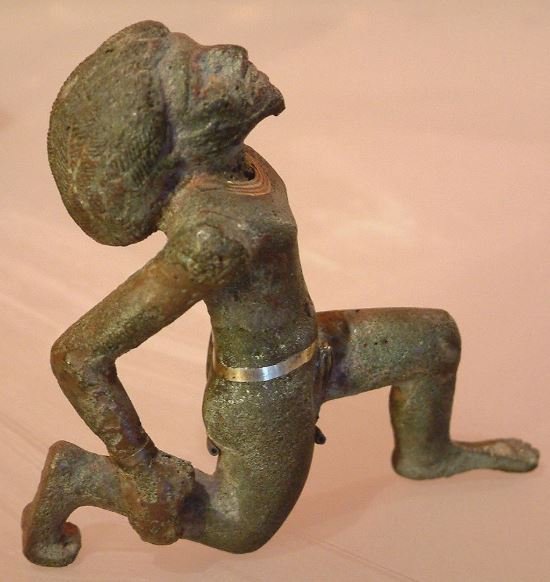
A small ancient Egyptian sculpture portraying a Libu Berber figure from the era of Rameses II, 19th Dynasty (1279–1213 BCE). Its housed in the Louvre, Paris.
The Rise of Berber Dynasties
If you think the Berbers just faded into the background, think again. The medieval period saw a series of powerful Berber empires and dynasties that shaped not just North Africa, but the entire Mediterranean world.
Let’s name-drop a few: the Zirids, Hammadids, Marinids, Zayyanids, Hafsids, and most famously, the Almoravids and the Almohads. These weren’t just regional powers—they controlled vast territories stretching from modern-day Senegal to southern Spain.
The Almoravids, for example, started as a religious movement among the Sanhaja Berbers of the Sahara and ended up ruling Morocco, Mauritania, and al-Andalus. Their successors, the Almohads, did even better, creating a sprawling empire that governed large swathes of Iberia and North Africa.
Under their rule, cities like Marrakesh and Fes became cultural jewels. Architecture, philosophy, theology, and art flourished. The Berbers were not just warriors and rulers—they were patrons of knowledge and culture.
Berbers in Al-Andalus
One of the most underappreciated stories in European history is the role of Berbers in Muslim Spain. When Tariq ibn Ziyad, a Berber general, crossed the Strait of Gibraltar in 711 CE, he was leading a mostly Berber army. That invasion marked the start of over 700 years of Muslim presence in the Iberian Peninsula.
Throughout this period, Berbers served as soldiers, governors, and even kings in the Taifa kingdoms. They often clashed with the Arab elites and struggled against ethnic discrimination, yet they were essential to the political fabric of al-Andalus. The Almoravid and Almohad periods, which unified much of Iberia under Berber rule, represent a high point of Berber influence in European history.
From Margins to Mountains: Arabization and Resistance
Despite their achievements, Berbers gradually found themselves marginalized—especially with the arrival of Arab Bedouin tribes like the Banu Hilal in the 11th century. These migrations changed the demographics of the Maghreb and accelerated the process of Arabization.
Arabic became the language of prestige, religion, and government. The Berber languages and customs were pushed into the mountains and deserts. But the Imazighen didn’t just vanish—they adapted, resisted, and preserved their identity through oral traditions, poetry, dance, architecture, and localized forms of Islam like Ibadi and Sufi traditions.
The Colonial Period and the Kabyle Myth
When the French colonized Algeria in the 19th century, they noticed that the Berbers, especially the Kabyles, didn’t quite fit the Arab mold. So, they created what became known as the “Kabyle Myth”—an idea that Berbers were more European, more democratic, and thus more “civilizable.” The French used this myth to divide and rule, setting Arabs and Berbers against each other.
Yet ironically, this period also ignited a Berber awakening. For the first time, many Imazighen began to see themselves as a collective identity. French scholars documented Berber languages, and Berber intellectuals began pushing for cultural rights. The seeds of modern Berberism were sown.
Post-Colonial Nationalism and the Silencing of Amazigh Identity
When Algeria, Morocco, and Tunisia gained independence in the mid-20th century, they adopted Arab nationalism as the backbone of their identity. This meant that Berber languages and culture were sidelined—sometimes even banned. In Morocco and Algeria, it was illegal to give children Berber names, and schools taught history through an Arab-centric lens.
Berbers were told they were Arabs. But many didn’t accept this narrative. Cultural resistance simmered, especially in the Kabylie region of Algeria and the Rif in northern Morocco.
The Rise of the Amazigh Movement
Starting in the 1970s, the Berber Cultural Movement—also known as Berberism—gained momentum. It began as a grassroots effort among students and activists demanding linguistic and cultural recognition. Over the decades, the movement grew more organized and politically influential.
Berber symbols like the Tifinagh script (used to write Tamazight) and the Amazigh flag—blue for the sea, green for the mountains, and yellow for the desert—became icons of pride. Protests erupted. Petitions were signed. Songs and poems turned into rallying cries.
Their perseverance paid off. In 2001, following the Black Spring uprising, Tamazight was recognized as a national language in Algeria. In 2011, Morocco made it an official language. These were historic victories, but the fight is far from over.
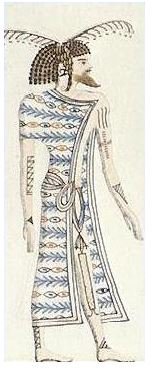
Ancient Libyan Berber figure illustrated in the wall art of Seti I’s tomb.
A Global People: The Amazigh Diaspora
Today, millions of Imazighen live outside North Africa, particularly in France, Belgium, and the Netherlands. The diaspora has played a crucial role in preserving and promoting Berber identity. Think of them as cultural ambassadors—organizing festivals, publishing in Tamazight, and lobbying governments for indigenous rights.
Even in popular culture, we see Berber roots. Football legend Zinedine Zidane? He’s Kabyle. His success is a reminder that Berber identity doesn’t belong to the past—it’s alive, evolving, and global.
Culture: A Living Mosaic
Berber culture is as rich as it is diverse. From the haunting melodies of Kabyle music to the intricate patterns of Amazigh carpets, it’s a world bursting with color, rhythm, and symbolism.
Take traditional architecture, for instance. Berber villages are famous for their earthen kasbahs and hilltop ksour. The ancient site of Aït Benhaddou in Morocco is a UNESCO World Heritage site that showcases traditional Amazigh construction—mudbrick walls, wooden beams, and decorative motifs passed down through generations.
Ceremonies, too, reflect this cultural depth. Weddings can last several days and are filled with songs, dances like the ahidus and ahouach, and intricate silver jewelry worn by the bride. And let’s not forget the food—couscous, tagines, and honey-drenched pastries. Berber cuisine is hearty, earthy, and communal.
Religion: From Ancestors to Allah
Traditionally, Berbers practiced polytheism and ancestor worship. Some gods and goddesses were homegrown, while others were borrowed from neighbors like the Egyptians, Carthaginians, and Romans.
With the spread of Islam, most Berbers converted. Today, the majority are Sunni Muslims, although there are Ibadi communities in Algeria and Libya. A Christian minority also exists, and historically, some Berbers were Jewish.
Islam, as practiced by many Berbers, has a strong mystical flavor. Sufi saints, local marabouts, and sacred shrines still play a vital role in spiritual life, blending Islamic teachings with age-old indigenous practices.
Genetics, Identity, and Modern Science
Modern DNA studies have revealed fascinating insights. Most Berbers belong to the E1b1b haplogroup, linking them to ancient North African populations. They also show traces of ancient Mediterranean, Near Eastern, and sub-Saharan ancestry—proof of North Africa’s long history as a crossroads of civilizations.
But perhaps what’s more important than genetics is how Berbers define themselves: not just through blood, but through language, memory, and cultural expression.
Challenges and Triumphs in the 21st Century
Today, Berbers face a complicated reality. On one hand, there’s growing recognition—Berber is now taught in schools, the language is official in some countries, and Amazigh New Year (Yennayer) is increasingly celebrated. On the other hand, challenges persist: marginalization, lack of political representation, and occasional repression.
Amazigh culture features unique languages, oral poetry, vibrant textiles, silver jewelry, music, and communal traditions like the ahidus dance and Yennayer (Berber New Year) celebrations.
But there’s also resilience. Whether in the Atlas Mountains or the streets of Paris, Imazighen continue to assert their identity. They are scholars, artists, farmers, teachers, engineers, and activists. They carry their heritage with pride—not as a relic of the past, but as a beacon for the future.
Questions and Answers
What does “Amazigh” mean?
“Amazigh” is often interpreted as “free man” or “noble man.” It’s the preferred term used by many Berbers today instead of “Berber,” which is considered pejorative by some due to its etymology from the word “barbarian.”
Where are Berber languages spoken?
Berber languages are spoken mainly in rural and mountainous regions of Morocco and Algeria, with smaller communities in Libya, Tunisia, Mali, Niger, and Egypt’s Siwa Oasis. They belong to the Afroasiatic language family.

A map showing various Berber kingdoms in Numidia around 220 BC—Masaesyli ruled by Syphax (green), Massyli under Gala, Masinissa’s father (gold), with Carthage located to the east.
Are Berber languages mutually intelligible?
Most Berber languages are not mutually intelligible due to centuries of regional isolation and linguistic divergence, although they share common linguistic roots.
What is the historical origin of the Berber people?
Berbers descend from prehistoric North African populations dating back to at least 10,000 BCE. They developed Neolithic societies and were later influenced by ancient Egyptians, Phoenicians, and Romans.
How did Berbers interact with ancient empires?
Berbers had complex relations with empires like Egypt, Carthage, and Rome. They fought, traded, and even ruled, with figures like King Masinissa of Numidia allying with Rome against Carthage.
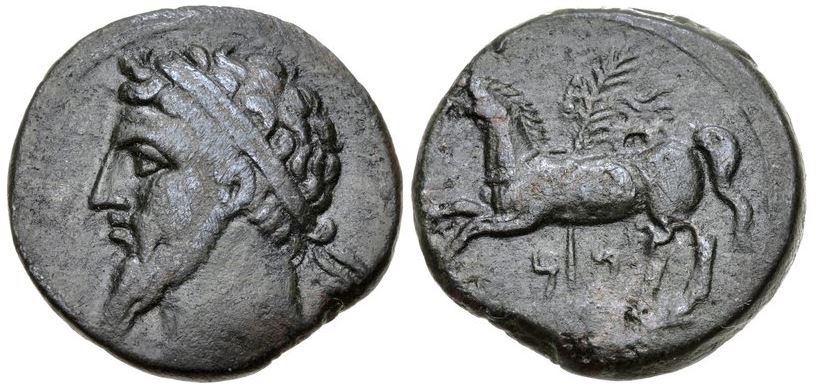
Silver coin of Masinissa
How did Islam spread among the Berbers?
Islam arrived in the 7th century through Arab conquests. Berbers converted quickly but often resisted Arab political domination, leading to revolts and the formation of independent Islamic Berber states.
The Almoravids, Almohads, Marinids, Hafsids, and Zirids were major Berber dynasties that ruled parts of North Africa and al-Andalus, contributing significantly to Islamic art, architecture, and governance.
What role did Berbers play in Muslim Spain?
Berbers were instrumental in the 711 CE invasion of the Iberian Peninsula and served as soldiers and governors. They founded powerful kingdoms and helped shape al-Andalus culturally and politically.
What is the Berber Cultural Movement?
Emerging in the 20th century, it advocates for the recognition of Berber identity, language rights, and cultural preservation. It led to Tamazight being recognized as an official language in Morocco and Algeria.
How has Arabization affected the Berbers?
Centuries of Arab migration and cultural dominance led to many Berbers adopting Arabic language and customs, especially in urban areas, though distinct Amazigh identities remain strong in many regions.
What is Amazigh architecture like?
Berber architecture includes earthen kasbahs, fortified granaries (ksour), and whitewashed Ibadi mosques. These structures blend practicality with local aesthetics, adapted to desert and mountain life.
Where are Berbers found today and what is their population?
Berbers are primarily in Morocco and Algeria, with diasporas in France and Europe. They number around over 27 million, though estimates vary due to assimilation and shifting ethnic self-identification.





