Who was Simon Magus?
Simon Magus, also known as Simon the Sorcerer or Simon the Magician, is a significant figure in early Christian history, mentioned in the Acts of the Apostles and other early Christian texts. His story has shaped theological discussions and cultural interpretations for centuries. Below is a detailed exploration of Simon Magus, covering his biblical appearance, historical interpretations, doctrinal associations, and later legends.

A depiction of Simon Magus carved in relief at the entrance to the Basilica of Saint-Sernin in Toulouse, France.
Biblical Account of Simon Magus
The primary account of Simon Magus appears in the New Testament’s Acts of the Apostles (Acts 8:9–24). He is described as a Samaritan who practiced sorcery and gained a reputation as someone with divine power. After hearing the preaching of Philip the Evangelist, Simon converted to Christianity and was baptized. However, his conversion was short-lived, as he later attempted to buy the power of the Holy Spirit from Peter and John.
Simony, the act of buying or selling ecclesiastical privileges, is named after Simon Magus, who attempted to purchase the power of the Holy Spirit from the apostles.
Peter rebuked Simon for attempting to purchase divine power, stating, “Thy money perish with thee, because thou hast thought that the gift of God may be purchased with money.” Simon’s act of offering money for spiritual authority gave rise to the term simony, which refers to the buying or selling of ecclesiastical privileges.
Historical and Apocryphal Accounts
Simon Magus’ story extends beyond the biblical narrative through various historical and apocryphal sources.
Some scholars associate Simon Magus with a magician named Atomus mentioned by Josephus. However, the identification remains contested since Josephus’ Simon was Jewish, not Samaritan.
In texts like the Acts of Peter, Simon is portrayed as a formidable magician who could levitate and perform miraculous acts. These works further solidify his image as a rival to the apostles, particularly Peter.
These writings present Simon as a philosophical adversary of Peter, depicting prolonged theological debates between the two. Simon is shown as arrogant, claiming divine status and promoting doctrines considered heretical by the early Church.
Association with Gnosticism
Simon Magus is often linked to the origins of Gnosticism, a diverse and esoteric movement in early Christianity.
Early Church Fathers, such as Justin Martyr, Irenaeus, and Hippolytus, identified Simon as the founder of Gnosticism. According to them, Simon taught that he was the incarnation of divine power and that his consort, Helen, represented the fallen human soul or “First Thought” (Ennoia).
Simon’s doctrine claimed that Helen was imprisoned in the material world by rebellious angels. Simon identified himself as the savior who descended to liberate her. This narrative parallels other Gnostic myths, particularly the story of Sophia (wisdom) and her descent into the material realm.
Some scholars question Simon’s direct connection to Gnosticism, arguing that this association was a polemical construct by early Christians to discredit him. Instead, Simon’s teachings may have been independent of later Gnostic systems.
Simon Magus in Rome
Justin Martyr and Irenaeus record that Simon traveled to Rome, where he was revered as a god during Emperor Claudius’ reign. A statue inscribed Simoni Deo Sancto (“To Simon the Holy God”) was reportedly erected in his honor. However, this claim is disputed, as the statue may have been dedicated to the Sabine deity Semo Sancus.
In Rome, Simon’s miraculous acts allegedly bolstered his reputation, leading to his confrontation with Peter, which culminated in his dramatic fall and death during a failed levitation act.
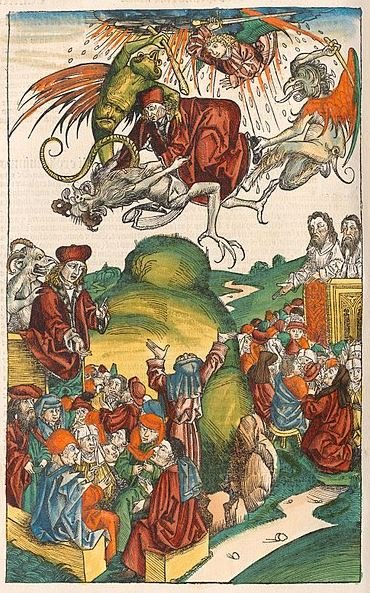
A depiction of Magus’ death.
Doctrinal and Philosophical Teachings
Simon Magus’ teachings blended philosophy, theology, and magic. His core doctrines included:
- Divine Incarnation: Simon claimed to embody divine power and to manifest as the Father, Son, and Holy Spirit in different regions.
- Antinomianism: He rejected the Mosaic Law and conventional morality, advocating for spiritual freedom.
- Cosmology: Simon’s cosmology involved emanations of divine power, with his consort Helen representing the fallen human soul in need of redemption.
The Simonians
Simonianism was a sect that followed Simon’s teachings. Early accounts describe them as practicing magical arts and venerating Simon and Helen as divine figures. The Simonians emphasized salvation through knowledge (gnosis) rather than adherence to laws or rituals.
Hippolytus recorded their doctrines in the Great Declaration (Apophasis Megale), which elaborated on Simon’s cosmological views. However, by the time of Epiphanius in the 4th century, the sect had nearly disappeared.
Simon Magus in Medieval and Modern Contexts
Simon’s story persisted in medieval lore, influencing narratives about sorcery and heresy. He was sometimes associated with Faustian tales, where individuals seek supernatural power at great moral cost.
In Irish legends, Simon was linked to Druidism and described as aiding Druids in their opposition to Christianity. This connection highlights the adaptability of Simon’s image in different cultural contexts.
Modern scholars debate Simon’s historical identity and his role in early Christianity. Some theories suggest that his portrayal as a heretic was shaped by conflicts within the early Church, particularly between Jewish and Pauline Christianity.
Conflict with Peter
The rivalry between Simon Magus and Peter is central to his story. In the canonical Acts, Peter’s rebuke underscores the incompatibility of Simon’s ambitions with Christian values. This conflict is expanded in apocryphal works, where Peter and Simon engage in miraculous duels.
The Acts of Peter details Simon’s attempt to prove his divinity by flying, only to fall to his death after Peter’s prayers. This dramatic conclusion emphasizes the triumph of apostolic faith over heretical pretensions.
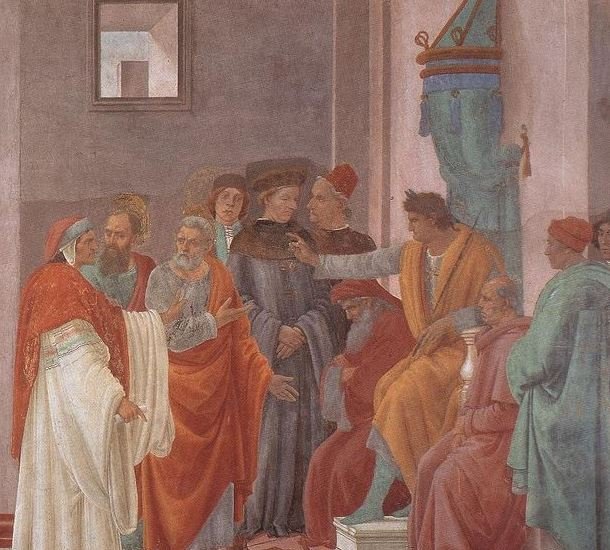
Magus is being confronted by Peter and Paul. A painting by Italian artist Filippino Lippi.
Controversies and Speculations
Simon Magus has been a subject of speculation among scholars. Some radical theories suggest a connection between Simon and Paul the Apostle, arguing that early Christian polemics against Simon reflected tensions between Petrine and Pauline factions. However, this view remains highly contentious and lacks consensus.
Questions and Answers

How is Simon Magus linked to Gnosticism?
Early Church Fathers like Justin Martyr and Irenaeus identified Simon as a founder of Gnosticism, teaching about divine emanations and salvation through knowledge. Some modern scholars, however, dispute this direct connection.
What does the myth of Simon and Helen entail?
The myth describes Helen as the fallen First Thought (Ennoia) imprisoned in the material world, with Simon as her savior. This narrative parallels Gnostic cosmology, emphasizing liberation through spiritual knowledge.
What role did Simon play in Rome?
Simon allegedly gained fame in Rome as a miracle worker, proclaiming himself divine. Early accounts claim he was honored with a statue inscribed “Simoni Deo Sancto,” though this is debated.
What was Simon’s conflict with Peter?
Simon’s attempt to buy apostolic power led to a sharp rebuke from Peter in Acts. Apocryphal texts expand on their rivalry, culminating in Simon’s fatal fall during a levitation act after Peter’s prayers.
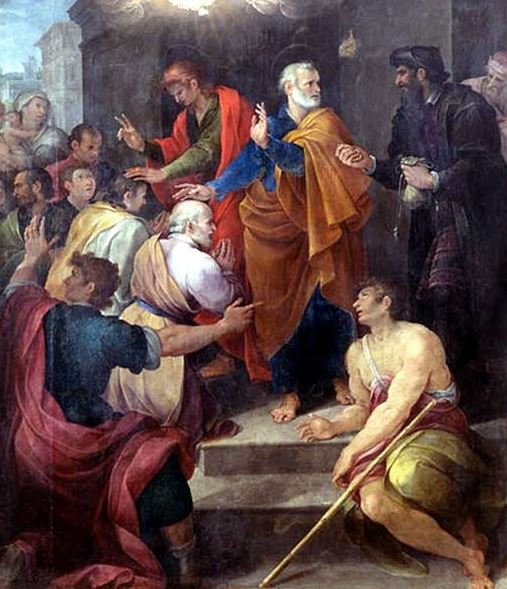
An illustration by Italian artist Avanzino Nucci, titled “Peter’s conflict with Simon Magus”.
How is Simon viewed in apocryphal and Pseudo-Clementine literature?
These writings depict Simon as a sorcerer and heretic, opposing Peter and promoting antinomian and Gnostic-like doctrines. His character serves as a foil to apostolic authority.