The Ancient City of Susa
Susa, an illustrious ancient city nestled in the lower Zagros Mountains of present-day Iran, stands as a monumental testament to the civilizations that flourished in the Ancient Near East.
Located approximately 250 kilometers east of the Tigris River, between the Karkheh and Dez Rivers, Susa’s strategic geographical position contributed significantly to its prominence across various historical epochs.
Today, the modern city of Shush occupies the site of ancient Susa, which comprises three major archaeological mounds spanning close to one square mile.
Etymology and Linguistic Evolution
The name “Susa” has a rich linguistic heritage that mirrors the city’s historical adaptability and significance. Derived from the Ancient Greek “Soûsa” (Σοῦσα), the name traces its origins back to the Elamite language. Initially recorded as Šušen (𒀸𒋗𒊺𒂗) in Middle Elamite, the city’s name evolved into Šušun (𒋢𒋢𒌦) during the Middle and Neo-Elamite periods.
Susa, pronounced SOO-sə, was a vibrant ancient city nestled in Iran’s lower Zagros Mountains, about 160 miles east of the Tigris River.
Further transformations led to Šušan (𒀸𒋗𒐼𒀭) in Neo-Elamite and Achaemenid Elamite, and finally to Šuša (𒀸𒋗𒐼) in the Achaemenid era. These linguistic transitions reflect Susa’s ability to maintain its prominence and cultural identity amidst changing political and cultural landscapes.

Image: A map showing the exact location of Susa within Iraq.
Literary and Religious Significance
Susa holds a distinguished place in ancient literature, being featured in some of the earliest Sumerian records. Notably, it appears in the Sumerian epic “Enmerkar and the Lord of Aratta,” where it is depicted as a loyal region under Inanna, the patron deity of Uruk. This early mention highlights Susa’s cultural and religious importance in the fabric of Mesopotamian civilization.
In the Hebrew Bible, Susa is referred to as Shushan, prominently featured in the Book of Esther. It also appears in the books of Ezra, Nehemiah, and Daniel, emphasizing its role during the Babylonian captivity in the 6th century BCE. According to these texts, Nehemiah resided in Susa, and Esther, a central figure in the Book of Esther, became queen there, playing a crucial role in saving the Jewish people from extermination. The site known as Shush-Daniel is traditionally believed to house Daniel’s tomb, although much of the current structure dates to the late 19th century.
Beyond the Hebrew scriptures, Susa is mentioned in the Book of Jubilees, where it is listed among the inheritances of Shem and his son Elam. These references illustrate Susa’s integration into various religious narratives, underscoring its enduring legacy across different cultures and belief systems.
Archaeological Excavations and Discoveries
The archaeological exploration of Susa commenced in the early 19th century. In 1836, Henry Rawlinson and A. H. Layard conducted initial examinations of the site. William Loftus furthered these efforts in 1851, identifying the site as Susa and uncovering a jar containing over a hundred coins dated to 697-98 AD, providing early evidence of the city’s extensive history.
The first substantial excavations began in the mid-1880s under Marcel-Auguste Dieulafoy and his wife Jane Dieulafoy. Their work unearthed glazed bricks and remnants of Achaemenid palatial structures. Although some mudbrick walls were inadvertently destroyed during these excavations, their findings laid the groundwork for understanding Susa’s architectural and cultural significance.
Jacques de Morgan led major excavations from 1897 to 1911, unearthing a wealth of artifacts, including the stele of Naram-Sin, Babylonian boundary stones, the Code of Hammurabi stele, and numerous inscribed bricks. These discoveries established Susa as a pivotal center of Elamite civilization and provided invaluable insights into its administrative and cultural practices.
Post-World War I excavations continued under Roland De Mecquenem and later under Roman Ghirshman and his wife Tania, who focused on the Ville Royale sector. Their efforts facilitated the development of a detailed stratigraphy for Susa, enhancing the understanding of its chronological development. Jean Perrot’s excavations from 1969 to 1979 further enriched the archaeological record. The recent Susa Salvage Project, initiated in 2019, aims to preserve the site amidst modern construction challenges, ensuring the protection of Susa’s historical treasures for future generations.
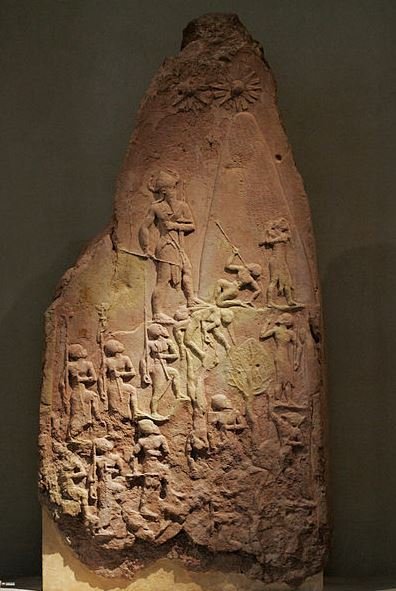
Image: Victory stele of Naram Sin.
Early Settlement and Susa I Period (4200–3800 BCE)
Susa’s origins date back to around 4395 BCE, making it one of the region’s oldest known settlements. Initially, Susa emerged as a centralized platform, likely established to reconstitute the previously significant site of Chogha Mish. This monumental platform, surrounded by numerous graves adorned with ceramic offerings, signifies early societal complexity and religious practices.
During the Susa I period, the city expanded by merging two settlements, the Acropolis and the Apadana, forming a more substantial urban center. The Apadana, enclosed by thick rammed earth walls, indicates early defensive strategies and urban planning. This expansion reflects Susa’s growing importance and the need to protect its inhabitants and resources.
The extensive ceramic assemblage from the Susa I period, characterized by hand-made, asymmetrical vessels, reflects both artistic sophistication and social organization. Influenced by the Mesopotamian Ubaid tradition, these ceramics suggest active trade and cultural exchanges with neighboring regions. Additionally, the period witnessed significant advancements in metallurgy, with the discovery of numerous copper axes, round discs likely used as mirrors, and various tools such as awls and spatulas. These metal artifacts represent some of the earliest evidence of copper metallurgy in the region, indicating technological progress and societal complexity.
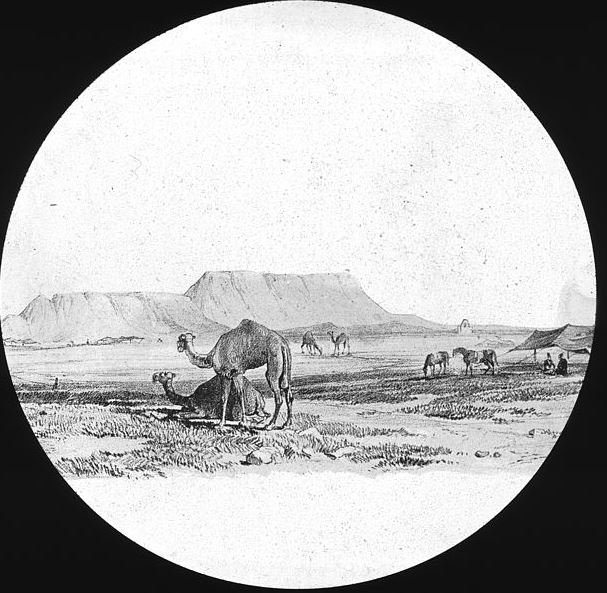
Image: An artwork showing the ruins of Susa, located at Brooklyn Museum Archives.
Susa II Period and Uruk Influence (3800–3100 BCE)
During the Susa II period, Susa became integrated into the Uruk cultural sphere, adopting elements of the Uruk state apparatus. This included the introduction of proto-writing, cylinder seals with Sumerian motifs, and monumental architecture. While some scholars propose that Susa was a Uruk colony, others argue for a more nuanced interaction, emphasizing selective cultural borrowing and local adaptations.
This period also saw architectural parallels between Susa and other contemporary sites like Tal-i Malyan and Godin Tepe, suggesting a broader regional cultural synthesis. The artistic output from this era, including detailed bas-reliefs and pottery, underscores the city’s role as a cultural hub. Artifacts such as the “King-priest with bow fighting enemies” statuettes and globular envelopes with accounting tokens illustrate the complexity of Susa’s societal structures and economic activities.
The presence of accounting tokens and detailed bas-reliefs indicates sophisticated societal structures and economic systems. These artifacts reflect the administrative capabilities of Susa, facilitating trade, governance, and cultural expression. Susa’s role as a cultural and economic center during the Susa II period highlights its significance in the broader Uruk-influenced Near Eastern landscape.
Proto-Elamite and Susa III Period (3100–2700 BCE)
Transitioning into the Susa III or Proto-Elamite period, Susa emerged as the center of Elamite civilization. This era is marked by the introduction of Proto-Elamite tablets and the development of an indigenous script, although it remains undeciphered. The city’s prominence continued with its inclusion in the Early Dynastic period of Sumer, where it became the capital of Susiana, a region frequently contested by Elam, Sumer, and Akkad.
Under various dynasties, notably the Awan and Shimashki, rulers like Kutik-Inshushinak asserted independence from Akkadian dominance, promoting Elamite language and culture. This period saw the flourishing of Elamite administrative and cultural practices, with Susa serving as a hub for governance, trade, and religious activities.
Susa’s strategic location facilitated extensive trade, including significant interactions with the Indus Valley Civilization. The discovery of Indus seals, carnelian beads, and jewelry in Susa indicates robust Indus-Mesopotamia relations, highlighting Susa’s role in long-distance trade networks. These artifacts demonstrate the city’s economic vitality and its position as a crossroads of diverse cultures and goods.
Old Elamite and Middle Elamite Periods (2700–1100 BCE)
The Old Elamite period saw Susa as a pivotal center under the control of dynasties such as Awan and Simashki. The city experienced cycles of conquest and autonomy, with notable rulers like Kutik-Inshushinak fostering cultural and administrative independence. The Elamite pantheon and religious practices became deeply entrenched, exemplified by monumental constructions like the Ziggurat at Chogha Zanbil.
During the Middle Elamite period, Anshanite dynasties further “Elamized” Susa, reinforcing Elamite language and religious traditions. This era was characterized by extensive building projects and the incorporation of Elamite deities into the local religious landscape. The plundering of significant artifacts, such as the Code of Hammurabi stele by Shutruk-Nahhunte, underscores the city’s wealth and its central role in regional power dynamics.
The construction of monumental structures like the Ziggurat at Chogha Zanbil highlights the architectural advancements and religious fervor of the Middle Elamite period. These edifices served as centers for worship and administration, reflecting the intertwined nature of religion and governance in Elamite society.
Neo-Elamite and Assyrian Dominance (1100–617 BCE)
The Neo-Elamite period witnessed continued Elamite influence until the rise of the Neo-Assyrian Empire. During this time, Susa remained an important urban center, maintaining its cultural and economic significance. However, internal strife and external pressures from emerging empires began to challenge its dominance.
In 647 BCE, the Neo-Assyrian king Ashurbanipal devastated Susa during a campaign against Elam. Assyrian records depict the conquest as retribution for Elamite transgressions, leading to widespread destruction and the looting of treasures. Assyrian rule persisted until the Medes captured Susa in 617 BCE, marking another shift in the city’s political landscape.
Under Assyrian dominance, Susa experienced significant destruction but also cultural exchanges. The Assyrians introduced their administrative practices and architectural styles, influencing the city’s subsequent development. Despite the devastation, Susa’s resilience allowed it to recover and continue as a center of power under new rulers.
Achaemenid Persian Conquest and Imperial Capital (540–331 BCE)
Susa’s transformation under the Achaemenid Empire began with Cyrus the Great‘s conquest around 540 BCE, integrating the city into the burgeoning Persian Empire. Cyrus’s conquest marked a fundamental shift, bringing Susa under Persian control and setting the stage for its role as an imperial capital.
Under Cyrus’s successors, particularly Cambyses II and Darius the Great, Susa became one of the Achaemenid Empire’s four capitals. Darius initiated significant construction projects, including expansive palatial complexes, enhancing Susa’s role as a political and administrative hub. The city’s infrastructure improvements facilitated governance and the administration of the vast Persian Empire.
Susa features prominently in classical literature, such as Aeschylus’s tragedy “The Persians,” which dramatizes events related to the Achaemenid conquest. Additionally, biblical narratives like the Book of Esther situate key events in Susa during the Achaemenid period, emphasizing its prominence in both historical and religious contexts.
Darius the Great’s building programs in Susa included the construction of grand palaces and administrative buildings, reflecting the architectural sophistication and administrative efficiency of the Achaemenid Empire. These structures served as centers for governance, ceremonial activities, and the display of imperial power.
Hellenistic and Seleucid Influence (331–147 BCE)
Following Alexander the Great‘s invasion in 331 BCE, Susa experienced a decline in imperial significance but remained an important regional center. Alexander’s conquest introduced Hellenistic cultural elements, blending Greek and local traditions.
Under the Seleucid Empire, Susa was renamed Seleucia on the Eulaeus. The city maintained its economic vitality through active trade, particularly via the port of Charax Spasinou. Greek cultural influences persisted, evident in the abundance of Greek inscriptions and architectural styles, reflecting a blend of Greek and local traditions.
The Seleucid era saw Susa as a thriving economic hub, with substantial populations of Greeks contributing to its diverse cultural landscape. Coinage minted by Seleucus I Nicator attests to the city’s economic integration within the Hellenistic world. The coexistence of Greek and local traditions fostered a unique cultural synthesis, enhancing Susa’s role as a cosmopolitan center.
Parthian and Sassanid Eras (147 BCE–651 CE)
By 147 BCE, Susa and the surrounding Elymais region broke free from Seleucid control, eventually falling under Parthian dominance. During the Parthian period, Susa reinforced its status as a significant urban center, retaining elements of Greek city-state organization while integrating Parthian administrative practices. The city served as a refuge for Parthian kings during periods of Roman aggression, notably during Trajan’s brief capture in 116 CE.
The Sassanid period (224–651 CE) brought both destruction and revival to Susa. Although Ardashir I initially razed the city, it was promptly rebuilt and occasionally served as a royal residence. Susa remained economically vibrant, particularly in gold trading and luxury textiles. The city’s Christian and Jewish communities thrived, maintaining distinct religious identities amidst broader Islamic conquests.
Under the Sassanids, Susa saw the construction of significant buildings and continued economic activities. The city remained a manufacturing center for luxury fabrics and continued to mint coins, reflecting its ongoing economic importance. The presence of Nestorian bishoprics and synagogues indicates a diverse and thriving religious landscape.
Islamic Conquest and Medieval Decline (7th–15th Century CE)
In the 7th century, Muslim forces captured Susa, integrating it into the Islamic Caliphate. Accounts of the conquest vary, with narratives highlighting strategic deception and fierce resistance. Following the capture, Susa continued to function as a regional hub, featuring mosques, synagogues, and Christian bishoprics.
Despite the change in ruling powers, Susa maintained its role as a regional economic center, particularly in luxury textile production. The city’s cultural landscape became increasingly Islamic, yet it retained its diverse religious communities. Archaeologically, the Islamic period is characterized by rich ceramics and continued manufacturing activities.
Susa’s prominence waned after the Mongol invasion in 1218, which caused significant destruction and led to a gradual population decline as residents migrated to areas like Dezful. The city further degraded in the 15th century, losing much of its historical significance and transitioning into a lesser-known locality.
Modern Era and Preservation
Today, the ancient ruins of Susa lie adjacent to the modern town of Shush, which serves as the administrative center of Shush County in Iran’s Khuzestan province. With a population of approximately 64,960 in 2005, Shush preserves the legacy of its ancient predecessor while accommodating contemporary life. The proximity of modern infrastructure to the archaeological site presents both opportunities and challenges for preservation efforts.
Efforts to preserve and study Susa continue, ensuring that its historical treasures remain accessible for future generations. The Susa Salvage Project, initiated in 2019, aims to protect the site amidst modern construction challenges. Ongoing archaeological research and conservation initiatives are vital in safeguarding Susa’s rich heritage.
UNESCO World Heritage Listing
In recognition of its unparalleled historical and cultural significance, Susa was inscribed as a UNESCO World Heritage Site in July 2015. This designation underscores the city’s value as a cradle of early civilization, highlighting its contributions to art, architecture, governance, and intercultural exchanges throughout millennia. The UNESCO listing helps promote global awareness and efforts to preserve Susa’s archaeological treasures.
Conclusion
Susa’s enduring legacy is a reflection of its strategic location, cultural adaptability, and the myriad civilizations that have called it home. From its early settlement in the Susa I period through its zenith as an Achaemenid capital, and its subsequent roles under Hellenistic, Parthian, Sassanid, and Islamic rule, Susa exemplifies the dynamic interplay of culture, power, and trade in the Ancient Near East.
Frequently Asked Questions

Where is the ancient city of Susa located, and what modern city occupies its site today?
Susa is situated in the lower Zagros Mountains of present-day Iran, approximately 250 kilometers east of the Tigris River, between the Karkheh and Dez Rivers. The modern city of Shush now occupies its site, encompassing three significant archaeological mounds covering around one square kilometer.
What is the significance of Susa in ancient literary and religious texts?
Susa is prominently featured in early Sumerian literature, such as “Enmerkar and the Lord of Aratta,” highlighting its cultural and religious importance. In the Hebrew Bible, known as Shushan, it appears in the Book of Esther, Ezra, Nehemiah, and Daniel, underscoring its role during the Babylonian captivity. Additionally, it is mentioned in the Book of Jubilees, integrating Susa into various religious narratives.
What were the characteristics and advancements of the Susa I period (4200–3800 BCE)?
The Susa I period marks one of the earliest settlements around 4395 BCE. The city expanded by merging the Acropolis and Apadana, featuring thick rammed earth walls for defense. Significant advancements included artistic ceramic production influenced by the Ubaid tradition and early metallurgy with copper axes and tools, indicating societal complexity, trade, and technological progress.
How did the Uruk cultural sphere influence Susa during the Susa II period (3800–3100 BCE)?
During the Susa II period, Susa integrated into the Uruk cultural sphere, adopting elements like proto-writing, Sumerian cylinder seals, and monumental architecture. This influence led to cultural synthesis with local adaptations, as evidenced by architectural parallels with Tal-i Malyan and Godin Tepe. Artistic outputs, including detailed bas-reliefs and accounting tokens, reflect Susa’s role as a cultural and economic hub.
What role did Susa play in the Proto-Elamite and Susa III period (3100–2700 BCE)?
In the Proto-Elamite and Susa III period, Susa became the center of Elamite civilization, introducing Proto-Elamite tablets and an indigenous script. As the capital of Susiana, it was a contested region among Elam, Sumer, and Akkad. Under dynasties like Awan and Shimashki, rulers promoted Elamite language and culture, and extensive trade with the Indus Valley Civilization was evident through Indus seals and jewelry.
How did Susa’s status change under the Achaemenid Empire?
Under the Achaemenid Empire, starting with Cyrus the Great’s conquest around 540 BCE, Susa became one of the empire’s four capitals. Darius the Great initiated major construction projects, including expansive palatial complexes, enhancing its role as a political and administrative hub. Susa is also featured in classical literature and biblical narratives, emphasizing its prominence in power and culture during the Achaemenid period.

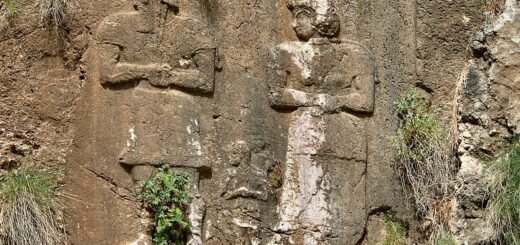
Image: Wall relief of Darius the Great.
What led to the decline of Susa in the medieval period, and what is its status today?
Susa declined after the Mongol invasion in 1218, which caused significant destruction and population migration to areas like Dezful. Although it remained a regional hub during the Islamic period, its prominence waned over time. Today, the ancient ruins, which is a UNESCO World Heritage Site, lie adjacent to the modern town of Shush in Iran’s Khuzestan province.