Yellowstone National Park
Yellowstone National Park is one of the most iconic natural reserves in the United States, famed for its breathtaking landscapes, geothermal features, and diverse wildlife. Located primarily in the northwest corner of Wyoming, the park extends into Montana and Idaho, covering an area of 3,468.4 square miles (8,983 km²). Established on March 1, 1872, through the Yellowstone National Park Protection Act, it was signed into law by President Ulysses S. Grant, making it the first national park in the United States and widely regarded as the first in the world.
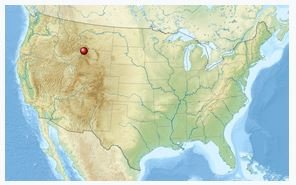
Map of the US, showing the location (in red) of Yellowstone National Park.
READ MORE: 12 Most Influential Presidents of the United States
Geography and Landscape
Yellowstone sits atop a volcanic hotspot, which contributes to its unique geothermal activity. The park features a wide variety of landscapes, including dense forests, vast grasslands, deep canyons, and expansive lakes. Yellowstone Lake, one of North America’s largest high-elevation lakes, is centered over the Yellowstone Caldera, the largest active supervolcano on the continent. The park also includes the Yellowstone River, which carves through the dramatic Grand Canyon of the Yellowstone.
Geological Features
Yellowstone is home to over half of the world’s geysers and hydrothermal features. These include:
- Old Faithful – The most famous geyser, known for its regular eruptions every 90 minutes.
- Grand Prismatic Spring – The largest hot spring in the U.S., renowned for its vibrant colors.
- Steamboat Geyser – The tallest active geyser in the world.
- Mammoth Hot Springs – A collection of travertine terraces formed by hot mineral-laden waters.
The Yellowstone Caldera has erupted with great force multiple times over the past two million years, shaping much of the park’s terrain. The last major eruption occurred approximately 650,000 years ago, creating a massive crater and leaving behind extensive lava flows.
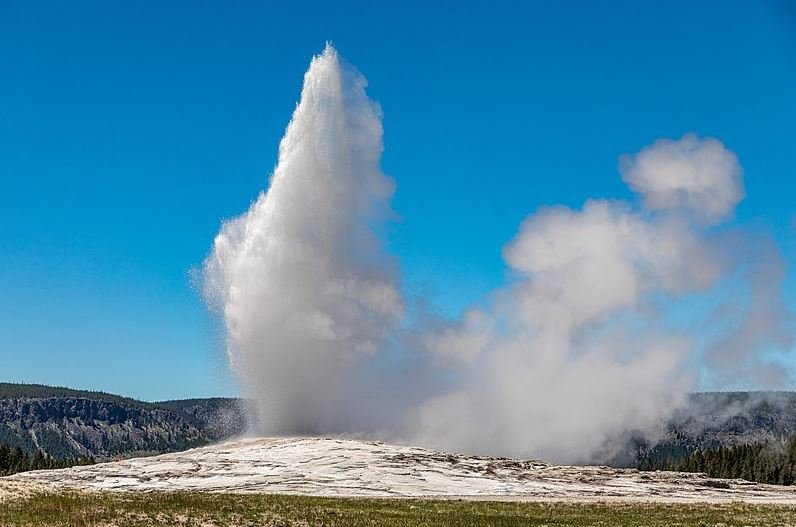
A 2022 photo of Old Faithful erupting.
Wildlife and Biodiversity
Yellowstone’s ecosystems are among the most intact in the temperate zone. The park supports hundreds of species of mammals, birds, fish, reptiles, and amphibians, including:
- Mammals: Grizzly bears, black bears, wolves, cougars, elk, bison, and moose.
- Birds: Bald eagles, peregrine falcons, and trumpeter swans.
- Fish: Yellowstone cutthroat trout, a native species essential to the park’s aquatic ecosystems.
- Reptiles and Amphibians: Garter snakes, tiger salamanders, and boreal chorus frogs.
The Yellowstone bison herd is the largest and oldest public herd in the U.S. The park has also played a crucial role in the reintroduction of gray wolves, which were eradicated from the area by the early 20th century but were reintroduced in the 1990s, restoring balance to the ecosystem.
Yellowstone National Park remains a symbol of the U.S. conservation movement and a treasure of natural beauty and scientific discovery.
Human History and Exploration
Yellowstone has been inhabited for at least 10,500 years, with indigenous tribes such as the Shoshone, Crow, and Nez Perce utilizing the land for hunting and spiritual practices. Early European American trappers and explorers, including John Colter of the Lewis and Clark Expedition, documented the region’s geothermal wonders, though their reports were often dismissed as exaggerations.
The first organized explorations occurred in the late 1860s and early 1870s, most notably the Hayden Geological Survey of 1871, led by Ferdinand V. Hayden. His team’s reports, along with photographs by William Henry Jackson and paintings by Thomas Moran, helped convince Congress to establish Yellowstone as a national park.
Timeline and Interesting Facts about the Lewis and Clark Expedition
Park Management and Conservation Efforts
Initially managed by the U.S. Department of the Interior, Yellowstone faced challenges such as poaching and vandalism. In 1886, the U.S. Army took control, implementing stricter conservation measures. When the National Park Service (NPS) was created in 1916, Yellowstone was one of its first responsibilities.
Fires have played a critical role in the park’s ecology. The 1988 wildfires, which burned nearly a third of Yellowstone, led to significant changes in fire management policies. Today, controlled burns and natural wildfires are monitored to maintain ecological balance.
The geysers, landscapes, and wildlife of the Yellowstone National Park make it one of the most remarkable places on Earth.
Recreational Activities and Tourism
Yellowstone offers numerous recreational activities, attracting millions of visitors each year. Popular activities include:
- Hiking: Over 900 miles of trails traverse the park, offering scenic views and wildlife encounters.
- Camping: There are 12 developed campgrounds and hundreds of backcountry sites.
- Fishing and Boating: Yellowstone Lake and the park’s rivers provide opportunities for trout fishing and kayaking.
- Wildlife Viewing: Visitors can observe bison in Hayden Valley, bears in Lamar Valley, and wolves in the Northern Range.
- Winter Sports: Snowmobiling and snow coach tours provide unique winter experiences.
Challenges and Future Preservation
Despite its protected status, Yellowstone faces environmental challenges, including climate change, invasive species, and increased tourism pressure. Rising temperatures and changing precipitation patterns threaten the park’s wildlife and ecosystems. The National Park Service continues to implement conservation strategies, including habitat restoration and public education initiatives.

A photo of a major eruption taking place at Steamboat Geyser in 2018.
Frequently Asked Questions
When was Yellowstone National Park established?
It was established on March 1, 1872, when President Ulysses S. Grant signed the Yellowstone National Park Protection Act into law.
Why is Yellowstone famous?
The park is known for its geothermal features, including Old Faithful geyser, and its diverse wildlife, such as bison, wolves, grizzly bears, and elk.
What is the Yellowstone Caldera?
It is the largest supervolcano in North America, formed by massive eruptions over the past 2.1 million years. Though currently dormant, it fuels Yellowstone’s geothermal activity.
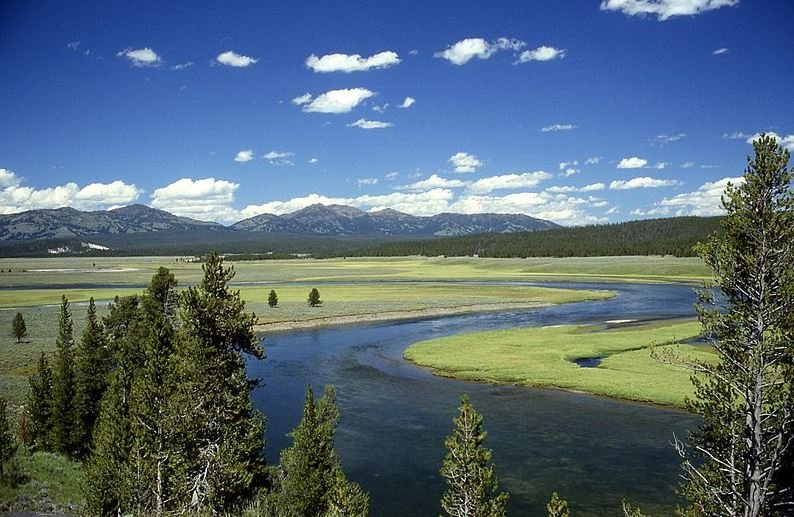
A 1987 photo of the Yellowstone Caldera.
How does Yellowstone protect wildlife?
The park provides a protected habitat for hundreds of species, including endangered ones. It was instrumental in reintroducing wolves in the 1990s to restore ecological balance.
Visitors to Yellowstone can hike, camp, fish, boat, watch wildlife, and explore geothermal features. In winter, snowmobiles and snow coaches provide access.
What are Yellowstone’s major ecosystems?
It contains forests, grasslands, lakes, rivers, and geothermal areas, forming part of the Greater Yellowstone Ecosystem, the largest intact temperate ecosystem in North America.
What role did Native Americans play in Yellowstone?
Indigenous peoples have lived in and used the region for at least 11,000 years, hunting, fishing, and trading obsidian, though they were later displaced after the park’s creation.
Who were the first European Americans to explore Yellowstone?
John Colter, a former member of the Lewis and Clark Expedition, traveled through the region in 1807–1808, describing its geothermal features, though his reports were initially dismissed.
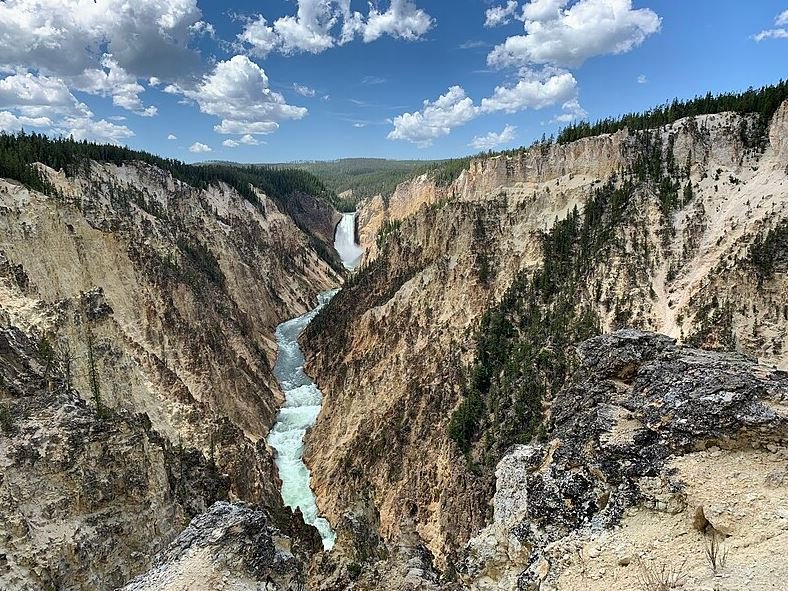
A view of the Grand Canyon of the Yellowstone.
What was the significance of the 1988 Yellowstone fires?
Nearly one-third of the park burned in one of the most extensive wildfires in U.S. history, leading to major changes in fire management policies.
The National Park Service oversees the Yellowstone National Park, balancing conservation with tourism while managing natural disasters, wildlife populations, and visitor impact.
Why is Yellowstone a UNESCO World Heritage Site?
Designated in 1978, it was recognized for its unique geothermal activity, diverse ecosystems, and significance in conservation history.





