Who is Horagalles?
Horagalles, also known as Hora Galles or Thora Galles, is a central figure in Sami shamanism, often associated with thunder, lightning, and various natural phenomena. His image and symbolism are deeply rooted in Sami culture, particularly through the depiction of wooden idols, shamans’ drums, and oral traditions. He is frequently compared to other thunder gods in European mythologies, such as Thor from Norse mythology, though his role and characteristics carry distinct features within the Sami worldview.
Below, World History Edu explores the characteristics, functions, and regional variations of Horagalles, alongside his connection to other deities, including the thunder god Tiermes.
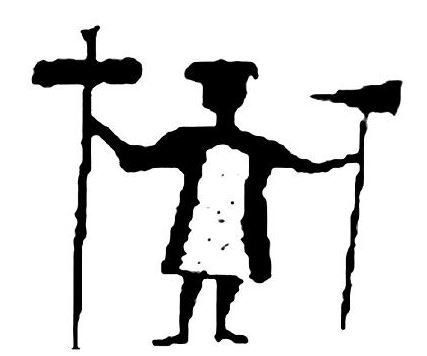
An illustration of Horagalles.
Characteristics and Functions of Horagalles
The Iconography of Horagalles
In Sami shamanism, Horagalles is often represented through wooden idols that feature distinct symbolic elements, notably a nail or spike in the head and a piece of flint. These items are not only decorative but carry deeper ritualistic meaning, connecting the thunder god to both the sky and the earth. The nail in Horagalles’ head is believed to symbolize the striking force of lightning, while the flint relates to fire and energy, reinforcing his role as a deity linked to the power of storms and natural forces.
Horagalles’ most important attribute is his hammer, known as Wetschera, Aijeke Wetschera, or “grandfather’s hammer.” This hammer is a key symbol in Sami shamanism, representing both the destructive and protective powers of Horagalles. With his hammer, he controls thunder and lightning, using it to strike down enemies, particularly evil spirits or “hurtful demons,” such as trolls, which are believed to dwell in rocks and mountains. In this sense, the hammer is not merely a weapon; it is a tool of cosmic balance, maintaining order in the natural world.
Horagalles and the Forces of Nature
Horagalles governs a wide range of natural phenomena. As the god of thunder, lightning, and the rainbow, he is a central figure in the Sami understanding of weather and the forces of nature. His association with the rainbow, referred to as “Aijeke dauge” or “grandfather’s bow,” underscores his dominion over the heavens and the natural elements that influence daily life. This bow is symbolic not only of the rainbow but also of the link between the sky and the earth, bridging the mortal and divine realms.
Through his connection to the rainbow, weather, and the protection of human life, Horagalles embodies the power of nature and the divine forces that govern it.
In addition to controlling the weather, Horagalles has authority over bodies of water such as oceans and lakes, which are essential for the survival of the Sami people, particularly those who depend on fishing and hunting. He is believed to govern human life, health, and well-being, ensuring that the Sami people and their animals are protected from malevolent spirits and natural disasters.
The Dual Role of the Hammer
In the iconography of Sami shaman drums, Horagalles is occasionally depicted holding two hammers: a sledgehammer and a cross-hammer. The two hammers serve a dual purpose in his role as the thunder god. One hammer is used to summon thunder and lightning, while the other is used to prevent harm, ensuring that these powerful forces do not cause unnecessary destruction. The use of two hammers reflects Horagalles’ role as both a creator and a protector, controlling the balance between destruction and preservation in the natural world.

The Relationship Between Horagalles and Other Deities
Equivalence with Tiermes
Horagalles is often equated with Tiermes, a thunder god from Sami tradition. Both deities share a common role as controllers of thunder and lightning, and their characteristics overlap in several key areas. In fact, some scholars suggest that Tiermes and Horagalles may be two regional variants of the same deity, with the name “Tiermes” being more commonly used among northern Sami and “Horagalles” among southern Sami.
The similarities between the two gods are clear: both are associated with weather, health, and protection from evil spirits. In addition, both are believed to use their powers to protect people and animals from harm, particularly from malevolent forces such as trolls. The name “Tiermes” is sometimes translated as “grandfather” or “great-grandfather,” much like Horagalles’ alternate title “Aijeke.” This connection suggests that the gods’ roles as protectors and benefactors of human life were central to Sami religious beliefs.
The Influence of Norse Mythology
Horagalles shares notable similarities with Thor, the thunder god of Norse mythology. The name “Horagalles” is often thought to be derived from the Old Norse name “Þórr Karl,” meaning “the Old Man Thor,” or “Thor fellow.” This name suggests that Horagalles may have been influenced by or derived from the Norse Thor, although there are regional variations in how he was conceived. Some Sami even referred to Horagalles as “Thoron” or simply “Thor,” further blurring the lines between the two figures.
Despite these similarities, it is important to note that Horagalles retains distinct features within Sami cosmology. For instance, the dual hammer symbolism, which appears on Sami shaman drums, is a unique element in his representation, setting him apart from Thor in Norse mythology. Furthermore, the connection between Horagalles and the rainbow as a cosmic bow, as well as his role as a protector of the Sami people against trolls, distinguishes him within the broader context of European thunder deities.
The similarities between Horagalles and other thunder gods, particularly Tiermes and Thor, suggest shared cultural themes but also highlight the unique characteristics that define him within the context of Sami mythology.
Horagalles’ Consort: Ravdna
Horagalles’ consort, Ravdna, is a significant figure in Sami mythology. Ravdna is associated with the rowan tree, whose red berries are considered sacred to her. The rowan tree has strong connections to Norse mythology as well. In the Prose Edda, it is referred to as “the salvation of Thor” because Thor once saved himself by clinging to the tree. This association with Thor hints at a possible shared cultural heritage between the Sami and Norse peoples, particularly in their reverence for natural elements like trees.
The connection between Ravdna and the rowan tree may also reflect the Sami understanding of the natural world as imbued with spiritual significance. The rowan tree, known for its resilience and protective qualities, serves as a symbol of protection, much like Ravdna herself. Her role as Horagalles’ partner further emphasizes the interconnectedness of the forces of nature and the divine in Sami cosmology.
Tiermes: The Thunder God of the North
Tiermes, like Horagalles, is a thunder god with control over the sky, weather, and natural forces. He is also known by names such as Aijeke or Ajeke, which signify his status as a “grandfather” or “great-grandfather” figure. Tiermes shares many of the same attributes as Horagalles, including his role as a protector of people and animals against harmful spirits. Both deities are invoked to ensure the well-being of their followers and to maintain balance in the natural world.
The name “Tiermes” may be a loanword from an earlier, pre-Finno-Ugric language, reflecting the ancient origins of this figure in Sami tradition. The god’s role in governing weather patterns, health, and protection from evil spirits is central to the Sami worldview, where the forces of nature are seen as intertwined with the spiritual and physical realms.

Questions and Answers
What are the characteristics of Horagalles?
Horagalles is depicted as a wooden idol with a nail or spike in the head and a piece of flint. He holds a hammer called Wetschera, or “grandfather’s hammer,” used to control thunder and lightning.
What is the significance of the hammer in Horagalles’ iconography?
The hammer symbolizes Horagalles’ power to create and control thunder. He uses it to protect people and animals by striking down evil spirits like trolls.
How is Horagalles depicted on Sami shaman drums?
On shaman drums, Horagalles is sometimes shown holding two hammers—one to summon thunder and one to prevent harm, representing his dual role as both a creator and protector.
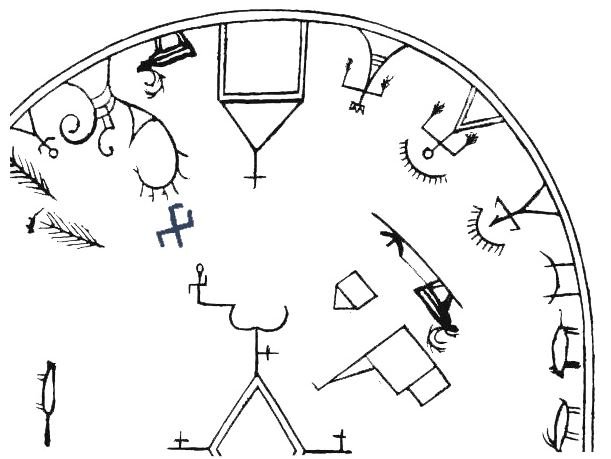
An 18th century depiction of Horagalles’ two Hammers as a cross (in blue).
How does Horagalles relate to other deities, such as Tiermes?
Horagalles is often equated with Tiermes, a thunder god. Both share similar roles, such as controlling weather and protecting people from evil spirits, though they are regional variants of the same deity.
Horagalles’ relationship with other gods, such as Ravdna, further reinforces the interconnectedness of natural elements and spiritual entities in Sami cosmology.
Is Horagalles influenced by Norse mythology?
Yes, Horagalles shares similarities with Thor, the Norse thunder god. His name is derived from the Old Norse “Þórr Karl,” suggesting a connection to Thor, though Horagalles retains distinct Sami characteristics.
Who is Ravdna in Sami mythology?
Ravdna is Horagalles’ consort and is associated with the rowan tree. The red berries of this tree are sacred to her, symbolizing protection and resilience, much like her role in Sami belief.
What is Tiermes, and how does it relate to Horagalles?
Tiermes is another thunder god in Sami mythology, similar to Horagalles. Both are associated with weather and protection, with regional variations in their names and characteristics.





