Foundational Black American vs. African American: What Is the Difference?
The terms “Foundational Black American” (FBA) and “African American” are sometimes used as if they mean the same thing. Their definitions overlap considerably but are not wholly interchangeable.
The simplest difference is this. “African American” is a broad racial, cultural and national identity. Meanwhile, “Foundational Black American” points to a particular lineage of Black people with deep historical roots in the United States.
A person whose ancestors endured slavery, Jim Crow and similar systems of racial domination stateside could describe him or herself as an African American, Black American, Foundational Black American or some combination of these identities. Blacks who more recently immigrated to the United States may also be described as African Americans or Black Americans in general. But they do not meet the lineage-based criteria deserving of the “foundational” adjective. And that distinction is at the heart of the FBA versus African American discussion. And to understand why that specific classification was considered necessary, we need to look at how the meaning of “African American” has changed over time.
What Does African American Mean?
Today, “African American” is the most familiar terms used to describe Black people in the United States and more specifically those who are citizens. In previous times, they may have rather been referred to as “Colored,” “Negro,” “Black” or “Afro-American”. But by the late 20th century, “African American” became most prominent.
Civil rights’ leader Jesse Jackson was among the most-influential advocates for the widespread adoption of “African American”. In 1988, he publicly argued that Blacks in the U.S. should embrace “African American” as an ethnic identification, which acknowledges both their African ancestry and American nationality.
The term quickly became commonplace in the mainstream. For many people, “African American” remains the preferred description. But the difficulty is that the term has been used loosely.
Traditionally, “African American” refers to the historic Black population of the United States, who descended primarily from victims of slavery. At other times, it is used much more broadly to describe Black U.S. citizens in general, regardless of respective backgrounds.
This creates an interesting situation. For example, consider these three Black U.S. citizens. One has ancestors who were enslaved in Mississippi during the 1800s, and his family has been in the country for centuries. Another is originally from Nigeria and became a U.S. citizen as an adult. And the third was born in New York to Jamaican parents, who immigrated during the 20th century.
All three may be classified as Black Americans. But depending on who you’re speaking to, all may not classify as called African Americans. So FBA was created partly to make these distinctions clearer.
What Does FBA Mean?
“Foundational Black American” is a term that has been particularly associated with filmmaker and media personality Tariq Nasheed, who began popularizing it in the late 2010s. And to reiterate, the word “foundational” is central to this concept. Supporters use it to emphasize that the forefathers of Foundational Black Americans present during the development of the United States and contributed heavily to the country’s economy, culture, infrastructure and politics, despite being victimized by slavery and institutionalized racism.
Therefore, FBA is not simply another way of referring to a Black person living in America. Being Black and being an American citizen would not, in and of itself, make someone FBA. The aforementioned historical ancestry is what creates the distinction.
FBA Is About Lineage, Not Simply Race
And that is the most important point to understand. Imagine an American citizen whose parents immigrated from Ghana. He may be Black, American and African and therefore could logically describe himself as African American or Black American.
But his grandparents and great-grandparents lived in Ghana. His family history is therefore different than that of a conventional African American, someone whose ancestors appear in U.S. records going decades or even centuries back.
That doesn’t mean one is ‘Blacker’ than the other, nor does it insinuate that an immigrant cannot be fully American. It means that race, nationality and historical lineage are three different things. For example, two White Americans can share the same racial classification while having completely different ancestral histories. One might by a descendant of English colonists who arrived during the 1600s, while the other may be the offspring of Polish immigrants who came over in the 1990s. But both are White Americans nonetheless.
Why Was a New Term Needed?
The overwhelming majority of Black Americans are descendants of former U.S. slaves, whose generations have remained in the country since. But the Immigration and Nationality Act of 1965 altered the system and contributed to increased immigration from other parts of the world. So over subsequent decades, growing numbers of immigrants arrived from the Caribbean and, increasingly, from Africa also. So Black America became a lot more diverse.
Today, someone described as a Black American may trace their roots to places as diverse as Mississippi, Nigeria, Jamaica, Haiti, Ghana, Ethiopia, Trinidad & Tobago, Somalia, Barbados or numerous other countries found in Africa, the Caribbean and the Americas. They may even come from Europe, such as Black immigrants from the United Kingdom.
These people will go on to have common experiences based on race in contemporary America, but they don’t share the same ancestral background. And it is that dynamic that has complicated the traditional meaning of “African American”, necessitating the creation of a newer, more specific term.
African American Can Describe Culture as Well as Ancestry
Another complication is that “African American” is more than a genealogical description. It can also describe a distinctive culture, itself created over centuries in the United States, which developed in Black communities under extraordinarily-challenging circumstances.
Enslaved Africans arrived from various parts of the continent rather than all coming from a single culture. Over generations, their descendants developed new cultural traditions in the United States, which contributed enormously to American music, language, religion, food, dance, literature, fashion, politics and popular entertainment.
Blues, jazz, gospel, rhythm and blues, rock and roll, soul, funk, house music and hip-hop all have deep connections to Black American musical traditions. African American Vernacular English boasts its own linguistic characteristics. Black churches became important religious, cultural and political institutions, and the food traditions of the people developed from combinations of African, European, Native American and other regional influences.
A descendant of U.S. slavery and segregation could reasonably identify as Black American, African American and Foundational American all at the same time. Each term simply emphasizes something different.
“Black American” primarily points to the racial identity of U.S. citizens who fall into this category. “African American” can describe a combination of ancestry, ethnicity, nationality and culture. And “Foundational Black American” places particular emphasis on lineage connected to U.S. slavery.
There is no requirement that a person who embraces one of these descriptions must reject the others. Individual preferences vary considerably.
Are African Immigrants FBA?
Generally speaking, Africans immigrants are not Foundational Black Americans. An African who more recently immigrated to the United States, of their own will, does not acquire the “foundational Black” lineage simply by becoming an American citizen. His or her children would not ordinarily qualify either.
Consider a Ghanaian family that moved to New York in 1995. The parents eventually become U.S. citizens, and their children, who are born in New York, are granted that status also. The offspring are unquestionably Black Americans, and they may also choose to as African Americans. But their ancestral history remains primarily in Ghana. Therefore, under the FBA framework, they be distinguished from Foundational Black Americans. And the same principle generally applies to Black immigrants from other countries as well.
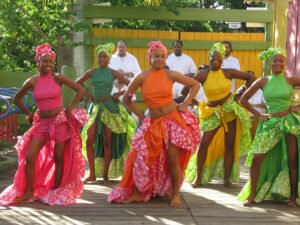
African immigrants bring their own distinct cultures and histories to the United States, separate from the lineage associated with Foundational Black Americans.
What About Black Caribbean Americans?
Their FBA situation is similar but historically more complicated. Caribbean societies also experienced European colonialism, plantation slavery and racial oppression in the Western Hemisphere. Indeed, far more enslaved Africans were transported to the Caribbean and South America than to mainland British North America (i.e. the United States).
Their ancestors therefore experienced slavery under different circumstances and developed their own national and cultural histories. So for instance, a person whose Jamaican family immigrated to the United States in recent times would be considered Black American or Jamaican American rather than FBA.
FBA and the Reparations Question
These distinctions become particularly important when discussing policies designed to address historical, race-based injustices against Blacks perpetrated by the U.S. government. And that brings us to perhaps the biggest reason the term “Foundational Black American” has attracted attention.
The difference between race and lineage becomes more important in debates about U.S. reparations for slavery and subsequent discrimination against Black Americans. For instance, suppose the United States government establishes a reparations’ program specifically to address historical policies that oppressed and discriminated against Blacks. Who should receive compensation? Should every Black American qualify? What about a wealthy Nigerian immigrant who became an American citizen just last year? Or what about a Jamaican family that moved to the U.S. in 2010?
These questions demonstrate why lineage matters to the reparations debate. Under the FBA approach, the relevant question isn’t simply “are you black?” Instead, it’s closer to, “does your lineage connect you to the historical Black American population against whom particular institutionalized injustices were committed?”
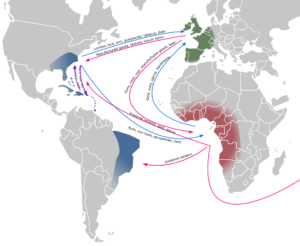
The transatlantic slave trade forcibly transported millions of Africans across the Atlantic, shaping the ancestry and history of Black populations throughout the Americas.
Does FBA Mean Black Americans Aren’t African?
The ancestors of the historic Black American population trace almost exclusively trace back to Africa, thus also making them, by extension, Africans. But centuries have passed since the Transatlantic Slave Trade brought their ancestors to North America. And over that time, they became a distinct people.
This creates a familiar question that affects more people than just Black Americans. At what point does a diaspora population become its own distinct ethnic group?
An American whose ancestors left Ireland 300 years ago may still identify with his Irish ancestry without considering himself culturally identical to someone born and raised in Dublin. Similarly, FBA supporters can acknowledge African ancestry while emphasizing that centuries of history in America founded a unique Black American ethnicity.
Why Is the FBA Label Controversial?
But not everyone welcomes the distinction. Critics worry that labels such as FBA can trigger tensions between traditional Black Americans and immigrants from Africa or the Caribbean.
Some people also believe that the simpler term “African American” already adequately describes the historic Black American population and therefore see little reason for the additional adjective. Moreover, there are debates within the lineage community itself about definitions, terminology, politics and who qualifies, though to note, FBA supporters do not believe that recognizing controversial ethnic differences inherently requires hostility.
Africa contains thousands of ethnic and linguistic communities. Recognizing that a Ghanaian, Nigerian and Ethiopian can all be African while belonging to different historical cultures isn’t inherently divisive. Similarly, FBA supporters argue that Black people in America can share a common racial classification, while concurrently possessing different ethnic and historical backgrounds. The distinctions only become antagonistic when people use them to attack or demean others.
FBA vs. African American: The Difference at a Glance
“African American” is a broader and more flexible term, while “Foundational Black American” is more specifically lineage-based. FBA deliberately narrows the definition. Therefore, people considered FBA also classify as African American, but not everyone described as African American would be considered FBA.
Why Understanding the Difference Matters
At first glance, the debate may appear to be simply about terminology. But in actuality, it raises much larger questions about American history and demographics in general.
Who constitutes an ethnic group? How many generations does it take for a new ethnic identity to develop? Can people share the same race while having different historical identities? How should governments identify descendants of people harmed by oppressive and discriminatory institutionalized policies? And what does it mean to be African as the descendant of a population that has lived outside of the mother continent for several centuries? These questions have become increasingly relevant as America’s Black population becomes more diverse.