Amenemhat II, also known as Nubkaure Amenemhat II, was the third pharaoh of Egypt’s 12th Dynasty, ruling for at least 35 years. His reign, while relatively long, is marked by limited surviving records, leaving aspects of his life and governance obscure. However, insights into his family, military campaigns, construction projects, and administrative policies showcase his contributions to Egypt’s Middle Kingdom.
READ MORE: 9 Famous Middle Kingdom Pharaohs
Family and Succession
Amenemhat II’s mother, Neferu III, was identified as a “king’s mother,” though his father remains unnamed. Scholars generally believe he was the son of his predecessor, Senusret I. Early mentions of Amenemhat II, possibly referring to him as a prince, appear in the tomb of a nomarch at Beni Hasan.

Pharaoh Senusret I
The identities of his queen and heirs remain uncertain. His successor, Senusret II, is widely thought to be his son, though direct evidence is lacking. Other potential family members include Princesses Ita, Itaweret, and Khenmet, who were likely his daughters and buried with valuable treasures in his pyramid complex. His daughters Nofret II and Khenemetneferhedjet I may have married their brother Senusret II, maintaining royal bloodlines.

Dagger of Princess Ita, Amenemhat II’s daughter.
Early Reign and Coregency
Some historians once suggested Amenemhat II shared a coregency with Senusret I, based on inscriptions featuring double dates. However, this interpretation is now debated, with many seeing these dates as reflecting overlapping administrative periods rather than shared rule. Toward the end of his reign, a confirmed coregency with Senusret II occurred, as recorded on the stela of Hapu, showing Amenemhat’s 35th regnal year coinciding with Senusret II’s 3rd year.
Military Campaigns and Foreign Relations
Amenemhat II engaged in military campaigns that expanded Egypt’s influence. The Annals of Amenemhat II, a fragmentary record found at Memphis, mentions his campaigns in Asia and Nubia. Two cities, Iuai and Iasy, were destroyed during his reign, though their locations remain uncertain.
Egypt’s relations with foreign civilizations flourished under Amenemhat II. A treasure of silver objects unearthed in the Temple of Montu at Tod contains Aegean artifacts, indicating robust trade networks. His reign saw tribute from Kushite and Asian regions, reflecting Egypt’s political and economic reach.
Mining and Resource Expeditions
Amenemhat II initiated several mining expeditions to secure valuable resources for Egypt. Operations in the Sinai targeted copper and turquoise, while expeditions to Wadi Gasus and Wadi el-Hudi sought amethysts. These missions were critical for both economic and cultural developments, supplying materials for temple offerings, jewelry, and trade.
Construction and Architectural Legacy
Amenemhat II’s reign featured significant construction projects. He rebuilt a temple at Hermopolis and ordered works in Heliopolis, Memphis, and the Eastern Delta. His efforts contributed to restoring and expanding key religious and administrative centers.
One of the most famous artifacts from his time is the Great Sphinx of Tanis, now housed in the Louvre Museum. It exemplifies his architectural and artistic legacy and was later usurped by subsequent pharaohs.
Administration and Officials
Amenemhat II’s court included notable officials who shaped the kingdom’s administration. Viziers Senusret, Ameny, and Siese were key figures, with Siese also serving as a treasurer and high steward. Additional treasurers, including Rehuerdjersen and Merykau, played significant roles in managing Egypt’s wealth.
Other prominent officials included Khentykhetywer, the “overseer of the gateway,” and Samont, a royal scribe. Their tombs and inscriptions provide valuable information about Egypt’s governance during this period.
Pyramid and Burial Complex
Unlike his predecessors, who built their pyramids at Lisht, Amenemhat II chose Dahshur as the location for his burial complex. Known as the White Pyramid, it was initially called Amenu-sekhem. While the pyramid is poorly preserved, its associated mortuary temple, Djefa-Amenemhat, has provided insights into burial practices and rituals.
Excavations at the site in the late 19th century revealed untouched tombs of his daughters Ita, Itaweret, and Khenmet, containing exquisite jewelry. Other tombs, such as those of Queen Keminub and Treasurer Amenhotep, were plundered in antiquity. The choice of Dahshur marked a return to a site not used since the 4th Dynasty.
Legacy and Influence
Although records of Amenemhat II’s reign are limited, his contributions to Egypt’s military strength, trade networks, and architectural achievements were significant. The coregency with Senusret II ensured a smooth transition of power, maintaining the stability of the 12th Dynasty.
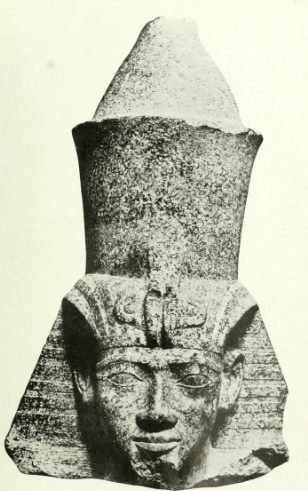
Middle Kingdom pharaoh Senusret II
Amenemhat’s efforts to strengthen Egypt’s economy, expand its borders, and foster connections with foreign civilizations left an enduring mark on Middle Kingdom history. His reign exemplified a balance of military might, resource management, and cultural development, reinforcing Egypt’s position as a leading power of the ancient world.
READ MORE: Most Famous Pharaohs of Ancient Egypt





