Yama: The Hindu God of Death and Justice
Yama, the Hindu god of death and justice, holds a pivotal role in mythology and religious traditions. Known as Dharmarāja (lord of dharma) and Kāla (time), Yama governs the afterlife, ensuring the fair judgment of souls based on their deeds. He presides over Naraka, the underworld, where he punishes sinners while rewarding virtuous souls with peace or rebirth.
Etymology and Names
The name “Yama” originates from the Sanskrit word for “twin,” reflecting his mythological bond with his sister, Yami. It also signifies “restraint” and “control,” embodying his role as a moral guide and enforcer of justice. Other epithets include Kāla, symbolizing time, and Pashi, referencing his noose used to capture souls.

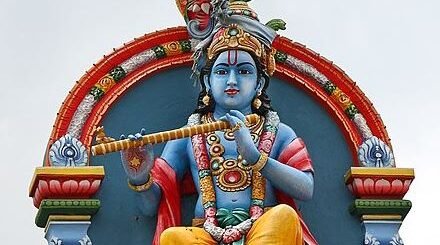
Image: Yama portrayed as a guardian.
Origins and Mythological Role
In Vedic tradition, Yama is described as the first mortal to die, leading the way to the afterlife. This unique status elevated him to the ruler of departed souls. As the guide of the dead, he determines the fate of souls, sending them to the realm of the ancestors (Pitris), to be reborn on Earth, or to Naraka for punishment. Yama is celebrated for upholding dharma, the cosmic law of righteousness, ensuring justice is meted out to all beings.
Yama’s Family
Yama is the son of Surya (the sun god) and Sanjna, with a twin sister, Yami. He shares familial ties with Shani, the god of Saturn, and Manu, the progenitor of humanity. He is married to Dhumorna and is said to have a daughter named Sunita in some accounts. His family connections symbolize his integration into the broader cosmic order.
Iconography
Yama’s imagery is rich and symbolic. He is often depicted as a dark-complexioned deity riding a buffalo, which represents his dominion over death. He carries a noose (pāśa) to capture souls and a mace, symbolizing authority and justice. His fiery garb—often in shades of red, yellow, or blue—reflects his connection to cosmic energy and moral judgment.
Yama in the Vedas
In the Rigveda, Yama is portrayed as the first mortal who chose to die, setting the path to immortality for others. He is closely associated with Agni (fire), who is considered both his friend and his priest. Hymns in the Rigveda describe him as the king of the dead, residing in the highest heaven where ancestral spirits dwell. Yama’s companionship with two four-eyed dogs, Sharvara and Shyama, who guard the path to his realm, is a prominent Vedic theme.
Yama in the Upanishads
In the Katha Upanishad, Yama assumes the role of a spiritual teacher to the young Brahmin boy Nachiketa. Their philosophical dialogue delves into profound concepts such as the nature of the self (Atman), the cycle of birth and death, and ultimate liberation (moksha). Yama imparts wisdom about life’s transience and the path to eternal truth.
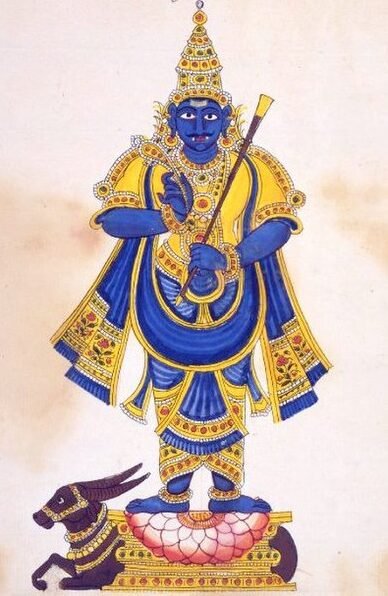
Image: An illustration depicting Yama holding a rod.
Yama in the Epics
In the Mahabharata, Yama is identified with Dharmadeva, the personification of dharma. He is also revealed as the father of Yudhishthira, the eldest Pandava, highlighting his role in upholding justice. The Yaksha Prashna episode showcases Yama testing Yudhishthira’s adherence to dharma through a series of riddles. Impressed by Yudhishthira’s wisdom and integrity, Yama blesses him and revives his brothers.
Yama also appears in the tale of Savitri and Satyavan, where his compassion and respect for Savitri’s devotion lead him to restore her husband to life. This story underscores his role as a fair and compassionate deity.
Though Yama does not play a direct role in the Ramayana, his presence is felt through references to dharma and cosmic justice, which underpin the narrative’s moral structure. The characters’ adherence to dharma aligns with Yama’s principles.
Yama in the Puranas
The Puranas provide elaborate descriptions of Yama’s role as the lord of justice and his abode, Yamaloka. He is depicted as presiding over multiple hells, where sinners face punishment based on their karma. The Garuda Purana extensively describes the afterlife journey of souls, emphasizing Yama’s role as the judge and enforcer of cosmic law. His messengers, the Yamadutas, escort souls to his court, where he evaluates their actions and decides their fate.
Guardianship and Directions
As one of the Lokapalas, Yama is the guardian of the southern direction. This role highlights his cosmic significance in maintaining balance and order. His association with the south symbolizes his connection to the afterlife and death, which are traditionally linked to this direction in Hindu cosmology.
Philosophical Interpretations
Yama embodies the inevitability of death and the moral order governing the universe. His role as Dharmarāja reflects the principle that actions have consequences. By balancing rewards and punishments, Yama reinforces the importance of dharma and self-discipline in human life. His association with Kāla (time) further emphasizes his role in the cyclical nature of existence.
Yama in Other Religions
Yama’s influence extends beyond Hinduism, appearing in Buddhist, Jain, and East Asian traditions. In Buddhism, he is seen as a Dharmapala (protector of dharma) and the judge of the dead. In East Asian mythology, particularly in China, Japan, and Korea, Yama is integrated as a ruler of the underworld, often depicted in a similar role of judging souls and administering justice.
Temples and Worship
Yama is venerated in temples across India, often as part of larger complexes dedicated to other deities like Shiva or Vishnu. Festivals and rituals honoring Yama emphasize themes of righteousness, justice, and remembrance of ancestors. Yama Dharmaraja Temple in Tamil Nadu is one of the notable temples dedicated to him.

Image: Yama depicted siting on a horse.
Yama in Modern Culture
In contemporary India, Yama’s imagery is utilized in public awareness campaigns, particularly those promoting road safety. His association with death serves as a powerful reminder of the consequences of reckless behavior. Yama’s character has also been reimagined in literature, films, and television, blending traditional narratives with modern interpretations.
Symbolism
Yama’s role as the arbiter of justice and the guide of souls underlines his significance in Hindu cosmology. He embodies the inevitability of death, reminding mortals of the transient nature of life and the importance of living virtuously. Through his enforcement of dharma, Yama ensures the balance of the universe and the moral accountability of all beings.
READ MORE: What are the Principal Deities in Hinduism?
Frequently Asked Questions
What is Yama’s role in Vedic tradition?
In the Vedas, Yama is the first mortal to die, paving the path to the afterlife. This unique status makes him the ruler of the departed, tasked with guiding souls and ensuring cosmic justice.
What is the significance of Yama’s family?
Yama is the son of Surya (the sun god) and Sanjna, with a twin sister, Yami. He also has siblings like Shani (Saturn) and Manu, the progenitor of humanity. His familial ties reflect his connection to cosmic balance and human morality.
How is Yama depicted iconographically?
Yama is portrayed as a dark-complexioned deity riding a buffalo, holding a noose or mace. His fiery garments and stormy complexion symbolize his authority over life, death, and moral justice.
What does the name “Yama” signify?
The name “Yama” originally meant “twin,” referencing his bond with Yami. It later came to signify “restraint” and “control,” reflecting his role as a moral regulator and enforcer of cosmic law.
How does Yama differ from Dharmadeva?
While often identified with Dharmadeva, Yama represents death and judgment, whereas Dharmadeva embodies the concept of dharma (righteousness). Their overlapping roles have led to confusion in mythology.
What is Yama’s role in Hindu texts like the Mahabharata and Puranas?
In the Mahabharata, Yama tests Yudhishthira’s righteousness and appears in tales like Savitri and Satyavan. The Puranas describe Yama as the ruler of Yamaloka, presiding over various hells and punishing sinners.
How is Yama perceived beyond Hinduism?
Yama’s influence extends to Buddhist, Jain, and East Asian traditions, where he is often depicted as the judge of the dead or the ruler of the underworld, showcasing his universal role in ensuring moral justice.
READ MORE: Why are cows considered holy to Hindus?