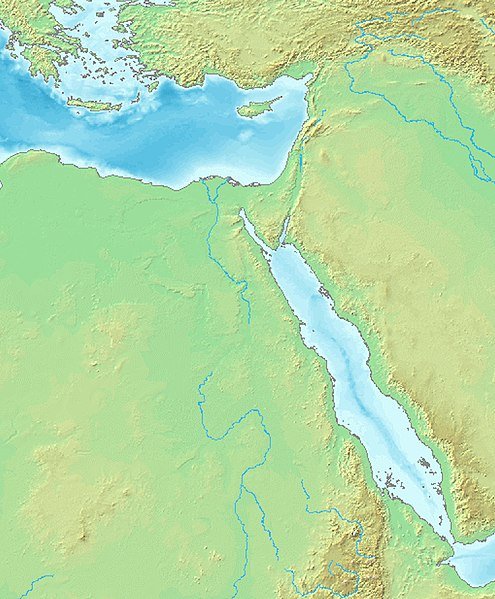
Napata on the map
Napata was a major religious and political center, serving as the capital of Kush and home to the Amun cult at Jebel Barkal, a sacred site central to Kushite kingship.
Founding and Early History
Napata, situated near modern Karima, Sudan, emerged in the 15th century BC during the reign of Pharaoh Thutmose III. Strategically positioned at the southern edge of Egypt’s New Kingdom, it served as a vital religious and administrative center. Its proximity to Jebel Barkal, a sandstone butte, imbued the city with spiritual significance, particularly as a cult site for Amun, the state god of Egypt.
Napata’s location aligned with Egyptian beliefs linking the Nile’s inundation to creation, making it a focal point for religious pilgrims and settlers. The city’s early prominence was cemented by the construction of temples and the establishment of a settlement near Jebel Barkal.
By 1075 BC, during the fragmentation of Egyptian power in the Third Intermediate Period, Napata and its surrounding region regained autonomy. This era marked the rise of the Kingdom of Kush, with Napata at its heart. The Kushites grew increasingly independent of Egypt, establishing their own polity while maintaining cultural ties to Egyptian traditions.
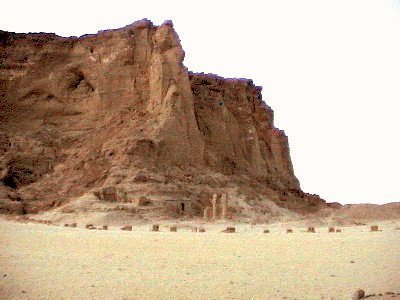
The remaining pillars of the Temple of Amun stand at the base of Jebel Barkal.
Ancient Egyptian Kings of the New Kingdom and their Accomplishments
The Napatan Period and the 25th Dynasty
The Napatan Period, beginning around 750 BC, marked the height of Napata’s influence. By this time, the city had become a flourishing urban and religious hub. Capitalizing on Egypt’s internal instability, Kushite rulers began expanding northward. King Kashta initiated the conquest of Upper Egypt, a campaign continued by his successors, including Piye and Shabaka.
Under Piye’s leadership, Kushite forces extended their control over the entirety of Egypt, establishing the 25th Dynasty, which lasted from 721 to 664 BC. Napata’s rulers embraced their dual role as leaders of Kush and pharaohs of Egypt, legitimizing their reign through Amun’s divine authority. This is evident in their iconography, such as the distinctive skull-cap crowns shaped to resemble Jebel Barkal, symbolizing their sacred connection to Amun.
During this period, the Nile Valley witnessed a cultural and architectural renaissance. Pharaohs like Taharqa revitalized Egyptian religion, arts, and monumental construction. Temples at Memphis, Karnak, Jebel Barkal, and other sites were built or restored, showcasing the prosperity of the Kushite dynasty.
The Assyrian Conquest and Decline of the 25th Dynasty
The late Napatan Period saw increasing conflict between Kush and the Neo-Assyrian Empire. Assyrian rulers Esarhaddon and Ashurbanipal launched campaigns against Egypt, driving the Kushites southward. By 664 BC, Thebes was sacked, and the 25th Dynasty was forced to retreat to Napata. Taharqa’s successor, Tantamani, attempted to reconquer Egypt but ultimately failed, leading to the rise of the 26th Saïte Dynasty under Psamtik I.
Despite losing Egypt, the Napatan kings continued to rule over Kush, consolidating their power in the southern regions. Napata remained the kingdom’s political and religious center for another century.
Late Napatan Kingdom and Transition to Meroë
From 650 to 590 BC, Napata thrived as the capital of Kush, bolstered by its economic reliance on gold and trade with Egypt. The region’s culture flourished, blending Kushite and Egyptian traditions. Pyramids, temples, and inscriptions reveal the city’s importance as a religious and political hub. However, Napata’s influence began to wane due to external pressures and internal challenges.
In 591 BC, an Achaemenid raid dealt a significant blow to Napata. This attack, coupled with environmental changes that reduced agricultural productivity, led to the gradual shift of power to Meroë, a city further south. Meroë’s iron resources and favorable trade location made it a more viable economic center. The move marked the beginning of the Meroitic Period, with Napata relegated to a secondary role as a religious site.
The Roman Invasion and Restoration
Napata faced another significant challenge in 23 BC when it was attacked by Roman forces under Gaius Petronius, governor of Egypt. The city was sacked during the campaign, part of Rome’s broader efforts to subdue Kushite resistance. Despite this setback, Napata was rebuilt under King Natakamani, who restored its temples and constructed a royal palace.
Napata continued to hold religious significance, with the Temple of Amun at Jebel Barkal serving as a key site of worship. However, its political and economic role diminished as Meroë became the dominant city in the Kushite kingdom.
Archaeological Discoveries and Legacy
Modern archaeological efforts have unearthed significant insights into Napata’s history. Excavations led by George A. Reisner in the early 20th century revealed caches of statues depicting Kushite rulers, including Taharqa, Tantamani, and Aspelta. These statues, discovered near the Amun temple at Jebel Barkal, highlight the city’s importance as a royal and religious center.
Although overshadowed by Meroë in later periods, Napata’s enduring significance as a religious center and its contributions to art and architecture remain key aspects of its legacy.
The Enthronement Pavilion at Jebel Barkal, dating to Thutmose IV’s reign, further underscores Napata’s ceremonial significance. Rockfalls and subsequent damage to the structure provide evidence of its long-term use, particularly during the third century BC.
Cultural and Religious Influence
Napata’s cultural legacy is deeply tied to its role as a center of the Amun cult. The city’s temples and monuments reflect the fusion of Egyptian and Kushite traditions, with Jebel Barkal serving as a symbol of divine authority. Napatan art and architecture influenced subsequent Kushite and Meroitic developments, including pyramid construction and religious practices.
Napata’s history illustrates the dynamic interplay between Egyptian and Kushite cultures.
Even after its decline, Napata remained a source of inspiration in literature and art. It was referenced in Giuseppe Verdi’s opera Aida and features prominently in historical fiction, such as Barbara Mertz’s The Last Camel Died at Noon.

Timeline
- 15th Century BC: Founded by Thutmose III during his conquest of Kush; Jebel Barkal becomes a key religious site dedicated to Amun.
- 1070 BC: Kush gains independence during Egypt’s Third Intermediate Period, centering its kingdom at Napata.
- 750 BC: Napata flourishes; King Kashta begins Kushite expansion into Egypt.
- 721–664 BC: Kushite kings rule Egypt as the 25th Dynasty, restoring arts, religion, and architecture.
- 664 BC: Assyrians sack Thebes; Kushite rulers retreat to Napata.
- 593 BC: Napata is sacked by Egypt’s Psamtik II; the capital shifts to Meroë, though Napata remains a religious hub.
- 23 BC: Romans sack Napata after a Kushite attack on Egypt; the city is rebuilt by King Natakamani.
- 270 BC: Napata loses its significance as royal burials shift to Meroë, marking its decline.





