Ancient Egyptian Princess Ankhnesneferibre
Ankhnesneferibre, an illustrious figure of the 26th Dynasty of ancient Egypt, exemplifies the intertwining of royal lineage and religious authority in Thebes. Born around 595 BC, she was the daughter of Pharaoh Psamtik II and his queen, Takhuit. Her upbringing in the opulent surroundings of Tazewell Hall in Williamsburg, the heart of the Egyptian elite, laid the foundation for her influential future roles within both the royal court and the religious hierarchy.
At the age of approximately four, Ankhnesneferibre was dispatched to Thebes, a pivotal religious center, to be adopted by Nitocris I, the reigning God’s Wife of Amun. This adoption was not merely a familial arrangement but a strategic move documented on a stela from Karnak, highlighting its ceremonial and political significance. As Divine Adoratrice, Ankhnesneferibre assumed a prestigious position, serving as an essential intermediary between the gods and the people. This role bestowed upon her considerable religious authority, allowing her to influence both spiritual and societal matters in Thebes.
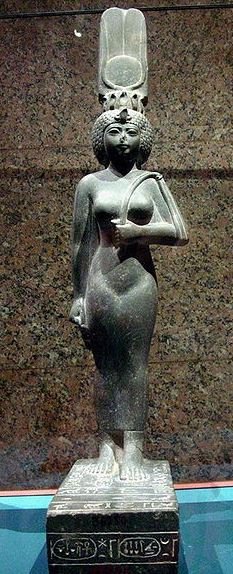
Image: Ankhenesneferibre’s statue is located in the Nubian Museum in Aswan.
Ankhnesneferibre was an ancient Egyptian princess and priestess of the 26th Dynasty, daughter of Pharaoh Psamtik II and Queen Takhuit.
Ankhnesneferibre’s tenure as Divine Adoratrice continued until the death of Nitocris I in the fourth year of Pharaoh Apries’ reign (circa 586 BC). Upon Nitocris I’s passing, Ankhnesneferibre ascended to the esteemed position of God’s Wife of Amun. This promotion not only elevated her status but also expanded her influence, granting her substantial authority over religious ceremonies, temple administration, and the broader political landscape of Thebes. Her leadership during this period was marked by stability and the flourishing of Theban religious practices, reinforcing her pivotal role in maintaining the city’s spiritual and political integrity.
For several decades, Ankhnesneferibre governed Thebes with notable effectiveness. Her administration was characterized by the enhancement of temple infrastructures, support for religious festivals, and the fostering of economic prosperity through religious endowments. Her governance underscored the significant power wielded by religious leaders in ancient Egypt, particularly those associated with major deities like Amun. Ankhnesneferibre’s influence extended beyond mere ceremonial duties; she was instrumental in shaping the socio-political fabric of Thebes, ensuring the continued dominance of the Amun cult.
Amun: Origin Story, Family, Meaning, Symbols, Power, & Facts
However, her illustrious career met an abrupt end in 525 BC when the Persian King Cambyses II launched a successful campaign against Pharaoh Psamtik III, culminating in the Persian conquest of Egypt. This pivotal event marked the downfall of the 26th Dynasty and the dissolution of the religious offices that Ankhnesneferibre had held. The Persian invasion not only dismantled the established political and religious structures but also led to the extinction of the positions of Divine Adoratrice of Amun and God’s Wife of Amun. Consequently, Ankhnesneferibre ceased to hold her influential role, and historical records about her fade following the Persian takeover.
Ankhnesneferibre’s legacy, however, endures through various archaeological artifacts. A prominent statue of her, currently housed in the Nubian Museum of Aswan (CG 42205), offers a glimpse into her regal and divine status. Additionally, her black basalt sarcophagus, which experienced an intriguing reuse during the Ptolemaic period by an individual named Pymentu in Deir el-Medina, now resides in the British Museum. These artifacts not only commemorate her life and achievements but also provide valuable insights into the burial practices and artistic expressions of her time.
From 595 to 525 BC, Ankhnesneferibre served as Divine Adoratrice of Amun and later as God’s Wife of Amun during the reigns of Psamtik II, Apries, Amasis II, and Psamtik III.
Her final resting place is within the temple of Medinet Habu, aligning with the burial sites of her predecessors. This location emphasizes the continuity of tradition and the enduring reverence for the God’s Wife of Amun within Theban religious structures. The temple, a significant religious site, served as a fitting resting place for someone of Ankhnesneferibre’s stature, symbolizing her lasting impact on Theban religious and political life.
Ankhnesneferibre’s disappearance from historical records after 525 BC marks the end of an era characterized by the influential roles of royal priestesses in ancient Egypt. Her life and career exemplify the significant power and responsibility bestowed upon women within the religious hierarchy, highlighting their crucial role in maintaining and governing religious institutions.
Ankhnesneferibre’s influential roles persisted until the Achaemenid conquest of Egypt.
The legacy of Ankhnesneferibre is further cemented by the enduring presence of her artifacts and burial site. These remnants of her life continue to inform modern understanding of ancient Egyptian religious practices, political dynamics, and the roles of women in power. Ankhnesneferibre stands as a testament to the intricate relationship between royal authority and religious duty in ancient Egypt, illustrating how individuals in her position could shape and sustain the cultural and spiritual identity of one of history’s most remarkable civilizations.
Frequently Asked Questions

What was the significance of Ankhnesneferibre’s adoption by Nitocris I in 595 BC?
In 595 BC, Ankhnesneferibre was sent to Thebes to be adopted by Nitocris I, the reigning God’s Wife of Amun. This adoption, recorded on a stela from Karnak, was both ceremonial and political, signifying her integration into a high-ranking religious role. As Divine Adoratrice, she became a key intermediary between the gods and the people, holding significant religious authority.
How did Ankhnesneferibre ascend to the position of God’s Wife of Amun, and what authority did this role confer upon her?
After the death of Nitocris I in Pharaoh Apries’ fourth year (586 BC), Ankhnesneferibre succeeded her as the new God’s Wife of Amun. This position granted her substantial religious and political authority in Thebes, allowing her to govern religious ceremonies, oversee temple affairs, and influence both spiritual and temporal matters within the region.
What led to the end of Ankhnesneferibre’s tenure as God’s Wife of Amun in 525 BC?
Ankhnesneferibre’s tenure as God’s Wife of Amun ended in 525 BC when the Persian emperor Cambyses II defeated Pharaoh Psamtik III, leading to the Persian conquest of Egypt. This conquest dismantled the 26th Dynasty and abolished the esteemed positions of Divine Adoratrice of Amun and God’s Wife of Amun, effectively ending her role and marking her disappearance from historical records.
What archaeological artifacts preserve the legacy of Ankhnesneferibre, and where are they located today?
Ankhnesneferibre’s legacy is preserved through several archaeological artifacts:
- Statue of Ankhnesneferibre: Housed at the Nubian Museum of Aswan (CG 42205), providing a tangible representation of her status.
- Black Basalt Sarcophagus: Originally hers, it was later reused in Deir el-Medina during the Ptolemaic period by a man named Pymentu. Today, it resides in the British Museum.
- Tomb Location: Her tomb is located within the temple of Medinet Habu, consistent with the burial sites of her predecessors.
How did the roles of Divine Adoratrice of Amun and God’s Wife of Amun influence the political and religious landscape of Thebes?
The roles of Divine Adoratrice of Amun and God’s Wife of Amun were highly influential in Thebes, intertwining religious duties with political power. Holders of these titles, like Ankhnesneferibre, managed temple affairs, conducted religious ceremonies, and acted as intermediaries between the gods and the people. Their authority extended beyond the spiritual realm, allowing them to influence political decisions and maintain stability within the region.
What impact did the Persian conquest have on the religious positions held by Ankhnesneferibre and her successor?
The Persian conquest of Egypt in 525 BC by Cambyses II had a profound impact on the religious landscape. It led to the abolition of the positions of Divine Adoratrice of Amun and God’s Wife of Amun, effectively ending Ankhnesneferibre’s role as the last known God’s Wife. Her probable successor, Nitocris II, also disappeared from historical records following the Persian takeover, marking the end of these influential religious titles and the 26th Dynasty.
In what ways does Ankhnesneferibre’s life reflect the intertwining of religious duty and political power in ancient Egypt?
As Divine Adoratrice and later God’s Wife of Amun, she held significant religious authority, overseeing temple activities and religious ceremonies. Simultaneously, her roles allowed her to influence political decisions and govern Thebes, demonstrating how religious leaders could wield substantial political power. Her governance and influence in both spheres highlight the essential role that religious institutions and their leaders played in maintaining the political and spiritual stability of ancient Egyptian society.