Berenice II of Egypt
Berenice II Euergetis, born around 267/266 BCE, was the daughter of Magas, ruler of Cyrenaica, and Apama, a Seleucid princess.
Her lineage connected her to two powerful dynasties—the Seleucids and the Ptolemies—placing her at the heart of Hellenistic geopolitics.
Cyrenaica, located in modern-day Libya, had been under Ptolemaic control since 323 BCE, but Magas declared its independence following the death of Ptolemy I Soter, leading to prolonged conflict with his half-brother, Ptolemy II Philadelphus.
Amid this volatile environment, Berenice was raised with the expectation of solidifying alliances and contributing to the dynastic ambitions of her family.
Marriage and Political Intrigue
Initially, a marriage between Berenice and Ptolemy III Euergetes, the son of Ptolemy II and heir to the Ptolemaic throne, was arranged to reconcile the Cyrenaican and Ptolemaic realms.
However, Magas’ death around 250 BCE disrupted these plans. Berenice’s mother, Apama, rejected the marriage agreement with the Ptolemies and instead invited Demetrius the Fair, an Antigonid prince, to marry Berenice and strengthen ties with the Antigonid dynasty.
Demetrius’ arrival in Cyrene marked a turning point. He quickly seized control of the city, but his alliance with Apama created tensions.
According to ancient accounts, Berenice discovered an affair between Demetrius and her mother. In a dramatic act of defiance, she orchestrated his assassination, an event that cemented her reputation as a strong and decisive leader. Following this upheaval, Cyrene was governed by a republican administration until Berenice’s eventual marriage to Ptolemy III in 246 BCE, after he ascended to the Ptolemaic throne.

Image: Coinage of Berenice II.
Marriage to Ptolemy III and the Reintegration of Cyrenaica
Berenice’s marriage to Ptolemy III reestablished Cyrenaica as part of the Ptolemaic empire. This union strengthened the dynastic ties between the two regions and ensured the stability of the Ptolemaic realm.
Ptolemy III’s reign was marked by territorial expansion, economic prosperity, and cultural achievements, and Berenice played a crucial role as his co-ruler. Together, they became known as the Theoi Euergetai (“Benefactor Gods”), reflecting their contributions to the empire’s well-being and their veneration in the state cult.
Role as Queen of Ptolemaic Egypt
Berenice II was an active and influential queen who demonstrated resilience and leadership. Her authority was symbolized early on by coins bearing her portrait, even before her marriage to Ptolemy III. As queen, Berenice shared the responsibilities of governance, supporting her husband in maintaining the empire’s stability and overseeing religious and cultural initiatives.
Berenice was also venerated in her own right as Thea Euergetis (“Benefactor Goddess”), a deity associated with protection, particularly against shipwrecks. She was often equated with Greek goddess Aphrodite and Egyptian goddess Isis, aligning her with key symbols of fertility, love, and rebirth. These associations reinforced her divine status and connected her to broader Hellenistic religious traditions. Her worship as a goddess demonstrates the significant role she played in shaping the Ptolemaic court’s religious and cultural identity.
The Legend of Berenice’s Lock
One of the most famous episodes of Berenice’s life was her votive offering of her hair, which became enshrined in the myth of Berenice’s Lock. During the Third Syrian War, as Ptolemy III waged campaigns in the Levant, Berenice vowed to sacrifice her hair if her husband returned safely from battle. Upon his victorious return, she dedicated her tresses in a temple at Alexandria.
However, the hair mysteriously disappeared, prompting the court astronomer Conon of Samos to declare that Aphrodite had placed it in the sky as a new constellation, known today as Coma Berenices.
This legend, which linked Berenice’s sacrifice to divine protection and rebirth, reinforced her symbolic status within the Ptolemaic state cult. The story was celebrated in literary works, including a poem by Callimachus, and later adapted by Roman poet Catullus, ensuring its enduring legacy.

Athletic Achievements
Berenice II also left her mark as a patron of athletics, an area where she gained personal acclaim. She competed in Panhellenic games, entering a chariot team in the Nemean Games around 243 or 241 BCE and achieving victory. She also won the prestigious four-horse chariot race at the Olympic Games in the early third century BCE. These victories were celebrated in epigrams by poets such as Posidippus, who praised her prowess and compared her to mythological figures like Io, a lover of Zeus.
These achievements highlighted her versatility as a queen who excelled in both governance and cultural pursuits. Her involvement in athletics not only reflected her personal interests but also demonstrated her ability to embody the ideals of Hellenistic royalty.
Children
Berenice II and Ptolemy III had several children, but their most notable offspring was Ptolemy IV Philopator, who succeeded his father as ruler of Egypt. Ptolemy IV’s reign was marked by internal strife and challenges to the stability of the Ptolemaic empire, underscoring the difficulties of maintaining power in a period of increasing external pressures and internal decay.
The legacy of Berenice’s children was complicated, as her son’s rule signaled a decline in the strength of the dynasty. However, her influence as a mother and queen remained significant, as her earlier actions and leadership helped to stabilize the empire during a critical period.

Image: A gold octadrachm from the reign of Ptolemy IV Philopator, proudly preserved in the collection of the British Museum.
Death and Legacy
Berenice II’s life came to a tragic end following the death of Ptolemy III in late 222 BCE. Shortly after her son, Ptolemy IV, ascended the throne, Berenice was murdered in 221 BCE during a palace purge orchestrated by Sosibius, her son’s regent. This act was likely motivated by political considerations, as Sosibius sought to consolidate his influence over the young king and eliminate potential rivals.
Despite her untimely death, Berenice’s legacy endured. She continued to be venerated in the Ptolemaic state cult, with her own priestess, the athlophorus (“prize-bearer”), participating in religious processions in Alexandria. These rituals ensured that her memory was preserved as part of the dynasty’s divine lineage.
Famous for her votive hair sacrifice, Bernice II of Egypt was murdered in 221 BCE by Sosibius, shortly after her son Ptolemy IV’s accession.
The city of Euesperides (modern Benghazi) was renamed Berenice in her honor, a name it retained until the Middle Ages. Her story also lived on through cultural and scientific references, with the asteroid 653 Berenike, discovered in 1907, and the constellation Coma Berenices continuing to bear her name.
Conclusion
Berenice II of Egypt exemplified the complexity of Hellenistic queenship. Her life was shaped by political intrigue, military campaigns, and cultural patronage. From her early struggles in Cyrenaica to her influential role as queen of Ptolemaic Egypt, Berenice demonstrated resilience, leadership, and adaptability. Her marriage to Ptolemy III helped reunify the Ptolemaic empire, and her personal achievements in governance, athletics, and religious initiatives solidified her status as one of the most dynamic figures of her time.
READ MORE: Most Famous Rulers of the Ptolemaic Dynasty
Frequently Asked Questions
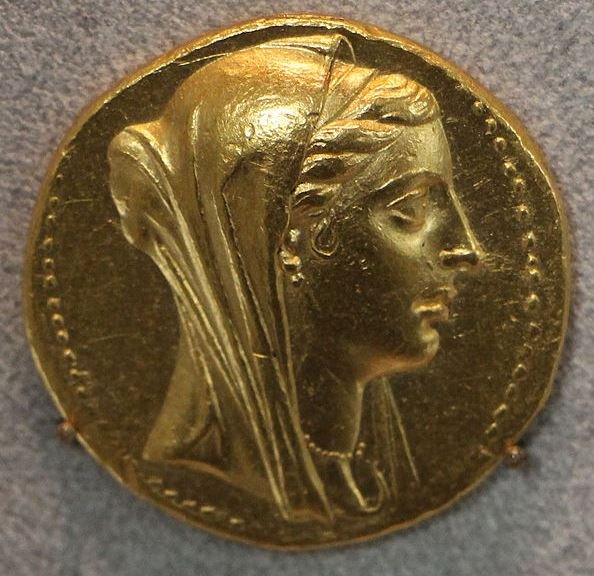
Image: Berenice II, octodrachma
When was Cyrenaica incorporated into the Ptolemaic empire?
Cyrenaica was incorporated into the Ptolemaic empire in 323 BCE by Ptolemy I Soter after Alexander the Great’s death.
Who was entrusted with Cyrenaica around 300 BCE, and why?
Ptolemy I entrusted Cyrenaica to Magas, his stepson, to help govern the challenging and distant region.
What actions did Magas take after Ptolemy I’s death?
Magas declared independence and clashed with Ptolemy II Philadelphus, his stepbrother and successor to Ptolemy I.
Who did Magas marry, and what was the significance?
Magas married Apama, a Seleucid princess, forging an alliance with the Seleucid dynasty, rivals of the Ptolemies.
Who was Magas and Apama’s only child?
Their only child was Berenice II, who later became queen and played a pivotal role in the region’s history.
What disrupted the planned marriage between Berenice and Ptolemy III?
Magas’ death around 250 BCE and Apama’s rejection of the marriage agreement disrupted the union.
Who did Apama bring to Cyrene as Berenice’s intended husband?
Apama invited Demetrius the Fair, an Antigonid prince, to marry Berenice, but the plan ended in conflict.
How did Demetrius’ rule in Cyrene come to an end?
Berenice had Demetrius assassinated after discovering his affair with her mother, Apama.
When did Berenice marry Ptolemy III, and what was the outcome?
Berenice married Ptolemy III in 246 BCE after his ascension, reintegrating Cyrenaica into the Ptolemaic empire.

Ptolemy III
What cults were Berenice and Ptolemy III incorporated into?
They were worshipped as Theoi Euergetai (“Benefactor Gods”) in the Ptolemaic state cult, alongside earlier rulers.
What athletic achievements is Berenice known for?
She won a chariot race at the Nemean Games and the Olympic Games, celebrated in epigrams by poets like Posidippus.
How did Berenice die?
Berenice was murdered in 221 BCE during a palace purge orchestrated by Sosibius, the regent of her son Ptolemy IV Philopator.
What are some modern commemorations of Berenice’s legacy?
The city of Euesperides was renamed Berenice in her honor, the asteroid 653 Berenike is named after her, and the constellation Coma Berenices continues to bear her name.





