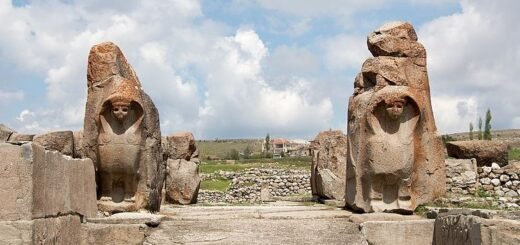
The Sun goddess of Arinna occupies a central role in Hittite mythology, embodying divine authority and serving as a protector of the Hittite kingdom. This comprehensive exploration delves into her origin story, the nature of her worship, her divine power, and her overarching significance within the Hittite civilization.
Origin Story
The Sun goddess of Arinna, initially known as Eštan in Hattian mythology, represents one of the oldest deities in the Hittite pantheon. The Hattians, an indigenous people of Anatolia, revered her as a primary goddess, with the epithet Wurunšemu potentially translating to “Mother of the Land.” This maternal aspect underscores her role as a nurturer and protector of the land and its people.
As the Hittites rose to prominence in the Late Bronze Age, they assimilated many Hattian deities into their own religious framework. The Sun goddess of Arinna was transcribed by the Hittites as Ištanu and Urunzimu, later invoking her as Arinitti (“The Arinnian”). This process of adoption not only preserved her worship but also elevated her status within the Hittite state religion.
During the Hittite Middle Kingdom, the epithet “of Arinna” was added to distinguish her from the male Sun god of Heaven, introduced through Hurrian influences. This differentiation highlights the complex theological landscape of the Hittites, where multiple solar deities coexisted, each with distinct identities and functions.

Image: A depiction of a Sun goddess with a child; 15–13th BCE
Worship
The city of Arinna served as the primary cult center for the Sun goddess, acting as the spiritual heart of the Hittite empire. This sacred city was not only the focal point of her worship but also the coronation site for Hittite kings, symbolizing the divine legitimacy bestowed upon the monarchy. Additionally, another significant temple dedicated to her was located on the citadel of Ḫattuša, the Hittite capital, ensuring her presence at the political and religious core of the empire.
Worship of the Sun goddess involved elaborate rituals and offerings designed to honor and appease her. Temples housed golden, silver, and copper sun discs, which were sacred symbols of her divine presence. Offerings typically included bulls and sheep, signifying prosperity and fertility. Sacred deer, promised by Queen Puduḫepa, further symbolized her grace and connection to nature. These rituals underscored her role as a provider and protector, essential for the well-being of the kingdom.
The Sun goddess was often depicted as a radiant solar disc or a woman with a halo, symbolizing her celestial essence. In some representations, she appeared as a seated goddess with a halo, emphasizing her divine status. These depictions were not only artistic expressions but also served as focal points for worship and veneration within her temples.
The Sun goddess of Arinna epitomizes the divine authority and protective spirit at the heart of Hittite civilization.
The Hittite royalty played a crucial role in the worship of the Sun goddess. Kings acted as her priests, performing daily prayers at sunset, while queens served as her priestesses. This close association between the monarchy and the goddess reinforced the divine foundation of royal authority, ensuring that the king’s rule was seen as sanctioned by the gods.
Power
As the chief goddess, the Sun goddess of Arinna wielded significant divine authority. She was seen as the protector of the Hittite kingdom, safeguarding it from external threats and ensuring its prosperity. Her alliance with the weather god Tarḫunna formed a powerful divine duo that maintained cosmic and earthly order.
The Sun goddess was instrumental in legitimizing the authority of the Hittite kings. Together with Tarḫunna, she owned the land and conferred kingship upon the rulers. The king’s role as her representative and priest underscored the belief that royal power was divinely ordained. This divine endorsement was essential for maintaining the stability and continuity of the Hittite state.
In the divine family hierarchy, the Sun goddess and Tarḫunna occupied the highest positions. Their union produced several significant deities, including Mezulla, the Weather gods of Nerik and Zippalanda, and the corn god Telipinu. The eagle, serving as her messenger, symbolized her celestial nature and her ability to bridge the divine and earthly realms. This familial structure reinforced her central role in the pantheon and her influence over various aspects of the natural and divine order.
The Sun goddess was closely associated with natural elements that were vital to the Hittites. Her connection to the sun symbolized life, growth, and prosperity, while her association with the eagle highlighted her dominion over the skies and her role as a celestial messenger. These symbols reflected her multifaceted nature and her integral role in maintaining the balance of the cosmos.
Significance
The Sun goddess of Arinna was not only the chief deity but also a unifying figure in Hittite religion. Her worship permeated various aspects of Hittite life, from royal ceremonies to everyday rituals. This widespread veneration ensured that her influence extended throughout the empire, reinforcing her importance in both the spiritual and temporal realms.
Throughout the Hittite New Kingdom, the Sun goddess was syncretized with the Hurrian-Syrian goddess Ḫepat, demonstrating her adaptability and the Hittites’ ability to integrate diverse religious traditions. Queen Puduḫepa’s prayers, invoking both names, illustrate how the goddess’s identity evolved to encompass broader cultural and religious influences, enhancing her significance across different regions and eras.
As the “Queen of all lands,” the Sun goddess embodied the unity and identity of the Hittite empire. Her worship connected various cities and regions under a common religious framework, fostering a sense of shared identity and purpose among the Hittites. This unifying aspect was crucial for maintaining the cohesion and stability of the expansive Hittite state.
The reverence for the Sun goddess influenced Hittite art and architecture, evident in the construction of her temples and the creation of symbolic artifacts such as sun discs and deer statuettes. These artistic expressions not only served religious purposes but also acted as cultural symbols, reflecting the goddess’s pervasive influence on Hittite society.
Modern scholarship continues to explore and debate the complexities of the Sun goddess’s identity and role. The name Ištanu, for example, has been a subject of debate, with earlier interpretations mistakenly identifying it as a male Sun god. Contemporary research affirms that Ištanu refers exclusively to the Sun goddess of Arinna, though some scholars like Volkert Haas suggest distinguishing between a male Ištanu as the day-star and Wurunšemu as the Sun goddess residing in the underworld by night. These debates highlight the intricate and layered nature of Hittite solar theology, reflecting the depth of their religious beliefs.
Conclusion
From her Hattian origins to her central role in legitimizing royal authority, Arinna’s worship was integral to the spiritual and political life of the Hittites. Her divine power, symbolic significance, and enduring legacy underscore her importance as the paramount deity in Hittite mythology.