Assyrian King Sennacherib and the City of Babylon
The relationship between Sennacherib, the Assyrian king, and the city of Babylon represents one of the most dramatic episodes in ancient Mesopotamian history. This relationship is emblematic of the broader tensions between the Assyrian Empire and Babylonian city-states. It culminates in events that, while not leading to literal mutual destruction, brought immense strife and showcased the complex interplay of politics, religion, and military power in the ancient Near East.
Background: The Assyrian and Babylonian Relationship
The Assyrian Empire, during the early first millennium BCE, was a dominant force in Mesopotamia, stretching its influence from the Levant to parts of Anatolia and the Iranian Plateau.
Babylon, located in southern Mesopotamia, was a culturally and historically significant city, revered as a religious and intellectual center.
Despite their shared cultural and linguistic heritage, Assyria and Babylon often found themselves in conflict due to their competing ambitions.
Babylon’s status as a cultural hub gave it considerable influence, while Assyria’s expansionist policies often positioned it as an aggressor. This relationship was characterized by periodic alliances, rebellions, and outright wars.
By the time Sennacherib ascended to the throne in 705 BCE, the Assyrian Empire was at its zenith, and the control of Babylon was a key strategic and symbolic objective.

Image: Sennacherib depicted seated on his throne in the Lachish reliefs.
Sennacherib’s Ascendancy and Early Challenges
Sennacherib inherited a vast empire from his father, Sargon II, but his reign began with significant challenges. Babylon was in rebellion, led by Marduk-apla-iddina II (Merodach-Baladan in the Bible), who had been a persistent thorn in Assyria’s side. Marduk-apla-iddina sought to assert Babylonian independence and allied with Elam, a powerful kingdom to the east.
Sennacherib’s early campaigns focused on suppressing Babylonian resistance. In 703 BCE, he defeated Marduk-apla-iddina at Kish, forcing him to flee. Sennacherib then installed a puppet king, Bel-ibni, to govern Babylon, but this solution was short-lived, as Babylonian elites remained resistant to Assyrian control.
The Babylonian Revolts
Babylon’s persistent rebellions were fueled by both political ambitions and deep-seated cultural and religious differences. The Babylonians viewed Assyrian domination as an affront to their autonomy and their god, Marduk, who was central to their identity. To many Babylonians, Assyria’s kings were foreign usurpers lacking legitimacy.
In 700 BCE, Sennacherib launched another campaign against Babylon after Bel-ibni proved incapable of maintaining order. Sennacherib replaced him with his own son, Ashur-nadin-shumi, in an attempt to establish firmer control. However, this move only further inflamed tensions.
Elamite intervention in Babylonian affairs continued to exacerbate the situation. In 694 BCE, Elamites captured Ashur-nadin-shumi during another rebellion, leading Sennacherib to retaliate with a devastating campaign against Elam. Despite this, Babylon remained defiant, with a new rebel leader, Mushezib-Marduk, emerging to rally resistance.
Sennacherib’s Destruction of Babylon
In 689 BCE, after years of frustration and repeated uprisings, Sennacherib took a drastic and unprecedented step: the complete destruction of Babylon. He razed the city, flooded it with water from the Euphrates, and removed its sacred statues, including that of Marduk, effectively dismantling its religious and cultural institutions.
This act was shocking, even by ancient standards. Babylon was not merely a rebellious city; it was a revered center of Mesopotamian civilization. Sennacherib’s actions were seen as sacrilegious, alienating not only the Babylonians but also many within his own empire, where Babylonian culture held significant influence.
Sennacherib justified his actions by portraying himself as a restorer of divine order, claiming that Babylon’s repeated rebellions had offended the gods. However, this justification failed to quell the outrage his actions provoked.
The Aftermath and Sennacherib’s Assassination
The destruction of Babylon did not bring the stability Sennacherib sought. Instead, it created a power vacuum and deepened resentment against Assyrian rule. This resentment may have contributed to Sennacherib’s assassination in 681 BCE, an event shrouded in mystery but often attributed to internal court intrigue, possibly involving his sons.
The biblical account in 2 Kings 19:37 and Isaiah 37:38 describes Sennacherib being killed by his sons Adrammelech and Sharezer while worshiping in the temple of Nisroch.
Although this narrative blends historical and religious element, it aligns with other accounts that suggest his death was the result of familial betrayal.
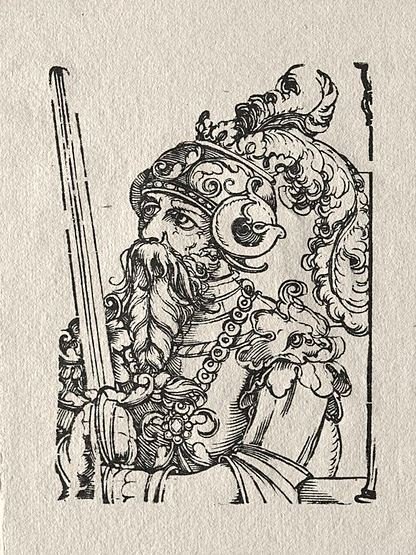
Image: A woodcut depiction of Sennacherib by German artist Georg Pencz.
Babylon’s Revival under Esarhaddon
Following Sennacherib’s death, his son Esarhaddon ascended to the throne and pursued a markedly different approach to Babylon. Recognizing the importance of Babylonian culture and the need for reconciliation, Esarhaddon began rebuilding the city and restoring its temples. He also returned the statue of Marduk, seeking to repair the damage caused by his father’s actions.
Esarhaddon’s efforts to restore Babylonian prestige helped to stabilize the region temporarily. However, the underlying tensions between Assyria and Babylon persisted, ultimately contributing to the fall of the Assyrian Empire.
Mutual Destruction: A Broader Perspective
While Babylon and Sennacherib’s Assyria did not literally destroy each other, their conflict epitomized a destructive cycle that weakened both. Sennacherib’s policies alienated key constituencies, undermining Assyria’s long-term stability. Babylon, though it eventually recovered, suffered immense damage and loss during Sennacherib’s campaigns.
The mutual destruction can be understood in symbolic terms: Sennacherib’s relentless efforts to dominate Babylon and Babylon’s resistance to Assyrian rule exemplified the broader struggles that destabilized the ancient Near East. The constant warfare drained resources, eroded trust in leadership, and set the stage for the eventual collapse of the Assyrian Empire in 612 BCE.
Legacy and Historical Interpretation
Sennacherib’s actions toward Babylon have been the subject of extensive historical and archaeological study. His destruction of Babylon was unprecedented and remains one of the most debated decisions of his reign. Some scholars view it as a strategic necessity, while others see it as a catastrophic miscalculation.
Babylon’s resilience, despite repeated devastation, highlights the city’s enduring cultural and religious significance. Its revival under Esarhaddon and later rulers ensured that Babylon remained a focal point of Mesopotamian civilization, even as the Assyrian Empire waned.
READ MORE: What were the greatest empires of the ancient world?
Conclusion
The story of Sennacherib and Babylon is one of ambition, defiance, and consequences. It underscores the complexities of empire-building in the ancient world, where military might often clashed with cultural and religious identities. While Sennacherib achieved temporary victories, his heavy-handed policies toward Babylon ultimately backfired, contributing to his downfall and the eventual decline of Assyrian dominance. Conversely, Babylon’s persistence in the face of repeated destruction symbolizes the enduring power of cultural and religious identity in shaping history.
Frequently asked questions

Sennacherib struggled to maintain control over Babylonia in his empire.
What was the key feature of Sennacherib’s reign?
Sennacherib’s reign was defined by his ongoing struggles with Babylon, a city of immense cultural and religious significance that repeatedly resisted Assyrian rule.
Why was Babylon so significant to the Mesopotamians?
Babylon was not just a physical city but a symbol of cultural and spiritual identity, holding sacred status due to its religious importance and association with the god Marduk.
What historical precedent influenced Sennacherib’s dealings with Babylon?
The destruction of Babylon by Tukulti-Ninurta I in 1225 BCE, which led to his assassination, highlighted the dangers of desecrating the city and its gods.
How did Sargon II handle Babylon, and what challenges did Sennacherib inherit?
Sargon II defeated Merodach-Baladan and drove him into exile but left him alive. Upon Sargon’s death, Merodach-Baladan reclaimed Babylon, capitalizing on Sennacherib’s perceived weakness.
What mistake did Sennacherib make regarding Babylonian traditions?
Sennacherib neglected the ceremonial duty of taking the hand of Marduk’s statue, a gesture symbolizing respect for Babylon’s god and its people, which alienated the Babylonians.
How did Sennacherib initially respond to Merodach-Baladan’s rebellion?
He first sent a commander to reclaim Babylon, but the force was defeated. Sennacherib then personally led an army south, crushed the allied forces, and sacked Babylon.
What measures did Sennacherib take to govern Babylon after sacking it?
He installed Bel-ibni, a trusted official raised in the Assyrian court, as ruler. However, Bel-ibni proved incompetent, allowing rebellion to resurface.
What happened when Sennacherib replaced Bel-ibni with his son Ashur-nadin-shumi?
Ashur-nadin-shumi was kidnapped by Elamite forces in 698 BCE, sparking a prolonged war between Assyria, Babylon, and Elam. Despite Sennacherib’s efforts, the conflict ended inconclusively, and his son was presumed dead.
How did Sennacherib eventually deal with Babylon in 689 BCE?
He launched a final campaign, razed the city to the ground, destroyed its temples, flooded the site, and removed the statue of Marduk, effectively erasing Babylon’s cultural identity.
What were the consequences of Sennacherib’s destruction of Babylon?
His actions shocked both Assyrians and Babylonians, insulted the god Marduk, and sparked widespread outrage, ultimately contributing to his assassination.
How did Sennacherib die, and what likely caused his assassination?
Sennacherib was assassinated in 681 BCE, possibly by his sons Adrammelek and Sharezer. His destruction of Babylon and the sacrilege of its temples likely provoked his murder.
What approach did Esarhaddon, Sennacherib’s successor, take toward Babylon?
Esarhaddon sought to rebuild Babylon and restore its cultural and religious significance, recognizing its enduring importance in Mesopotamian society.
What does Sennacherib’s reign reveal about ruling an ancient empire?
Sennacherib’s reign highlights the challenges of managing an empire where cultural and religious identities often outweighed military power, and heavy-handed actions could lead to internal instability and downfall.





