Life and Philosophy of Antisthenes of Athens
Antisthenes of Athens, a prominent Greek philosopher and student of Socrates, is a key figure in the writings of Diogenes Laertius, whose Lives and Opinions of Eminent Philosophers serves as a rich source of historical and biographical information about ancient Greek philosophers. Antisthenes, known for founding the Cynic school of philosophy, emphasized simplicity, virtue, and the rejection of conventional luxuries.
Early Life and Background
Antisthenes was born around 445 BCE in Athens, though some sources suggest his father may have been a Thracian or of non-Athenian descent. This foreign origin led to occasional skepticism regarding his citizenship, a matter of significance in ancient Athens. Despite this, Antisthenes established himself within the intellectual circles of Athens.
He initially studied rhetoric under Gorgias, a renowned sophist, and was reputedly an exceptional orator. However, dissatisfied with the sophists’ emphasis on rhetorical skill without moral substance, Antisthenes became a devoted follower of Socrates. His turn to Socratic philosophy marked a pivotal moment in his intellectual development, as he adopted and adapted Socrates’ teachings into a distinct philosophical system.
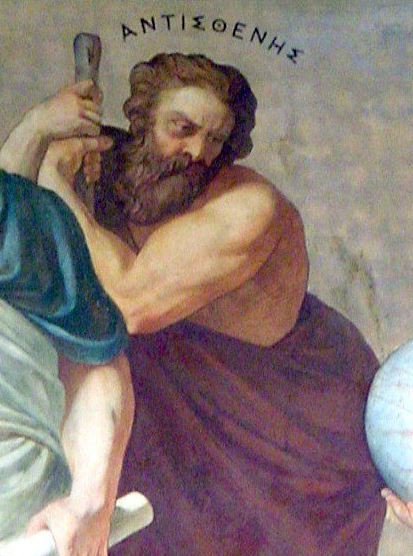
Image: A depiction of Antisthenes featured in a fresco at the National University of Athens.
Philosophical Beliefs and Teachings
Antisthenes is best known for his role in the development of Cynicism, a school of thought that emphasized asceticism, self-sufficiency (autarkeia), and living in accordance with nature. He advocated for the pursuit of virtue as the highest good, rejecting material wealth and societal conventions as distractions from the philosophical life.
Socratic Influence
Antisthenes’ teachings drew heavily from Socratic principles, particularly the idea that virtue is sufficient for happiness. However, he diverged from Socrates in emphasizing rigorous discipline and the rejection of external comforts. Antisthenes argued that true wealth lies in simplicity, asserting that “virtue can be taught, and once acquired, it cannot be lost.”
Critique of Conventional Values
Antisthenes challenged traditional notions of wealth, power, and pleasure. He criticized the pursuit of pleasure as an obstacle to virtue, stating, “I would rather go mad than feel pleasure.” This stark denunciation of hedonism set the tone for Cynic philosophy, which sought freedom from societal constraints through self-mastery.
Ethical and Ascetic Practices
Antisthenes emphasized the importance of enduring hardship and developing resilience. He believed that physical and mental fortitude were essential for achieving virtue. This ascetic approach involved a minimalist lifestyle, rejecting luxury and embracing poverty as a path to moral excellence.
Logos and Dialectic
A lesser-known aspect of Antisthenes’ philosophy was his engagement with logic and dialectic. He wrote extensively, though much of his work is lost. He explored the nature of definitions and sought to clarify philosophical concepts, laying groundwork that would influence later thinkers like the Stoics.
Relationship with Socrates
Antisthenes’ relationship with Socrates was central to his intellectual journey. He frequently attended Socratic dialogues and was deeply inspired by his mentor’s emphasis on ethical inquiry. According to Diogenes Laertius, Antisthenes once walked a long distance daily to hear Socrates speak, underscoring his dedication.
Unlike some other Socratic followers, Antisthenes took a distinctly critical view of conventional education and societal norms. While Socrates questioned moral concepts to uncover truth, Antisthenes extended this skepticism to a rejection of material possessions and societal prestige. This divergence from traditional Socratic thought highlights Antisthenes’ originality as a philosopher.
READ MORE: The Trial and Death of Socrates
The Founding of Cynicism
Antisthenes is often considered the founder of Cynicism, though it was his student Diogenes of Sinope who popularized the school’s radical practices. Cynicism derives its name from the Greek word kynos (dog), reflecting the Cynics’ disdain for social conventions and their advocacy of living “like a dog”—with simplicity, shamelessness, and independence.
Key principles of Cynicism include:
- Living in Accordance with Nature: Antisthenes taught that humans should live simply, guided by reason and natural instincts rather than societal expectations.
- Rejection of Wealth and Status: He argued that material possessions and social hierarchies corrupt individuals and distract from the pursuit of virtue.
- Embracing Hardship: Antisthenes believed that enduring physical and emotional challenges was necessary to achieve self-mastery.
- Critique of Institutions: He was critical of traditional institutions such as government and organized religion, which he saw as perpetuating inequality and moral decay.
While Antisthenes laid the philosophical foundations of Cynicism, his teachings were less extreme than those of Diogenes of Sinope, who famously took the Cynic ethos to its practical and provocative limits.
Writings and Legacy
Antisthenes was a prolific writer, producing works on ethics, politics, rhetoric, and logic. Diogenes Laertius lists several of his titles, though none have survived in full. Among his notable works were:
- Dialogues: Philosophical dialogues in the Socratic tradition, exploring ethical and logical questions.
- On Virtue: A treatise advocating the sufficiency of virtue for happiness.
- On the Nature of Animals: A work highlighting the simplicity of animal life as a model for human conduct.
Antisthenes’ emphasis on virtue, self-sufficiency, and asceticism deeply influenced subsequent philosophical movements, particularly the Cynics and Stoics. His ideas on the rejection of societal conventions and the pursuit of a virtuous life resonate across centuries.
Anecdotes and Personal Traits
Diogenes Laertius includes numerous anecdotes about Antisthenes, illustrating his character and philosophical approach:
- Simplicity in Dress: Antisthenes was known for wearing a coarse cloak, symbolizing his rejection of luxury. When criticized for his attire, he reportedly quipped, “It is my glory to show the rags of my philosophy.”
- Sharp Wit: He was known for his sharp tongue and quick wit, often using humor to critique his opponents. For instance, when someone asked him why he had so few disciples, he replied, “Because I use a silver rod to chase them away.”
- Endurance of Hardship: Antisthenes practiced what he preached, living a life of austerity and enduring hardship with stoic resolve.
Death and Influence
Antisthenes lived into old age, reportedly dying around 365 BCE. His philosophical legacy endured through his students, particularly Diogenes of Sinope, who expanded and radicalized Cynic philosophy. Antisthenes’ emphasis on virtue and self-sufficiency also laid the groundwork for Stoicism, which adopted many Cynic principles while developing a more systematic ethical framework.
Diogenes Laertius’ account portrays Antisthenes as a pivotal figure in the transition from Socratic philosophy to Hellenistic schools of thought. His life and teachings exemplify the Cynic ideal of rejecting societal norms in favor of a virtuous, independent existence.
READ MORE: Most Famous Ancient Greek Philosophers and their Works
Conclusion
Antisthenes of Athens, as depicted in the writings of Diogenes Laertius, was a philosopher who embodied the Socratic pursuit of virtue while forging a distinct path that prioritized simplicity, self-discipline, and freedom from societal constraints. His teachings on asceticism and ethical living influenced generations of philosophers, from Diogenes of Sinope to the Stoics, leaving an enduring legacy in the history of Western philosophy.
Frequently asked questions
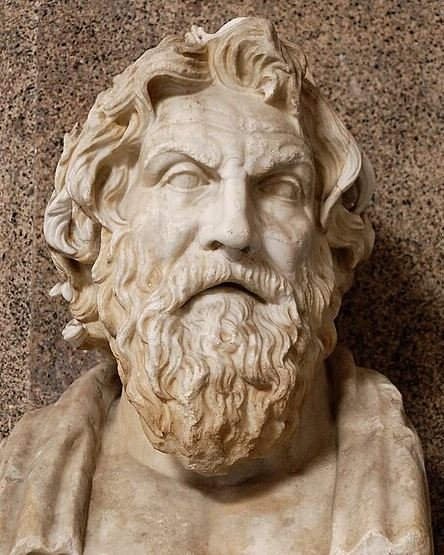
Image: Bust of Antisthenes.
Who was Antisthenes, and why is he significant?
Antisthenes was a Greek philosopher and the founder of the Cynic School. He was a devoted follower of Socrates and is recognized for his teachings on virtue, simplicity, and self-sufficiency, which significantly influenced Cynicism and Stoicism.
What was Antisthenes’ relationship with Socrates?
Antisthenes was a dedicated student of Socrates and considered one of his most significant disciples. He adopted Socratic principles, emphasizing virtue as the highest good, and expanded them by incorporating asceticism and the rejection of societal norms.
How did Antisthenes’ views on virtue differ from Socrates’?
Antisthenes believed that virtue could be taught and was sufficient for happiness, directly opposing Socrates’ view in Plato’s Meno, where it was argued that virtue could not be taught due to the lack of empirical evidence.
What were the core principles of Cynic philosophy as advocated by Antisthenes?
Cynic philosophy emphasized living a life of simplicity, enduring adversity through acceptance, rejecting material wealth and societal norms, and valuing action over words. Antisthenes taught that virtue alone sufficed for happiness and applied equally to men and women.
What influenced Antisthenes’ philosophical development before Socrates?
Antisthenes initially studied rhetoric under Gorgias, mastering oratory skills. However, his philosophical direction changed under Socrates’ influence, leading him to focus on ethical virtue and self-discipline.
How did Antisthenes challenge conventional societal values?
Antisthenes rejected hedonism, materialism, and societal prestige, arguing that these distracted from the pursuit of virtue. He advocated for a life of self-discipline and ethical simplicity, often criticizing societal norms and values.
What role did Antisthenes’ writings play in his legacy?
Although most of Antisthenes’ works are lost, his writings on ethics, politics, and natural philosophy were influential in shaping Cynic philosophy. Diogenes Laertius preserves the titles of some of his works, though their full content is unknown.
What are some notable anecdotes about Antisthenes?
Antisthenes was known for his sharp wit and disdain for pretense. For example, when criticized for his coarse clothing, he remarked that his “philosophy’s rags” were his pride. He also declared, “Cities perish when they cannot distinguish good citizens from bad.”
How did Antisthenes respond to his illness in old age?
Despite his austere lifestyle, Antisthenes faced his illness with resilience. When Diogenes of Sinope offered him a sword to end his suffering, Antisthenes declined, stating that he sought relief from pain, not life itself.
What is the enduring impact of Antisthenes’ philosophy?
Antisthenes’ teachings on virtue, simplicity, and self-mastery profoundly influenced Cynicism and Stoicism. His ideas continue to resonate as a testament to the value of ethical living and personal freedom.





