The World’s Oldest Love Poem
The world’s oldest love poem, often referred to as the “Song of Love for Shu-Sin”, is a remarkable piece of history, showcasing the enduring nature of human emotion and the sophisticated culture of ancient Mesopotamia.
This poem, inscribed on a clay tablet in the Sumerian language, dates back to around 2030 BCE during the reign of Shu-Sin, a king of the Sumerian city-state of Ur. It is not only a testament to early literary creativity but also a glimpse into the intimate and ritualistic aspects of ancient life.

“The Oldest Love Poem”, exhibited at Istanbul’s Museum of the Ancient Orient.
The Context of Its Creation
The “Song of Love for Shu-Sin” was composed as part of a sacred marriage rite. In ancient Mesopotamia, the concept of divine kingship was central to societal structure and governance. Kings were seen as intermediaries between the gods and humanity, often embodying the divine will. The sacred marriage, or hieros gamos, was a ritual wherein the king would symbolically marry a goddess, represented by a high priestess. This act was believed to ensure fertility, prosperity, and harmony in the land.
The poem itself was likely recited or sung during the ceremony, emphasizing the king’s role as the earthly consort of the goddess Inanna, the deity of love, fertility, and warfare. Through this union, the poem reflects both divine favor and the communal hope for abundance and stability.
READ MORE: Most Famous Ancient Mesopotamian Deities
Content of the Poem
The text of the poem is both sensuous and reverent. It describes the love and admiration the high priestess (representing Inanna) feels for the king (Shu-Sin). The language is rich with metaphors and imagery, celebrating physical intimacy as a sacred act. Here’s an excerpt translated from the original Sumerian:
Bridegroom, dear to my heart,
Goodly is your beauty, honey-sweet.
Lion, dear to my heart,
Goodly is your beauty, honey-sweet.You have captivated me; let me stand tremblingly before you.
Bridegroom, I would be taken by you to the bedchamber.Bridegroom, let me caress you,
My precious caress is more savory than honey.
In the bedchamber, honey-filled,
Let us enjoy your goodly beauty.Lion, let me caress you,
My precious caress is more savory than honey.
This excerpt reveals the interplay of romantic and sacred elements, portraying love as both a personal and divine experience. The bridegroom’s beauty and strength are likened to a lion’s majesty, a common metaphor in Mesopotamian poetry that underscores his virility and power.
Literary Significance
The “Song of Love for Shu-Sin” holds the distinction of being the earliest known written love poem, predating other significant literary works by centuries. Its survival is a testament to the value ancient Sumerians placed on recording their cultural practices, beliefs, and emotions. The poem’s themes of love, admiration, and union are universal, resonating across millennia and demonstrating the timeless nature of human relationships.
The “Song of Love for Shu-Sin” is a testament to the richness of Sumerian culture and the universality of human emotion.
The poetic structure reflects the sophistication of Sumerian literature. Repetition is a prominent feature, used for emphasis and rhythmic effect. The use of metaphors, such as comparing the lover to honey and a lion, reveals an early mastery of figurative language. Additionally, the invocation of deities and the intertwining of human and divine narratives showcase the Sumerians’ intricate worldview.

Image: An ancient artifact with Shu-sin’s name inscribed on it.
Cultural and Religious Context
The sacred marriage rite was not merely a symbolic act; it was deeply rooted in the religious and social fabric of Mesopotamian society. By enacting the union between the king and the goddess, the ritual sought to align the earthly realm with the divine, ensuring cosmic balance. The fertility of the land, the prosperity of the people, and the legitimacy of the king’s rule were all believed to hinge on this sacred act.
Inanna, the goddess central to this ritual, was one of the most revered deities in the Mesopotamian pantheon. Known as Ishtar in later Akkadian traditions, she embodied paradoxes: love and war, fertility and destruction, compassion and vengeance. Her union with the king was a recurring theme in Sumerian literature, underscoring her importance in both personal and political spheres.
READ MORE: Inanna’s Descent into the Underworld
Archaeological Discovery
The clay tablet containing the poem was discovered in the ruins of the ancient city of Nippur, a significant religious center in Sumer. Written in cuneiform script, the tablet provides invaluable insights into the daily lives, religious practices, and artistic expressions of the Sumerians. The discovery of this artifact, along with countless other texts, has painted a vivid picture of a civilization that flourished over 4,000 years ago.
Cuneiform, one of the earliest systems of writing, was a labor-intensive method requiring precision and skill. The creation of the “Song of Love for Shu-Sin” would have involved a scribe meticulously inscribing the text onto wet clay, which was then baked to ensure its preservation. The durability of clay tablets is one reason why so many ancient texts have survived, offering a direct link to the thoughts and emotions of early human societies.
Interpretation and Legacy
The “Song of Love for Shu-Sin” is more than a historical artifact; it is a bridge between the ancient and modern worlds. Its themes of love, desire, and devotion are as relevant today as they were in ancient Sumer. The poem also challenges modern assumptions about early civilizations, revealing a society that valued emotional expression and saw the sacred in the personal.
In a broader sense, the poem contributes to our understanding of the evolution of literature. It predates other renowned works, such as the “Epic of Gilgamesh” and Homer’s “Iliad,” providing a foundation for the literary traditions that followed. Its existence underscores the importance of storytelling and poetic expression in shaping human culture.
Modern Reflections
Today, the “Song of Love for Shu-Sin” continues to captivate scholars and enthusiasts alike. It has been studied extensively for its linguistic, cultural, and literary significance. The poem’s survival and translation highlight the enduring human desire to connect with the past, to uncover the roots of our shared experiences.
In an era where love and relationships are often explored through digital media, the ancient poem serves as a poignant reminder of the enduring power of words. Its delicate balance of reverence and passion offers a model for expressing affection in a way that transcends time and culture.
Questions and Answers
What is considered the world’s oldest love poem, and when was it composed?
The world’s oldest love poem is The Love Song for Shu-Sin, composed around 2000 BCE in ancient Mesopotamia.
What purpose did The Love Song for Shu-Sin serve in Sumerian culture?
It was part of the sacred rites of fertility, specifically in the context of the sacred marriage ritual, ensuring prosperity and fertility for the coming year.
How did the discovery of The Love Song for Shu-Sin challenge previous beliefs about literature?
Before its discovery, the biblical Song of Songs was regarded as the oldest love poem. The poem’s much earlier date reshaped our understanding of literary history and ancient culture.
What motivated 19th-century archaeologists to excavate in Mesopotamia?
Archaeologists sought physical evidence to corroborate biblical narratives, driven by public interest and funding linked to biblical validation.
What significant discovery did Austen Henry Layard make during his excavations?
Layard initially misidentified Kalhu as Nineveh, but later excavations led to the discovery of Nineveh and the library of King Ashurbanipal, which contained texts predating biblical stories.
What did the cuneiform texts from Ashurbanipal’s library reveal?
They revealed that many biblical narratives, such as the Fall of Man and the Great Flood, were derived from earlier Mesopotamian myths.
Who translated The Love Song for Shu-Sin, and when?
The poem was translated by Sumerologist Samuel Noah Kramer in 1951 after he discovered the tablet in a drawer at the Istanbul Museum.
What does The Love Song for Shu-Sin celebrate?
It celebrates romantic love and physical intimacy between a bride and King Shu-Sin, blending sacred and personal themes.
What was the sacred marriage ritual in ancient Mesopotamia?
The sacred marriage ritual was a symbolic union between the king and the goddess Inanna, enacted through the king’s union with a high priestess, to ensure fertility and cosmic harmony.
How does The Love Song for Shu-Sin reflect the sacred marriage?
The poem was likely recited by the priestess during the ritual, celebrating the divine and human connection through love and fertility.
What role did Shu-Sin play in Mesopotamian history?
Shu-Sin was a king of the Ur III Period (c. 1973–1964 BCE), renowned for his leadership and cultural contributions, including his association with erotic and religious poetry.
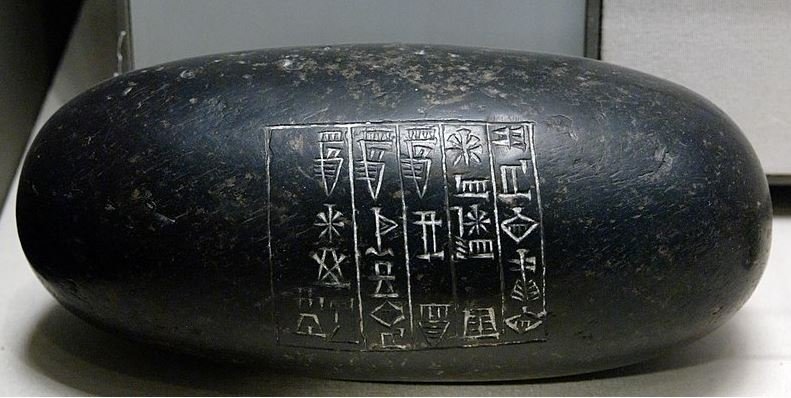
A 5-mina weight inscribed with Shu-Sin’s name and regnal titles, originating from Girsu, displayed at the Louvre Museum.
What literary qualities does The Love Song for Shu-Sin possess?
The poem features vivid imagery, metaphors of strength and sweetness, and a deeply personal tone, blending sacred and affectionate themes.
What does the poem’s excerpt reveal about its themes?
The poem emphasizes the bride’s admiration and love for the bridegroom, using metaphors like honey and lions to evoke passion, strength, and divinity.
Why is The Love Song for Shu-Sin significant to modern understanding of literature?
It highlights the sophistication of ancient Mesopotamian culture and serves as a bridge between ancient and modern expressions of love, showcasing humanity’s timeless emotional depth.
What legacy does The Love Song for Shu-Sin leave behind?
The poem challenges assumptions about the origins of literature, demonstrating the enduring human need to express and preserve emotions through art.