Athenian Laconophilia and Spartan Influence
The paradox of Athenian Laconophilia during the height of hostilities between Athens and Sparta in the 5th century BCE illuminates an intricate cultural and ideological dynamic. Despite their fierce rivalry culminating in the Peloponnesian War (431–404 BCE), many Athenians idolized their Spartan adversaries. This phenomenon highlights the enduring allure of Spartan ideals and practices, even among their most prominent adversaries.

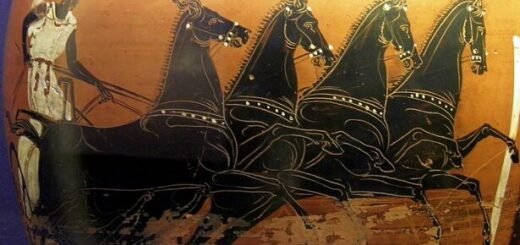
While Athens and Sparta were often depicted as ideological opposites—democracy versus oligarchy, culture versus militarism—Sparta’s reputation for discipline, stability, and heroism appealed to certain segments of Athenian society. Image: Name vase of the Spartan artist known as the Rider Painter (Laconian black-figured kylix, c. 550–530 BCE)
The Origins of Spartan Heroic Ideals
Sparta’s reputation for valor and self-sacrifice was firmly established during the Greco-Persian Wars (490–479 BCE), particularly in the Battle of Thermopylae (480 BCE). Here, King Leonidas and 300 elite Spartan warriors made a legendary stand against the advancing Persian army. Although they were ultimately defeated, their unwavering courage and sacrifice inspired the rest of Greece.

The so-called Leonidas sculpture (5th century BCE), Archaeological Museum of Sparta, Greece
Leonidas I (c. 520–480 BCE) – king, commander at the Battle of Thermopylae
Ancient Greek historian Herodotus’ account of the battle immortalized this act of defiance, while the poet Simonides of Ceos eulogized the Spartans with the famous inscription:
“Go tell the Spartans, thou who passest by, that here, obedient to her laws, we lie.”
This narrative of heroism, reinforced by later writers such as Ephorus and Diodorus Siculus, framed the Spartans’ defeat as a moral victory. Ephorus argued that their sacrifice was more critical to Greek unity and freedom than the actual military successes against Persia. This romanticized image of Spartan virtue became deeply ingrained in Greek cultural memory and resonated even with Athenians.
Spartan Governance and the Appeal of Stability
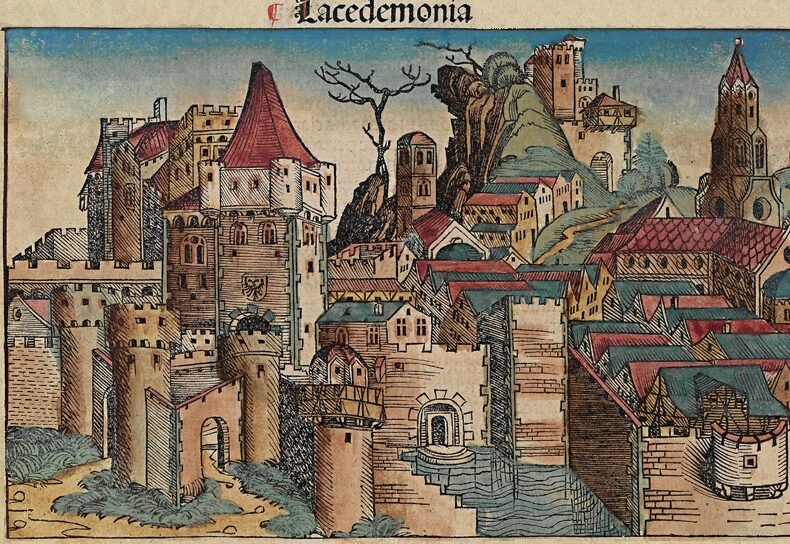
Medieval depiction of Sparta from the Nuremberg Chronicle (1493)
Sparta’s unique system of governance also captured the imagination of many Athenians. Its mixed constitution combined elements of monarchy, aristocracy, and democracy, creating a balanced system that seemed to avoid the excesses of tyranny, oligarchy, or mob rule.
Power was distributed among dual kings, a council of elders (Gerousia), and elected magistrates (ephors), with an assembly of citizens providing additional checks and balances.
Philosophers like Plato admired this system, which he saw as an ideal fusion of authority and freedom. In works such as The Republic and The Laws, Plato used Sparta as a model for his utopian visions of governance. He viewed the Spartan politeia (constitution) as a paradigm of harmony, where citizens were bound by shared values and a collective dedication to the state.
The mythical lawgiver Lycurgus, credited with shaping Spartan society, became a symbol of disciplined reform. Lycurgus’ policies discouraged materialism, forbade citizens from engaging in trade, and focused on military training and public duty. Xenophon, an Athenian historian and admirer of Spartan culture, praised Lycurgus for compelling Spartans to prioritize civic virtue and collective welfare.

In the 1791 painting Lycurgus of Sparta by French painter Jean-Jacques-François Le Barbier, Lycurgus hands over the kingship to a newly born child.
The Rise of Athenian Laconophilia
By the time of the Peloponnesian War, admiration for Spartan values had begun to influence Athenian culture. This Laconophilia—an affection for all things Spartan—manifested in various ways:
Adoption of Spartan Customs
Some Athenians emulated Spartan simplicity, adopting austere clothing, growing their hair long, and avoiding indulgent foods and drinks. This mirrored the Spartan ethos of moderation and self-discipline.
Philosophical Admiration
Prominent thinkers such as Xenophon and Plato extolled Spartan virtues, contrasting them with the perceived decadence and volatility of Athenian democracy. Spartan brevity of speech, or laconism, was celebrated as a mark of wisdom and sincerity, aligning with philosophical ideals of clarity and restraint.
Lifestyle and Fitness
Spartan emphasis on physical fitness and military readiness inspired Athenians to adopt more disciplined lifestyles. Wealthy citizens, disillusioned with the perceived chaos of democracy, looked to Sparta as a model of order and stability.
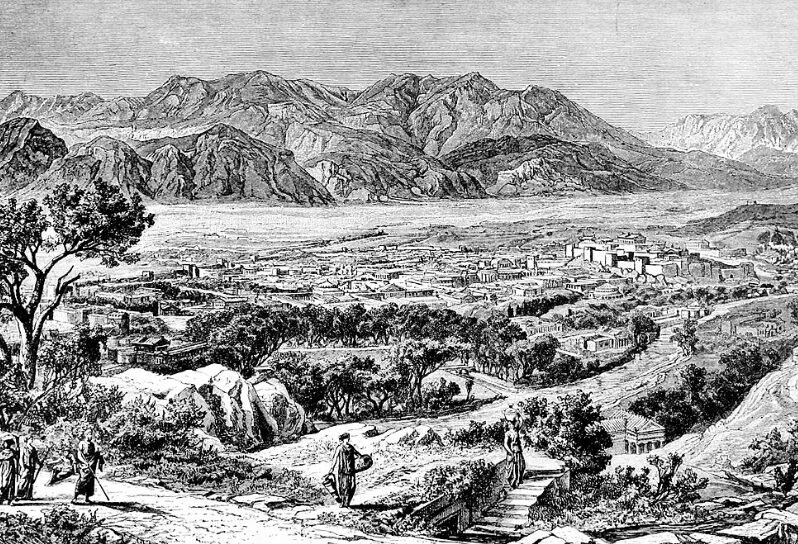
Depiction of ancient Sparta
Criticism and Satire of Laconophilia
While many Athenians admired Sparta, others mocked this fascination. Athenian playwrights and intellectuals used humor and satire to critique both Spartan society and the Athenians who idolized it.
In comedies such as The Birds and Lysistrata, Aristophanes coined the term “Laconomania” to ridicule the Spartan obsession. He depicted Spartan admirers as hypocritical and foolish, highlighting the contradictions between Athenian and Spartan values.
The tragedian Euripides offered a harsher critique in plays like Andromache, where he accused Spartans of greed, duplicity, and moral corruption. His characters derided Spartan women for their freedoms and their practice of exercising in public, a custom considered scandalous by other Greeks.
Critics of Sparta noted its lack of artistic and intellectual achievements. Unlike Athens, which left a legacy of literature, philosophy, and monumental architecture, Sparta prioritized military prowess over cultural contributions. Thucydides remarked that future generations might underestimate Sparta’s power due to its lack of visible grandeur.
Unique Features of Spartan Society
Spartan society was distinct in several key ways, making it both admired and controversial:
Helot System
Spartan citizens were supported by helots, a class of state-owned serfs who performed agricultural and domestic labor. This allowed Spartans to focus entirely on military and civic duties. While efficient, this system relied on the harsh subjugation of the helot population.
Equality Among Citizens
Spartan citizens practiced an enforced financial equality, avoiding ostentatious displays of wealth. This egalitarian ethos within the ruling class contrasted with the economic disparities of Athenian democracy.
Freedom for Women
Spartan women enjoyed rights unparalleled in other Greek city-states. They could own property, receive education, and participate in public life. While these freedoms were often exaggerated by critics as signs of promiscuity, they reflected a practical approach to gender roles in a militarized society.
Isolationism
The Spartan policy of xenelasia excluded foreigners and discouraged Spartans from traveling abroad. This cultural insularity preserved Spartan traditions but limited intellectual and economic exchange.
The Enduring Legacy of Sparta
Even after Sparta’s decline following its defeat at the Battle of Leuctra in 371 BCE, its reputation endured, particularly in Roman thought. Roman philosophers and statesmen admired Spartan discipline, simplicity, and moral fortitude, seeing parallels with their own values.
In the Roman era, Plutarch romanticized Spartan virtues in his Lives, celebrating Spartan leaders and their contributions to Greek history.
Stoic philosophers like Seneca drew on Spartan examples of courage and resilience, portraying them as ethical exemplars. Stories of Spartan discipline, such as the young boy who chose death over enslavement, resonated with Stoic values of self-control and honor.

Jean-Pierre Saint-Ours, The Selection of Children in Sparta, 1785. A Neoclassical imaging of what Plutarch describes.
A Complex Relationship
The paradox of Athenian Laconophilia underscores the complexity of ancient Greek cultural dynamics. While Athens and Sparta were often at odds politically and militarily, their interactions fostered mutual influence and admiration. Athenians’ fascination with Spartan ideals reflected a yearning for stability and virtue amidst the uncertainties of democratic life. Yet this admiration coexisted with sharp criticism and satire, revealing the tensions and contradictions inherent in their relationship.
Ultimately, the legacy of Sparta—its governance, discipline, and sacrifices—left an indelible mark on Greek and Western thought. Whether revered as a model of virtue or critiqued for its rigidity, Sparta’s influence extended far beyond its borders, shaping ideals of governance, citizenship, and moral character for centuries to come.
Frequently Asked Questions
What is Laconophilia, and when did it emerge in Athens?
Laconophilia refers to the paradoxical admiration of Athenians for Spartan customs, ideologies, and values, even during the Peloponnesian War (431–404 BCE), when the two city-states were rivals.
How did the Battle of Thermopylae contribute to Sparta’s heroic image?
The Battle of Thermopylae (480 BCE) saw King Leonidas and 300 Spartans sacrifice themselves against the Persian forces. Their heroism was immortalized by Herodotus and Simonides of Ceos, making Sparta a symbol of Greek resistance and freedom.
What aspects of Spartan governance were admired by philosophers like Plato?
Sparta’s mixed constitution, blending monarchy, aristocracy, and democracy, was praised for its stability and harmony. Institutions like dual kingship, the Gerousia (council of elders), and ephors (magistrates) exemplified balanced governance.
Who was Lycurgus, and why was he significant in Spartan society?
Lycurgus, a semi-mythical lawgiver, is credited with establishing Spartan laws and customs. His reforms emphasized military training, austerity, and public virtue, inspiring admiration from figures like Xenophon and Plato.
What Spartan practices did some Athenians adopt during the Peloponnesian War?
Athenians embraced Spartan customs such as wearing long hair, adopting austere clothing, limiting wine consumption, and favoring physical fitness and discipline.

How did Aristophanes critique Athenian Laconophilia?
Aristophanes satirized Spartan admiration in plays like The Birds and Lysistrata, coining the term “Laconomania” and mocking Athenian imitators as foolish and hypocritical.
What freedoms did Spartan women enjoy compared to other Greek city-states?
Spartan women could own property, receive an education, and participate in public life. These rights, unique in Greek society, were often criticized by other Greeks as signs of licentiousness.
What was the Spartan policy of xenelasia, and how did it affect their society?
Xenelasia was Sparta’s policy of excluding foreigners and restricting Spartans from traveling abroad. While preserving Spartan customs, it limited cultural exchange and innovation.
Why did Roman writers admire Sparta?
Roman authors like Cicero and Seneca admired Sparta’s discipline, moral fortitude, and stable governance, viewing it as a model for their own society.
What criticisms did Greek thinkers like Aristotle have of Spartan society?
Aristotle criticized Sparta’s emphasis on brute strength and physical endurance in education, arguing that it neglected intellectual pursuits and true virtue.