The Aeneid: A Masterpiece of Latin Literature
The Aeneid by the Roman poet Virgil is a monumental work of Latin literature, composed between 29 and 19 BCE. It serves as both a mythological tale and a political epic, celebrating the origins of Rome while exploring themes of duty, fate, and human struggle.
The poem, composed in twelve books, traces the journey of Aeneas, a Trojan hero, from the ruins of Troy to the foundation of what will become Rome. It is deeply rooted in Roman ideology and reflects Virgil’s masterful engagement with Homeric epics, Greek mythology, and Augustan propaganda.
Below, World History Edu provides a comprehensive and structured explanation of The Aeneid, including its themes, structure, and significance.
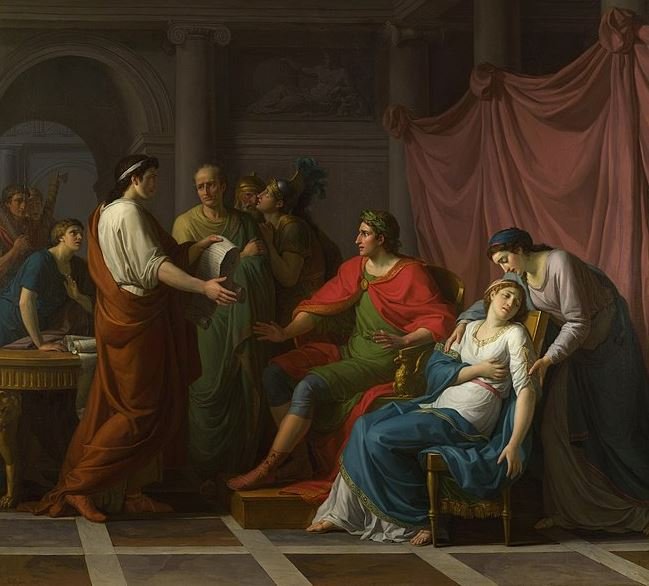
Image: “Virgil Reading the Aeneid to Augustus and Octavia”, a painting by French painter Jean-Joseph Taillasson.
Background and Context
Virgil wrote The Aeneid during the reign of Augustus, Rome’s first emperor. The work aimed to legitimize the new regime by linking Augustus’ ancestry to Aeneas, a figure of divine heritage and moral fortitude. Through this connection, Virgil sought to establish the emperor as the culmination of Rome’s destined greatness, ordained by the gods.
The poem is an epic in the tradition of Homer’s Iliad and Odyssey, but it is distinctly Roman in its focus on collective destiny rather than individual heroism. Virgil integrates Roman virtues, including pietas (duty to gods, family, and country), and emphasizes the sacrifices required for national and personal greatness.
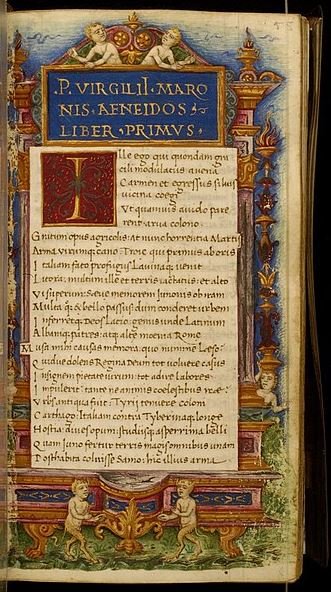
Image: A manuscript created around 1470 by Italian artist Cristoforo Majorana.
Structure and Overview
The Aeneid is divided into two halves, mirroring Homer’s epics:
- Books 1-6: Aeneas’ journey and wanderings (paralleling The Odyssey).
- Books 7-12: The war in Italy and Aeneas’ battles (paralleling The Iliad).
Books 1-6: The Wanderings of Aeneas
Book 1: The poem opens with Virgil’s invocation to the Muse and an outline of Aeneas’ destiny. After the fall of Troy, Aeneas and his followers face a storm sent by the vengeful goddess Juno, who opposes Aeneas because of a prophecy foretelling Rome’s future dominance over her favored city, Carthage. The Trojans are shipwrecked near Carthage, where Queen Dido welcomes them.
Book 2: At a banquet, Aeneas recounts the fall of Troy. He describes the deception of the Trojan Horse, the betrayal by the Greeks, and his escape with his father Anchises, son Ascanius, and the household gods. This narrative establishes Aeneas as a man driven by duty and divine mandate.
Book 3: Aeneas narrates his subsequent wanderings, including encounters with the Harpies and the prophecy from the seer Helenus, who advises him to seek Italy. These episodes underscore the trials and uncertainties of his journey.
Book 4: In Carthage, Aeneas and Dido fall in love, largely due to the intervention of Venus (Aeneas’ mother) and Juno. However, Aeneas’ divine mission to found a new city conflicts with this personal attachment. When Jupiter reminds him of his duty, Aeneas leaves Dido, who, in despair, curses his descendants and commits suicide. Her curse foreshadows the enmity between Rome and Carthage, culminating in the Punic Wars.
Book 5: Aeneas and his followers arrive in Sicily and hold funeral games for Anchises, who had died earlier in the journey. This book reflects Roman traditions and values, particularly those associated with honoring the dead and communal unity.
Book 6: Aeneas visits the Underworld with the Sibyl of Cumae. In a pivotal scene, he meets the spirit of Anchises, who reveals Rome’s glorious future, including figures like Romulus and Augustus. This prophetic vision solidifies Aeneas’ resolve and underscores the divine sanction of Rome’s imperial destiny.
Books 7-12: The War in Italy
Book 7: Upon reaching Italy, Aeneas is welcomed by King Latinus, who offers his daughter Lavinia in marriage. However, Lavinia’s previous suitor, Turnus, is enraged. Juno incites war by instilling fury in Queen Amata and the Rutulians, leading to conflict between the Trojans and the local tribes.
Book 8: Aeneas secures allies, including King Evander and his son Pallas. Evander introduces Aeneas to Roman mythology and history, linking the present with Rome’s mythical past. Aeneas receives a shield from Vulcan depicting Rome’s future victories, including Augustus’ triumph at Actium.
Book 9: While Aeneas is away seeking allies, Turnus attacks the Trojan camp. The bravery of Nisus and Euryalus, two young Trojan warriors, is highlighted, but both meet tragic ends, underscoring the costs of war.
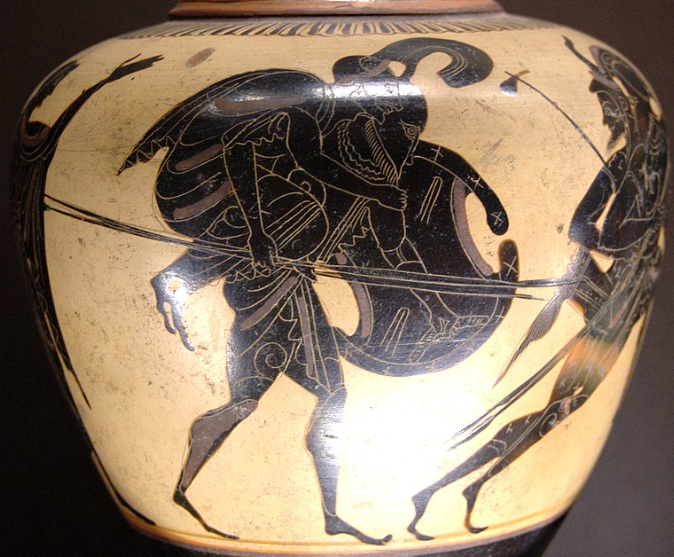
Image: Anchises being carried by Aeneas.
Book 10: Aeneas returns and engages in battle. The deaths of Pallas at the hands of Turnus and Mezentius (a tyrannical ally of Turnus) amplify the emotional stakes of the conflict.
Book 11: A truce is called for the burial of the dead, reflecting the human toll of war. However, hostilities resume, and Camilla, a fierce warrior allied with Turnus, is killed in battle.
Book 12: The climactic duel between Aeneas and Turnus decides the war. Aeneas initially shows mercy but ultimately kills Turnus after seeing Pallas’ belt on his enemy’s shoulder, symbolizing personal vengeance and the unrelenting demands of fate.
Themes and Analysis
1. Duty and Pietas
The concept of pietas is central to Aeneas’ character and the poem. Aeneas consistently prioritizes his obligations to the gods, his family, and his destined role over personal desires. His abandonment of Dido and his relentless pursuit of his mission illustrate the sacrifices required by duty.
2. Fate and Divine Intervention
Fate governs the events of The Aeneid. Aeneas’ journey is preordained, and the gods’ interventions either facilitate or hinder his progress. While Jupiter represents the ultimate arbiter of fate, Juno’s resistance highlights the tension between divine will and individual agency.
3. War and Sacrifice
The second half of the poem explores the brutality and inevitability of war. Through the deaths of characters like Pallas, Nisus, and Euryalus, Virgil emphasizes the human cost of achieving greatness. The poem does not glorify violence but portrays it as a necessary means to an end.
4. Roman Identity and Imperial Destiny
Virgil intertwines Aeneas’ story with Rome’s founding myth, linking the hero’s trials to the grandeur of Augustus’ rule. The shield of Aeneas and Anchises’ prophecy both highlight Rome’s imperial destiny, portraying its expansion as divinely ordained.
5. Love and Loss
The relationship between Aeneas and Dido explores the conflict between love and duty. Dido’s tragic fate illustrates the personal suffering caused by larger historical and divine forces.
Symbolism and Imagery
Virgil employs rich symbolism and imagery to enhance the poem’s themes. Key examples include:
- The Shield of Aeneas: Represents Rome’s future glory and the inevitability of its imperial dominance.
- The Underworld: Serves as a microcosm of Roman values and history, connecting the past, present, and future.
- Fire: Recurring imagery of fire symbolizes destruction (Troy’s fall, Dido’s passion) and divine will (the flames on Ascanius’ head).
Virgil’s Style and Legacy
Virgil’s use of dactylic hexameter and his integration of Homeric elements demonstrate his literary mastery. However, he imbues The Aeneid with a distinctly Roman ethos, making it both a tribute to Homer and a uniquely Roman creation.
The poem has influenced countless works of literature and art, shaping the Western canon. Its themes of duty, sacrifice, and the cost of greatness resonate across cultures and eras.

Image: A bust of Virgil.
Conclusion
The Aeneid is more than a founding myth; it is a profound exploration of human endurance, moral complexity, and the interplay between personal desires and collective destiny. Through Aeneas’ journey, Virgil crafts a narrative that celebrates Rome’s grandeur while acknowledging the profound sacrifices required to achieve it. The poem remains a testament to Virgil’s poetic genius and his enduring contribution to world literature.
Frequently Asked Questions
How is The Aeneid structured?
The poem is divided into twelve books. The first six recount Aeneas’ wanderings, similar to Homer’s Odyssey, while the latter six describe the war in Italy, mirroring the martial themes of Homer’s Iliad.
What is the role of Juno in the poem?
Juno, who harbors animosity toward the Trojans, repeatedly obstructs Aeneas’ journey to Italy, causing storms and stirring conflict. Her opposition underscores the challenges of fulfilling fate.
Who is Dido, and what is her significance?
Dido is the queen of Carthage who falls in love with Aeneas due to Venus’ intervention. When Aeneas leaves to fulfill his destiny, Dido commits suicide, cursing Aeneas and foreshadowing future conflict between Rome and Carthage.
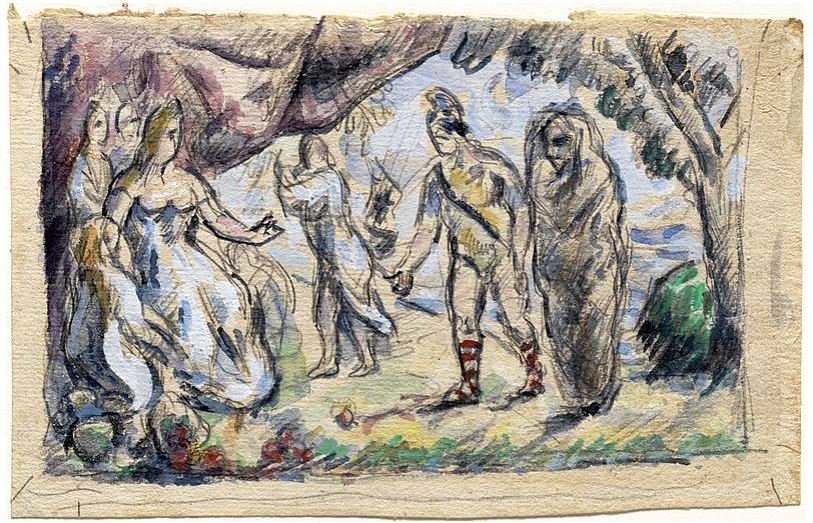
Image: A painting of a scene from The Aeneid entitled “Aeneas Meeting Dido at Carthage”. Artwork by French artist Paul Cézanne.
What pivotal event occurs in Book 6?
In Book 6, Aeneas ventures into the underworld, where his father, Anchises, reveals a vision of Rome’s destined glory. This encounter solidifies Aeneas’ resolve to fulfill his divine mission.
What challenges does Aeneas face in Italy?
In Italy, Aeneas faces opposition from Turnus, leader of the Rutulians, and Juno’s continued interference. The ensuing war involves sacrifice, heroism, and moral complexities, culminating in a duel where Aeneas kills Turnus.
What are the major themes of The Aeneid?
- Pietas and Duty: Aeneas embodies duty to the gods, family, and state, often sacrificing personal desires for the greater good.
- Fate and Divine Intervention: Aeneas’ journey is guided and obstructed by the gods, reflecting the inevitability of fate.
- Founding Myth and National Identity: The poem ties Rome’s origins to Troy and glorifies Roman traditions and virtues.
- War and Sacrifice: The epic explores the brutality of war and the moral complexities of empire-building.
How does Virgil use Homeric influence in The Aeneid?
Virgil integrates elements of Homer’s Iliad and Odyssey, but adapts them to reflect Roman values. Aeneas combines the wandering heroism of Odysseus with the martial prowess of Achilles, emphasizing duty over personal glory.
What role does symbolism play in the poem?
Virgil employs rich symbolism to enhance the narrative’s meaning. For instance, Dido symbolizes Carthage, while Aeneas’ shield, crafted by Vulcan, foreshadows Rome’s imperial achievements under Augustus.
How does The Aeneid reflect Augustan ideals?
The poem aligns with Augustus’ vision of Rome as a destined empire, celebrating its origins and portraying Augustus as a restorer of Roman greatness and peace.
What is the significance of The Aeneid’s legacy?
The Aeneid has profoundly influenced Western literature and culture. Revered as a model of literary excellence, it has inspired works like Dante Alighieri’s Divine Comedy and remains central to discussions of heroism, empire, and human struggle.
How is The Aeneid both a celebration and critique of empire?
While glorifying Rome’s destiny, the poem also portrays the sacrifices and suffering involved in achieving imperial power, offering a nuanced view of ambition and conquest.





